

Pool Patio Ideas for Small Rhode Island Yards: A 2026 Planning Guide
Small Rhode Island yards can support a functional pool patio by pairing a compact pool style, such as a plunge pool or cocktail pool, with a durable surface material and a layout that separates the wet zone from seating. Lot size, local setbacks, and material choice all shape what works for a given property.
Rhode Island is the smallest state in the country, and that shows up most clearly in backyard planning. Lot sizes in Providence, Pawtucket, and Cranston often run well below the national average, which means homeowners looking at pool patio ideas for small Rhode Island yards need a more deliberate approach than a generic backyard guide would offer.
A tight lot doesn't rule out a pool. It just changes which pool styles, materials, and layouts are worth considering first.
This guide walks through the pool shapes, surface materials, layout strategies, and local permitting factors that matter most for compact Rhode Island backyards in 2026, drawing on current material pricing and setback data for the state.
Why Small Yards Still Work for a Pool Patio
A common assumption is that a pool needs a large yard to feel right. In practice, compact lots often make for a more considered design, since every section of the yard has to serve a purpose rather than sitting unused.
Rhode Island also gets a reasonable stretch of outdoor living weather. From late May through early October, most homeowners get close to five months of use out of a pool patio, which is enough to justify the investment even on a modest lot.
The households that get the most out of a small pool patio tend to start with three decisions: pool shape, surface material, and layout. Getting these right early avoids a cramped, awkward result later.
Choosing a Pool Shape That Suits a Compact Lot
Pool shape has a bigger effect on how a small yard feels than most people expect. A few options tend to work better than a standard rectangular pool on a tight footprint:
- Plunge pools typically run 10 to 15 feet long and are built for cooling off rather than lap swimming. They suit smaller lots in Providence, Cranston, and Warwick.
- Cocktail pools, sometimes called spools, combine a spa and a small pool with built-in seating and heating. These are common in Newport, where waterfront lots can be narrow.
- Freeform pools use curved, organic shapes that can wrap around existing trees or decking, which helps on irregularly shaped yards.
- L-shaped pools suit corner lots or yards that are wider on one side, tucking the pool into one section while leaving room for a patio or lawn.
The right shape depends on how the household plans to use the pool. A family that swims laps needs different proportions than one that mostly wants a place to cool off on a hot afternoon.
Sizing the Patio Around the Pool
Once a pool shape is chosen, the surrounding deck needs to be sized sensibly. Average pool deck sizes for Rhode Island backyards generally fall between 600 and 1,200 square feet for a single-family home, with the right figure depending on the pool's surface area, the lot, and how many functional zones the household wants.
As a general guide, a deck area equal to the pool's surface, and ideally 1.5 to 2 times that size, gives enough room for safe movement and basic furniture without overbuilding a small yard.
On city lots in Providence or Pawtucket, that often lands closer to 500 to 800 square feet. Suburban properties with more room to work with can support larger decks without crowding the yard.
Materials That Suit Rhode Island's Climate
Patio material matters as much as layout in this part of the country. Rhode Island winters bring repeated freeze-thaw cycles through December, January, and February, and a material that performs fine in a milder climate can crack or heave here.
A few materials hold up consistently well around Rhode Island pools:
- Porcelain pavers resist frost and staining, need little upkeep, and come in styles that mimic natural stone or timber.
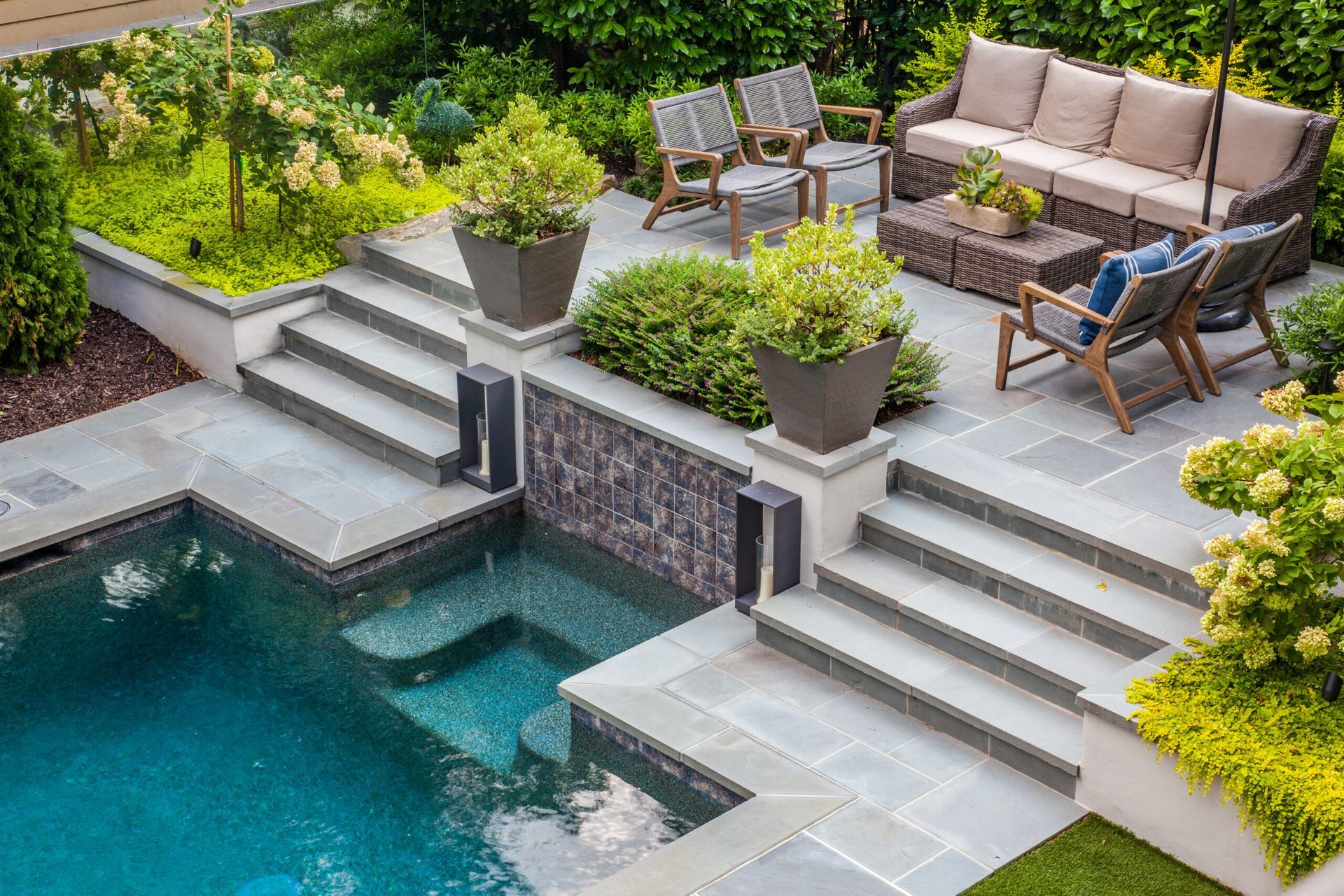
- Bluestone is a longstanding choice across the state, suiting both Colonial-style homes in Providence and shingled cottages in Newport.
- Travertine stays cooler underfoot in direct sun, which matters for pool surrounds. Filled and honed travertine performs better through the colder months than unfilled stone.
- Concrete pavers offer a budget-friendly, versatile option, and permeable versions help where drainage is a concern.
- Natural flagstone suits a more informal, wooded backdrop, common in towns like Lincoln or North Kingstown.
Materials that become slippery when wet or that crack easily under frost heave are worth avoiding around a pool edge, where a secure footing matters.
Laying Out a Small Pool Patio
With space limited, the goal is to create distinct zones rather than one open slab. A layout that works for many small Rhode Island yards places the pool toward the back of the property, with a patio between the house and the pool edge. Even a 10-foot zone here can fit a dining table or a couple of lounge chairs.
In narrower yards, particularly in older, denser neighbourhoods, running the pool parallel to the longest fence line tends to open up the rest of the space rather than dividing it into awkward sections.
Sloped yards can also work in a homeowner's favour. A raised pool deck with a retaining wall addresses drainage while adding some visual interest to an otherwise flat design.
For more detail on arranging a compact outdoor space, this guide to the best patio designs for small Rhode Island backyards covers layout patterns that apply beyond pool areas as well
Landscaping and Shade for Small Pool Areas
Plantings and shade structures do a lot of work in making a small pool patio feel less confined.
- Trellises with climbing plants such as clematis or climbing hydrangea add height along a fence line without using floor space.
- Ornamental grasses, including Karl Foerster or blue oat grass, suit coastal areas like Narragansett and Barrington, where salt tolerance matters.
- Evergreen shrubs such as arborvitae or boxwood provide year-round privacy without the upkeep a fence requires.
- A pergola sized around 10 by 12 feet can define a seating zone and support shade cloth or string lights without overwhelming the yard.
- Retractable awnings and shade sails offer flexibility for homeowners who want full sun on some afternoons and shade on others.
Coastal humidity and salt air affect what grows well even a few miles inland, so checking with a local nursery about specific conditions is worth the time before planting.
Lighting for Evening Use
Good lighting extends a pool patio's use well into the evening and adds a safety element around steps and pool edges. Underwater LED lighting, low-voltage path lights, and up-lighting on trees or pergola posts are common additions across Rhode Island projects, particularly for households using the patio into September and October when evenings get dark earlier.
Local Permitting Considerations
Most Rhode Island municipalities require permits for inground pools, and many set specific fencing or barrier requirements for safety. Setback rules vary by town, so confirming requirements with the local building department early in the planning process avoids costly changes later.
Homeowners near Narragansett Bay or its tributaries should also check stormwater and drainage requirements, since a pool patio with significant impervious surface coverage can affect how a project is permitted.
For projects in Newport specifically, this overview of paver patio builders and hardscaping work in Newport, RI outlines what local homeowners typically need to plan for on coastal lots.
Bringing It Together
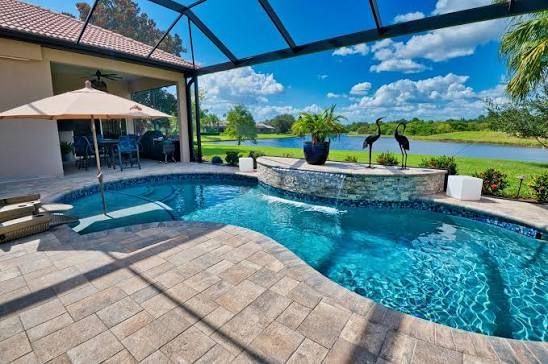
Pool patio ideas for small Rhode Island yards tend to work best when they follow the same basic order: choose a pool shape suited to the lot, size the deck sensibly, select a material built for New England winters, and lay out the space in clear zones.
A small backyard in Cranston, Barrington, or East Greenwich can support a well-functioning pool patio when these decisions are made with the lot's actual size and shape in mind, rather than trying to fit a design meant for a much larger property.
Small Pool Patio Space Calculator
Plan your pool patio using your backyard dimensions. Estimate the pool footprint, recommended patio area, and remaining outdoor space.
1. Enter Your Yard Dimensions
2. Enter Your Pool Dimensions
3. Choose Your Patio Size
This calculator provides a preliminary space estimate using rectangular dimensions. Actual layouts may need more room for walkways, steps, furniture, fencing, drainage, and local setbacks. Confirm Rhode Island municipal requirements before construction.
Frequently Asked Questions
What is the best pool shape for a small Rhode Island backyard?
Plunge pools and cocktail pools generally suit the smallest lots, since they prioritise relaxing and cooling off over lap swimming and take up less space than a standard rectangular pool.
How big should a patio be around a small pool?
A deck area equal to the pool's surface area, up to about twice that size, works for most small Rhode Island yards. On a compact city lot, that often lands between 500 and 800 square feet.
What patio material holds up best to Rhode Island winters?
Porcelain pavers and bluestone are common choices, since both handle freeze-thaw cycles well. Permeable concrete pavers are also worth considering where drainage is a concern.
Do I need a permit for a pool patio in Rhode Island?
Yes. Most Rhode Island towns require permits for inground pools, and many set specific fencing or barrier rules. Requirements vary by municipality, so checking with the local building department before finalising a design is necessary.
Can a raised pool deck work on a sloped yard?
Yes. A raised deck paired with a small retaining wall can address drainage issues while adding a more defined structure to the yard.