

Best Kitchen Layouts for Rhode Island Homes: A Practical Guide
The best kitchen layout for a Rhode Island home depends on the property's age, available space and how the household uses the room. L-shaped and galley layouts suit the state's older homes with smaller footprints, while U-shaped and open concept designs work well in larger suburban properties. The right choice balances function, budget and the architectural character of the home.
Choosing the right kitchen layout is one of the first decisions homeowners face when planning a renovation. In Rhode Island, this decision carries extra weight because the state's housing stock is so varied.
A triple-decker in Providence has very different space constraints to a ranch home in Warwick or a cottage near the coast in Westerly. Picking a layout that fits the home, rather than forcing a trend that doesn't suit the space, makes the difference between a kitchen that works and one that frustrates the people using it every day.
This guide walks through the main kitchen layout options available to Rhode Island homeowners, where each one tends to work best, and what to consider before committing to a renovation plan.
Why Kitchen Layout Matters More in Rhode Island
Rhode Island's housing stock includes a high proportion of older homes, many built well before open-plan living became common. Colonial homes in Providence, Cape Cod cottages along the coast, and converted mill buildings throughout the Blackstone Valley were generally designed with smaller, separate kitchens. That history shapes what's realistic for a renovation today.
Structural elements such as load-bearing walls, lower ceiling heights and narrower room dimensions are common in homes built before 1950. Before deciding on a layout, it's worth having a licensed contractor assess the home's structure, since this will often determine which layouts are actually achievable without major rework.
For a broader look at how these five layouts compare across Rhode Island's housing types, our guide on the most popular kitchen layouts in Rhode Island breaks down dimensions, costs and suitability in more detail.
The Galley Kitchen: A Good Fit for Historic Homes
The galley layout places two parallel countertops along opposite walls with a walkway in between. It's one of the most space-efficient configurations available, which explains why it's so common in Providence's Federal Hill, Pawtucket, and other neighbourhoods with older, narrower homes.
Galley kitchens work well because:
- They suit narrow room footprints common in triple-deckers and colonials
- The sink, stove and refrigerator can be arranged within a tight, efficient work triangle
- Storage is maximised along both walls
- Natural light can reach the space from either end if windows are present
The main drawback is that galley kitchens don't accommodate large gatherings easily, and if the layout also functions as a walkway between rooms, traffic flow can become an issue. This layout generally suits households that prioritise everyday cooking efficiency over hosting large groups.
L-Shaped Kitchens: Flexible and Widely Used
The L-shaped layout uses two adjoining walls to form a natural work zone, leaving the remaining space open for a dining table, island or walkway. It's a common choice across Rhode Island because it adapts well to both small and larger kitchens.
This layout tends to suit:
- Ranch homes in East Greenwich, North Kingstown and South Kingstown
- Renovations that open the kitchen to an adjoining family or dining room
- Homeowners who want a casual, connected layout without a full open-concept rebuild
Because an L-shaped kitchen only requires two walls of cabinetry, it leaves room to add a peninsula or island later if the budget allows. This makes it a practical starting point for homeowners who aren't ready to commit to a full open-plan renovation but want some flexibility.
U-Shaped Kitchens: Built for Serious Cooking
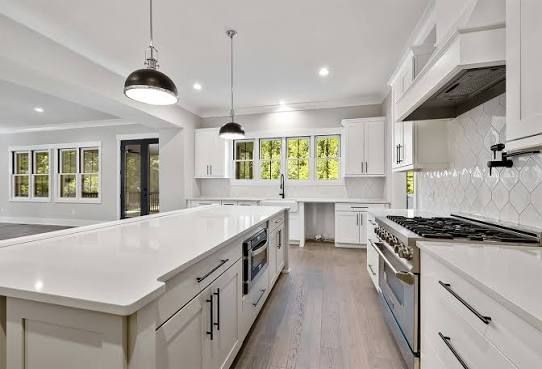
A U-shaped layout wraps cabinetry and counters around three walls, creating a compact and highly functional work triangle. It offers the most storage and bench space of the common layouts, which makes it popular with larger households and those who cook frequently.
U-shaped kitchens are well suited to:
- Larger suburban homes in Warwick, Cranston and West Warwick
- Households where more than one person cooks at the same time
- Homes where the kitchen is a dedicated room, separate from living areas
The trade-off is space. A U-shaped kitchen needs a reasonably sized room to avoid feeling closed in, so it isn't always practical in Rhode Island's smaller, older homes. Lighter cabinet finishes and good lighting can help offset a cramped feel if the room is on the smaller side.
Kitchen Islands: Adding Function Without a Full Redesign
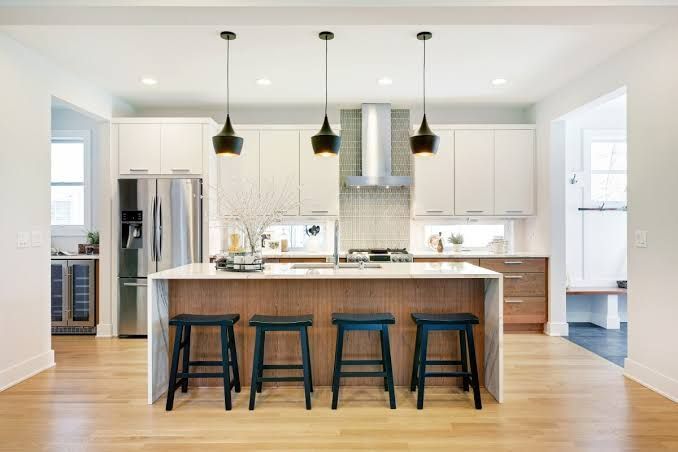
An island isn't a layout on its own, but it's one of the most requested additions across Rhode Island kitchen renovations. Islands work well within L-shaped, U-shaped and open layouts, provided there's enough clearance around them, generally a minimum of 36 inches on all sides.
Islands typically add:
- Extra bench space for food preparation
- Additional storage
- Casual seating for everyday meals
- A central point for entertaining, which is particularly relevant for Rhode Island's summer gatherings
For homeowners who are uncertain about a permanent change, a freestanding island can be a lower-commitment way to test whether the extra space suits the household before investing in a built-in version.
Open Concept Layouts: Suited to Modern Living
Open concept kitchens remove the walls between the kitchen, dining area and living room, creating one connected space. This layout has grown in popularity across Rhode Island, particularly in renovated ranches, split-levels and newer builds throughout Johnston, Lincoln and Cumberland.
The appeal is straightforward. Removing walls lets light travel further through the home, makes smaller properties feel larger, and allows whoever is cooking to stay part of the conversation rather than working in a separate room. It also tends to suit how many Rhode Island families actually use their homes, with the kitchen functioning as the main gathering point rather than a space reserved purely for cooking.
That said, open layouts aren't always straightforward to achieve in older Rhode Island homes. Removing a wall that turns out to be load-bearing adds engineering and construction costs, and historic districts in places like Newport may have additional restrictions on structural changes. For a fuller comparison of the benefits and limitations of each approach, see our breakdown of open versus closed kitchen layouts in Rhode Island.
Peninsula Kitchens: A Middle Ground
A peninsula layout extends a connected section of cabinetry out from an existing wall, giving many of the benefits of an island without requiring the floor space for a freestanding unit.
This works well in condominiums and smaller coastal properties around Middletown and Portsmouth, where square footage is limited but homeowners still want some separation between the kitchen and living area.
Matching the Layout to the Home
There's no single layout that works best across every Rhode Island property. A few practical factors should guide the decision:
Home age and style. Historic homes often come with structural limitations that make galley or L-shaped layouts more realistic than a full open-concept rebuild.
Household size and cooking habits. Families who cook often and in larger groups tend to get more value from a U-shaped layout, while smaller households may find a galley or L-shaped kitchen more practical to maintain.
Entertaining frequency. Homeowners who regularly host gatherings generally lean towards open layouts with an island, while those who prefer a contained cooking space often stick with a closed or semi-open design.
Budget. Layout changes that involve moving plumbing, electrical work or structural walls add cost. Working within the kitchen's existing footprint is usually the more affordable path.
Permits and Local Requirements
Kitchen renovations involving structural, electrical or plumbing changes require permits in most Rhode Island municipalities, including those across Providence County, Kent County, Washington County and Newport County.
Homeowners in towns such as Scituate should also check local zoning and permit requirements before finalising a layout, particularly if the renovation involves wall removal. Working with a contractor experienced in kitchen and bathroom remodelling throughout Rhode Island helps ensure the project meets code requirements from the outset, rather than running into issues during inspection.
Planning Your Next Step
Settling on the right kitchen layout for a Rhode Island home comes down to understanding the property's structure, the household's day to day needs, and what's realistic within budget. Galley and L-shaped layouts tend to suit the state's older, narrower homes, while U-shaped and open concept designs work better where more space is available. Islands and peninsulas can add function to almost any layout without requiring a complete redesign.
Getting the layout right from the start avoids costly changes later, and it's worth involving an experienced local contractor early in the planning process to confirm what's achievable in your specific home.
Kitchen Layout Fit Calculator
Answer a few questions about your home and how you use your kitchen to find the layout that best fits your space and lifestyle.
What type of home do you have?
Rhode Island's older and newer homes can have very different kitchen constraints.
How would you describe your kitchen space?
Your available footprint has a major effect on which layouts are practical.
How often do you cook?
Cooking frequency helps determine how valuable additional bench space and storage are.
Do multiple people use the kitchen at the same time?
Shared cooking space can make a more spacious configuration useful.
How important is entertaining?
Open layouts and islands can be useful when the kitchen is also a gathering space.
Would you like an island or peninsula?
Islands need adequate circulation space. Peninsulas can be useful where a freestanding island is difficult to accommodate.
If you choose an island, is there at least 36 inches of clearance?
The guide recommends a minimum of 36 inches around an island.
Are structural changes acceptable?
Older homes may have load-bearing walls or historic restrictions that make major layout changes more difficult.
Rhode Island layout guide
Frequently Asked Questions
What is the most common kitchen layout in Rhode Island homes?
L-shaped layouts are the most widely used across Rhode Island, largely because they adapt well to both smaller older homes and larger suburban properties without requiring major structural changes.
Is an open concept kitchen practical for an older Rhode Island home?
It can be, but it depends on whether interior walls are load-bearing and whether the property falls within a historic district. A structural assessment is recommended before planning an open layout in any home built before 1950.
Do I need a permit to change my kitchen layout in Rhode Island?
Most layout changes involving electrical, plumbing or structural work require a permit from the local municipality. Requirements vary by town, so it's worth confirming with your contractor before work begins.
What kitchen layout works best for a small Rhode Island home?
Galley and L-shaped layouts are generally the most practical for smaller homes, as they make efficient use of limited square footage without sacrificing storage or workflow.
Can I add an island to an existing kitchen layout?
In many cases, yes, provided there's enough clearance around it, typically at least 36 inches on all sides. A freestanding island can also be a lower-cost way to trial the extra space before committing to a built-in version.