

DIY Christmas Lights Installation: What Rhode Island Homeowners Should Know
Why Rhode Island Presents Unique Challenges for DIY Lighting
Putting up your own Christmas lights is one of the most common home projects Rhode Island homeowners take on each year. A DIY Christmas lights installation can save money and give you full control over the look of your property, but it also comes with real risks if the wrong methods, materials, or safety precautions are used. This guide walks through what to consider before climbing a ladder, from choosing the right lights to understanding when a project is better left to professionals.
Rhode Island's older housing stock, unpredictable winter weather, and mix of architectural styles all affect how a lighting project should be approached. What works on a newer home in Cranston may not suit a Victorian in Providence or a Colonial near the coast. Understanding these differences before starting will help avoid damage to your home and reduce the chance of injury.
Why Rhode Island's Climate and Housing Matter for DIY Lighting
Rhode Island winters bring freezing temperatures, ice, and coastal wind, all of which affect outdoor lighting installations. Ice on rooflines and gutters makes ladder work more dangerous, and cold temperatures can make certain cords and clips brittle. Wind off Narragansett Bay also puts additional strain on lights attached to trees, railings, and rooflines, particularly in exposed coastal towns.
Older homes are common throughout the state, and many were not built with modern outdoor electrical use in mind. Homes in historic areas of Providence, Newport, and Bristol often feature wood trim, delicate shingle siding, or masonry that can be damaged by improperly secured clips or adhesive hooks. If your home falls within a designated historic district, there may be additional rules to follow.
Choosing the Right Lights for a DIY Installation
Not all Christmas lights are suited to outdoor use, and picking the wrong type is one of the most common mistakes homeowners make.
Key factors to check before buying lights:
- Confirm the packaging states the lights are rated for outdoor use
- Look for LED options, as they use less power and generate less heat than incandescent bulbs
- Check the cord gauge, since thinner cords are more prone to damage in cold weather
- Choose commercial-grade lights if you plan to leave them up for several weeks, as they tend to hold up better in freezing conditions
LED lights have become the standard choice for most homeowners because they last longer and reduce the load on outdoor outlets. This matters in Rhode Island winters, where extension cords and power strips left outside are exposed to moisture and temperature swings.
Electrical Safety Basics for Outdoor Christmas Lights
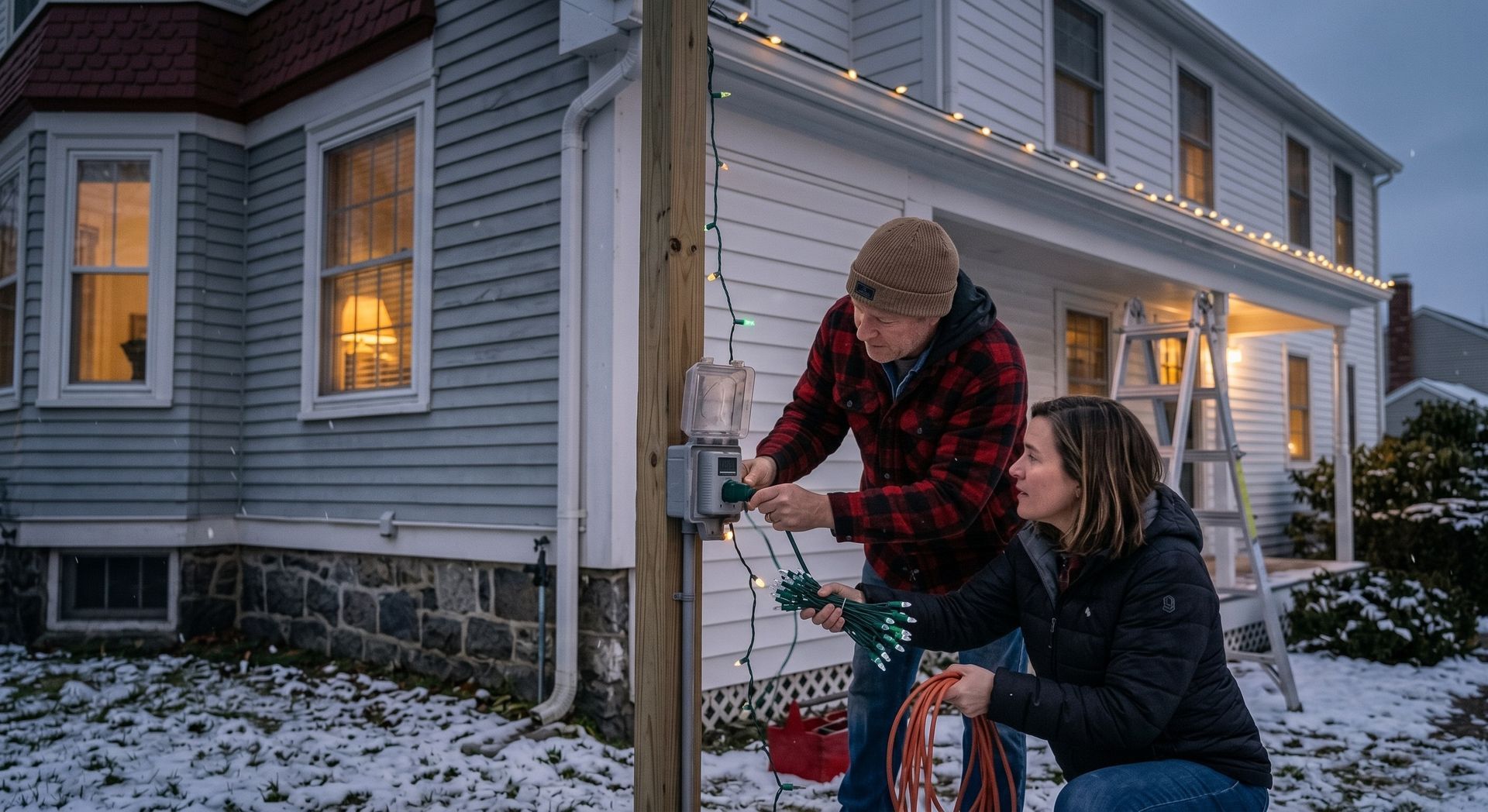
Electrical safety is the area where DIY installations most often go wrong. A poorly planned setup can lead to blown circuits, damaged wiring, or fire hazards.
Basic safety steps to follow:
- Use a ground fault circuit interrupter (GFCI) outlet for any outdoor lighting connection
- Avoid connecting more strands together than the manufacturer recommends
- Keep all plug connections off the ground and away from standing water or snow
- Inspect cords each season for cracks, exposed wire, or chewed insulation
- Turn off lights when nobody is home or overnight, using a timer if preferred
If your home does not have a GFCI outlet on the exterior, this is worth addressing before the holiday season, as it is one of the simplest ways to reduce electrical risk.
Installing Lights on Rooflines, Gutters, and Trim
Roofline lighting is one of the more physically demanding parts of a DIY Christmas lights installation, and it is also where most fall-related injuries occur.
Points to keep in mind:
- Use a stable, properly rated ladder, and avoid leaning ladders directly against gutters, which can bend or crack under weight
- Use clips designed for gutters, shingles, or trim rather than nails, staples, or adhesive hooks that can damage siding or roofing material
- Work with a second person present whenever possible, particularly on steep or multi-storey homes
- Avoid working on rooflines during or shortly after snow or ice, as surfaces become unpredictable
Homes with older or more delicate trim, such as those found in many of Rhode Island's historic neighbourhoods, require extra care. Clips that grip too tightly or hooks driven into wood trim can cause damage that is costly to repair, particularly on properties where exterior materials are protected under local preservation guidelines.
Lighting Trees, Shrubs, and Landscape Features
Wrapping trees and shrubs is a popular way to extend a lighting display beyond the house itself.
A few practical guidelines:
- Use lights rated for the size of the branch or trunk they will be wrapped around
- Avoid wrapping too tightly, as this can damage bark and restrict growth
- Choose battery-operated or solar options for garden beds and pathways where running a cord is impractical
- Check that any lights placed in mulch or garden beds are rated for wet locations
Landscape lighting is generally lower risk than roofline work, but it still requires attention to cord placement and connection points to avoid tripping hazards or exposure to moisture.
When to Call a Professional Instead
DIY Christmas lights installation works well for many homeowners, but there are situations where hiring a professional makes more sense.
Consider professional help if:
- Your home has steep rooflines, multiple storeys, or limited safe roof access
- You are unsure how to safely manage the electrical load for a larger display
- Your property is in a historic district and you want to avoid any risk of damage to protected materials
- You want a more elaborate design but do not have the time or equipment to manage installation and removal
Professional installers may also handle take-down and storage, removing the need to climb back up in colder weather once the holiday season ends. If you prefer professional installation, Rockhouse Construction provides Christmas light installation in Providence, RI, Warwick, RI, Cranston, RI, and many other areas across Rhode Island, with services covering design, installation and removal.
Maintaining Your Display Through the Season
Once your lights are installed, a small amount of ongoing maintenance helps avoid problems partway through the season.
Simple maintenance habits:
- Check connections after major storms or high winds
- Replace any bulbs or sections that stop working promptly, rather than leaving damaged strands in place
- Keep an eye on ice build-up around clips and cords, especially after freezing rain
- Unplug and inspect lights if you notice flickering, which can indicate a loose connection or damaged wire
Rhode Island's weather can shift quickly, so a five-minute check after a storm is a reasonable habit to build into the season.
Taking Down and Storing Lights Properly
How lights are removed and stored affects how well they hold up for the following year.
Recommended approach:
- Remove lights before ice or snow makes roof access unsafe
- Wind cords loosely rather than tightly, which reduces strain on the wiring
- Store lights in a dry area away from extreme temperature changes
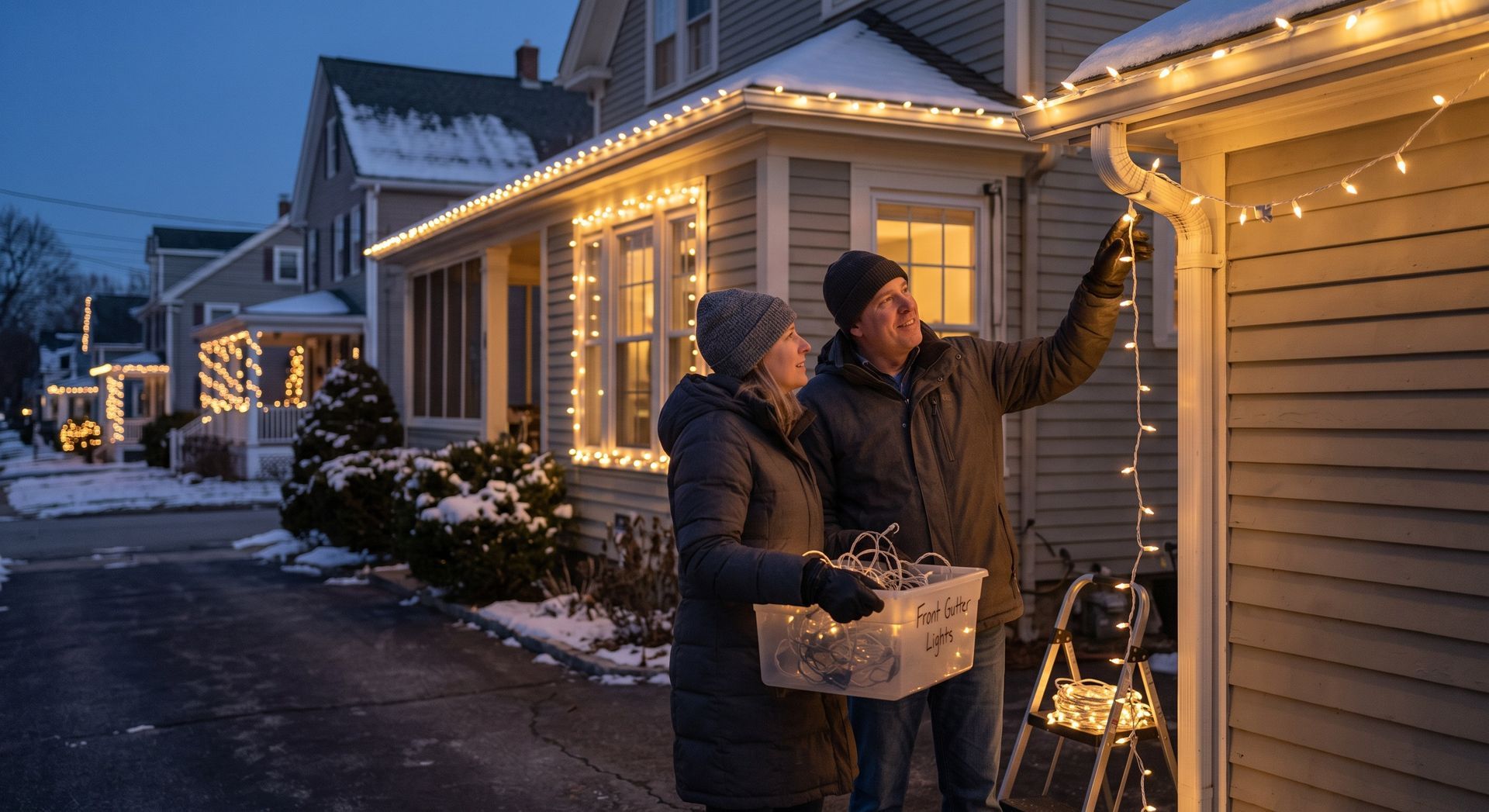
- Label storage containers by area of the house, which makes next year's installation faster
Taking the time to store lights correctly reduces the number of replacements needed each year, which keeps the overall cost of a DIY Christmas lights installation lower over time.
Getting Your Display Right This Season
A DIY Christmas lights installation can be a straightforward and rewarding project when approached with the right preparation. Choosing outdoor-rated lights, following basic electrical safety steps, and taking extra care on rooflines and older exterior materials will help your display go up smoothly and come down without damage to your home.
If your property has features that make DIY installation more complicated, or you would simply prefer to leave the ladder work to someone else, Rockhouse Construction offers holiday lighting services throughout Rhode Island, including design, installation, and post-season removal.
Christmas Lights Power Calculator
Estimate the total power and current needed for your outdoor Christmas lights.
This calculator provides a basic estimate only. Always check the manufacturer's specifications and follow appropriate electrical safety guidance for outdoor lighting.
Frequently Asked Questions
Q. Is it safe to install Christmas lights on an older Rhode Island home?
A. Yes, but older homes often have more delicate trim, siding, or roofing materials. Use clips rather than nails or adhesive hooks, and avoid over-tightening any
fixtures to prevent damage to original materials.
Q. Do I need a permit to install Christmas lights in Rhode Island?
A. Standard residential Christmas lighting does not typically require a permit. However, homes in local historic districts may have guidelines around what is visible from the street, so it is worth checking with your local historic commission if you are unsure.
Q. What type of lights last longest in cold weather?
A. LED lights generally perform better in cold conditions than incandescent bulbs, as they are less prone to filament failure and use less power, which reduces strain on outdoor circuits.
Q. How long can Christmas lights stay up in Rhode Island?
A. There is no set rule, but many homeowners remove lights by mid-to-late January to avoid installing or removing them once ice and snow make roof access unsafe.
Q. Should I hire a professional if my home has multiple storeys?
A. It is worth considering. Roofline work on taller homes carries a higher risk of falls, and a professional installer will have the right equipment and experience for safer access.