

Does an Outdoor Kitchen Add Value to a Rhode Island Home?
If you've been weighing up whether to add an outdoor kitchen to your Rhode Island property, the short answer is yes, in most cases it does. The longer answer depends on your neighbourhood, the quality of the build, and how well the design matches what local buyers expect.
Rhode Island's outdoor season, food culture, and competitive housing market all work in favour of this kind of investment, but the details matter more than the headline number.
This guide breaks down what adds genuine value, what Rhode Island buyers respond to, and what to consider before you commit to a build.
How Much Value Does an Outdoor Kitchen Add in Rhode Island?
Outdoor kitchens generally return a meaningful share of their cost at resale, and in stronger Rhode Island markets like Barrington, East Greenwich, and Newport County, that return tends to sit at the higher end of the range.
We cover the specific numbers and cost breakdowns in detail in our Rhode Island outdoor kitchen ROI guide, which is worth reading alongside this article if you're trying to work out the financial side of the decision.
Real estate agents across the state consistently point out that homes with finished outdoor kitchens tend to attract more showings and stronger offers than comparable homes without one. Buyers respond to move-in ready outdoor living space, particularly in a market where inventory has stayed tight for several years running.
The build quality matters as much as the feature list. A permanent, well-built outdoor kitchen with a grill, countertop, and storage adds more perceived value than a portable setup. Appraisers and buyers both respond to permanence, proper materials, and a design that looks like it was planned rather than added on.
Why Rhode Island Suits Outdoor Kitchen Investment
A few local factors make Rhode Island a reasonable market for this kind of upgrade.
- The outdoor season runs roughly from late April through October, giving homeowners close to six months of regular use each year.
- Outdoor cooking and entertaining are part of daily life here, not an occasional novelty, which means buyers already understand the value of the space.
- Many suburban towns, including Cranston, North Kingstown, and Johnston, have lot sizes that comfortably accommodate a built-in kitchen without crowding the yard.
None of this guarantees a return on its own. It simply means the conditions are favourable if the project is planned and built properly.
What Features Actually Add Value?
Not every addition carries the same weight with buyers. If resale value is part of the decision, focus on features that are broadly useful rather than highly specific to your own habits.
Features that tend to perform well in Rhode Island:
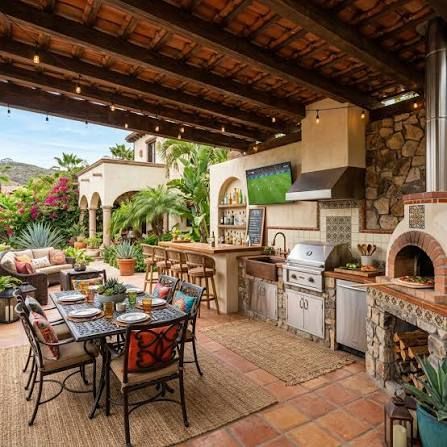
- A built-in gas grill, typically 36 inches or larger, in stainless steel
- A weatherproof outdoor refrigerator or beverage cooler
- Stone or concrete countertops that hold up to freeze-thaw cycles, such as granite or bluestone
- A pergola or roof structure that extends the usable season
- Built-in lighting for evening use
- An outdoor sink with running water
- Seating or a dining area that fits the yard without overwhelming it
Material choice matters more here than in many other parts of the country. Rhode Island winters and coastal salt air in towns like Newport, Bristol, and Narragansett will corrode lower-grade materials faster than homeowners expect.
Marine-grade stainless steel, sealed stone, and porcelain tile are a better long-term choice than cheaper alternatives, even if the upfront cost is higher.
How Does This Compare to Other Outdoor Projects?
An outdoor kitchen isn't the only outdoor project worth comparing. A well-built patio, for example, typically recovers a solid share of its cost and can lift overall home value when paired with proper hardscaping. We go through the specifics in our patio ROI guide for Rhode Island homes, including which materials hold up best in our climate.
In practice, many outdoor kitchens are built as part of a larger patio or hardscape project rather than as a standalone addition. If you're planning both, it's worth thinking through the layout together rather than treating them as separate decisions, since drainage, base preparation, and flow between spaces affect the outcome of both.
What Does an Outdoor Kitchen Cost in Rhode Island?
Costs vary depending on size, materials, and site conditions, but here's a general guide:
- Basic built-in grill station with countertop: roughly $5,000 to $10,000
- Mid-range outdoor kitchen with grill, fridge, sink, and seating: roughly $15,000 to $30,000
- High-end full outdoor kitchen with pergola, appliances, and lighting: $40,000 or more
Labour costs in Rhode Island run somewhat higher than the national average, which reflects local contractor rates and permitting requirements. It's worth getting several quotes from contractors with specific experience building outdoor living spaces in this climate, rather than a general handyman or builder.
Which Rhode Island Markets See the Strongest Return?
Location affects how much value an outdoor kitchen adds, since buyer expectations differ from town to town.
Newport and the surrounding coastal areas tend to see the strongest returns. Buyers in this market often expect outdoor entertaining space as part of the package, and a well-built kitchen here can come close to returning its full cost.
Barrington and East Greenwich attract buyers upgrading their family lifestyle. Larger grilling islands and dining areas that comfortably seat eight to twelve people tend to suit these neighbourhoods better than a compact setup.
Cranston and Johnston are more mid-market, and outdoor kitchens here don't need to be elaborate to add appeal. A clean, functional build with a grill, small fridge, and countertop space can still help a listing move faster.
Narragansett and South County buyers are often lifestyle-driven, and durable, easy-care materials that suit a coastal routine tend to work well.
If you're in the Johnston area specifically and are also considering hardscaping around an outdoor kitchen, our team has handled a number of local paver patio and hardscaping projects in Johnston, RI and understands the terrain and permitting requirements in that part of the state.
Permits and Practical Considerations
Permit requirements vary by municipality. In towns like Smithfield, North Providence, and Cumberland, it's worth checking with your local building department before any work begins, particularly if the project involves gas lines, electrical work, or a permanent structure.
Working with a licensed contractor who understands local codes reduces the risk of delays, and avoids complications if you decide to sell down the line.

Is It Worth It for Rhode Island Homeowners?
For most homeowners across the state, yes. Whether you're in a coastal town like Westerly, a suburban community like North Kingstown, or closer to Providence, a well-built outdoor kitchen tends to add real value, both at resale and in everyday use.
The strongest outcomes come from quality materials, a layout suited to the neighbourhood, and a design that looks like a natural extension of the home rather than an afterthought.
If you're planning a project and want to understand how it fits your specific property and budget, working with a local Rhode Island contractor who understands the climate and building requirements in your town is the most reliable way to get it right.
Outdoor Kitchen Home Value Calculator
Estimate how much of your outdoor kitchen investment you might recover when selling your Rhode Island home.
Your Estimated Results
This calculator provides a hypothetical estimate, not a guaranteed increase in home value. Actual resale results depend on location, comparable home sales, construction quality, buyer demand, and permitted improvements. The calculation excludes maintenance, financing, and selling expenses. All amounts are in USD.