

How Are Christmas Lights Attached Without Damaging Your Roof?
Rhode Island winters bring short days, cold nights, and plenty of homes lit up with colour from Newport to Woonsocket. For many homeowners, the appeal of a well-lit house comes with a nagging worry: will the installation process leave marks on the roof, gutters, or siding? It's a fair question, and one worth answering properly before any lights go up.
The short answer is that professional installers use methods designed specifically to avoid roof damage. Clips, not nails or staples, do the heavy lifting. But there's more to it than that, and understanding the details can help you decide whether to tackle the job yourself or bring in a local team.
This guide walks through how Christmas lights get attached without harming roofing materials, what mistakes cause damage, and what Rhode Island homeowners in particular should keep in mind given the region's weather and housing styles.
Why Roof Damage Happens in the First Place
Most roof damage from holiday lighting doesn't come from the lights themselves. It comes from how they're attached.
Common culprits include:
- Nails and staples punched directly into shingles, which create entry points for water
- Adhesive hooks that pull off granules when removed, especially in cold weather when shingles are brittle
- Overloaded gutters from heavy light strings or improperly distributed weight
- Ladders resting directly on gutters, which can bend aluminium or pull it away from the fascia
Rhode Island's coastal climate makes some of these issues worse. Asphalt shingles become more brittle in freezing temperatures, which means they're more prone to cracking under pressure from nails, staples, or even a poorly placed ladder foot. Homes in Newport, South Kingstown, and North Kingstown often deal with salt air and coastal wind, which can also affect how well certain adhesives hold up over a season.
The Right Way to Attach Lights to a Roof
Professional installers rely on a handful of tools and techniques that avoid puncturing or straining the roofline.
Clip-based systems
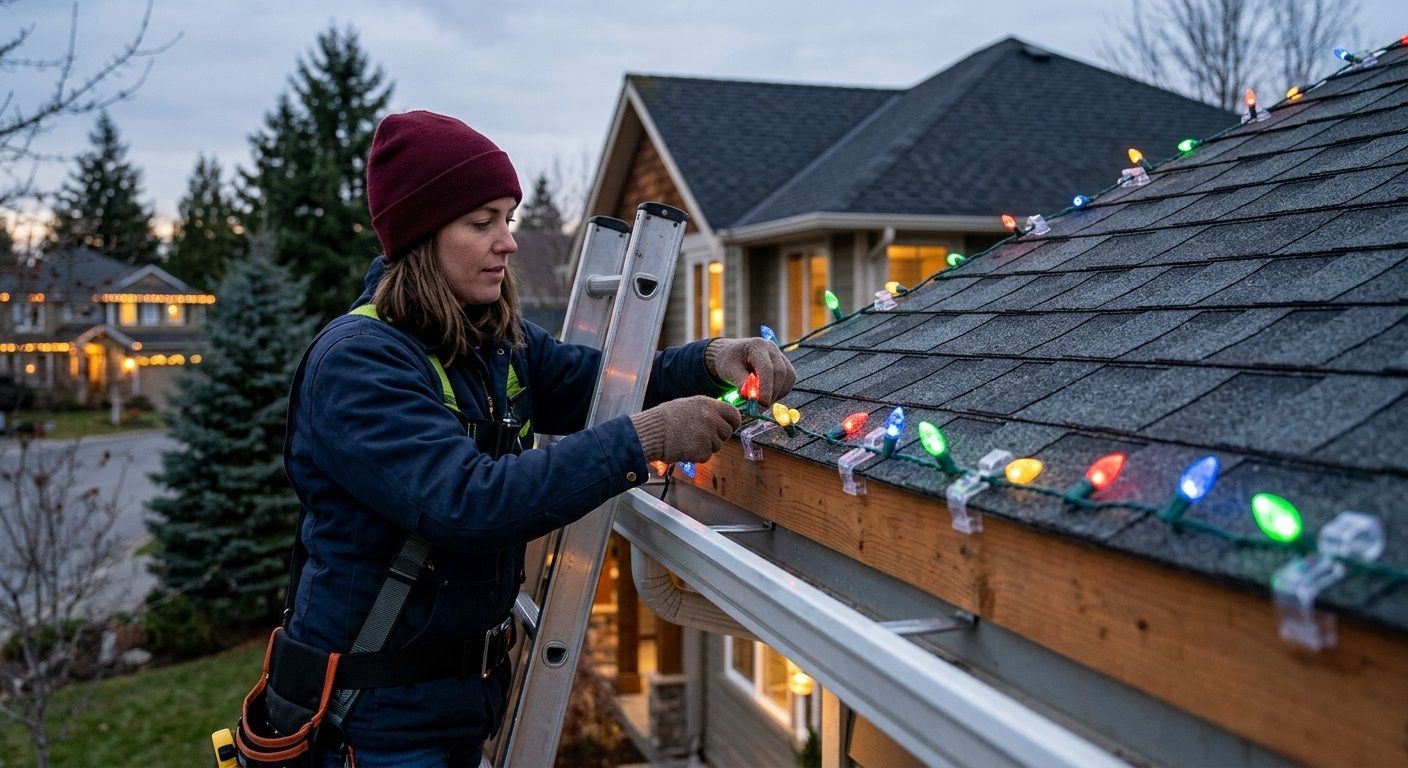
Plastic or metal clips are designed to hook directly onto the edge of shingles, gutters, or fascia boards without any fasteners penetrating the surface. These clips distribute weight evenly along the roofline and can be removed at the end of the season without leaving marks.
There are a few common types:
- Shingle clips, which slide under the edge of a shingle and hold the light string in place
- Gutter clips, which hook over the lip of a gutter
- All-in-one clips, designed to work on multiple surfaces including fascia, gutters, and shingles
Using the roofline structure itself
Rather than attaching lights flat against the roof, many installers run light strings along natural edges, such as the fascia board or gutter line. This keeps the lights secure while relying on the home's existing structure rather than adding new attachment points.
Avoiding direct contact with shingles
Lights should never press weight directly onto shingles for extended periods, particularly in freezing conditions. Even a small amount of pressure on a brittle shingle can cause cracking that isn't noticeable until a leak shows up months later.
What to Avoid When Installing Lights Yourself
If you're installing lights yourself, a few habits can quickly lead to problems:
- Using a staple gun on shingles or trim, which creates small puncture wounds that let moisture in
- Leaning a ladder against the gutter instead of using a stabiliser, which can bend or detach the gutter
- Wrapping lights too tightly around downspouts or railings, which can cause cracking in cold weather
- Leaving lights up well past the season, since UV exposure and ice accumulation add strain over time
None of these mistakes are obvious right away. Roof damage from poor light installation often shows up later, during the spring thaw, when minor cracks or loosened shingles become bigger problems.
Why Professional Installation Matters in Rhode Island
Rhode Island's weather pattern, cold winters, coastal wind, and occasional ice, means roofs here face more strain than in milder climates. A professional installer understands which attachment methods suit different roofing materials, from older slate roofs common in Providence's historic homes to newer asphalt shingle roofs found throughout the state.
Local installers also factor in:
- Wind exposure, particularly in coastal towns like Newport, where loose lights can become a safety hazard
- Roof pitch, which affects how clips and ladders are used safely
- Material type, since slate, asphalt, and metal roofing all require different handling
For homeowners in Newport, RI, South Kingstown, RI, and North Kingstown, RI, working with a team familiar with the area's housing styles and coastal conditions reduces the chance of damage and makes removal easier once the season ends.
Maintaining Tour Roof Once Lights Are Up
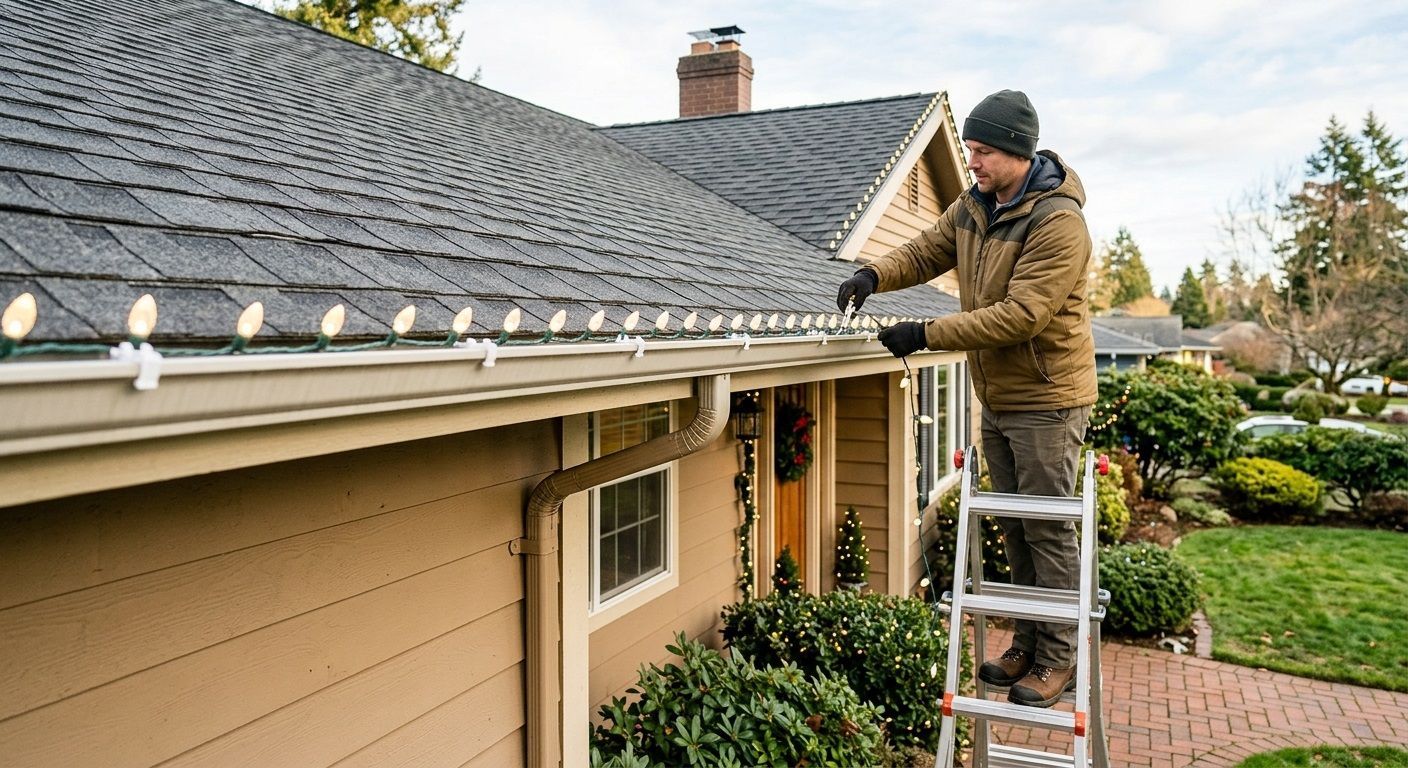
Once lights are installed, a bit of ongoing attention helps avoid problems:
- Check connections after storms, since wind can loosen clips over time
- Clear snow build-up around light strings where safe to do so, as excess weight can strain clips
- Avoid walking on the roof to adjust lights; most adjustments can be made from a ladder or with an extension pole
- Remove lights promptly after the season to limit UV and weather exposure
These steps are straightforward, but they make a real difference in preventing the kind of wear that leads to costly repairs down the track.
Getting It Right The First Time
Christmas lights can be attached to a roof without causing damage, provided the right tools and techniques are used. Clip-based systems, careful attention to roofline structure, and an understanding of local weather conditions all play a part in keeping a roof intact through the festive season and beyond.
For homeowners who'd rather not risk a ladder in the cold, or who want the job done with Rhode Island's climate in mind, Rockhouse Construction's holiday light installation service handles the process from start to finish, using clip-based methods that protect shingles, gutters, and fascia boards.
If you're weighing up whether Christmas lights can be attached without damaging your roof, the answer comes down to method and material knowledge. Getting both right the first time means one less thing to worry about this winter. Contact Rockhouse Construction to discuss holiday lighting options suited to your home.
Christmas Light Roof Attachment Safety Checker
Check your roofline, attachment method and installation conditions before putting up your Christmas lights.
Select the options that best describe your home. Your results will highlight potential roof damage risks and suggest attachment methods to consider.
Potential risks to address
Recommended next steps
This checker provides general guidance based on your selections. It cannot inspect your roof or confirm that a specific clip is compatible with your home. Always follow the light and clip manufacturer's instructions. Do not install lights on a wet or icy roof, and seek professional help when access or roof conditions create a safety concern.
Frequently Asked Questions
Q: Do Christmas lights damage roof shingles?
Lights themselves don't cause damage. Damage usually comes from how they're attached, particularly nails, staples, or adhesive hooks that pull off shingle granules or create punctures.
Q: What's the safest way to attach lights to a roof?
Clip-based systems that hook onto shingles, gutters, or fascia boards without penetrating the surface are the safest option. They distribute weight evenly and remove cleanly at the end of the season.
Q: Can cold weather make roof damage worse during installation?
Yes. Shingles become more brittle in freezing temperatures, which increases the risk of cracking from pressure, nails, or even ladder contact.
Q: Is it worth hiring a professional for holiday light installation in Rhode Island?
For homes with steep rooflines, slate roofing, or coastal wind exposure, professional installation reduces the risk of damage and makes the process safer overall.
Q: When should Christmas lights be removed to avoid roof strain?
Lights should come down shortly after the season ends. Extended exposure to UV rays, ice, and wind adds unnecessary wear on both the lights and the roofline.