

Rhode Island Outdoor Kitchen Season: When to Build
If you're a Rhode Island homeowner thinking about an outdoor kitchen, the biggest question isn't what to build, it's when. Rhode Island's climate gives you a narrower construction and usage window than warmer states, so timing your project correctly can mean the difference between grilling by Memorial Day or watching another summer pass from an unfinished backyard.
This guide walks through outdoor kitchen season in Rhode Island, the best months to plan and build, permit timelines, material choices suited to New England weather, and what homeowners in Providence, Warwick, Cranston, Barrington, and beyond need to know before breaking ground.
What Is Outdoor Kitchen Season in Rhode Island?
Rhode Island's outdoor living season generally runs from late May through October, roughly five months of reliable grilling and entertaining weather. That's shorter than states further south, which is exactly why build timing matters so much here.
The goal for most homeowners is simple: have the outdoor kitchen finished before the season starts. That means the planning work needs to happen well before the weather turns warm.
When Is the Best Time to Build an Outdoor Kitchen in Rhode Island?
The short version: plan in fall or winter, and build in early spring. Here's why that sequence works well for Rhode Island conditions.
- Fall planning (October to December): This is a good time for design consultations, finalising layouts, choosing materials, and locking in a contractor. Builders are coming out of their busy season and have more time for detailed project discussions.
- Winter permitting (January to February): Many Rhode Island municipalities, including Providence, Cranston, and Warwick, require permits for outdoor kitchen builds involving gas, electrical, or permanent structures. Submitting applications in winter often means faster processing, since building departments are less backed up than in spring.
- Early spring construction (March to May): Once the ground thaws and frost risk drops, crews can pour concrete bases, set countertops, run gas lines, and complete electrical work. A March or April start generally supports a Memorial Day finish.
- Summer use (June to September): With construction complete, you get the full run of the Rhode Island outdoor season.
Homeowners who wait until June or July to start the process often find themselves pushed into the following year, or stuck trying to schedule a build during the busiest stretch of the season, when contractors have limited capacity.
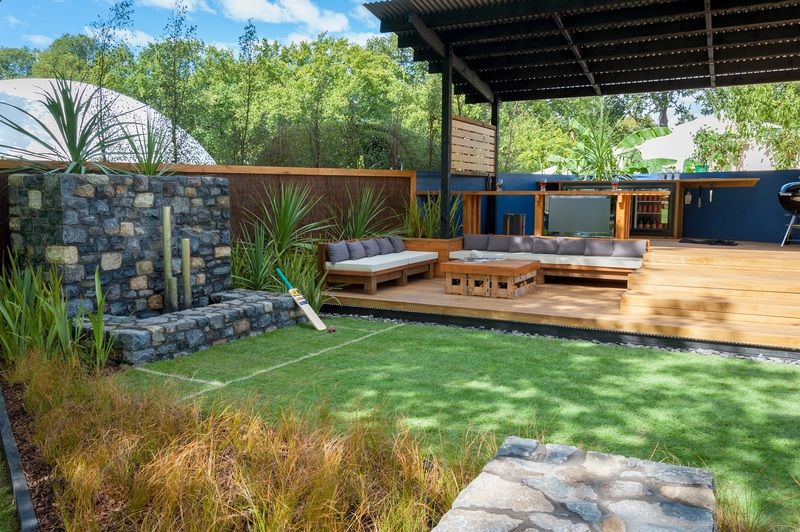
Why Spring Works Well for Outdoor Kitchen Builds
Spring in Rhode Island, roughly March through early May, suits both the construction process and the homeowner's timeline.
Ground conditions improve steadily after February. Frost depth in Rhode Island typically averages between 24 and 36 inches, and once the soil stabilises, excavation and foundation work become far more manageable. This matters for outdoor kitchens that need a concrete slab, paver base, or masonry support for countertops.
Spring also tends to bring more contractor availability. Demand for outdoor living projects usually picks up sharply from mid-May onward, so booking a spring build ahead of that surge generally means more attention to your project and better scheduling.
Spring weather is also typically dry enough for curing concrete, setting tile, and completing masonry work without the heat stress that can affect certain materials during summer installs.
Can You Build an Outdoor Kitchen During Rhode Island Winter?
Technically yes, but with real limitations. Concrete can't be poured safely below 40 degrees Fahrenheit without added precautions, and mortar work and tile setting face similar issues. Most Rhode Island contractors pause or delay outdoor kitchen builds during hard freeze periods, which can run from December through February.
That said, winter isn't wasted time. It's a practical window for:
- Finalising your outdoor kitchen design and layout
- Selecting countertop materials such as granite, porcelain, or concrete
- Choosing appliances, grills, and refrigeration units
- Reviewing and submitting permit applications
Treat winter as the preparation phase of the project, not downtime.
Rhode Island Permits: What to Know Before You Build
Permit requirements for outdoor kitchens vary by city and town across Rhode Island. Most projects involving gas lines, electrical connections, or permanent structures will require at least one permit.
Here's a general overview of what to expect:
- Building permits are typically required for permanent structures, roof or pergola attachments, or significant foundation work.
- Gas permits are required in nearly every Rhode Island municipality when connecting natural gas to outdoor appliances, including Providence, Warwick, Cranston, North Kingstown, and Barrington.
- Electrical permits apply when adding outlets, lighting, or dedicated circuits to the outdoor kitchen area.
- Zoning review may apply depending on setback distances from property lines, particularly in tighter neighbourhoods around Providence and Pawtucket.
Submitting permits in January or February gives you a useful buffer. Some towns take four to eight weeks to process applications during the spring rush, so getting ahead of that timeline helps keep your project on schedule.
Outdoor Kitchen Season by Region: Providence, Warwick, Cranston and Beyond
Rhode Island is compact, but local regulations and lot conditions still create real differences depending on where you live.
Providence and Pawtucket homeowners often work with smaller urban lots, which generally means outdoor kitchen designs need to be more compact and efficient. Permit processing through Providence's Department of Inspection and Standards can take longer than in suburban towns, so early submission matters more here.
Warwick and Cranston are two of the more popular markets for outdoor kitchen builds, largely due to suburban lot sizes and a strong culture of backyard entertaining. Both cities have active building departments, and spring permits tend to move smoothly when submitted before March.
Barrington, Bristol, and East Greenwich homeowners frequently fold outdoor kitchens into broader landscape projects. These towns have established contractor networks accustomed to handling outdoor living permits efficiently.
South County and Narragansett present a seasonal wrinkle. Proximity to the water can mean slightly milder winters in some pockets, but saltwater exposure needs to be factored into material selection for any outdoor kitchen build.
North Kingstown and Smithfield are growing markets for outdoor living, with larger lots and strong demand for higher-end installations. If you're in North Kingstown and considering an outdoor kitchen alongside a paver patio or broader hardscaping project, local contractors in this area often book out earlier than homeowners expect.
Regardless of your town, the advice stays consistent: plan early, permit early, and build in the spring window.
How Long Does It Take to Build an Outdoor Kitchen?
Timelines vary based on scope, but here are realistic estimates for Rhode Island projects:
- Basic outdoor kitchen (grill station, countertop, storage): 1 to 2 weeks of active construction, assuming permits are already in hand
- Mid-range outdoor kitchen (built-in grill, side burner, refrigerator, bar seating): 2 to 4 weeks
- Full outdoor kitchen and living space (pizza oven, sink, full bar, pergola, lighting): 4 to 8 weeks or more
These figures don't include the design, permitting, and material lead times that happen before construction starts. Certain appliances and custom countertop materials can have lead times of 4 to 10 weeks, which is another reason starting the process in fall or winter pays off. By the time permits clear and materials arrive, your contractor can begin building as soon as spring conditions allow.
Choosing Materials for Rhode Island's Climate
Not all outdoor kitchen materials hold up equally well in New England conditions. Rhode Island homeowners deal with freeze-thaw cycles, coastal humidity in some areas, and significant temperature swings between summer and winter.
Materials that generally perform well in Rhode Island builds include:
- Porcelain countertops: Durable, frost-resistant, and low maintenance.
- Granite countertops: Attractive and heat-resistant, though proper sealing matters in coastal areas.
- Stainless steel cabinetry: Handles moisture and temperature swings well, though marine-grade steel is worth considering near the coast due to salt exposure.
- Concrete block or masonry frames: A common structural approach in New England, and durable through freeze-thaw cycles when built properly.
- Ipe or composite decking surrounds: If your outdoor kitchen integrates with a deck, these materials tend to hold up better through Rhode Island winters than standard pressure-treated lumber.
Materials worth avoiding include certain natural stones with high porosity, standard ceramic tile in freeze-exposed areas, and untreated wood cabinetry. Rhode Island winters don't forgive outdoor kitchen builds that cut corners on material selection.
Once your outdoor kitchen is built, keeping it properly maintained matters just as much as the initial construction. For a full rundown of seasonal upkeep, see our guide on how to winterize an outdoor kitchen in Rhode Island.
Signs You're Ready to Start Your Rhode Island Outdoor Kitchen Project
Not sure if now's the right time to move forward? A few indicators that you're in a good position to start:
- You have a clear budget in mind. Rhode Island outdoor kitchens generally range from around $8,000 for basic builds to $50,000 or more for full outdoor living spaces.
- You've identified the space in your backyard and have a rough layout idea.
- You're willing to start the design and permitting process now, even if construction is still months away.
- You want the project finished before summer, which means starting the conversation today.
If most of these apply, the next step is reaching out to a qualified Rhode Island outdoor kitchen contractor for an initial consultation.
Timing considerations for an outdoor kitchen are similar to those for other exterior home projects. If you're also weighing up a larger renovation, our guide on the best time to start a home addition in Rhode Island covers the same seasonal planning logic in more detail.

Planning Early Makes the Difference
The most common mistake Rhode Island homeowners make with outdoor kitchen projects is starting too late. It's understandable. Cold winter months don't exactly inspire backyard renovation planning.
But by the time May arrives and the grilling season is top of mind, the most experienced contractors are already booked, permits are backed up, and custom materials are on backorder.
Homeowners who get the most use out of their outdoor kitchens each summer, whether in Providence, Warwick, Cranston, Barrington, or elsewhere across Rhode Island, are generally the ones who started planning while it still felt early. They submitted permits in February, finalised materials in March, had a crew on site in April, and were using their outdoor kitchen by the end of May.
That's the Rhode Island outdoor kitchen season timeline that actually works, and the earlier you start, the smoother the process tends to go.
Outdoor Kitchen Season Calculator
Planning an outdoor kitchen in Rhode Island? Choose your target completion date and project details to estimate when you should start planning.
Your Project Timeline
This calculator provides a planning estimate, not a guaranteed construction schedule. Permit processing, weather, contractor availability, ground conditions, and material delays can affect your actual timeline. Rhode Island permit requirements vary by municipality. Confirm local requirements before construction.