

Rhode Island Roofline and Wreath Holiday Light Installation Guide
Rhode Island roofline and wreath holiday light installation works best when LED lights are matched to the coastal climate, rated for wind and moisture, and fitted with clips rather than nails or staples. Warm white lights suit historic homes, while cool white or multicolour options work well on newer builds. Installation between mid and late November gives the best results before temperatures drop.
Rhode Island's coastal weather makes holiday light installation a bit more demanding than in drier, inland states. Salt air, nor'easters, and temperature swings between 20°F and 45°F all put pressure on materials that weren't built to handle them. Roofline and wreath lighting remains one of the most reliable ways to decorate a home for the season, provided it's done with the right equipment and a bit of planning.
This guide covers what actually matters for Rhode Island roofline and wreath holiday light installation, from choosing the right bulbs to keeping a display running safely through January.
Why Roofline and Wreath Lighting Works for Rhode Island Homes
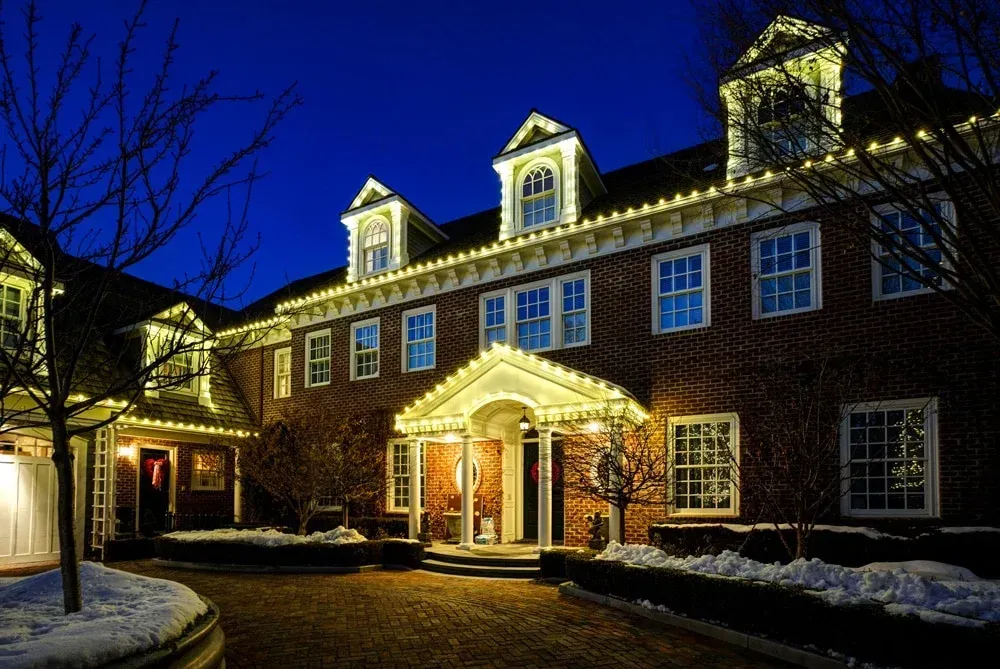
Roofline lighting follows the shape of a house, tracing eaves, peaks, and gables. It suits Rhode Island's mix of housing styles, from Federal Hill's Colonials to the waterfront homes around East Greenwich. Wreath lighting adds a second layer, bringing warmth to doors and windows without overwhelming the display.
Together, they create a balanced look that doesn't rely on excess. Many homeowners across Providence County, Kent County, and Washington County stick to this combination because it holds up season after season and photographs well from the street.
Rhode Island's Weather Is the Main Design Factor
Before choosing lights or clips, it helps to understand what the display needs to survive.
Rhode Island winters bring a mix of conditions that can undo a poorly planned installation:
- Coastal wind gusts, particularly in exposed or elevated properties
- Salt air exposure near the shoreline, which corrodes cheap metal fittings
- Ice build-up on gutters and roof edges
- Temperature swings that make plastic components brittle
Materials rated for outdoor use, and specifically for cold and wet conditions, are non-negotiable here. Anything advertised for indoor or "light outdoor" use generally won't last a full Rhode Island season.
Choosing the Right Lights
LED lighting is the standard choice for roofline and wreath installations in Rhode Island. LEDs use around 80 to 90 percent less energy than incandescent bulbs, run cooler (which helps prevent ice melt issues near gutters), and hold up better in cold temperatures.
Colour temperature affects how a display reads against different home styles:
- Warm white (2700K to 3000K) suits Colonial, Victorian, and Cape Cod homes common throughout the state, including many in Providence and Newport
- Cool white (5000K to 6500K) fits contemporary builds in areas like Barrington and East Greenwich
- Multicolour works well in family neighbourhoods where a more playful look is the goal
Roofline Installation: What Holds Up
Getting roofline lighting right comes down to hardware as much as the lights themselves.
Clip systems designed for gutters and shingles avoid the damage that nails or staples cause. All-purpose clips fit most Rhode Island homes, though older properties with less common gutter profiles sometimes need specialised clips.
Spacing lights 6 to 12 inches apart gives a consistent look. It's worth measuring the roofline before buying materials, since guessing quantities usually means a second trip to the shop or an uneven finish.
Wire management matters more than it seems. Insulated staples rated for outdoor cable, not general-purpose staples, keep wiring secure without damaging the insulation. At corners, leaving a small amount of slack in the wire prevents tension that can pull clips loose during a windy stretch.
Wreath Lighting: Getting the Placement Right
Wreaths add texture and warmth that roofline lighting alone doesn't provide.
For a front door wreath, centring it at eye level, roughly 5 to 6 feet from the ground, gives the most balanced look. Battery-operated LED string lights woven through the branches work well, or a pre-lit wreath rated for outdoor use saves the extra step.
Window wreaths should generally match the colour and style of the main roofline display so the whole property reads as one design rather than several unrelated pieces. Removable outdoor hooks avoid marking window frames.
On larger or multi-storey homes, spacing multiple wreaths symmetrically across the facade tends to look more deliberate than clustering them on one side.
Electrical Safety Requirements
Rhode Island electrical codes require GFCI protection on all outdoor outlets, and most roofline and wreath displays run comfortably on a 15 to 20 amp circuit with proper load calculation.
A few points worth checking before plugging anything in:
- Use only outdoor-rated extension cords, marked with a "W-A" designation
- Match cord gauge to length: 16-gauge for runs up to 50 feet, 14-gauge for 50 to 100 feet
- Stay within the manufacturer's stated wattage limits per strand
- Keep all connections elevated off the ground to avoid water exposure
Programmable timers or smart plugs are worth adding at this stage too. Most Rhode Island neighbourhoods run displays from around 5pm to 11pm, and a timer removes the need to manage this manually each night.
When to Install and When to Take Lights Down
Early November is a reasonable time to plan and buy materials, while stock is still available and the weather is mild enough for outdoor work. Mid to late November tends to be the better window for the actual installation, since daytime temperatures usually stay above freezing.
Installing after Thanksgiving is still workable, though the chance of ice forming on rooflines increases as December progresses. For removal, early to mid January is the general timeframe. Leaving lights up much longer risks them freezing to surfaces, which makes taking them down without damage far more difficult.
Matching Lighting to Rhode Island's Different Home Styles
Rhode Island's housing stock varies a fair bit by town, and that affects what looks right.
Colonial and Federal-style homes throughout Providence and Newport generally suit clean white lights that follow cornice lines and pediments without extra embellishment. Ranch and Cape-style homes, common in Warwick, Cranston, and Pawtucket, often benefit from a combination of roofline lighting and a well-placed wreath, since their rooflines tend to be simpler.
Contemporary homes in areas like East Greenwich and Barrington can handle bolder choices, including cool white or colour-changing LED strips along linear rooflines. For larger properties with multiple roof levels or dormers, it's usually better to focus on the main rooflines and key features rather than attempting to cover every surface, which tends to look cluttered rather than polished.
Professional Installation Versus DIY
DIY installation is a reasonable option for single-storey homes with easy roofline access and straightforward layouts. It takes more time, but the equipment and material costs are lower, typically ranging from $200 to $800 depending on the size of the display.
Professional installation makes more sense for multi-storey homes, steep or complex rooflines, or situations where roof access would otherwise be needed. Professional costs in Rhode Island generally run from $500 to $2,500 or more, depending on home size and complexity, but this includes the safety equipment and experience needed for higher or harder-to-reach areas.
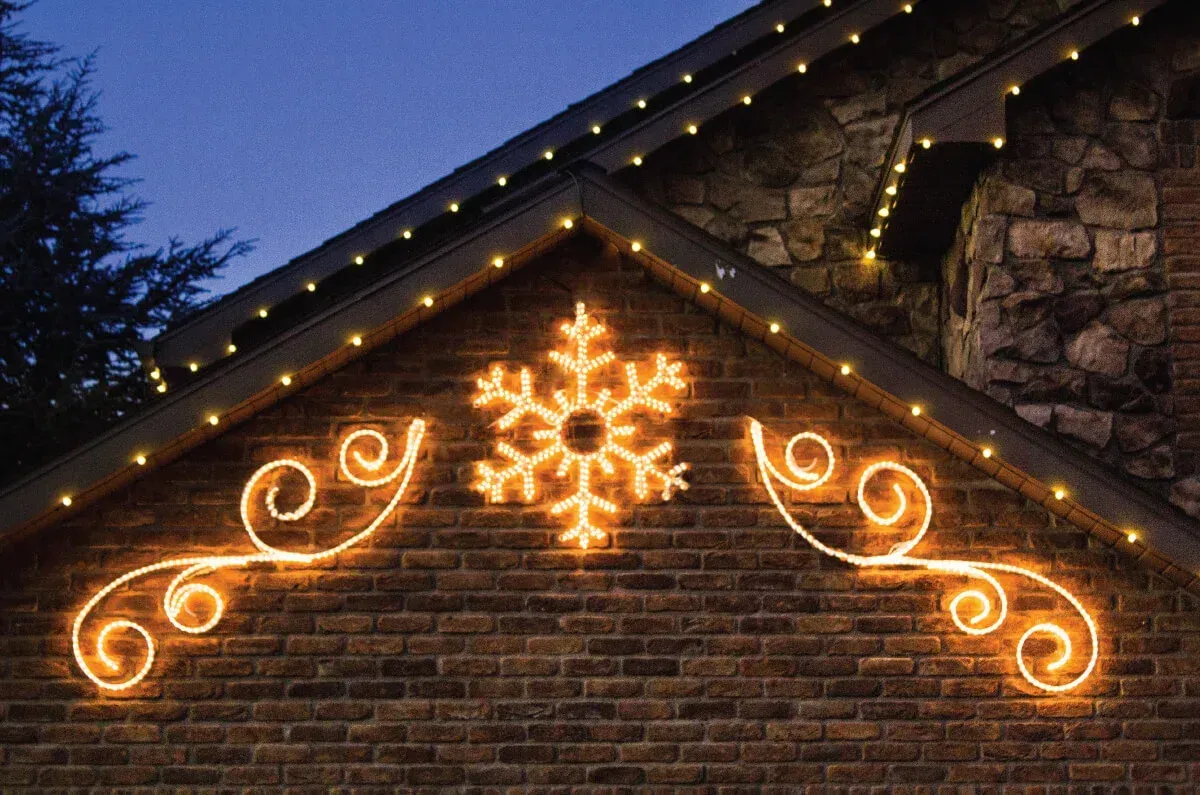
For homes with additional decorative elements, such as decorating the front of the house for Christmas, a professional team can coordinate roofline, wreath, and entryway lighting so the whole display looks intentional rather than pieced together. Properties with mature trees on the lot might also consider tall tree holiday light installation, which requires different equipment and techniques than roofline work.
Common Mistakes Worth Avoiding
A handful of issues come up repeatedly with holiday lighting in Rhode Island:
- Overloading a single circuit by connecting too many strands. Most household circuits handle around 1,800 watts safely.
- Fastening lights with regular staples or nails, which damages wiring insulation and creates a fire risk.
- Skipping a test run before installation, only to find a faulty strand once it's already hung.
- Underestimating roofline length and buying too few lights, resulting in an uneven display.
Municipal and HOA Considerations
Most Rhode Island municipalities don't require a permit for temporary seasonal lighting. That said, some historic districts, including parts of Providence and Newport, have guidelines around display brightness or style, so it's worth a quick check with the local building or zoning office if the property falls within one of these areas. Homeowners associations may also have their own rules on display dates or colours, which are worth reviewing ahead of time.
Getting Professional Help in Rhode Island
For homeowners in towns like Exeter looking for support with design, installation, or removal, holiday lighting services in Exeter cover roofline, wreath, and full property displays suited to the local climate and housing styles.
Final Thoughts on Rhode Island Roofline and Wreath Holiday Light Installation
Rhode Island roofline and wreath holiday light installation comes down to choosing weather-appropriate materials, following safe electrical practices, and timing the work around the state's coastal conditions. A well-planned display, whether installed independently or with professional help, holds up through nor'easters and cold snaps while giving a home a clean, festive look for the season.
Rhode Island Holiday Light Calculator
Estimate how many lights, strands and clips you'll need for a roofline and wreath display, plus a rough project budget.
DIY projects in your article generally fall around $200–$800, depending on display size and materials.
This is paragraph text. Click it or hit the Manage Text button to change the font, color, size, format, and more. To set up site-wide paragraph and title styles, go to Site Theme.