

Best Patio Designs for Small Rhode Island Backyards
Small backyard patio designs are one of the most practical upgrades a Rhode Island homeowner can make, especially given how common compact lots are across Providence, Cranston, Warwick, and Pawtucket.
Many properties in these areas were built decades before outdoor living became a priority, which means the backyard often feels like an afterthought rather than usable space. The good news is that a tight footprint doesn't rule out a functional, attractive patio. It just means the design needs to be more deliberate.
This guide walks through the layouts, materials, and planning considerations that work well for small Rhode Island backyards, with attention to our local climate, older housing stock, and the realities of building in dense neighborhoods.
Why Small Backyard Patios Need a Different Approach in Rhode Island
Rhode Island's climate plays a bigger role in patio planning than most homeowners expect. We get cold winters with repeated freeze thaw cycles, humid summers, and unpredictable shoulder seasons. Materials that hold up fine in milder states can crack, heave, or shift here if they aren't suited to the conditions.
Older housing stock adds another layer of complexity. Cities like Providence, Newport, and Woonsocket often have irregular lot shapes, shared fence lines, mature trees limiting sunlight, and aging underground utilities.
Any of these factors can affect where digging is possible or how a patio needs to be graded. Working with a local contractor who understands these patio layout challenges tends to save homeowners time and prevent costly mistakes later.
Patio Layouts That Work in Tight Spaces
When square footage is limited, layout decisions carry more weight. The goal isn't to fit as much as possible into the space. It's to make the space feel considered rather than crowded.
Layouts that tend to perform well in small Rhode Island yards include:
- L-shaped patios that follow a fence line and leave the centre of the yard open
- Curved or circular designs that soften hard boundaries and visually expand the space
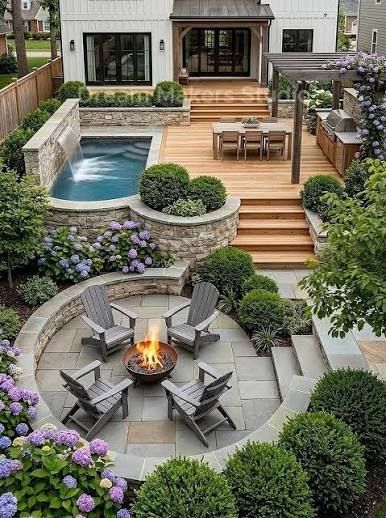
- Multi-level platforms that create separate zones without adding to the footprint
- Floating deck patios built just above grade, useful in older neighbourhoods where utility lines aren't always well documented
- Corner patios set against the house and side fence, which preserves lawn space for households that still want some grass
One of the more common mistakes is placing a large square patio directly in the centre of a small yard. It tends to dominate the space rather than complement it. Shifting the patio to one side or into a corner generally reads better and leaves the rest of the yard feeling more open.
Choosing Materials That Suit Rhode Island's Climate
Material selection matters more here than in states with milder winters. A paver or stone that performs well in the Carolinas might not hold up through a Rhode Island winter.
Concrete pavers remain a sensible choice for most small patio projects. They tolerate freeze thaw cycles reasonably well, individual pavers can be replaced if damaged, and the range of styles suits everything from older colonials in Cranston to newer builds in East Providence.
Natural bluestone has long been popular in Providence and Newport, where landscaping traditions run deep. It looks the part, but it does need a properly compacted base and regular sealing to prevent heaving over time.
Porcelain tile pavers have become more common in recent years. When installed correctly, they resist staining, need little upkeep, and are available in larger formats that can make a small patio appear more open.
Brick suits New England's architectural character and tends to age well. Reclaimed brick is a common choice in older Providence neighbourhoods, where it blends with the surrounding streetscape.
Poured concrete, particularly stamped or stained, is usually the most budget-conscious option. On a smaller patio, a well-finished stamped concrete surface can look sharp without the cost of individual pavers.
One material worth avoiding at ground level is basic pressure-treated wood decking. It tends to wear down faster than expected given Rhode Island's wet spring conditions. If a wood appearance is important, composite decking holds up better over time.
Design Ideas Suited to Small RI Backyards
A few design approaches translate particularly well to compact Rhode Island outdoor spaces.
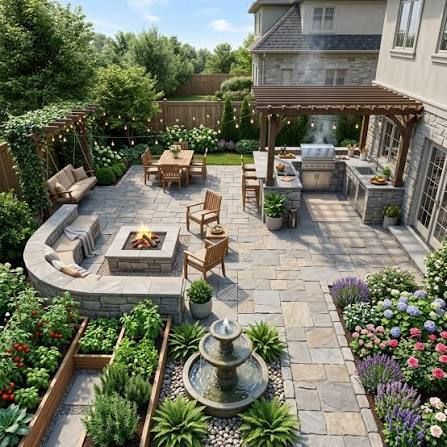
The outdoor room concept treats the patio as an enclosed space with defined edges, whether through tall privacy fencing or a cedar pergola overhead. This works well on smaller lots in Pawtucket and Central Falls, where neighbouring homes sit close together.
The kitchen and dining combination pairs a compact built-in grill station with a small dining set. This can fit into as little as 150 square feet and remains one of the more requested upgrades among Rhode Island homeowners.
The lounge-first layout shifts the focus away from dining and toward comfortable seating around a fire pit or fire table. A 10 by 12 foot patio with a loveseat, two chairs, and a fire table can feel generous when the layout is planned well.
Layered planting beds around the patio perimeter add privacy and help the patio feel integrated into the yard rather than placed on top of it. Native plants such as switchgrass, inkberry, and native hydrangea require minimal maintenance and suit the local growing conditions.
For more design inspiration specific to the state, this guide to backyard patio ideas in Rhode Island covers additional layout and planting options.
Addressing Privacy in Smaller Yards
Privacy is a common concern for homeowners with small backyards, particularly in denser cities. A few approaches that tend to work:
- Cedar privacy fencing, which handles humidity well and ages gracefully
- Lattice panels paired with climbing plants, offering a softer look that fills in over a season or two
- Pergolas fitted with curtains or shade sails, which also help manage afternoon sun
- Clumping bamboo screens for a faster, lower-cost option (avoid running varieties, as they can spread into neighbouring yards)
- Tall ornamental grasses planted along a fence line to break up sightlines without a structure
Homeowners in historic districts such as Providence, Newport, or Narragansett should check local ordinances before building a fence or structure above a certain height, since some areas restrict materials and heights for these additions.
Making a Small Patio Feel More Spacious
A handful of practical adjustments can make a compact patio feel larger than its actual dimensions.
Using large-format pavers rather than smaller units reduces the number of grout lines, which helps the eye travel further without interruption. A 24 by 24 inch paver on a 10 by 14 foot patio tends to read as more open than a smaller brick pattern would.
Furniture scale matters as well. Oversized sectionals are a frequent issue on small Rhode Island patios. A modest bistro table with two chairs can comfortably seat a couple without overwhelming the space.
Vertical elements, such as tall planters or a small pergola, draw the eye upward and make the footprint feel less confined. Sticking to a single, cohesive colour palette across pavers, furniture, and accessories also helps the space read as calm rather than cluttered.
Planning Costs for a Small Patio Project
Costs vary depending on materials and the complexity of the design, but general ranges for small patio projects in the Rhode Island market include:
- Basic concrete paver patio (200 square feet): roughly $3,500 to $6,000 installed
- Bluestone or natural stone patio: roughly $6,000 to $12,000, depending on stone choice and base preparation
- Stamped concrete patio: roughly $4,000 to $8,000 installed
- Pergola addition: roughly $4,000 to $10,000, depending on size and material
- Built-in fire pit: roughly $1,500 to $4,000
These figures reflect typical pricing seen among Rhode Island contractors in Providence, Cranston, Warwick, and Woonsocket. Labour costs in the state tend to run higher than national averages, so it's worth getting multiple quotes before committing to a project.
Final Thoughts on Small Backyard Patio Design in Rhode Island
A small backyard doesn't limit what's possible. It simply requires a more intentional approach to layout, materials, and privacy. The best small backyard patio designs for Rhode Island properties balance function, climate-appropriate materials, and a layout that makes the most of every square foot.
Whether the property is a Cape-style home in Warwick, a triple-decker lot in Providence, or a cottage near Narragansett, a well-planned patio can change how a family uses the outdoor space from late spring through autumn.
Start by deciding how the space will actually be used, choose materials built to withstand New England winters, and work with a team familiar with the local ground conditions. For homeowners ready to move forward with a project, this overview of paver patio builders in Rhode Island outlines what to look for when choosing a contractor.
With the right planning, even a modest backyard in Rhode Island can become outdoor space worth using.
Small Backyard Patio Design Calculator
Plan a patio that fits your Rhode Island backyard. Enter your dimensions, choose a layout and surface material, and explore an estimated project range with optional outdoor features.
Your Patio Plan
A corner patio keeps the design compact and leaves more of your yard open for planting or lawn space.
Concrete pavers are a practical option for Rhode Island's freeze-thaw conditions when installed over a suitable, well-compacted base.
No additional features selected.
Estimates are planning guidelines based on the ranges in this article and scaled by patio area. Actual contractor quotes can differ. Smaller projects may have minimum installation charges. Grading, drainage, difficult access, utility relocation, permits and unusual site conditions may add to the total. Confirm local requirements before construction.
Frequently Asked Questions
What is the best patio material for a small Rhode Island backyard?
Concrete pavers tend to work well for most homeowners because they handle freeze thaw cycles and are easier to repair than natural stone if a section shifts.
How small can a patio be and still feel functional?
A patio as small as 150 square feet can support a grill station and compact dining set, or a cosy seating area with a fire table.
Do I need a permit to build a patio in Rhode Island?
Requirements vary by city and town, and some historic districts have additional rules around fencing and structure heights, so it's worth checking with the local building department before starting.
What's the most common mistake homeowners make with small patios?
Centring a large square patio in the middle of the yard is a frequent issue. Shifting the layout to one side or a corner usually makes better use of the space.