

Patio vs Deck Cost in Rhode Island: What Homeowners Can Expect in 2026
Rhode Island homeowners planning an outdoor living upgrade often face the same early decision: should the space be a patio or a deck? Both options change how a backyard is used and both carry real differences in price, upkeep, and durability in our local climate.
This guide breaks down current patio vs deck costs in Rhode Island, what drives those numbers up or down, and how to weigh the decision for your own property, whether you're in Providence, Warwick, Cranston, or further out toward the coast.
Understanding these costs matters because Rhode Island's weather, soil conditions, and municipal permitting rules all play a part in what a project ends up costing. A choice that works well in a dry, flat climate elsewhere in the country does not always hold up the same way here, so local context is worth taking seriously before signing off on a design.
What Does a Patio Cost in Rhode Island?
Patio installation in Rhode Island generally falls between $8 and $25 per square foot, with the final number depending on the material chosen and how much site preparation the yard needs. For a typical 300 to 400 square foot patio, most homeowners in the state spend somewhere between $3,500 and $10,000 once installation is complete.
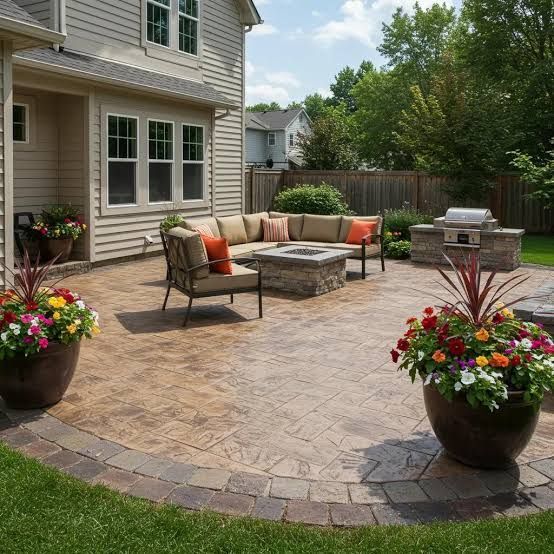
Poured concrete sits at the more affordable end of that range, usually running $8 to $12 per square foot in areas like Cranston or Woonsocket. Stamped concrete, which replicates the look of stone or brick at a lower cost, typically runs $12 to $18 per square foot.
Natural stone and bluestone remain popular choices in towns such as Barrington, Bristol, and East Greenwich, where homeowners often want a higher end finish. These materials can reach $20 to $30 per square foot or more once labour is included. Pavers offer a durable middle ground, generally landing between $10 and $20 per square foot for supply and installation combined.
A quick breakdown of common patio materials and their installed cost ranges in Rhode Island:
- Poured concrete: $8 to $12 per square foot
- Stamped concrete: $12 to $18 per square foot
- Concrete pavers: $10 to $20 per square foot
- Natural stone or bluestone: $20 to $30 per square foot
- Brick: $14 to $22 per square foot
What Does a Deck Cost in Rhode Island?
Deck construction tends to cost more per square foot than a basic patio, mainly because it involves framing, footings, and often elevated structural work that a ground-level patio does not require.
A standard pressure-treated wood deck typically runs $15 to $25 per square foot installed, while composite decking, which has become a common choice across the state due to how well it holds up in New England winters, usually costs $25 to $45 per square foot.
For a 300 to 400 square foot deck in Warwick, Providence, or Cumberland, total project costs commonly land between $6,000 and $18,000, depending on deck height, material selection, and extras like railings, built-in seating, or stairs.
Common deck materials and their typical cost ranges in Rhode Island:
- Pressure-treated pine: $15 to $25 per square foot
- Cedar or redwood: $20 to $35 per square foot
- Composite decking (Trex, TimberTech): $25 to $45 per square foot
- PVC decking: $30 to $50 per square foot
- Hardwood (ipe, tigerwood): $30 to $55 per square foot
Decks that require significant structural support, footings dug below Rhode Island's frost line of roughly 48 inches, or custom multi-level layouts can push total costs well beyond $20,000.
Patio vs Deck: Comparing Costs Side by Side
When sizing up similar outdoor spaces, patios almost always come in lower on upfront price. For a 350 square foot project in Rhode Island, here's how the numbers typically compare:
- Basic concrete patio: $2,800 to $4,200
- Paver patio: $3,500 to $7,000
- Pressure-treated wood deck: $5,250 to $8,750
- Composite deck: $8,750 to $15,750
That price gap narrows when comparing a high-end natural stone patio to a basic pressure-treated deck. In those cases, the patio can actually cost more, particularly if the yard requires grading or drainage work, which is a common issue on the sloped lots found throughout much of Rhode Island.
For a closer look at how these two options stack up beyond cost alone, our guide on patio vs deck: which is right for your Rhode Island home walks through the broader design and lifestyle factors worth considering.
How Does Rhode Island's Climate Affect the Decision?
New England winters put real strain on outdoor structures, and Rhode Island's freeze-thaw cycles, which generally run from November through March, affect patios and decks differently.
Poured concrete and natural stone can crack over time as the ground shifts beneath them. A properly prepared base using gravel and sand layers is essential for long-term performance, and skipping this step is one of the more common reasons patios fail early.
Paver patios tend to handle freeze-thaw movement better, since individual pieces can shift slightly without cracking, and any damaged pavers can be replaced on their own rather than requiring a full redo.
Wood decks need regular upkeep in this climate. Pressure-treated wood should be cleaned and sealed annually to guard against moisture damage, mould, and graying.
Composite decking was designed with wet, cold conditions like Rhode Island's in mind, which is a large part of why it has become a preferred option for homeowners from Westerly to Woonsocket who want fewer ongoing maintenance tasks.
Do You Need a Permit for a Patio or Deck in Rhode Island?
Both patios and decks may require a permit depending on size and location within the state. In Providence, Warwick, and most Rhode Island municipalities, any deck attached to a home needs a building permit. Detached, ground-level structures may fall under the permit threshold in some towns, but it is worth checking with your local building department before any work begins, since requirements vary from one municipality to the next.
Permit costs in Rhode Island generally range from $150 to $500 depending on project scope and location. Providence, Cranston, and Pawtucket each run their own permitting departments, while smaller towns such as Jamestown, Little Compton, and Tiverton typically process permits through a town hall office.
Factors that can affect permitting requirements include:
- Whether the structure is attached to the house
- Height above grade, since decks over 30 inches often face stricter rules
- Proximity to property lines and wetlands
- HOA restrictions in communities such as North Kingstown or South Kingstown
Which Adds More Value: A Patio or a Deck?
Well-built outdoor living spaces tend to support resale value, though the type of structure matters. In Rhode Island's housing market, composite decks and natural stone patios generally deliver the strongest returns.
A well-constructed composite deck in a Rhode Island suburb can return an estimated 60 to 70 percent of its cost at resale, while paver patios and natural stone installations often return 50 to 65 percent. A basic concrete patio, while cheaper to install, tends to return less, since buyers in markets like Barrington, East Greenwich, and Westerly often expect a more finished look.
In coastal communities such as Newport, Narragansett, and Middletown, outdoor living space carries added weight for buyers, who are often drawn to usable areas that complement the surrounding landscape. A well-maintained deck or bluestone patio can be a meaningful point of difference in these markets.
What Are the Long-Term Maintenance Costs?
The installation price only tells part of the story. When weighing patio vs deck costs in Rhode Island, it helps to think about what you'll spend over 10 to 15 years of ownership.
Typical patio maintenance costs over time:
- Concrete patios: sealing every 2 to 3 years, plus crack repair as needed
- Paver patios: resanding joints every few years, with occasional releveling
- Natural stone: annual sealing, with minimal structural upkeep
Typical deck maintenance costs over time:
- Pressure-treated wood: annual cleaning, with staining or sealing every 2 to 3 years
- Composite decking: periodic cleaning only, with no staining or sealing required
- Cedar: annual oiling or staining is usually recommended
Composite decking costs more upfront but can reduce ongoing maintenance considerably. For homeowners who would rather not spend weekends on upkeep, that trade-off is often worth factoring into the overall budget.
For a closer comparison of wood decking against stone patios specifically, see our article on what's better for Rhode Island: wood deck or stone patio.

Which Option Suits Your Rhode Island Property?
The right choice between a patio and a deck depends on your yard's layout, your budget, and how you intend to use the space.
A patio tends to be the better fit if:
- Your yard is relatively flat and level
- You want a lower upfront cost
- You prefer a ground-level space that connects naturally with the landscape
- You're in a city like Providence or Cranston where yard space is limited
A deck tends to be the better fit if:
- Your home has a raised first floor or a sloped backyard
- You want elevated outdoor space with a view
- You're prepared to invest in composite or PVC materials to reduce maintenance
- You live in a coastal or lakefront area where outdoor living is a central part of daily life
Getting Started With Your Rhode Island Outdoor Project
Working out patio vs deck costs in Rhode Island comes down to matching your yard's conditions, your budget, and your long-term maintenance preferences to the right material and structure. Concrete and pavers offer a lower-cost, ground-level option, while wood and composite decking provide elevated living space with a different set of upkeep considerations.
If you're in the Providence area and weighing a paver patio against other options, our team at Rockhouse Construction's Providence hardscaping page can walk you through site-specific factors like soil conditions, drainage, and local permitting before you commit to a design.
Patio vs Deck Calculator for Rhode Island
Compare estimated installation ranges for a patio and a deck in Rhode Island. Select the materials you are considering and enter your dimensions to see how the two outdoor projects compare.
Your Project Comparison
Estimated installed ranges based on your selected materials and calculated outdoor area.
For these selections, the patio has the lower estimated installation midpoint. Your final decision should also account for elevation, drainage, maintenance and how you plan to use the space.
How your estimate is calculated
The selected installed rate per square foot is multiplied by the total project area. The optional permit allowance is added separately.
These are planning estimates based on the ranges in this article, not contractor quotations. Actual project totals may vary due to excavation, grading, drainage, soil conditions, deck height, structural footings, stairs, railings, access and local permit requirements. The calculator does not include separate allowances for those additional site-specific items.
Frequently Asked Questions
Is a patio cheaper than a deck in Rhode Island?
In most cases, yes. A basic concrete or paver patio generally costs less per square foot than a wood or composite deck, though the gap narrows when comparing a high-end natural stone patio to a basic pressure-treated deck.
How long does a composite deck last in Rhode Island's climate?
Composite decking is built to handle wet, cold conditions and typically requires far less maintenance than wood, which is a key reason it has become common across the state.
Do all decks in Rhode Island require a permit?
Any deck attached to a home generally requires a building permit in Providence, Warwick, and most other municipalities. Detached, ground-level structures may be exempt in some towns, so it's best to check with your local building department.
Which adds more resale value, a patio or a deck?
Composite decks and natural stone patios tend to deliver the strongest returns at resale in Rhode Island, often in the range of 50 to 70 percent of installation cost, depending on the material and local market.
What affects patio and deck costs the most in Rhode Island?
Material choice has the biggest impact, followed by site preparation needs such as grading, drainage, and frost-line footing depth, along with any permitting requirements specific to your municipality.