

Christmas Light Installation Safety Tips for Rhode Island Homeowners
Rhode Island homeowners can install Christmas lights safely by using weather-rated outdoor products, inspecting cords and bulbs before use, avoiding overloaded circuits, and using proper ladder technique on icy or sloped roofs. For taller homes, steep rooflines, or older electrical systems common throughout the state, hiring a professional like Rockhouse Construction reduces the risk of falls, shocks, and fire hazards.
Christmas light installation safety matters more in Rhode Island than in many other states. Our winters bring ice, wind off Narragansett Bay, and early darkness that pushes homeowners onto ladders after dusk. Add in the age of housing stock across towns like Narragansett, RI, Scituate, RI, and Richland, RI, and you have a combination of older wiring, steep roof pitches, and unpredictable weather that raises the stakes for anyone decorating for the holidays.
This guide walks through practical, research-backed safety steps for hanging Christmas lights on a Rhode Island home. It covers electrical precautions, ladder use, roof access, and when it makes sense to call in a professional installer rather than handling the job yourself.
Why Christmas light safety is different in Rhode Island
Rhode Island's coastal climate brings damp air, salt exposure, and sudden temperature swings. These conditions accelerate wear on outdoor extension cords, light strings, and clips. A cord that looked fine last winter may have cracked insulation by this season, and that's a fire and shock risk homeowners often miss until it's too late.
Many homes in towns such as Narragansett, RI and Scituate, RI were built decades ago, before modern electrical codes required ground-fault circuit interrupter (GFCI) protection on exterior outlets. If your home falls into this category, outdated wiring combined with wet holiday weather is a serious hazard. Richland, RI homeowners dealing with older farmhouse-style properties face a similar issue, particularly with detached garages or barns that were never updated with GFCI outlets.
What are the biggest electrical hazards when hanging Christmas lights?
Electrical hazards account for a large share of holiday-related house fires and injuries each year. The most common issues homeowners run into include:
- Using indoor-rated lights outdoors, where moisture can cause shorts
- Overloading a single outlet or extension cord with too many strands
- Plugging lights into outlets without GFCI protection near water or damp ground
- Leaving frayed, cracked, or chewed cords in service
- Connecting too many extension cords end to end, which increases voltage drop and heat buildup
Before plugging anything in, check every strand of lights for cracked sockets, exposed wire, or loose bulbs. If a cord feels warm to the touch after use, stop using it. That's a sign of resistance building inside the cord, which can lead to melting insulation or a fire.
Always confirm your outdoor outlets have GFCI protection. If you're not sure, an electrician can check this quickly, and it's worth doing before committing to a full lighting display.
How should homeowners handle ladder and roof safety?
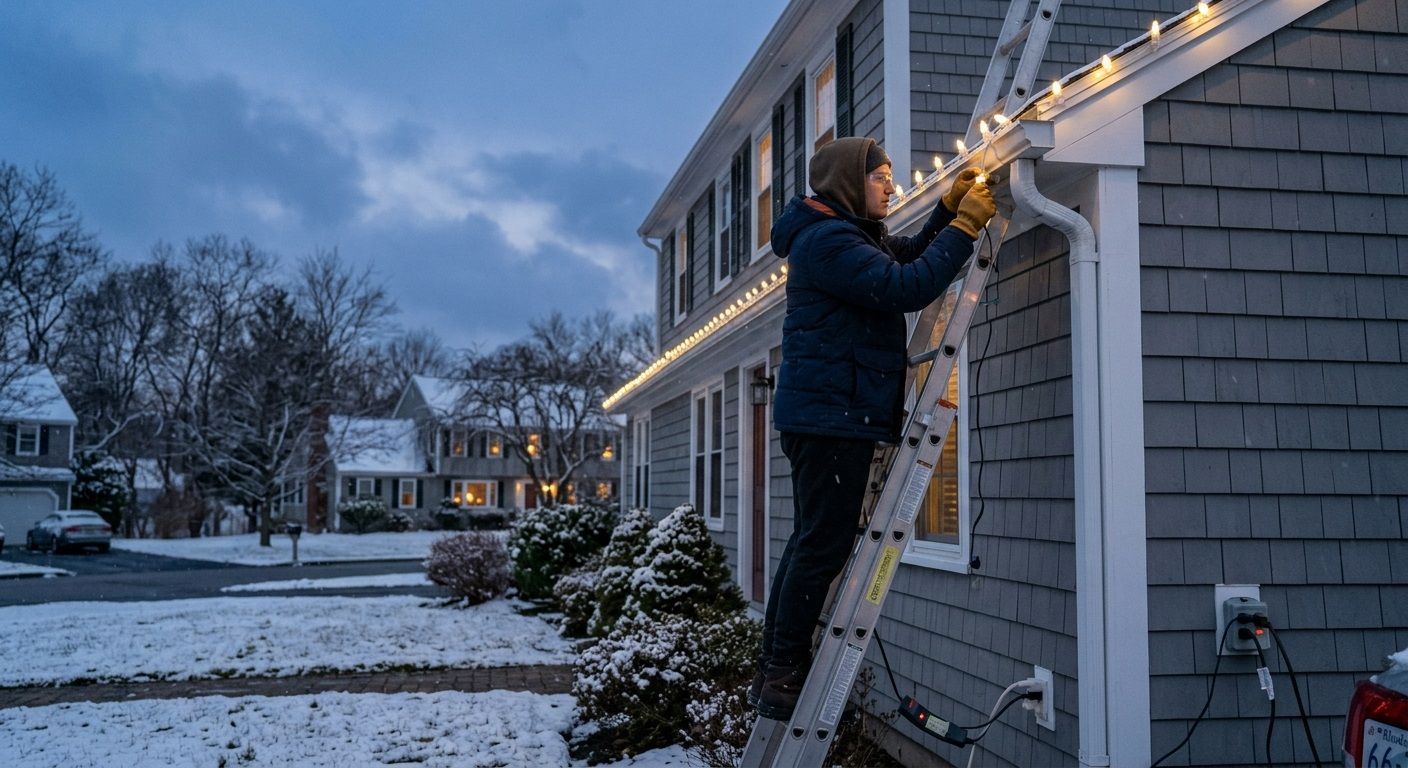
Falls from ladders are one of the most common injuries during holiday decorating season, and Rhode Island's winter weather makes this worse. Roofs, gutters, and ground surfaces ice over quickly once temperatures drop, often without obvious visual warning.
A few practical steps reduce the risk significantly:
- Set the ladder on firm, level, and dry ground. Avoid placing it on frozen grass or loose gravel.
- Follow the 4-to-1 rule: for every four feet of ladder height, move the base out one foot from the wall.
- Never stand on the top two rungs of a ladder.
- Have someone hold the base steady, especially on uneven Rhode Island terrain.
- Avoid working on a ladder in wind, rain, or when ice has formed on the roofline.
Steep or multi-story rooflines, which are common in older Rhode Island neighborhoods, call for extra caution. If your roof pitch is steep or your gutters sit higher than a single-story ladder can safely reach, this is a reasonable point to bring in a professional rather than risk a fall.
What's the safest way to attach lights without damaging your roof or gutters?
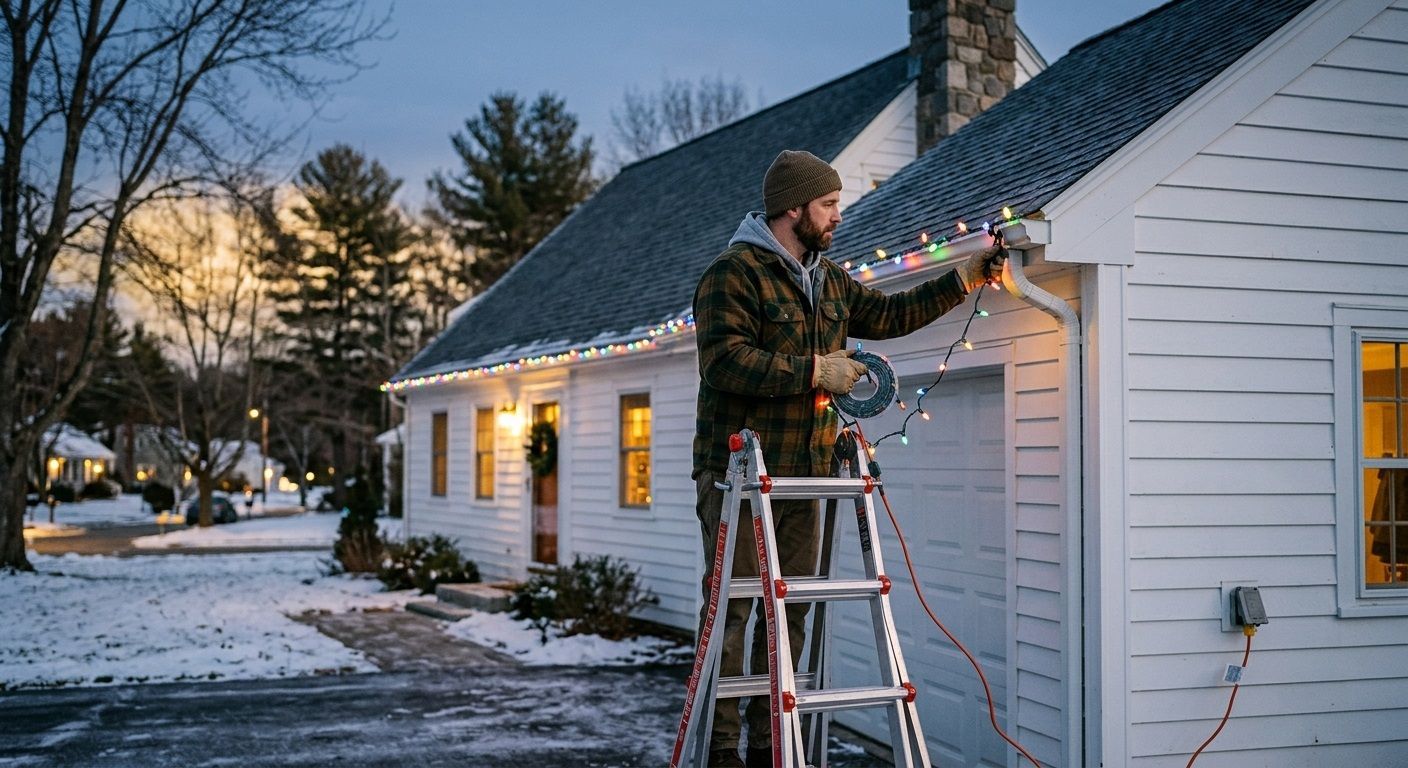
Avoid stapling or nailing light strings directly into shingles, siding, or trim. This creates small puncture points where water can seep in, leading to rot or ice dam formation over the winter. Instead, use purpose-built clips designed for gutters, shingles, or siding that grip without puncturing the surface.
For homes with icicle lights or roofline displays, plastic all-purpose clips distribute weight evenly and come off cleanly in January without leaving marks. If you're decorating around chimneys or dormers, which many Rhode Island homes have, make sure cords aren't resting against hot surfaces or sharp edges that could wear through insulation over several weeks of use.
When does it make sense to hire a professional installer?
Not every home or household is set up for a DIY lighting job, and there's no shame in recognizing that. Professional installation makes sense when:
- Your roofline is steep, high, or difficult to access safely
- Your home's electrical system is older and you're unsure about outdoor outlet capacity
- You want a more elaborate display without spending multiple weekends on a ladder
- You'd rather have insured professionals handle the fall risk
Rockhouse Construction has handled holiday light installation and decorating across Rhode Island for homeowners who want a polished result without the ladder time or electrical guesswork. This includes commercial-grade lighting, proper mounting methods that protect your roof and siding, and takedown service once the season ends.
This kind of service is especially popular with homeowners in Narragansett, RI, where coastal wind and salt exposure make DIY installations wear out faster, and in Scituate, RI, where many properties have large, multi-story rooflines that aren't practical to decorate solo. Homeowners in Richland, RI with older farmhouse properties also benefit from a professional electrical check before lights go up, given the age of wiring on many of these lots.
Putting Christmas light safety into practice this season
Christmas light installation safety in Rhode Island comes down to a few consistent habits: checking your equipment before use, respecting your home's electrical limits, and being realistic about what you can safely reach on a ladder. Rhode Island's coastal weather and older housing stock make these precautions more important here than in many other parts of the country, not less.
If you'd rather skip the ladder altogether this year, Rockhouse Construction can handle the full process, from design to installation to takedown. Contact us to get a quote for safe, professionally installed holiday lighting for your Rhode Island home.
Christmas Light Installation Safety Checker
Use this checklist before decorating your Rhode Island home. Confirm each safety measure and review any access or electrical concerns before starting installation.
This checklist tracks the safety measures you've confirmed. It does not certify an installation as safe. Stop work if conditions become unsafe, and consult a qualified professional when access or electrical safety is uncertain.
Frequently asked questions
Q: Are outdoor extension cords different from indoor ones?
A: Yes. Outdoor-rated extension cords have thicker insulation designed to handle moisture, cold temperatures, and UV exposure. Using an indoor cord outside increases the risk of shorts and fire, particularly in Rhode Island's damp winter conditions.
Q: How many light strands can I safely connect together?
A: This depends on the wattage of the strand and the gauge of your extension cord, but most LED strands can be connected end to end in series of 3 to 5 before you should plug into a separate outlet. Check the manufacturer's packaging for the exact limit, since incandescent strands have much lower limits than LED.
Q: Do I need GFCI outlets for outdoor Christmas lights?
A: Yes. GFCI protection shuts off power automatically if it detects a ground fault, which is critical for outdoor outlets exposed to rain, snow, or ice. If your home's exterior outlets predate current code requirements, a licensed electrician can add GFCI protection.
Q: Is it safer to use LED lights instead of incandescent lights?
A: LED lights run cooler, use less electricity, and put less strain on circuits and extension cords, which lowers the risk of overheating. They're a safer option for larger displays or homes with older electrical systems.
Q: What should I do if I'm not comfortable getting on a ladder?
A: Hire a professional installer. Falls from ladders are a leading cause of holiday season injuries, and a licensed, insured installer carries the right equipment and training to work safely on roofs and higher structures.