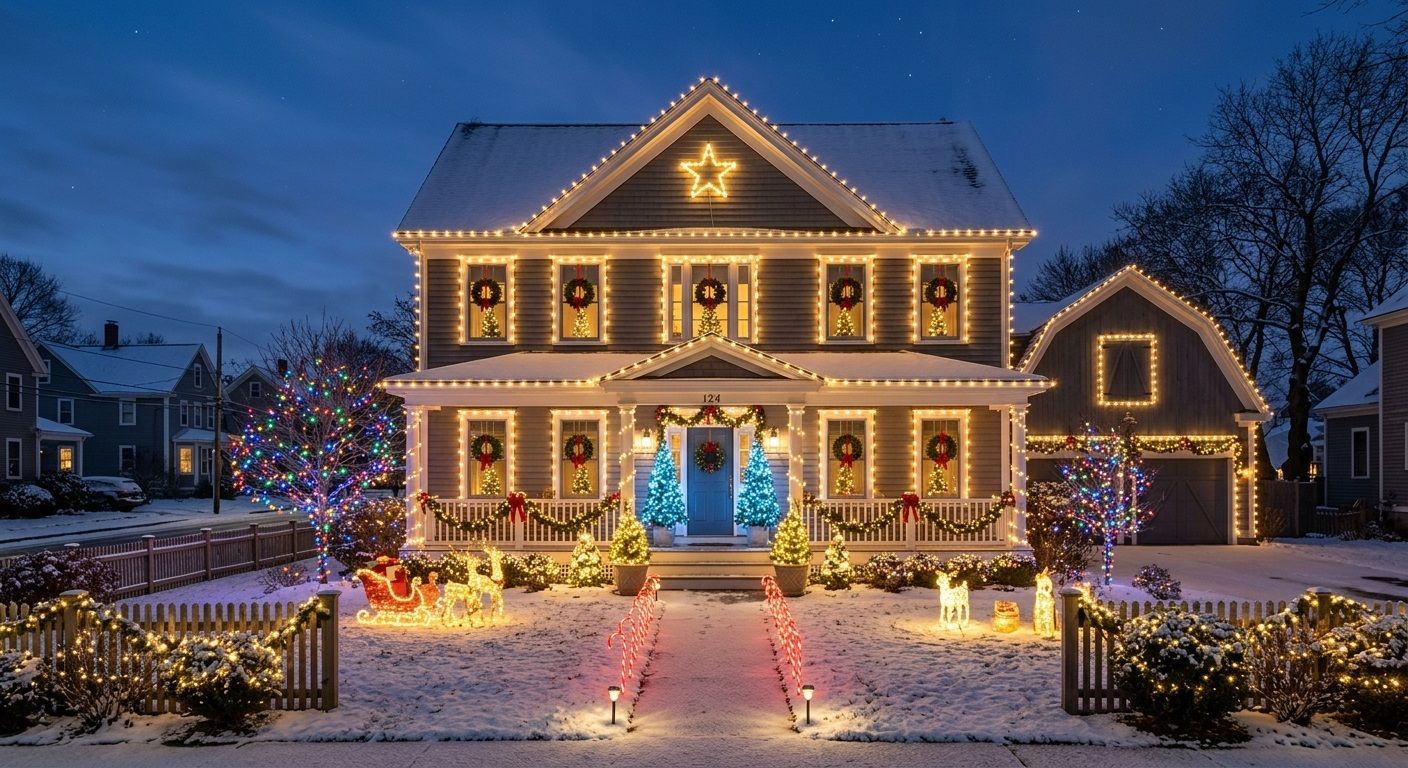
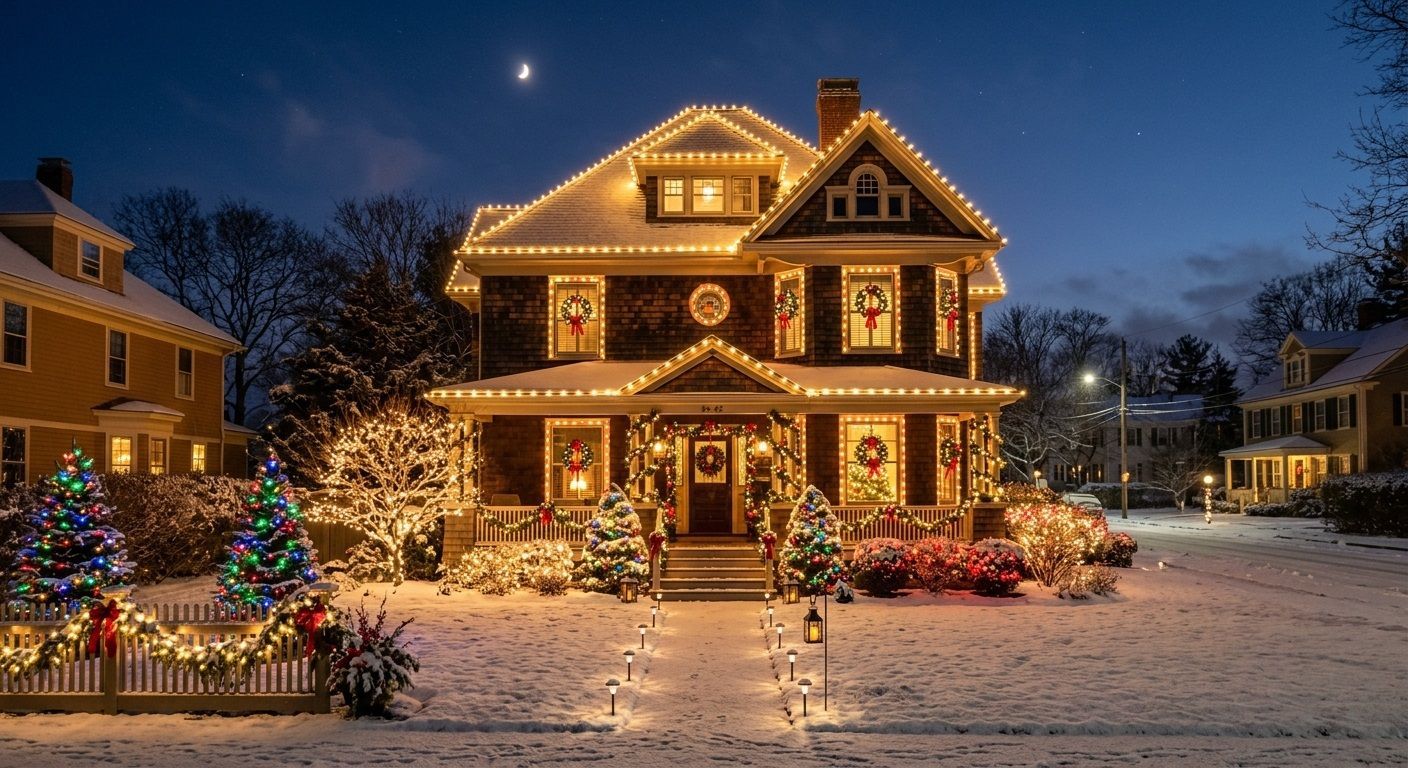
Rhode Island winters bring short days and long, dark evenings, which makes Christmas lighting one of the easiest ways to bring warmth back to a neighbourhood. Whether you live along the coast in a historic colonial or in a newer build further inland, choosing the right Christmas light ideas for Rhode Island homes can make your property feel festive without becoming a maintenance headache. This guide walks through practical lighting styles, materials that hold up in New England weather, and planning tips that local homeowners genuinely find useful.
Christmas lighting in Rhode Island isn't just about stringing a few bulbs along the gutter line. The state's mix of coastal humidity, snow, and freezing overnight temperatures means decorations need to be durable as well as attractive. Below, we cover design ideas, safety considerations, and when it makes sense to call in a professional installer rather than tackling the ladder work yourself.
Why Christmas Lighting Needs to Suit Rhode Island's Climate
Rhode Island experiences a genuine four-season climate, with winter temperatures regularly dropping below freezing and coastal areas facing damp, salty air. These conditions affect how long lights last and how safely they can be installed.
- Cold snaps can make plastic housings brittle, so lights rated for outdoor winter use matter more here than in milder climates.
- Coastal humidity near towns like Narragansett and Warwick can speed up corrosion on cheaper wiring and connectors.
- Snow load on rooflines adds weight to clips and fixtures, so secure mounting is important, not optional.
Homeowners in Rhode Island should look for lights rated IP44 or higher for outdoor use, and commercial-grade clips rather than adhesive hooks that can fail in the cold.
Popular Christmas Light Styles for Rhode Island Homes
Classic Rooflines and Eaves Outlining:
Outlining the roofline remains the most requested style across Rhode Island neighbourhoods. Warm white LED strands along eaves, gables, and dormers give a clean, traditional look that suits the state's older colonial and cape-style homes particularly well. This style works for almost any home, regardless of size or architectural period.
Wrapped Trees and Shrubs:
Wrapping mini lights around trees and foundation shrubs adds depth to a display without overwhelming the property. This is especially effective for homes with mature landscaping, which is common throughout established neighbourhoods in Providence County.
Pathway and Driveway Lighting:
Lining walkways and driveways with lighted stakes or lanterns improves both the look of a property and visibility for guests arriving after dark. Given how early sunset comes in a Rhode Island winter, this is a practical addition as much as a decorative one.
Warm White Versus Multicolour Displays:
Warm white lighting has become the more popular choice for whole-home displays because it photographs well and suits a wider range of architectural styles. Multicolour lighting still has its place for homes wanting a more playful, traditional holiday look, particularly around front doors and window frames.
Materials That Hold Up to New England Winters
Not all Christmas lights are built the same, and this matters more in a state where temperatures can swing from mild to well below freezing within a week.
- LED strands: Use less energy, run cooler, and are less likely to become brittle in the cold compared to incandescent bulbs.
- Commercial-grade wiring: Rated for continuous outdoor use and less prone to cracking.
- UV-resistant housings: Help prevent fading and brittleness from both cold and summer storage conditions.
- Weatherproof connectors: Reduce the risk of short circuits when snow or sleet settles into open plug connections.
Choosing quality materials from the start reduces the number of replacement bulbs needed each season and lowers the risk of electrical issues during a Rhode Island winter.
Safety Considerations for Rooftop and Ladder Work
Installing lights on a roof or high eaves during winter carries real risk, particularly once ice begins to form. Falls from ladders are among the most common home injuries during the holiday season, and Rhode Island's freeze-thaw cycles can leave roof edges slippery even on clear days.
- Avoid working on ladders during or immediately after snowfall or rain.
- Use fall protection or have a second person steady the ladder at all times.
- Check that outdoor outlets are GFCI protected before connecting any string of lights.
- Inspect lights for frayed wiring or cracked housings before installation each year.
For homes with steep rooflines, multiple storeys, or extensive lighting plans, this is where many Rhode Island homeowners choose to bring in a professional rather than take on the risk themselves.
Planning a Christmas Light Display for Your Rhode Island Property
A well-planned display starts with assessing the home's architecture rather than simply buying lights and working it out on the day. Consider which features of the house, such as window trims, columns, or rooflines, naturally draw the eye, and plan lighting to highlight those areas rather than covering the entire exterior.
It also helps to measure rooflines and walkways in advance so you purchase the right length of lights and avoid awkward gaps or overlap. Timers are worth including in any plan, both for convenience and for reducing energy costs across the weeks lights are left up.
Homeowners across towns such as Glocester, RI, Hopkinton, RI, and Burrillville, RI often deal with larger properties and more rural settings, where longer driveways and tree lines offer more opportunities for lighting but also require more planning around cable runs and power sources.
When to Call in a Professional Installer
While smaller displays are manageable as a DIY project, larger or more complex installations are often better suited to professional help. This is particularly true for:
- Multi-storey homes where ladder access is difficult or unsafe.
- Properties with extensive rooflines, large trees, or long driveways.
- Homeowners who want a polished, symmetrical look without the trial and error.
- Anyone short on time during the busy lead-up to the holidays.
Rockhouse Construction offers
holiday light installation and decorating services across Rhode Island, including for homeowners in
Glocester, RI,
Hopkinton, RI, and
Burrillville, RI. Professional installation handles the planning, the ladder work, and the removal once the season ends, which takes the physical risk and the guesswork out of the process.
Maintaining Your Display Through the Season
Once lights are up, a bit of ongoing attention keeps the display looking its best through to New Year's. Check connections after any significant snowfall or windstorm, as both can loosen clips or shift wiring. Replace any bulbs that fail early rather than waiting until several sections are dark, since this is easier to spot and fix while the issue is small. Timers should be checked periodically too, particularly after power outages, which can reset settings and leave lights running at the wrong hours.
Bringing Your Rhode Island Christmas Lighting Plan to Life
Choosing the right Christmas light ideas for Rhode Island homes comes down to matching your style preferences with materials and methods that can handle the state's winter conditions. From classic roofline outlines to wrapped trees and pathway lighting, there are options to suit every property type, provided the planning and installation are done with safety and durability in mind.
If you would rather leave the ladder work, planning, and takedown to experienced professionals,
contact Rockhouse Construction to discuss a holiday lighting plan suited to your Rhode Island home.
Christmas Light Length Planner
Rhode Island Home Planning Tool
Christmas Light Length Planner
Estimate how much lighting to plan for your rooflines,
windows, landscaping and outdoor paths before you start decorating.
Measure your planned display
Enter the approximate total length for each area you want to
illuminate. Use feet for all measurements.
Estimated total lighting length
0
ft
Warm white
Measured total
0
ft
Extra allowance
ft
Rooflines and eaves
0
ft
Windows and doors
0
ft
Trees and shrubs
0
ft
Paths and driveway
0
ft
This is a planning estimate, not an installation measurement.
Check the usable length listed on each light set and allow for
the distance to suitable outdoor power sources.
Frequently Asked Questions
Q: What type of Christmas lights work best in Rhode Island's winter weather?
A: LED lights rated for outdoor use are the most reliable option in Rhode Island, as they handle cold temperatures better than incandescent bulbs and are less prone to cracking or becoming brittle during freeze-thaw cycles.
Q: Is it safe to install Christmas lights on a roof in winter?
A: Rooftop installation carries added risk once ice or frost forms, so it's best done before the first hard freeze, with proper fall protection or by hiring a professional installer for steep or multi-storey homes.
Q: How early should Rhode Island homeowners put up Christmas lights?
A: Many Rhode Island homeowners install lights in mid to late November, while the weather is still mild enough for safe ladder work and before snow or ice makes rooftops hazardous.
Q: Do I need special lights for coastal Rhode Island properties?
A: Homes near the coast benefit from weatherproof, corrosion-resistant fixtures and connectors, since salt air can speed up wear on lower-quality wiring and housings.
Q: Should I hire a professional or install Christmas lights myself?
A: Smaller, single-storey displays are generally manageable as a DIY project, while larger properties, steep rooflines, or extensive designs are better suited to a professional installer who can manage the planning, safety, and removal.