

Designing a Four-Season Patio in Rhode Island: A Practical Guide
Rhode Island's weather changes fast, and a patio that only works in summer is only earning its keep for a few months of the year. A well-planned four-season patio in Rhode Island gives homeowners a space that holds up through humid summers, wet springs, crisp autumns, and cold, snowy winters.
Getting the design right means thinking about materials, drainage, wind, and how each season actually behaves here, not just picking furniture that looks good in a catalogue.
At Rockhouse Construction, we build patios across Rhode Island, from coastal towns to inland neighbourhoods, and the same lesson comes up again and again: the design decisions that matter most are the ones that deal with the state's climate, not the ones that just look nice on day one.
This guide walks through what actually makes a patio usable all year round in Rhode Island, and why some choices hold up better than others.
Why Rhode Island's Climate Demands a Different Approach
Rhode Island sits in a humid continental climate zone, shaped heavily by its coastline. Winter temperatures regularly drop into the 20s and 30s, while summer days can push into the 80s with high humidity. That swing puts real stress on outdoor surfaces and structures.
Each season brings its own set of problems for a patio:
- Spring brings heavy rain and freeze-thaw leftovers from winter, which means standing water and soft ground are common in towns like Lincoln and Smithfield.
- Summer humidity encourages mould and mildew, and coastal storms test anything that isn't properly anchored, particularly in areas like Barrington and Bristol.
- Autumn cools quickly in the evenings, so patios without any heat source lose usability earlier than homeowners expect, something residents of Warwick and East Greenwich notice by late October.
- Winter means snow load, ice, and salt exposure, especially near the coast in North Kingstown and Westerly.
A patio built without these factors in mind will show cracking, pooling water, or surface damage within a few years. A patio designed around them can last decades with basic upkeep.
Choosing Materials That Can Handle Rhode Island's Weather
Material choice is the single biggest factor in how long a patio lasts and how usable it stays through winter. For a deeper breakdown of specific materials suited to local conditions, our guide on best patio designs for Rhode Island's climate and weather covers this in more detail, but the short version is this:
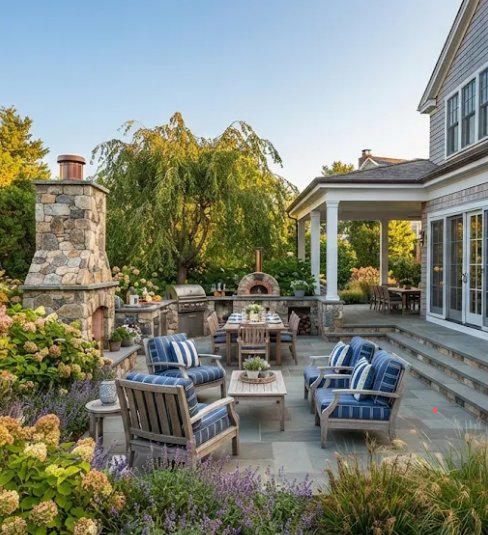
- Natural stone (granite and bluestone) handles freeze-thaw cycles well and resists salt air, which matters for coastal properties.
- Porcelain pavers absorb almost no water, so they don't crack from ice the way porous materials can.
- Composite decking resists rot and warping, and needs less upkeep than timber over time.
- Concrete pavers offer a solid middle ground on cost, especially for larger patios where natural stone gets expensive.
Whatever material is chosen, it needs to tolerate both the summer humidity in Central Falls and Pawtucket and the winter freeze further inland. Mixing materials that expand and contract at different rates is one of the most common mistakes homeowners make, and it's one of the quickest ways to end up with cracked joints after a single winter.
Drainage Is Not Optional
Rhode Island gets roughly 47 inches of rain a year, and a patio that doesn't manage that water properly will suffer for it. Water that pools on a surface in autumn becomes ice in winter, and ice is what cracks pavers, lifts stone, and creates slip hazards.
Good drainage design includes:
- A slope of at least a quarter inch per foot, directing water away from the house
- Permeable paving where the site allows it, reducing runoff
- French drains in low-lying yards, which is common in parts of Cumberland
- Gutter and downspout placement that doesn't dump water straight onto the patio surface
This isn't a detail to leave until after installation. Drainage needs to be part of the design from the start, because retrofitting it later usually means tearing up the surface.
Managing Wind, Sun, and Shade Through the Year
Rhode Island's coastal exposure means wind is a real design factor, not an afterthought. In towns like Cranston and Johnston, a patio oriented without regard for prevailing wind direction can become unusable on breezy days, even when the temperature is mild.
A few design choices help manage this across the year:
- Positioning the patio to capture southern exposure for warmth in cooler months
- Using retractable awnings or pergolas that can be opened for airflow in summer and closed for wind protection in shoulder seasons
- Adding low walls or dense planting as windbreaks, particularly useful in open coastal yards in South County
- Choosing furniture that's rated for coastal wind exposure, rather than standard patio sets
None of these elements need to be complicated, but skipping them usually means the patio gets used for fewer months than it could.
Extending Usability Into Autumn and Winter
A four-season patio earns its name by staying usable once the weather turns. The most effective additions for this are heating elements and some form of cover.
Common options include:
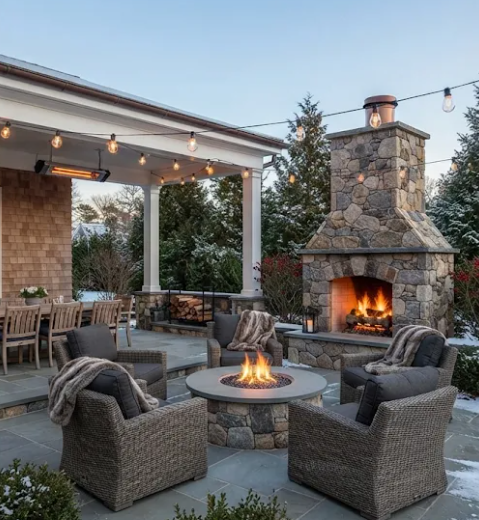
- Fire pits, which add warmth and work well in backyards across Woonsocket and similar inland towns
- Patio heaters, either freestanding or mounted, for targeted warmth over seating areas
- Infrared heaters, which work well under a roofed or partially enclosed patio
- A pergola with a retractable canopy or a simple fixed roof, which protects against rain and snow and significantly extends the number of usable days per year
Lighting also matters more than homeowners often expect. Longer summer evenings and shorter winter days both call for a mix of ambient and task lighting, not just for atmosphere but for basic safety when navigating steps or uneven surfaces after dark.
Preparing the Patio for Winter
Even a well-designed four-season patio needs seasonal upkeep, particularly heading into winter. Furniture should be cleaned and stored or covered, water features need to be drained to avoid frozen pipes, and any loose structures like umbrellas or screens should be secured or removed.
For a full rundown of this process, our guide on how to winterize your patio in Rhode Island covers the steps in detail, including timing recommendations based on when the first hard frost typically hits.
Skipping winterisation is one of the more common reasons homeowners end up with cracked pavers or rusted hardware by spring, even on patios that were otherwise well built.
Landscaping That Works With the Seasons
Plantings around a four-season patio should be chosen with the same seasonal thinking as the hardscaping itself. Evergreens hold their colour through winter when little else in the yard is green. Flowering plants bring colour through spring and summer.
Trees with strong autumn foliage add visual interest without requiring any extra maintenance from the homeowner. Layering these types together means the patio has something worth looking at no matter the month.
Working With a Local Builder
Patio design decisions that work in one part of the country don't always translate well to Rhode Island's specific mix of coastal wind, humidity, and winter freeze. Builders familiar with local conditions, soil types, and town-specific drainage issues are better positioned to avoid the common mistakes that shorten a patio's lifespan.
Rockhouse Construction has built patios across the state, including in North Kingstown, where coastal exposure and seasonal shifts shape nearly every design decision. If you're in that area, our page on paver patio installation and hardscaping in North Kingstown, RI outlines the services we offer locally.
Final Thoughts
Building a genuine four-season patio in Rhode Island comes down to a handful of decisions made early: the right materials, proper drainage, sensible wind and sun management, and some form of heating or cover for the colder months.
None of these require an unusual budget or exotic materials, they just need to be planned for from the start rather than added as an afterthought. Get those fundamentals right, and the patio stops being a summer-only feature and become
Four-Season Patio Readiness Calculator
Find out how well your patio is prepared for Rhode Island's changing seasons. Answer the questions below to receive a personalized assessment and recommendations for year-round outdoor living.
Your Four-Season Patio Assessment
Best improvement to prioritize:
Season-by-Season Readiness
Recommended Materials
Drainage and Site Preparation
Year-Round Comfort Recommendations
Winter Preparation Checklist
Your Recommended Next Steps
This calculator provides an estimated planning assessment based on the information entered. It does not replace a professional site inspection, structural assessment, drainage evaluation, or local code review. Actual requirements depend on property conditions and Rhode Island municipal regulations.