

Hardscape Ideas to Boost Curb Appeal in Rhode Island
Curb appeal is the first thing anyone notices about a Rhode Island home, whether they're a potential buyer, a guest pulling into the driveway, or a neighbour walking past. While landscaping gets a lot of attention, it's the hardscape elements, pathways, driveways, retaining walls, and entryways, that give a property its structure and lasting impression.
At Rockhouse Construction, we've spent years designing and installing hardscaping across Rhode Island, and we've seen firsthand how the right combination of materials and layout can transform a home's exterior without requiring a full renovation.
This guide covers practical hardscape ideas suited to Rhode Island's climate, architecture, and housing stock, along with what to consider before starting a project.
Why Hardscaping Matters for Curb Appeal
Garden beds and lawns soften a property, but they don't provide the framework that ties everything together. Hardscape features do that job. A well-placed walkway, a tidy driveway edge, or a low retaining wall gives a yard definition and makes the whole property look intentional rather than accidental.
A few specific benefits worth noting:
- Defined pathways guide visitors to the front door and reduce the "walk across the lawn" habit that wears down grass over time.
- Framed garden beds created by stone or paver edging keep mulch and soil contained and make maintenance easier.
- Added architectural interest from steps, low walls, or decorative pillars gives a facade more depth, particularly on older Rhode Island homes with flat front elevations.
- Improved functionality in driveways and entry areas, which matters as much for daily use as it does for appearance.
None of this requires an elaborate budget. Smaller, well-executed changes often do more for curb appeal than large, expensive additions that don't suit the property.
Hardscape Ideas for Rhode Island Homes
Walkways That Suit the Property
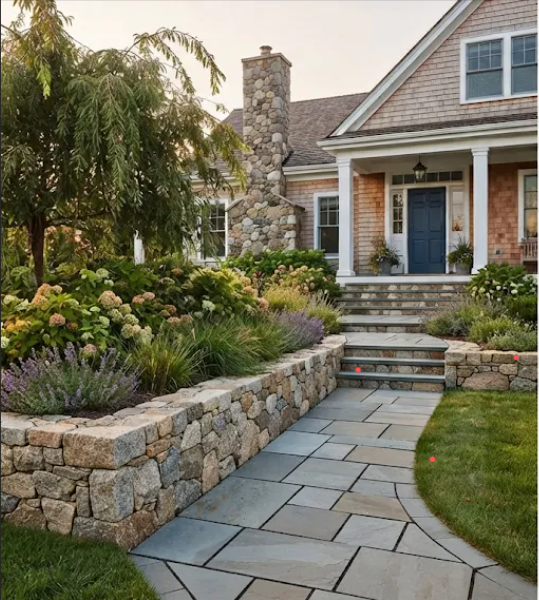
Cracked concrete or uneven stepping stones are one of the first things people notice when approaching a home. Replacing a tired walkway with pavers, natural stone, or stamped concrete gives an immediate lift.
A gentle curve rather than a straight line often reads as more welcoming, though this depends on the layout of the yard and shouldn't be forced where a straight path makes more sense.
For homes in coastal or exposed areas, material choice matters more than style. Dense, freeze-thaw resistant materials hold up better over a Rhode Island winter than softer stone options. We've covered this in more detail in our breakdown of patio designs suited to Rhode Island's climate and weather, which applies just as much to walkways and entry paths as it does to patios.
Driveway Upgrades
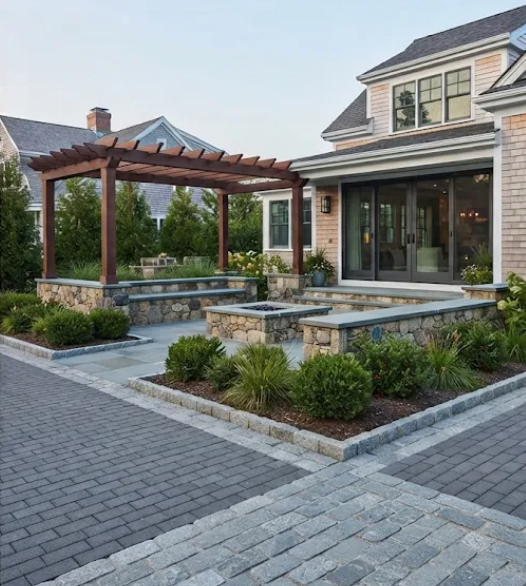
A driveway takes up a large portion of the visible frontage on most properties, so its condition has an outsized effect on curb appeal. Paving stones, exposed aggregate concrete, or decorative edging along an asphalt driveway are all reasonable options depending on budget and the existing surface.
Drainage is worth checking before any driveway work begins. Rhode Island's freeze-thaw cycles are hard on poorly drained surfaces, and a driveway that pools water in autumn will likely crack by spring.
Entryway Improvements
The front entry is where first impressions are formed, so it's worth treating as its own small project rather than an afterthought. Options here include:
- Updated steps in stone or paver material
- A small porch extension using matching hardscape materials
- Decorative pillars or columns that frame the doorway
These changes don't need to be large to be effective. Even modest updates to steps and the immediate entry area tend to stand out because they're the focal point visitors see first.
Retaining Walls and Garden Edging
Many Rhode Island properties sit on slightly sloped lots, which makes retaining walls a practical as well as a decorative choice. Natural stone or segmental block walls hold soil in place, prevent erosion, and create clearly defined planting areas.
On flatter yards, simple paver or stone edging around garden beds and lawns achieves a similar visual effect without the structural requirements of a full retaining wall. It's a low-cost way to make a yard look maintained, even between gardening seasons.
Mailbox Surrounds and Small Details
Small details add up. A standard mailbox post can be replaced with a stone or brick surround that matches the rest of the property's hardscaping. It's a minor project, but one that ties the front yard together and signals attention to detail.
Front Porch and Seating Areas
Where a front porch already exists, decorative pavers, stone accents on columns, or a low seating wall can turn an underused space into something more functional. This works particularly well on older Rhode Island homes where the porch is a key architectural feature rather than a later addition.
Lighting Along Hardscape Features
Low-voltage lighting along walkways, steps, and garden beds serves two purposes: it improves safety after dark and highlights the hardscape work during evening hours. This is a relatively affordable addition that extends the visual impact of a project well beyond daylight hours.
Using Local Stone
Rhode Island has a long history of stone wall construction, and incorporating local stone into a hardscape project connects a property to that regional character. Stone walls, steps, or placed boulders can look appropriate on both historic homes and newer builds, provided the style matches the rest of the property.
Small-Scale Water Features
A modest fountain or small pond near an entryway isn't necessary for every property, but where it suits the overall design, it adds a point of interest that's uncommon enough to be memorable. This is a lower priority than the structural elements above, and it's worth getting the basics right first.
What to Consider Before Starting a Hardscape Project
Before committing to any of the above, a few practical points are worth working through:
- Drainage first. Any hardscape element, from a walkway to a retaining wall, needs proper grading and drainage underneath it. Skipping this step is the most common reason hardscaping fails within a few years in Rhode Island's climate.
- Material suited to the climate. Not every material performs the same way through freeze-thaw cycles. Dense pavers and natural stone generally outlast poured concrete over the long term.
- Scale to the property. A large, elaborate feature on a modest home can look out of place and may not add the value homeowners expect. Matching the scope of work to the size and style of the property tends to produce better results.
- Local permitting. Depending on the municipality, some hardscape projects, particularly retaining walls and driveway changes, may require permits. It's worth checking with the local building department before work begins.
If you're also weighing up whether a patio addition makes financial sense alongside these curb appeal updates, our article on patio ROI and home value in Rhode Island covers what homeowners can reasonably expect to recover at resale.
Working With a Local Contractor
Rhode Island's mix of historic homes, coastal exposure, and inland clay soils means hardscape projects often need to be adapted to the specific property rather than applied as a one-size-fits-all solution. A contractor familiar with the region will account for frost depth, drainage requirements, and the architectural style common in a given area.
Homeowners in Cumberland looking for hardscape or paver patio work can find more detail on local considerations on our Cumberland paver patio and hardscaping page, which outlines the services and planning involved for that area specifically.
Final Thoughts
Improving curb appeal doesn't require a complete overhaul of a property's exterior. Thoughtful hardscape ideas, from updated walkways to retaining walls and entryway details, can make a noticeable difference without an unreasonable budget. The key is choosing materials suited to Rhode Island's climate, getting the drainage and base work right, and scaling the project to match the home.
For homeowners considering where to start, Rockhouse Construction can walk through the options and help identify which hardscape ideas will have the most impact on a specific property's curb appeal. Contact us to discuss a project suited to your home and budget.
Hardscape Curb Appeal Calculator
Discover which hardscape improvements are best suited to your Rhode Island home. Select your preferred upgrades and property conditions to receive a personalized project plan.
Your Personalized Hardscape Plan
Recommended starting point:
Your Selected Projects
Recommended Materials
Property Preparation Checklist
Important Rhode Island Considerations
Suggested Project Approach
This calculator provides general hardscape planning guidance. Actual installation requirements depend on site conditions, municipal regulations, design specifications, and contractor assessments. Confirm applicable permits and drainage requirements with your local building department before starting construction.
Frequently Asked Questions
What hardscape features add the most curb appeal in Rhode Island?
Walkways, driveway upgrades, and entryway improvements tend to have the most visible impact since they're the first elements people notice when approaching a property.
Does hardscaping increase home value in Rhode Island?
Well-executed hardscaping can support a home's resale value, particularly when it's scaled appropriately to the property and built with durable, climate-suited materials.
What's the most durable material for Rhode Island walkways and driveways?
Dense concrete pavers and natural stone generally hold up better than poured concrete through Rhode Island's freeze-thaw winters, provided the base and drainage are installed correctly.
Do retaining walls need a permit in Rhode Island?
This depends on the height of the wall and the municipality. It's worth checking with the local building department before starting any retaining wall project.
How much does a hardscape project typically cost?
Costs vary widely depending on material, scope, and site conditions. Smaller projects like edging or a mailbox surround are relatively affordable, while larger driveway or retaining wall work involves a greater investment.