

Fire Pits and Outdoor Fireplaces in Rhode Island: A Homeowner's Guide
Rhode Island's outdoor living season runs short compared to warmer states, which is exactly why fire pits and outdoor fireplaces have become such a common addition to local patios and backyards.
A well-placed fire feature extends the months you can actually use your outdoor space, and it does so without requiring a full renovation. This guide looks at the practical differences between fire pits and outdoor fireplaces, what Rhode Island regulations expect from homeowners, and how to choose the right option for your property.
At Rockhouse Construction, we build hardscaping across Rhode Island, and fire features are one of the most requested additions to patio and backyard projects. Before any installation goes ahead, it helps to understand what these features involve, how they differ, and what rules apply in your city or town.
Fire Pits vs Outdoor Fireplaces: What's the Difference?
Both fire pits and outdoor fireplaces bring heat and ambience to an outdoor space, but they're built differently and suit different needs.
Fire pits are typically lower to the ground, open on most or all sides, and either portable or built as a simple in-ground or above-ground feature. They work well for:
- Smaller patios where space is limited
- Homeowners wanting a lower-cost option
- Casual gatherings where people sit in a circle around the flame
Outdoor fireplaces are taller, usually built with a back and sides, and designed as a permanent structure. They tend to suit:
- Properties with more established patio or deck areas
- Homeowners who want a defined architectural feature
- Situations where directional heat matters more than an all-around glow
Neither option is better across the board. The right choice depends on your budget, how you plan to use the space, and what your local regulations allow for permanent versus portable structures.
What Rhode Island Regulations Say About Fire Pits and Outdoor Fireplaces
Rhode Island doesn't have one single rule that covers every fire feature in the state. Instead, homeowners need to work through a few layers: the state fire code, local municipal ordinances, and in some cases, homeowners association rules.
The Rhode Island State Fire Marshal sets baseline safety requirements that apply everywhere, including clearance distances from structures, restrictions on what can be burned, and rules around supervision and extinguishing equipment. On top of that, cities and towns such as Providence, Warwick, Newport, and Cranston each apply their own permit requirements and setback distances, which can be stricter than the state minimum.
Seasonal burn bans add another layer. The Rhode Island Division of Forest Environment can issue a ban during dry conditions, which temporarily stops all outdoor burning, including in fire pits and fireplaces that are otherwise fully compliant.
Because these rules shift depending on where you live, it's worth reading through the specifics before starting a project. Our detailed breakdown of fire pit regulations for Rhode Island patios covers size limits, distance requirements, and city-by-city differences for portable and built-in fire pits.
If you're considering a permanent outdoor fireplace instead, our guide to Rhode Island outdoor fireplace rules and building codes walks through permit requirements, setback distances, and the fuel type considerations that come with a fixed structure.
Key Factors That Affect Which Fire Feature Suits Your Property
Budget and Installation Complexity
Fire pits generally cost less to install because they involve less material and labour. An outdoor fireplace, being a permanent structure, usually requires a foundation, more substantial materials, and often a building permit, which adds both time and cost to the project.
Available Space
A smaller patio or backyard may only have room for a compact fire pit, while a larger property with an established patio layout can usually accommodate a fireplace without crowding the space.
Fuel Type
Both fire pits and outdoor fireplaces can run on wood or gas, and the choice affects maintenance, permitting, and day-to-day use.
- Wood-burning units need seasoned firewood, are subject to burn bans, and require spark arrestors in many municipalities.
- Gas units need a licensed gas fitter for installation, come with their own setback rules for propane tanks or gas lines, and are often the more practical choice in denser neighbourhoods where smoke can be an issue for neighbours.
Local Permit Requirements
Portable fire pits often avoid the need for a building permit, while permanent fire pits and outdoor fireplaces usually require one. This is one of the main reasons homeowners in tighter residential areas, such as parts of Providence or Pawtucket, lean towards smaller or gas-powered options.
Materials That Hold Up in Rhode Island's Climate
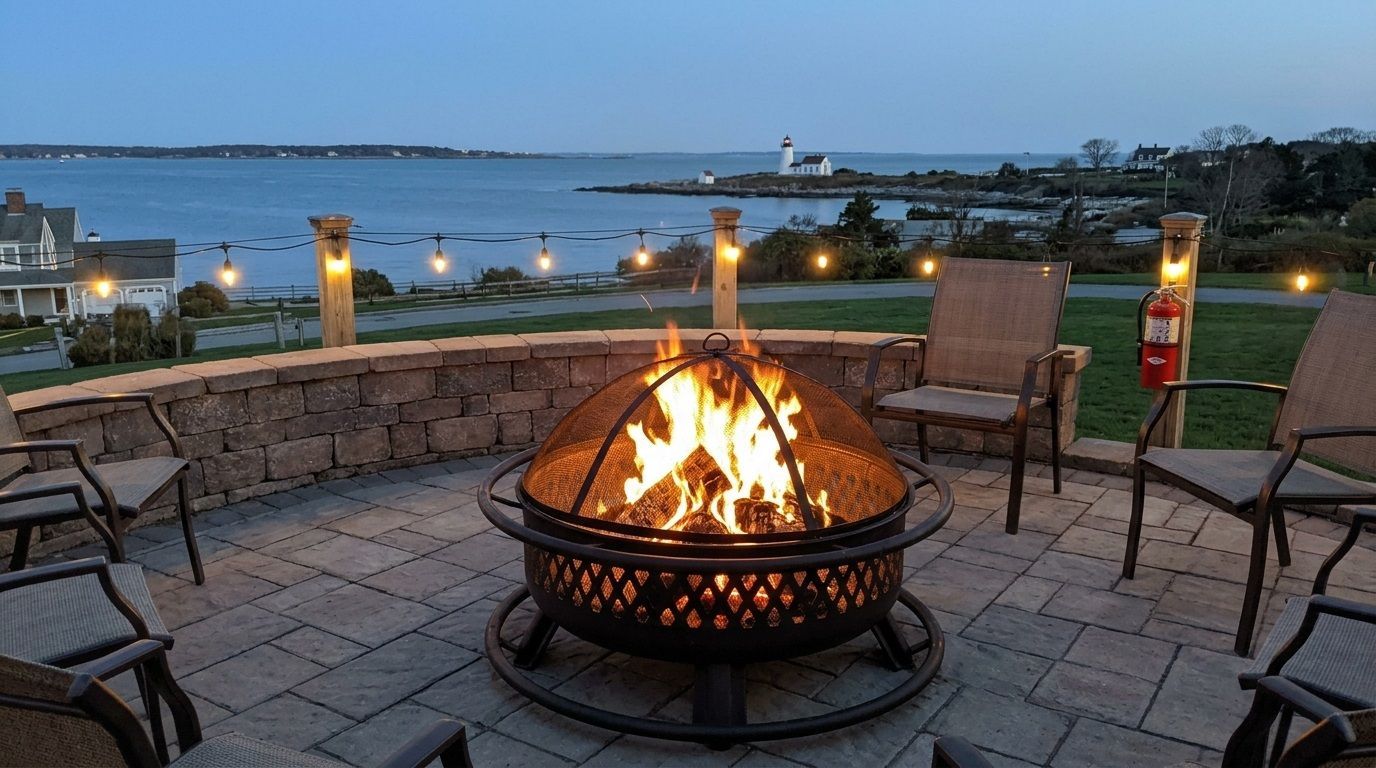
Rhode Island's freeze-thaw winters and, for coastal properties, salt air exposure both play a role in material selection.
- Natural stone, such as fieldstone, granite, or bluestone, handles temperature swings well and suits the traditional New England look found across much of the state.
- Refractory brick is built to withstand sustained high heat, making it a solid choice for fireboxes and interior fireplace surfaces.
- Stainless steel resists corrosion better than untreated metal, which matters for properties near the coast.
- Materials to avoid include regular concrete, which can crack under repeated freezing and thawing, and untreated metal, which rusts quickly in salt air.
Planning Your Fire Feature Installation
Getting the regulatory side sorted before construction begins saves time and avoids rework later. A reasonable approach looks like this:
- Confirm whether your project needs a building permit by contacting your local building department.
- Check current setback requirements for your specific municipality, since these vary from one city to the next.
- Decide between wood-burning and gas based on your property's density, neighbours, and maintenance preferences.
- Choose materials suited to Rhode Island's climate, particularly if your property is near the coast.
- Confirm there's no active burn ban before using a wood-burning feature, and check this regularly during dry seasons.
If your project is part of a broader patio build, it helps to think about the fire feature alongside the rest of the layout rather than as an afterthought. Seating, pathways, and drainage all need to work together with wherever the fire pit or fireplace ends up.
For homeowners in Bristol planning a patio project that includes a fire feature, our Bristol, RI paver patio and hardscaping services page outlines how we approach fire pits, retaining walls, and patio layout as a connected project rather than separate jobs.
Maintenance Considerations
Fire features need some upkeep to stay safe and functional over time.
- Clear ash and debris regularly, and dispose of cold ashes in a metal container, not a plastic bin.
- Check gas lines and connections periodically if you have a gas unit, and have any issues addressed by a licensed gas fitter.
- Inspect masonry fireplaces for cracking after winter, since freeze-thaw cycles can affect mortar joints over time.
- Keep the surrounding area clear of leaves, overhanging branches, and other combustible material, particularly during high fire danger periods.
Final Thoughts on Fire Pits and Outdoor Fireplaces in Rhode Island
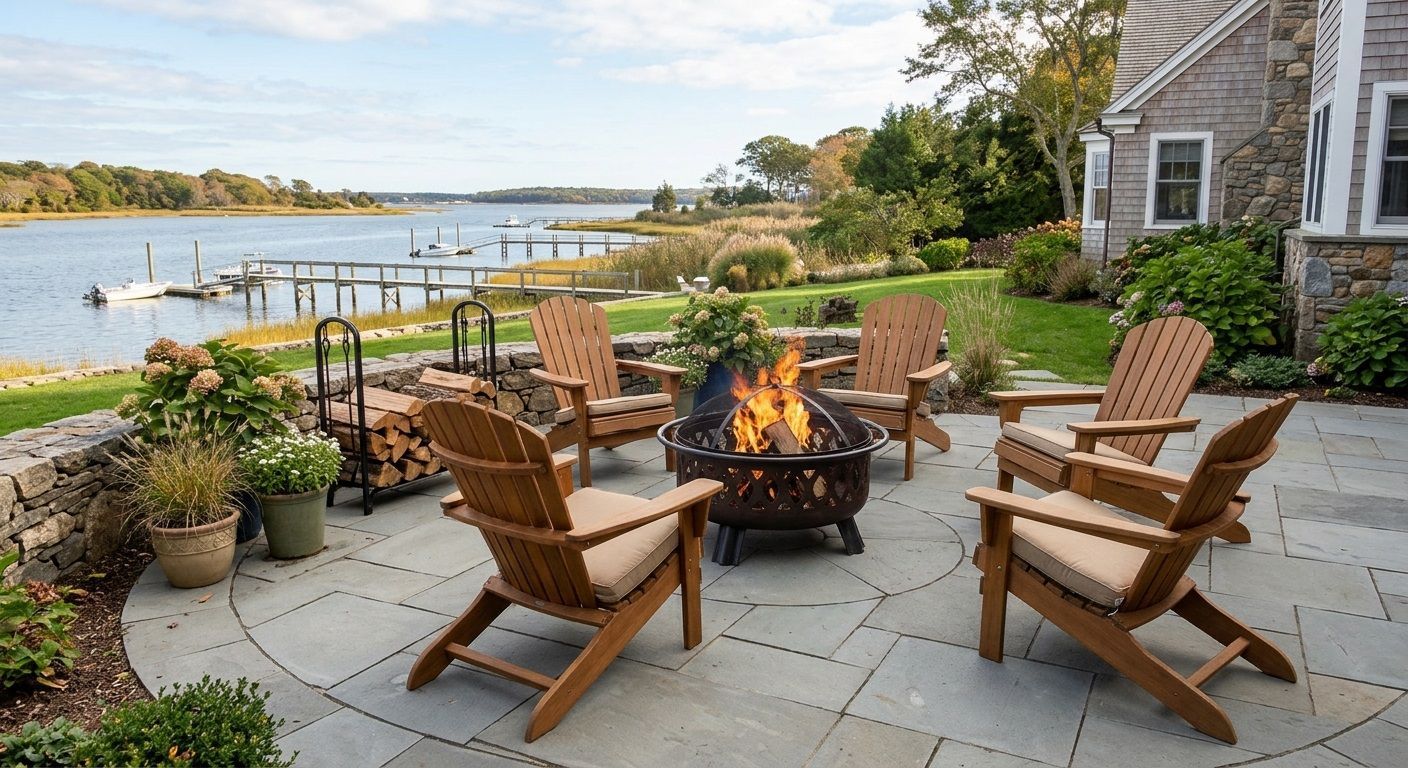
Choosing between a fire pit and an outdoor fireplace comes down to your budget, the space you have available, and how you intend to use it. Both options can genuinely extend how long your outdoor space stays usable through Rhode Island's cooler months, provided they're installed with proper attention to local regulations and built with materials suited to the local climate.
Rockhouse Construction designs and builds fire pits and outdoor fireplaces across Rhode Island, working within state and local requirements from the initial design stage through to completion. If you're weighing up your options for a patio project, get in touch with our team to discuss what will work best for your property.
Fire Pit & Outdoor Fireplace Calculator
Find out whether a fire pit or outdoor fireplace is a better fit for your Rhode Island property. Answer a few questions to receive a personalized installation recommendation.
Your Fire Feature Recommendation
Recommended option:
Fuel Recommendation
Material Suggestions
Installation Considerations
Rhode Island Approval Checklist
This calculator provides general planning guidance, not a permit determination or guarantee of code compliance. Requirements vary by Rhode Island municipality, property conditions, and fire feature type. Confirm local rules with your building and fire departments before installation.
Frequently Asked Questions
Do I need a permit for a fire pit in Rhode Island?
Portable fire pits often don't require a permit, but permanent, built-in fire pits usually do. Requirements vary by city and town, so it's worth checking with your local building department before installation.
Is a gas or wood-burning fire feature better for Rhode Island properties?
Gas units tend to suit denser neighbourhoods better due to lower smoke output and fewer neighbour concerns, while wood-burning features suit larger suburban properties where seasonal burn bans and smoke are less of an issue.
How close can a fire pit or outdoor fireplace be to my house?
Setback distances vary by municipality and fuel type, but many guidelines reference a minimum of 10 to 25 feet from structures. Local zoning ordinances often set the exact figure for your area.
Can I still use my fire pit during a burn ban?
No. When the Rhode Island Division of Forest Environment issues a burn ban, all outdoor burning is prohibited statewide, regardless of whether your fire pit otherwise meets code.