

LED vs Incandescent Christmas Lights: What Rhode Island Homes Need to Know
Choosing between LED vs incandescent Christmas lights is one of the first decisions Rhode Island homeowners face when planning a holiday display. The Ocean State's coastal weather, including nor'easters, salt air, and sharp temperature swings, puts real pressure on outdoor lighting. Understanding how each type of bulb performs in these conditions helps you make a decision that holds up through the season rather than one that needs constant repairs.
This guide compares LED and incandescent Christmas lights across energy use, durability, cost, and safety, with a focus on what actually matters for homes and businesses across Rhode Island.
Energy Use: A Clear Difference for Larger Displays
LED Christmas lights use significantly less electricity than incandescent bulbs, typically 80 to 90 percent less for the same amount of illumination. This matters most for larger properties in towns like Newport, Barrington, and East Greenwich, where extensive rooflines and landscaping call for hundreds or thousands of bulbs.
At Rhode Island's average electricity rate, a large incandescent display can run several hundred dollars a month to operate. The same display using LED lights costs a fraction of that. For homeowners running lights nightly through December and into January, this difference adds up quickly, particularly for displays that stay lit for six or more hours a night.
How Each Type Holds Up in Rhode Island Winters
Rhode Island's winter weather is not gentle on outdoor electrical fixtures. Salt air from the Atlantic reaches well inland, affecting properties in Warwick, Cranston, and Providence, not just coastal towns. Add regular nor'easters with strong winds, and you have conditions that test any lighting product.
Incandescent bulbs rely on a fragile filament housed in glass. This construction is more likely to break under vibration from wind, and the metal components in the base are prone to corrosion when exposed to salt air over time. Cold temperatures also cause incandescent bulbs to dim, and rapid swings between mild and freezing days can shorten their working life.
LED bulbs do not use a filament, which removes one of the main points of failure. They are built with sealed housings and corrosion resistant components that better withstand salt exposure, and their lighter, more flexible strings tend to move with wind rather than snapping at the connection points. LED lights also maintain consistent brightness across a wider temperature range, which suits Rhode Island's unpredictable winter conditions.
Lifespan and Replacement
One of the most practical differences between LED and incandescent Christmas lights is how long they last. Incandescent strings typically need replacing after one or two seasons of regular use, especially in a coastal climate. LED strings, by comparison, are commonly rated for 15 to 25 years of use when installed correctly.
For anyone considering a professional installation, this longevity matters. Fewer replacements mean less time spent each year sourcing new lights, less waste, and fewer callouts for repairs after storms. If you're weighing up whether the higher upfront cost of LED lighting is worth it, the extended lifespan is usually the deciding factor, particularly for larger or more detailed displays.
Heat and Safety Considerations
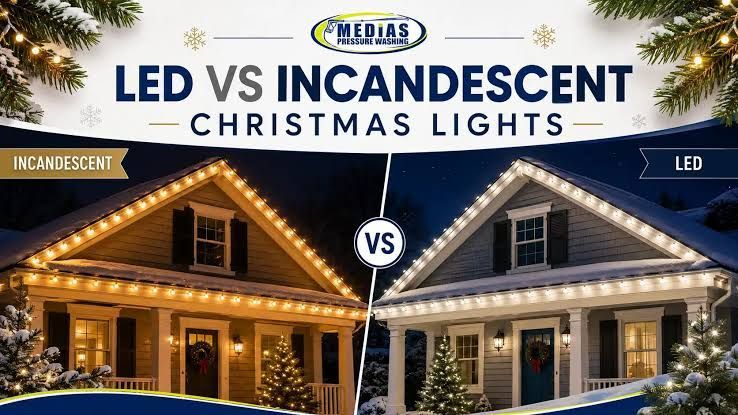
Incandescent bulbs generate noticeable heat, which can be a genuine safety concern. On rooflines, that heat can melt surrounding snow and ice, creating water that refreezes into hazards on walkways or in gutters. The bulbs themselves also run hot enough to pose a fire risk if left in contact with dry materials such as garlands or timber trim, which is a relevant consideration for Rhode Island's many older homes with wood siding and cedar shake roofing.
LED lights run cool to the touch. This reduces the risk of heat damage to building materials and removes one of the more common causes of holiday lighting fires. For a closer look at safe installation practices in changeable weather, see our guide on Christmas light installation safety in Rhode Island.
Cost Comparison Over Time
It's worth being upfront about cost, since LED lights do cost more to buy initially, generally three to five times the price of comparable incandescent strings. Professional grade LED lighting suited to coastal conditions is priced accordingly higher per hundred bulbs.
However, when you factor in electricity use and replacement frequency over several years, the balance shifts. Incandescent displays typically cost more overall once you account for higher power bills each season and the need to replace failed strings, sometimes more than once per winter after storm damage. LED displays cost more at the outset but tend to even out, and often come out ahead, over a five to ten year period due to lower running costs and far fewer replacements.
If your priority is the lowest possible purchase price and you're only decorating for a single season, incandescent lights may suffice. If you're planning a display you intend to use year after year, LED lighting is the more practical long-term choice.
Smart Features and Control
Beyond durability and cost, LED Christmas lights are generally easier to integrate with modern control systems. Many LED products support dimming, timers, and app based control, which can help manage energy use and allow adjustments without physically accessing the display. This is particularly useful in dense neighbourhoods or historic districts where lighting needs to be adjusted to suit local expectations.
If you're interested in controlling your display remotely or setting automated schedules, our article on smart Christmas light installation with app control in Rhode Island covers how these systems work and what to look for.
What to Look for When Choosing LED Christmas Lights
Not all LED products are built the same, and quality varies between consumer grade and professional grade options. When comparing products for Rhode Island conditions, consider:
- Weather rating: Look for lights rated IP65 or higher, which indicates protection against wind driven rain and moisture.
- Wire and connector quality: Heavier gauge wire and reinforced connections hold up better against wind and repeated handling.
- Warranty length: Professional grade LED lighting often comes with multi-year warranties, which is a reasonable indicator of expected durability.
- Colour temperature: Warm white (around 2700K to 3000K) suits traditional holiday displays, while cooler white tones give a more modern look. This is a matter of preference rather than performance.
Professional Installation Versus DIY
Rhode Island's winter conditions, including icy rooflines and high winds, make ladder work genuinely risky during installation and takedown. Professional installers bring the right equipment, insurance, and experience working safely in these conditions, along with design knowledge suited to the area's mix of historic and modern properties.
Professional installation also typically includes service through the season, plus takedown and storage, which reduces the physical demands on homeowners during the coldest months. If you're located in or near North Kingstown, you can find more detail on local service options through our holiday light installation page for North Kingstown.
Making the Right Choice for Your Property
There is no single correct answer to the LED vs incandescent Christmas lights question for every property. If you're decorating a small area for one season and cost is the main concern, incandescent lights will do the job. For most Rhode Island homes and businesses, particularly larger displays or properties exposed to coastal weather, LED lighting offers better durability, lower running costs, and a longer working life, which generally makes it the more sensible option over time.
Whichever option you choose, proper installation and weather appropriate products make the biggest difference to how well your display holds up through a Rhode Island winter.
LED vs. Incandescent Christmas Light Calculator
Compare lighting options based on your home's display size, usage, weather exposure, durability needs, and smart-lighting requirements.
Recommended Lighting
Why This Option Fits Your Property
Key Considerations
Installation Recommendations
Frequently Asked Questions
Do LED Christmas lights work well in cold Rhode Island winters?
Yes. Modern LED Christmas lights maintain consistent brightness in cold temperatures and do not dim the way incandescent bulbs can in freezing conditions.
Are LED Christmas lights worth the higher upfront cost?
For displays used across multiple seasons, LED lights generally cost less overall due to lower electricity use and fewer replacements, even though the initial purchase price is higher.
Can I use my existing timers and extension cords with LED lights?
Most LED Christmas lights work with standard timers and outdoor extension cords, so no special equipment is usually required.
How long do LED Christmas lights typically last?
With proper installation, LED strings commonly last 15 to 25 years, compared to one or two seasons for incandescent lights.
Is professional installation necessary for LED Christmas lights?
It's not strictly necessary, but given Rhode Island's icy conditions and high winds during installation season, professional installation reduces safety risks and often includes ongoing maintenance support.