

LED vs Incandescent Christmas Lights: Which Is Better for Your Rhode Island Home?
Every November, Rhode Island homeowners face the same decision: stick with the familiar warm glow of incandescent Christmas lights or switch to LEDs. The choice affects your electricity bill, how often you'll be replacing bulbs, and even how your display holds up against New England's cold, damp winters. At Rockhouse Construction, we've installed holiday lighting on homes across the state, from Providence to the Northwest corner, and we've seen firsthand which option tends to hold up and which one leaves homeowners frustrated by January.
This guide breaks down the real differences between LED and incandescent Christmas lights, with a focus on what matters most for Rhode Island weather, energy costs, and long-term value. If you're planning your holiday display this year, understanding these differences will help you make a decision that actually fits your home and budget.
What's the Difference Between LED and Incandescent Christmas Lights?
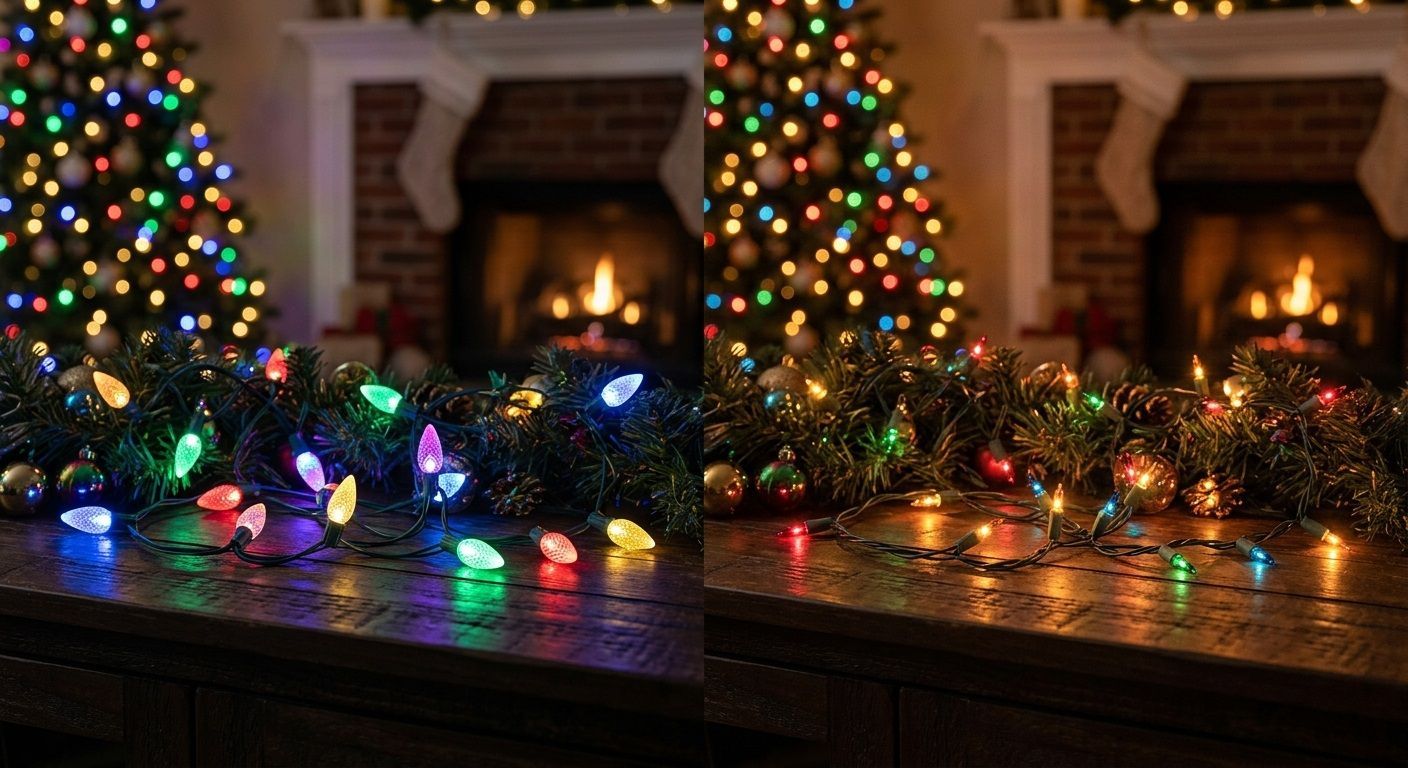
Incandescent Christmas lights use a small filament that heats up and produces light, the same basic technology that's been around for over a century. LED lights, on the other hand, use diodes that light up when electricity passes through them. There's no filament, no heat buildup, and a completely different energy draw.
This difference in technology is why the two bulb types perform so differently once you get into details like energy use, lifespan, and durability in cold climates.
Energy Use and Running Costs in Rhode Island Winters
Rhode Island winters mean longer nights, and for many homeowners, that means lights running for six or more hours a day throughout the holiday season. Energy use adds up over that stretch.
LED Christmas lights use significantly less electricity than incandescent lights to produce the same amount of brightness. A string of incandescent mini-lights might draw close to 40 watts, while an equivalent LED string could use under 5 watts. Multiply that across an entire house display, and the difference on your electricity bill becomes noticeable by the time the season wraps up.
Incandescent lights aren't dramatically expensive to run for a single string, but once you're covering a roofline, wrapping shrubs, and lighting up trees across a full property, the wattage adds up fast. For larger displays, especially the kind we install on bigger Rhode Island properties, LED lighting usually makes more financial sense over the course of a season.
Durability and Performance in Cold, Wet Conditions
Rhode Island's winter weather isn't gentle. We get freezing rain, snow, ice, and plenty of temperature swings between day and night. Lighting that isn't built for this kind of exposure tends to fail early into the season.
Incandescent bulbs are more fragile in this respect. The filament inside can break from vibration or impact, which means a gust of wind or a branch brushing against a string can knock out a bulb. Incandescent strings are also wired so that one bad bulb can sometimes take out an entire section of lights, which is a common complaint we hear from homeowners every December.
LED bulbs hold up better in cold weather. They don't rely on a fragile filament, so they're more resistant to breakage from wind, ice, or accidental knocks while you're installing them on a ladder. Most LED strings are also built with more durable, weather-resistant casings, which matters when you're dealing with freezing rain followed by a thaw, followed by more freezing rain, which is a pretty normal week in Rhode Island from late November through January.
Lifespan: How Long Do They Actually Last?
If you've ever pulled out a box of Christmas lights only to find half the strand doesn't work, you already know how frustrating incandescent lights can be after a season or two in storage. Incandescent bulbs typically last around 1,000 to 2,000 hours of use. Given a typical holiday season's worth of runtime, that often means replacing strings every year or two. LED lights last considerably longer, often rated for 25,000 to 50,000 hours. For most homeowners, that translates to a decade or more of use before you'd need to replace them, assuming reasonable care in storage and handling.
If you're installing a display that covers your roofline, trees, and landscaping, the lifespan difference matters. Fewer replacements mean less time spent testing strings, less waste, and less hassle each year when you're trying to get your display up before the season gets away from you.
Brightness and Appearance: Does One Look Better Than the Other?
This is where personal preference comes in more than anywhere else. Incandescent lights give off a warm, slightly yellow glow that many homeowners associate with a traditional look. LEDs have improved a great deal over the years and now come in warm white options that closely resemble incandescent lighting, but some people still notice a difference in tone, particularly with older or cheaper LED strings.
LEDs also tend to produce a cleaner, more consistent brightness across the entire string, since each diode burns at a steady output rather than dimming gradually like an aging incandescent filament can. If consistency across a large display matters to you, particularly for rooflines or larger trees, that's a point in favor of LEDs.
Neither option is objectively better looking. It comes down to whether you want a traditional warm glow or a brighter, more uniform finish.
Cost Comparison: Upfront Price vs Long-Term Value
Incandescent lights are usually cheaper to buy upfront. If you only need a string or two for a small area, this lower initial cost can make sense.
LED lights cost more per string initially, but the combination of lower energy use and a much longer lifespan usually makes them the better value over several seasons. For larger displays, where you're covering more of the property and running lights for longer each night, the LED upfront cost tends to pay for itself within a couple of seasons through lower electricity bills alone.
When incandescent might make sense:
- Small, simple displays where energy use isn't a concern
- Homeowners who prefer the traditional warm glow and don't mind occasional bulb replacement
- Short-term or one-off setups where longevity isn't a priority
When LED makes more sense:
- Larger displays covering rooflines, trees, and landscaping
- Homeowners running lights for extended hours each evening
- Anyone looking to reduce the hassle of yearly bulb replacement
- Properties with harsh exposure to wind, ice, or freezing rain
What We Recommend for Rhode Island Homes
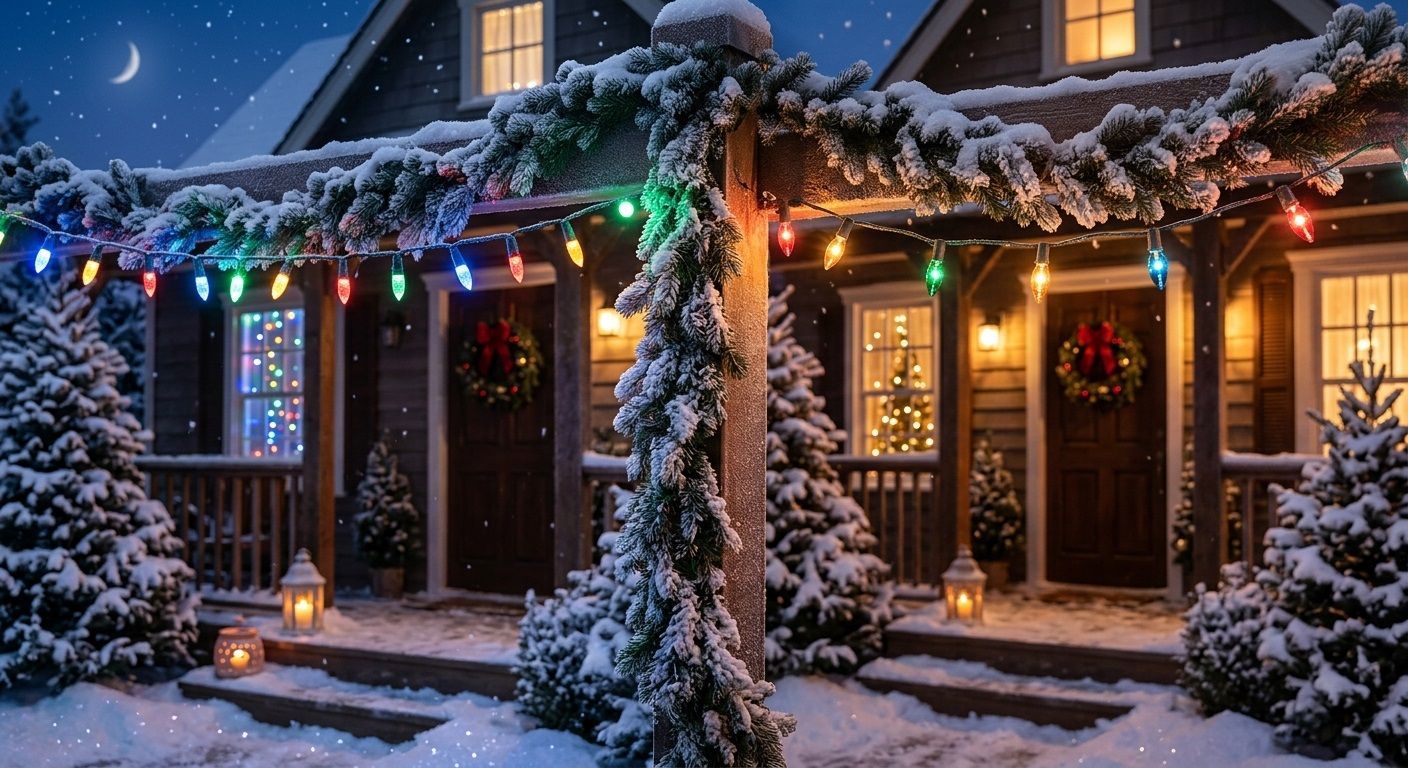
Based on what we see across installations in Providence, Burrillville, Exeter, and other communities around the state, LED lighting is generally the better choice for most Rhode Island homeowners. The combination of lower running costs, longer lifespan, and better resistance to cold and wet weather makes LEDs a practical fit for our climate.
That said, the right choice depends on the size of your display, your budget, and what look you're going for. If you're still deciding, or if you'd rather not spend a weekend on a ladder figuring it out yourself, our team at Rockhouse Construction handles holiday light installation and decorating across Rhode Island, including custom setups suited to your property and budget.
We've installed holiday lighting for homeowners in Burrillville, RI, Exeter, RI, and Providence, RI, and we understand what holds up through a Rhode Island winter and what doesn't.
Final Thoughts
Choosing between LED and incandescent Christmas lights comes down to what matters most for your home: upfront cost, long-term savings, durability, or the specific look you want on your property. For most Rhode Island homeowners dealing with cold, wet winters and wanting a display that lasts, LED Christmas lights tend to be the more practical option.
If you'd like help planning or installing your holiday lighting this season, contact Rockhouse Construction and our team can walk you through the options that suit your property.
LED vs Incandescent Christmas Light Selector
Not sure which Christmas lights are right for your Rhode Island home? Answer these quick questions to find the option that best fits your display, lighting habits, and preferences.
This recommendation is a general guide. Check that your lights are rated for outdoor use and follow the manufacturer's installation and care instructions.