

Rhode Island Outdoor Kitchen With Pergola: A Complete Guide
A Rhode Island outdoor kitchen with pergola gives homeowners a permanent cooking and entertaining space that holds up against the state's four distinct seasons.
For families in Providence, Cranston, Warwick, Barrington, and East Greenwich, this kind of project has become one of the more common backyard upgrades, combining a built-in kitchen with an overhead structure that adds shade and a finished look to the space.
This guide covers what these setups typically include, how Rhode Island's climate shapes material choices, what permits to expect, and roughly what the project costs. It also looks at where a pergola fits compared with other covered outdoor options, since not every backyard needs the same structure.
What Does an Outdoor Kitchen With Pergola Actually Include?
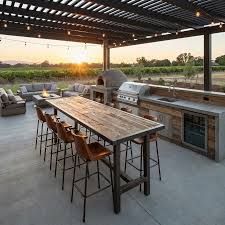
An outdoor kitchen with a pergola pairs a functional cooking area with an overhead frame that defines the space and provides partial shade. The pergola sits above the kitchen like a roofline, turning what would otherwise be an open patio into something that reads as an intentional outdoor room.
Most builds in Rhode Island include a built-in grill, countertops, storage cabinetry, and a sink. Some homeowners add a pizza oven or a small outdoor refrigerator, depending on how the space will be used.
The pergola itself is usually framed in wood, vinyl, or aluminium, chosen based on how much maintenance a homeowner wants to take on over time.
It's worth noting that a pergola is not the same as a solid patio cover. A pergola has an open or semi-open top that lets some light and rain through unless fitted with a retractable canopy or louvered panels.
For a full breakdown of how the two compare, including cost ranges and weather performance, see our guide on pergolas versus patio covers in Rhode Island.
Why Rhode Island Homeowners Choose This Setup
Rhode Island's outdoor season runs roughly from May through October, and homeowners in North Kingstown, South Kingstown, Cumberland, and Smithfield tend to use backyard kitchens heavily during that window. A few practical reasons come up often when people explain why they built one:
- It extends how the backyard gets used during warmer months, especially when paired with shade and lighting
- It keeps cooking heat and mess out of the main house during summer
- It can add resale appeal, since buyers increasingly look for usable outdoor space
- It gives families a dedicated spot for everyday meals, not just special occasions
None of these points guarantee a specific return at resale. Value depends heavily on build quality, the surrounding landscaping, and what buyers in a given neighbourhood expect.
Pergola Materials That Hold Up in Rhode Island
Material choice matters more here than in drier climates, since Rhode Island sees humid summers, salty coastal air in towns like Newport and Narragansett, and real winter freeze-thaw cycles inland.
Wood pergolas, typically cedar or pressure-treated pine, suit colonial and Cape Cod style homes that are common across the state. They need sealing or staining every couple of years to prevent moisture damage.
Vinyl pergolas require very little upkeep and resist rot, which makes them a practical option for coastal properties in Middletown, Portsmouth, and Westerly.
Aluminium pergolas hold up well against salt air once powder-coated, and they've become more common across the state for homeowners who want a cleaner, more modern look without ongoing maintenance.
Louvered roof pergolas let homeowners adjust the roof panels to control sun and rain. These show up more often in waterfront backyards in Tiverton and Little Compton, where outdoor entertaining happens close to the water.
How Rhode Island's Climate Shapes the Design
Rhode Island averages around 47 inches of rain a year, and that figure matters when planning an outdoor kitchen. Countertops made from granite, concrete, or porcelain hold up better than porous stone, since they resist moisture absorption.
Grout lines should be sealed on a regular schedule to avoid cracking during winter freeze-thaw cycles, and countertop edges should be designed to direct water away from cabinetry rather than letting it pool.
Homeowners further from the coast, in places like Johnston, Lincoln, and Woonsocket, still deal with wet springs and cold winters even without the salt air exposure.
The same baseline advice applies across the state: choose weather-resistant materials and don't skip waterproofing details, since they're far more expensive to fix after the build is finished.
Permits and Local Requirements
Most Rhode Island municipalities require at least one permit for a permanent outdoor kitchen, particularly once plumbing or gas lines are involved. Generally speaking:
- A building permit is usually required once the pergola structure passes a certain square footage, which varies by town
- A plumbing permit is needed if the kitchen includes a sink connected to running water
- A gas permit applies whenever a natural gas line runs out to the structure
- Zoning setback rules differ by municipality, so it's worth checking with the local zoning office before finalising a design
Requirements can differ meaningfully between Providence, Warwick, and smaller towns, so confirming details with the local building department early on avoids delays once construction starts.
What Does an Outdoor Kitchen With Pergola Cost in Rhode Island?
Pricing depends on size, materials, and the features included. As a general guide:
- Entry-level setups typically run $15,000 to $30,000, covering a basic pergola, a built-in grill, and limited counter space
- Mid-range builds fall between $30,000 and $65,000, usually including a fuller appliance lineup, stone or concrete countertops, and a more custom pergola
- High-end custom projects can reach $65,000 to $150,000 or more, often featuring a louvered roof, pizza oven, bar area, and built-in lighting or audio
Most Rhode Island homeowners land in the mid-range bracket, particularly in towns like Barrington, East Greenwich, and Westerly, where outdoor entertaining is a regular part of life.
Considering Alternatives Before You Build
An outdoor kitchen isn't the right fit for every property or every household. Some homeowners weigh it against a sunroom addition, since the two serve different purposes and carry different year-round usability. If you're trying to decide between the two, our comparison of outdoor kitchens versus sunroom additions in Rhode Island walks through cost, climate considerations, and resale impact in more detail.
If your project also involves hardscaping, such as a paver patio to support the kitchen and pergola footprint, it helps to work with a contractor experienced in local drainage and freeze-thaw conditions.
Homeowners near Pawtucket can review our paver patio and hardscaping services for an idea of what a complete outdoor build typically involves.
Is an Outdoor Kitchen With Pergola Worth It?
For households that cook and entertain outdoors regularly between late spring and early autumn, a Rhode Island outdoor kitchen with pergola adds genuine usable space to a property. It works best when the materials are matched to the state's climate and the layout fits how the household actually spends time outside, rather than following a generic template.
Getting the permitting, material choices, and drainage details right from the start makes the difference between a space that holds up for decades and one that needs costly repairs within a few years.
Outdoor Kitchen With Pergola Calculator
Estimate the budget for your outdoor kitchen and pergola project in Rhode Island.
Your Estimated Project Budget
30,000 – 65,000
Select your project options and calculate your estimate.
Frequently Asked Questions
How much does a Rhode Island outdoor kitchen with pergola typically cost?
Costs generally range from $15,000 for a basic setup to $150,000 or more for a fully custom build with premium finishes. Most mid-range projects fall between $30,000 and $65,000.
Do I need a permit to build an outdoor kitchen with a pergola in Rhode Island?
In most municipalities, yes. Building permits are common once the structure exceeds a certain size, and separate plumbing or gas permits apply if water or gas lines are extended to the kitchen.
What's the difference between a pergola and a patio cover for an outdoor kitchen?
A pergola has an open or semi-open top that allows some light and rain through, while a patio cover is a solid roof built to block weather entirely. The right choice depends on how much protection you need and the look you want for your home.
How long does an outdoor kitchen last in Rhode Island's climate?
With weather-resistant materials such as aluminium, vinyl, or sealed stone, and regular maintenance on any wood components, a well-built outdoor kitchen can last well beyond a decade.
Is a pergola or a sunroom a better addition for Rhode Island homeowners?
It depends on how the space will be used. A pergola-covered outdoor kitchen suits warmer-month entertaining, while a sunroom offers usable space throughout the year, including winter.