

Rhode Island Setback Requirements by Town: A Homeowner's Guide
Setback requirements in Rhode Island control how far a structure must sit from property lines, roads, and water bodies. These distances are set at the municipal level, so they differ from town to town and even from zone to zone within the same town. Coastal communities often add extra buffer rules through the Coastal Resources Management Council (CRMC), while rural towns tend to require larger setbacks tied to bigger minimum lot sizes. Always confirm exact figures with your local zoning or building department before you design a project.
Planning a home addition, deck, garage, or new structure in Rhode Island means working within your town's zoning ordinance, and setback requirements sit at the centre of that ordinance. A setback is the minimum distance a building or structure must be positioned from a property line, street, or in some cases, a water body or wetland. Get it wrong, and you could face a stop-work order, a costly redesign, or a variance application that delays your project by months.
Rhode Island setback requirements by town vary considerably because each of the state's 39 municipalities sets its own zoning code. Even within a single town, setback rules change depending on the zoning district, whether that's a dense residential zone, a rural-residential zone, or a commercial corridor. This guide walks through what influences setback distances across Rhode Island, what to expect in some of the state's most active construction markets, and how to find the exact numbers that apply to your lot.
What Determines Setback Requirements in Rhode Island?
Before looking at individual towns, it helps to understand the factors that shape setback rules across the state.
Zoning district. Most Rhode Island towns divide land into residential, commercial, industrial, and rural or agricultural zones. A standard suburban residential zone might carry a front setback of 25 to 30 feet, while a rural zone with larger minimum lot sizes can require 50 feet or more. Dense urban zones, like those found in Providence or Central Falls, often allow smaller setbacks because lots are narrower and development is tighter.
Lot size and frontage. Towns with larger minimum lot requirements, such as Exeter or Glocester, generally pair those bigger lots with larger setback distances. Towns with smaller urban lots, like Pawtucket or Woonsocket, tend to have more modest setback minimums simply because the lots themselves don't allow for much else.
Coastal and wetland buffers. Communities along Narragansett Bay and the coastline, including Newport, Barrington, Warwick, Portsmouth, Middletown, Narragansett, and Westerly, must also account for CRMC regulations. These add buffer zones near shorelines, wetlands, and water bodies that sit on top of standard municipal setbacks. The Rhode Island Department of Environmental Management (RIDEM) also regulates setbacks from freshwater wetlands statewide, which can affect projects even in towns without a coastline.
Accessory structures. Sheds, detached garages, pools, and decks often have their own, smaller setback allowances compared to the main dwelling. Some towns allow accessory structures closer to side and rear lines than the primary home, provided they meet height and size limits.
Corner lots and through lots. Properties with frontage on two streets usually have two front setbacks to satisfy, which catches a lot of homeowners off guard during planning.
Because each town sets its own ordinance, and because many have multiple zoning districts with different numbers, there's no single statewide setback figure that applies everywhere. The sections below give a general picture of what to expect across Rhode Island's most common construction markets, but the only way to confirm exact figures for your lot is to check your town's zoning map and ordinance or speak with the local building department.
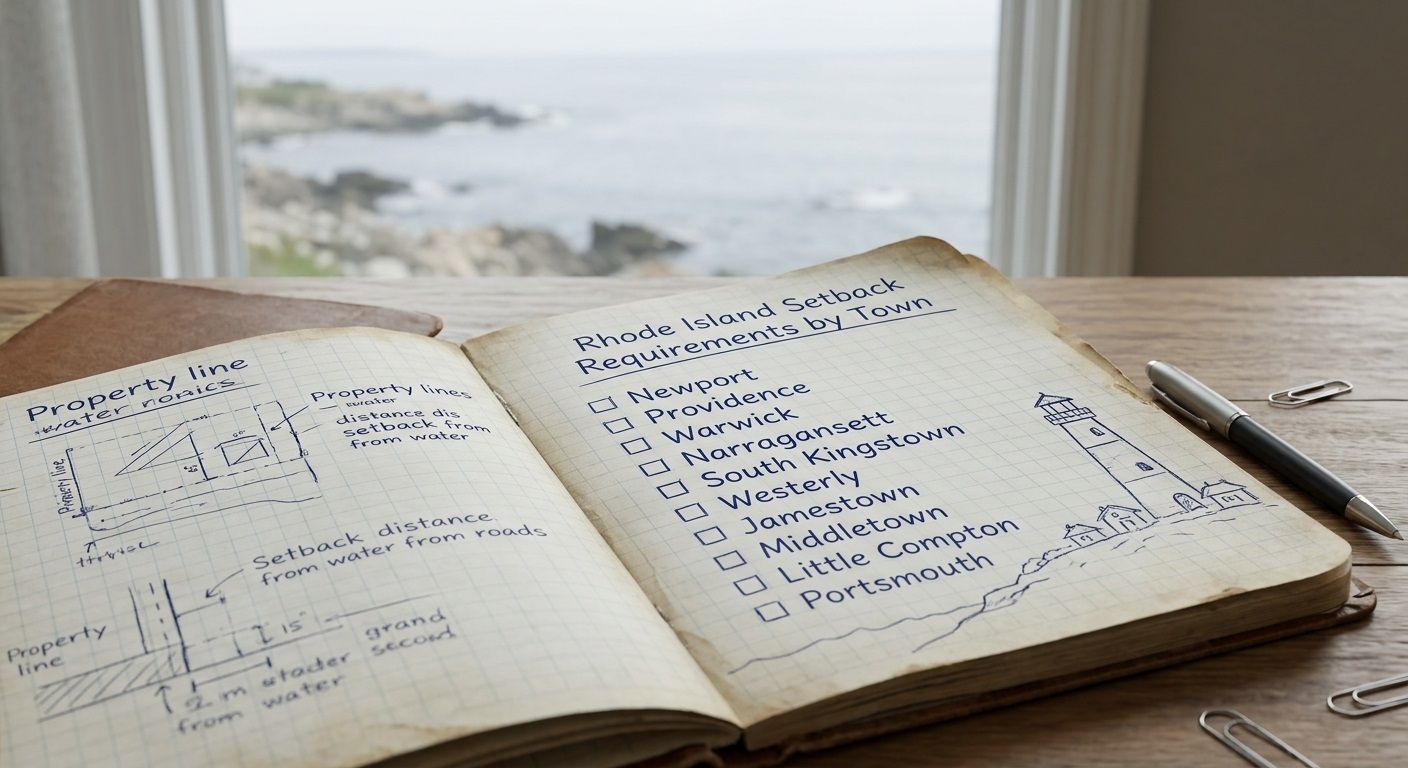
Setback Requirements in Rhode Island's Urban Centres
What are typical setbacks in Providence, RI?
Providence has a detailed zoning ordinance with multiple residential districts (R1, R1A, R2, R3, R4), each carrying different setback minimums. Dense districts closer to downtown generally allow smaller front and side setbacks, reflecting the city's tighter urban lots, while outer neighbourhoods with larger single-family lots carry more generous requirements. Historic district overlays can add further design review on top of standard zoning, which matters if your property sits in one of Providence's protected historic areas.
What are typical setbacks in Pawtucket, RI?
Pawtucket's zoning ordinance reflects its dense, historic housing stock, with many residential lots falling under districts that permit relatively compact setbacks compared to suburban towns. Older triple-decker neighbourhoods often have non-conforming setbacks already in place, meaning existing structures may sit closer to the line than current code would allow for new construction. This makes a zoning check especially important before any addition or rebuild.
What are typical setbacks in Central Falls, RI?
As Rhode Island's smallest and most densely populated city, Central Falls has some of the tightest lot and setback standards in the state. Projects here frequently involve non-conforming lots, so a variance or special use permit is a common part of the process for additions, garages, or new construction.
What are typical setbacks in Woonsocket, RI?
Woonsocket's residential districts mirror other older mill towns, with setback minimums that account for narrow historic lots in the city centre and larger allowances in outlying residential areas. Flood zone considerations near the Blackstone River can also affect what's buildable on certain lots.
What are typical setbacks in Cranston, RI?
Cranston is one of the larger and more zoning-diverse communities on this list, ranging from dense urban neighbourhoods near the Providence line to suburban and semi-rural districts further south and west. Setback requirements shift noticeably depending on which part of the city your property falls in, so checking the zoning map first saves time.
Setback Requirements in Suburban Rhode Island Towns
What are typical setbacks in Warwick, RI?
Warwick's zoning ordinance includes several residential districts with setback requirements that increase as minimum lot sizes grow. Because Warwick has significant coastal frontage along Narragansett Bay and Greenwich Bay, properties near the water often need to factor in CRMC setback and buffer requirements in addition to standard municipal zoning.
What are typical setbacks in East Greenwich, RI?
East Greenwich combines a historic downtown with larger-lot residential neighbourhoods further out. Setback minimums tend to be more generous in the town's outer residential zones, while the historic district downtown carries its own design and setback considerations tied to preserving the area's character.
What are typical setbacks in North Kingstown, RI?
North Kingstown's zoning includes both coastal and inland residential districts. Waterfront parcels, particularly those near Wickford or the Narragansett Bay shoreline, are subject to CRMC review in addition to town setback rules.
What are typical setbacks in South Kingstown, RI?
South Kingstown spans a large geographic area with a mix of village centres, rural land, and coastal neighbourhoods near Narragansett and the ocean. Setback requirements vary significantly depending on which zoning district and which part of town your property sits in.
What are typical setbacks in North Providence, RI?
North Providence is a compact, largely built-out suburb with residential zoning that reflects smaller lot sizes typical of inner-ring communities near Providence.
What are typical setbacks in West Warwick, RI?
West Warwick's residential districts generally follow suburban setback patterns, with somewhat tighter requirements in neighbourhoods closer to the town centre and former mill villages.
What are typical setbacks in Johnston, RI?
Johnston includes a mix of suburban residential neighbourhoods and more rural land to the west. Setback requirements increase in the town's larger-lot rural residential zones compared to its denser suburban districts.
What are typical setbacks in Smithfield, RI?
Smithfield's zoning ordinance includes several residential districts with setback minimums tied to lot size, generally larger in the town's more rural western sections than in neighbourhoods closer to Route 44.
What are typical setbacks in Lincoln, RI?
Lincoln's residential zoning ranges from village-style neighbourhoods to larger suburban lots, with setback requirements that shift accordingly across the town.
What are typical setbacks in Cumberland, RI?
Cumberland has a mix of established residential neighbourhoods and newer suburban development, with setback minimums generally following standard suburban patterns that increase with lot size.
What are typical setbacks in Bristol, RI?
Bristol's zoning reflects its position on Narragansett Bay and Mount Hope Bay, meaning waterfront and near-shore properties are subject to CRMC buffer requirements on top of standard town setbacks. The historic downtown area also has distinct considerations tied to Bristol's colonial-era street grid and narrower lots.
Setback Requirements in Coastal Rhode Island Towns
What are typical setbacks in Newport, RI?
Newport combines a dense historic downtown with larger-lot residential neighbourhoods elsewhere in the city. Because Newport sits almost entirely along the coast, CRMC jurisdiction plays a significant role in many construction and renovation projects, particularly those near the shoreline or within flood zones. Historic district rules add another layer of review for properties within Newport's protected areas.
What are typical setbacks in Barrington, RI?
Barrington is largely residential with substantial water frontage along the Barrington and Warren Rivers and Narragansett Bay. Waterfront setbacks here commonly involve CRMC review in addition to the town's standard residential zoning requirements.
What are typical setbacks in Portsmouth, RI?
Portsmouth includes a long stretch of coastline along the Sakonnet River and Narragansett Bay, so CRMC setback and buffer rules frequently apply to waterfront parcels here, alongside the town's municipal zoning requirements.
What are typical setbacks in Middletown, RI?
Middletown sits between Newport and Portsmouth and shares similar coastal characteristics. Properties near Easton's Beach, Sachuest, or the Sakonnet shoreline may need to account for CRMC jurisdiction in addition to town zoning.
What are typical setbacks in Tiverton, RI?
Tiverton spans both denser village areas near the Sakonnet River and more rural inland sections. Setback requirements increase in the town's rural residential and agricultural districts compared to its village zones.
What are typical setbacks in Narragansett, RI?
Narragansett's zoning ordinance reflects its identity as a coastal resort town, with significant CRMC involvement for properties near the beach and shoreline, alongside standard residential setback rules inland.
What are typical setbacks in Westerly, RI?
Westerly includes both a traditional town centre and extensive coastal neighbourhoods near Watch Hill and Misquamicut. Coastal parcels here are subject to CRMC review, while inland residential zones follow the town's standard setback schedule.
Setback Requirements in Rural Rhode Island Towns
What are typical setbacks in Scituate, RI?
Scituate is a largely rural town with substantial land around the Scituate Reservoir, Providence Water's supply source. Setback and buffer requirements near the reservoir watershed can be stricter than standard residential setbacks elsewhere in town, given the added environmental protections in place.
What are typical setbacks in Glocester, RI?
Glocester carries some of the largest minimum lot sizes in the state, and its setback requirements follow suit, generally requiring more distance from property lines than denser suburban or urban towns.
What are typical setbacks in Burrillville, RI?
Burrillville is one of Rhode Island's most rural municipalities, with large-lot residential and agricultural zoning that typically pairs with generous setback minimums compared to the state average.
What are typical setbacks in Richmond, RI?
Richmond's zoning favours larger rural residential lots, with setback requirements generally scaled to match.
What are typical setbacks in Hopkinton, RI?
Hopkinton is similarly rural in character, with setback minimums tied to its larger residential and agricultural lot sizes.
What are typical setbacks in Exeter, RI?
Exeter has some of the largest minimum lot requirements in Rhode Island, and its setback rules reflect that rural, low-density character.
What are typical setbacks in Coventry, RI?
Coventry spans a wide area with both suburban neighbourhoods near its town centre and more rural land further west, meaning setback requirements vary considerably depending on the specific zoning district.
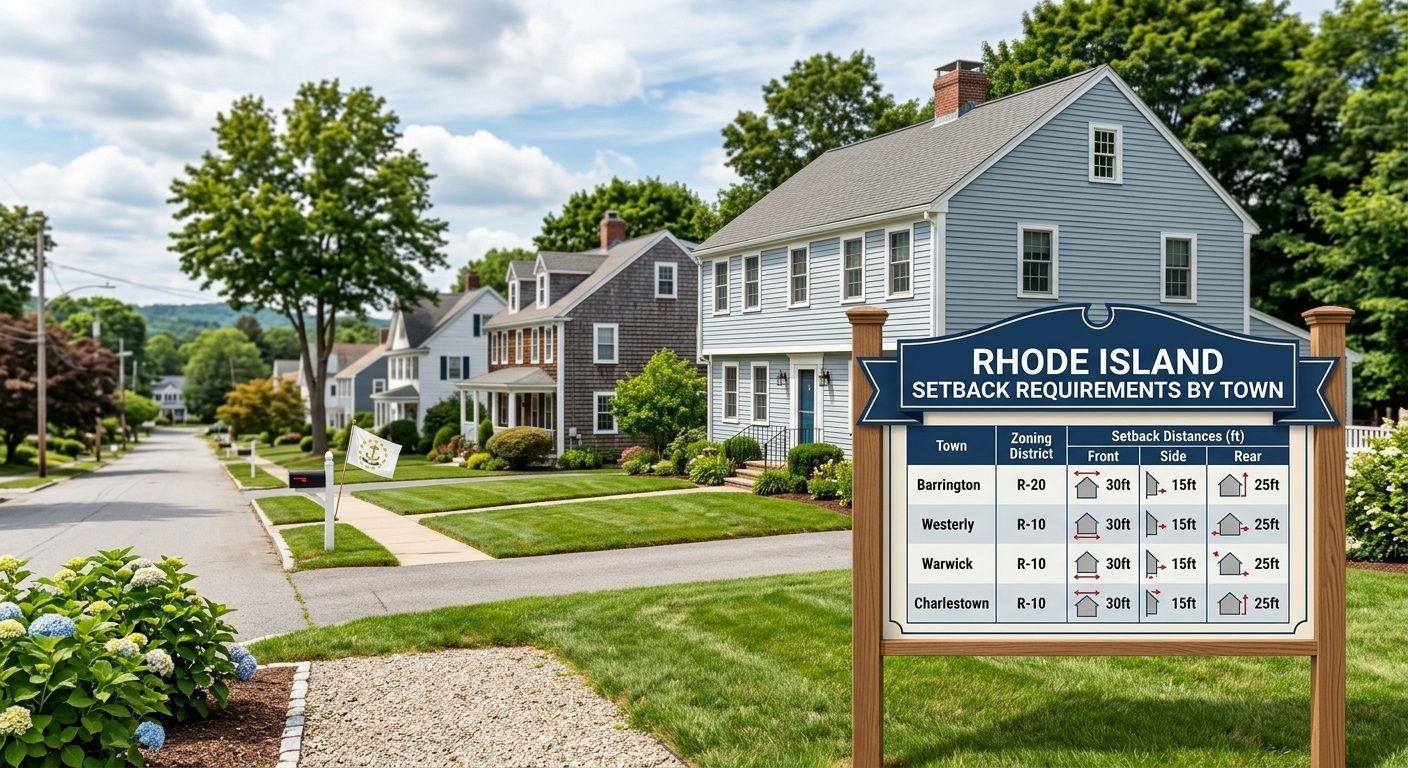
Why Confirming Local Setback Rules Matters
Setback violations are one of the most common and most avoidable problems in residential construction. A structure built too close to a property line can trigger a stop-work order from the building inspector, force a costly redesign partway through a project, or require a time-consuming variance application through the local zoning board. In coastal towns, missing a CRMC requirement can add months to a project timeline.
Because Rhode Island's 39 towns and cities each maintain their own zoning ordinance, with the added layer of CRMC oversight in coastal communities and RIDEM oversight near wetlands, there is no shortcut to confirming the exact numbers for your property. The most reliable path is to:
- Check your town's zoning map to confirm which district your lot falls in.
- Review the specific setback table for that district in the zoning ordinance.
- Contact the local building or zoning department to confirm current requirements, since ordinances are periodically updated.
- Factor in CRMC or RIDEM review if your property is near the coast, a pond, or a wetland.
Work With a Contractor Who Knows Rhode Island Zoning
Navigating setback requirements across Rhode Island's towns takes local knowledge, and that's where an experienced Rhode Island contractor earns their keep. At Rockhouse Construction, our team has worked on residential projects across the state since 2008, from additions and garages to decks, patios, and full renovations.
We understand how zoning requirements shift from one Rhode Island town to the next, and we factor that into planning every project from the start.
If you're planning a home addition, garage, deck, or renovation anywhere in Rhode Island and want a team that understands local setback requirements, contact Rockhouse Construction today to discuss your project.
Rhode Island Setback Calculator
Enter your lot dimensions and required setbacks to estimate the area available for construction.
This calculator provides an approximate rectangular buildable area based on the measurements entered. Actual building placement may be affected by zoning rules, easements, corner-lot requirements, wetlands, CRMC regulations, and other site restrictions. Confirm the applicable requirements with your local Rhode Island zoning or building department before planning construction.
Frequently Asked Questions
Q: What is a setback requirement in construction?
A: A setback is the minimum distance a building or structure must be set back from a property line, street, or in some cases a water body or wetland. Setback rules are set by local zoning ordinances and vary by municipality and zoning district.
Q: Do setback requirements differ between Rhode Island towns?
A: Yes. Each Rhode Island municipality sets its own zoning ordinance, so setback distances differ from town to town and often between zoning districts within the same town.
Q: What happens if I build too close to a property line in Rhode Island?
A:You may face a stop-work order from the local building inspector, be required to modify or remove the structure, or need to apply for a variance through the local zoning board to keep it in place.
Q: Do waterfront properties in Rhode Island have extra setback rules?
A:Many coastal towns, including Newport, Barrington, Warwick, Portsmouth, Middletown, Narragansett, and Westerly, require CRMC review for projects near the shoreline, which adds buffer requirements beyond standard municipal setbacks.
Q: How do I find the exact setback requirements for my property?
A:Check your town's zoning map to identify your district, review the setback table in the local zoning ordinance, and confirm current requirements with the building or zoning department before starting design work.
Q: Do accessory structures like sheds or garages have different setbacks than a house?
A: In many Rhode Island towns, accessory structures are allowed smaller setbacks than the primary dwelling, though this depends on the size and height of the structure and the specific town ordinance.