

Best Patio Styles for Beach Homes in Rhode Island
Choosing the best patio style for a beach home in Rhode Island means balancing coastal character with practical durability. The Ocean State's salt air, strong winds, and shifting seasons put real pressure on outdoor materials, so the right design has to look good and hold up year after year. This guide walks through the patio styles, materials, and regional factors that matter most for coastal properties here.
Why Beach Home Patios Need a Different Approach in Rhode Island
Rhode Island's 400 miles of coastline create conditions that inland patios simply don't deal with. Salt spray, high humidity, and intense UV exposure wear down standard materials faster than most homeowners expect. Metal fixtures corrode, colours fade, and untreated wood can start showing damage within a few seasons.
Moisture is a constant factor near the water. Mould and mildew develop quickly on surfaces that trap dampness, and freeze-thaw cycles in winter add another layer of stress on stone and concrete. Add in the risk of nor'easters and the occasional hurricane remnant, and it becomes clear why patio design near the coast needs careful planning from the start.
Getting the material and layout right at the outset saves money on repairs later. It also means the patio actually gets used, rather than sitting damaged or deteriorating after a rough winter.
Patio Styles That Suit Rhode Island's Coastal Homes
Classic New England Coastal
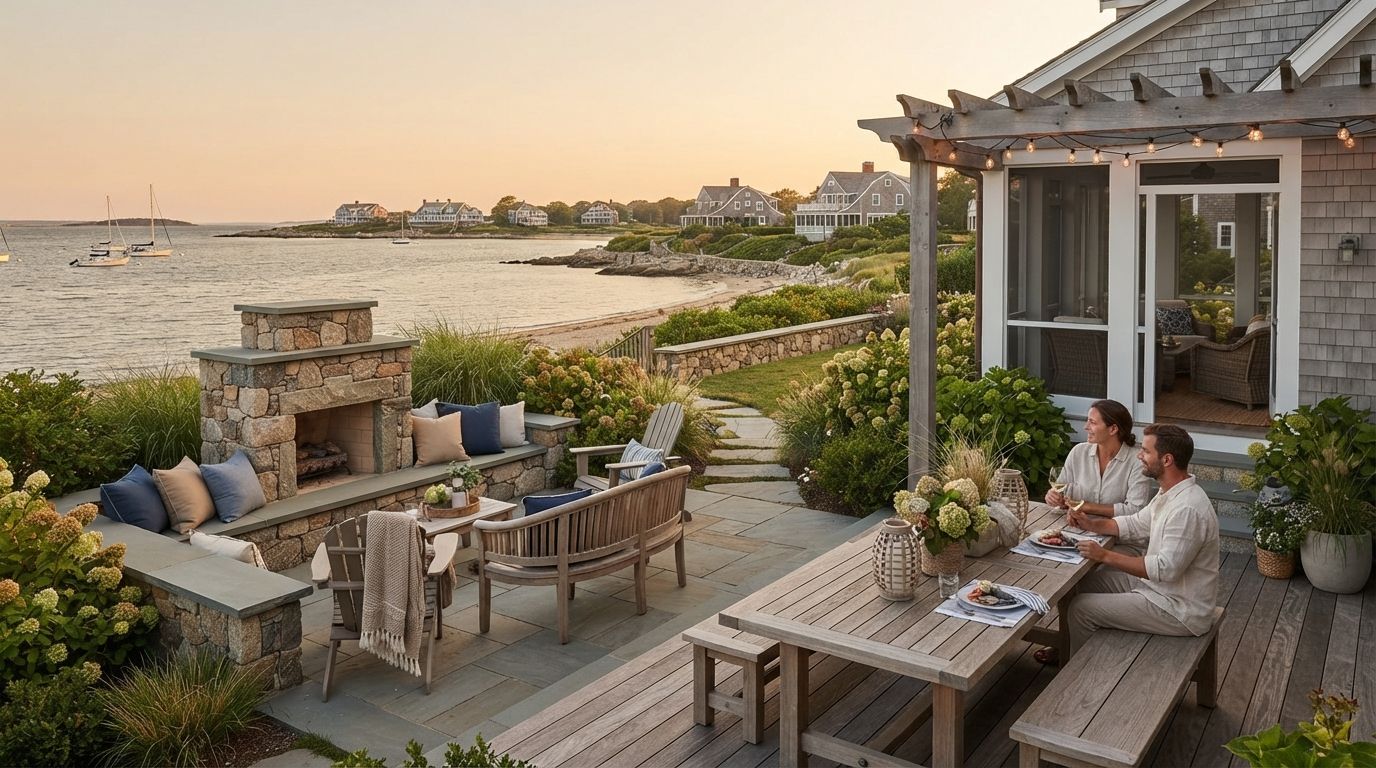
This style leans on the state's maritime history, with weathered wood tones, white and grey colour schemes, and simple built-in seating. Composite decking that mimics aged cedar is a common choice here, since it keeps the look without the upkeep real cedar demands in salt air.
This approach fits well in historic coastal communities like Watch Hill and Narragansett, where blending with the surrounding architecture matters as much as function.
Modern Coastal Minimalism
Newer or renovated beach homes often suit a cleaner look, built around large-format porcelain tile, aluminium or stainless railings, and furniture that doesn't block sightlines to the water. The focus is on horizontal lines and open sightlines rather than ornamentation.
It's a practical option for homeowners who want low maintenance alongside a contemporary finish, and it holds up well against salt exposure when the right materials are specified.
Rustic Beach Cottage
For smaller or seasonal properties, a rustic cottage style keeps things relaxed. Treated reclaimed wood, mixed textures, and native plantings give the space an informal, lived-in feel. This style pairs naturally with rustic patio design approaches already popular inland across Rhode Island, adapted here for coastal conditions with salt-tolerant plants and weather-resistant finishes.
Resort-Style Outdoor Living
Larger coastal properties sometimes call for a more developed outdoor space, including built-in kitchens, fire features, and multiple seating zones. Native granite and high-performance composites are common here, chosen for their resistance to salt damage over decades of use. This style tends to suit larger waterfront homes where the outdoor area gets heavy seasonal use.
Materials That Hold Up Near the Water
Material choice is arguably more important than style when it comes to long-term performance. A few options consistently perform well in Rhode Island's coastal climate:
- Natural stone: Granite and bluestone resist salt damage and age well without heavy upkeep. Bluestone, often sourced from nearby Connecticut and Massachusetts, also offers good slip resistance for pool surrounds.
- Composite decking: Engineered for coastal use, composite resists corrosion, UV fading, and splintering better than standard timber.
- Porcelain tile: Large-format outdoor porcelain resists moisture absorption and salt damage, with anti-slip finishes suited to areas near pools or outdoor showers.
- Marine-grade metals: Aluminium and stainless steel hold up to salt exposure far better than standard steel, making them a sound choice for railings and furniture frames.
Sealing and periodic maintenance still matter, even with durable materials. Natural stone benefits from resealing every few years, and composite surfaces should be checked for drainage issues after storms.
Design Details Worth Planning For
Wind and Weather Protection
Coastal wind can make an otherwise comfortable patio unusable without some planning. High-backed built-in seating, pergolas with adjustable covers, and living windbreaks using salt-tolerant shrubs all help manage wind without blocking the view.
Drainage
Proper drainage is one of the most overlooked parts of coastal patio design. Rhode Island sees heavier rainfall and occasional storm surge in low-lying coastal areas, so grading, permeable paving, and drainage systems like French drains need to be part of the design, not an afterthought.
Native, Salt-Tolerant Planting
Plants like beach grass, bayberry, and rugosa rose are suited to Rhode Island's coastal soil and salt exposure. They also double as informal windbreaks and privacy screening, which reduces the need for built structures in some layouts.
Regional Differences Across Rhode Island's Coast
Design choices often shift depending on where along the coast a home sits.
- South County (Narragansett, Misquamicut) tends to favour casual, family-oriented patios with outdoor showers and storage for beach gear.
- Newport leans toward more traditional detailing, partly due to historic district guidelines that influence material and design choices.
- Block Island favours simpler designs using materials that are easier to transport, given the logistics of building on the island.
These regional patterns are worth considering early, since they affect both design approach and project cost.
Seasonal Factors to Keep in Mind
Rhode Island's climate swings from intense summer use to harsh winter conditions, and a well-planned patio needs to handle both.
- Summer: Shade structures and ventilation matter most during the busiest months of use.
- Storm season: Removable furniture, solid drainage, and wind-resistant materials reduce storm damage risk.
- Winter: Freeze-thaw cycles test stone and concrete joints, so proper installation and base preparation are critical for long-term durability.
How Patio Design Affects Property Value
A well-designed outdoor space adds genuine value to a coastal property, both in terms of usable living area and overall appeal to future buyers. Quality materials and proper installation reduce long-term maintenance costs, which matters to buyers evaluating upkeep on a waterfront home. Homeowners thinking long-term should also factor in future conditions.
Rising sea levels and more frequent severe weather are prompting more coastal homeowners to choose adaptable layouts and robust materials that can handle changing conditions over the coming decades.
Working With Local Building Requirements
Coastal construction in Rhode Island comes with specific building code considerations, including flood zone rules and setback requirements that vary by municipality. These regulations affect what's possible on a given property, so it's worth checking local requirements early in the planning process, particularly for homes in flood-prone zones or historic districts.
For homeowners further inland, including those in areas like Smithfield, similar principles around materials, drainage, and base preparation apply. You can see how these fundamentals translate to a Smithfield paver patio project for comparison, even though coastal exposure isn't a factor there.

Bringing It All Together
The patio design also needs to work with the rest of the home's exterior. For a broader look at how coastal homes across Rhode Island approach exterior materials, colour, and layout, our guide to coastal home design in Rhode Island covers these decisions in more detail.
Choosing the right patio style for a Rhode Island beach home comes down to matching material durability with the look you want, while planning for the state's coastal weather patterns. Whether the goal is a classic New England feel, a modern minimal layout, or a more developed resort-style space, the best patio styles for beach homes in Rhode Island are the ones built with the right materials and proper drainage from day one.
Rhode Island Beach Home Patio Style Selector
Discover the right coastal patio design and materials for your property.
Coastal patios need to balance appearance with protection against salt air, moisture, UV exposure, and strong winds. Answer these questions to find a patio style and material combination suited to your Rhode Island beach home.
Your Rhode Island Coastal Patio Results
How Your Preferred Style Fits Your Property
Coastal Material and Fixture Recommendations
Wind and Weather Protection
Drainage and Stormwater Planning
Coastal Landscaping Suggestions
Local Permits and Property Checks
This planner provides general design recommendations, not an engineering assessment or guarantee of material performance. Flood-zone requirements, coastal approvals, zoning restrictions, historic review, structural design, and drainage solutions depend on the specific property. Verify local requirements and consult qualified professionals before construction.
Frequently Asked Questions
What is the most durable patio material for a Rhode Island beach home?
Natural stone such as granite or bluestone and marine-grade composite decking tend to perform best against salt exposure, UV damage, and moisture over the long term.
Do coastal patios in Rhode Island need special drainage?
Yes. Coastal properties often deal with heavier rainfall and occasional storm surge, so proper grading and drainage systems are an important part of the design, not an optional extra.
Which patio style suits a historic Newport property?
Classic New England coastal or traditional resort-style designs generally suit historic areas better, particularly where local historic district guidelines influence material choices.
How often does a coastal patio need maintenance?
This depends on the material. Natural stone may need resealing every few years, while quality composite decking generally requires only routine cleaning.