

Mistakes Rhode Islanders Make When Building a Patio
When homeowners across Rhode Island start planning a new patio, the most common mistakes usually come down to the same handful of issues: shallow footings, poor drainage, materials that cannot handle salt air, and skipped permits.
Understanding these problems before construction begins can save thousands of dollars in repairs and keep a patio looking good for decades rather than a few seasons.
Rhode Island's position between the Atlantic Ocean and inland New England creates a mix of conditions that most patio guides written for other states simply do not cover. Coastal towns like Newport and Narragansett deal with salt spray and storm exposure, while inland communities such as Foster and Glocester face repeated freeze-thaw cycles through winter.
A patio built without accounting for these local factors tends to fail earlier than expected, often showing cracks or uneven pavers after the very first hard winter.
This guide walks through the mistakes we see most often on Rhode Island properties and explains what a properly built patio should look like instead.
Why Rhode Island's Climate Makes Patio Mistakes More Costly
Rhode Island sits in a tricky spot climate-wise. It gets the humidity and storm exposure typical of a coastal state, along with the freeze-thaw winters common across inland New England. That combination means a patio built without local knowledge is more likely to fail, and fail sooner, than the same design installed somewhere with milder or more consistent weather.
Inland towns including Coventry, West Greenwich, and Richmond see repeated freezing and thawing through winter, which pushes against anything installed too close to the surface. Coastal communities like Westerly and East Greenwich deal with salt air that wears down unsuitable materials. Even towns set back from the water can be affected during coastal storms, so this is not only a concern for beachfront properties.
Mistake 1: Ignoring the 40 Inch Frost Line Requirement
Rhode Island requires footings to reach a minimum depth of 40 inches below grade, with the exception of New Shoreham, where the requirement is 30 inches. This rule exists because ground movement during freeze-thaw cycles will heave anything not anchored below that line.
When this requirement is skipped, usually by inexperienced installers or DIY attempts, the result is cracked concrete, shifted pavers, and structural elements like retaining walls or seat walls that lose stability within a few winters. This is a particular issue in inland communities where temperatures sit below freezing for extended stretches.
The frost line requirement also applies to attached structures, including pergolas, gazebos, and built-in seating, not just the patio surface itself. Many homeowners only discover this mistake after their first winter, once cracks appear or paver patterns shift due to ground movement.
Mistake 2: Poor Drainage Planning for New England Weather
Rhode Island receives around 47 inches of rain a year, plus snowmelt during colder months. A patio built without proper slope or drainage will hold water, and that water eventually causes more damage than most homeowners expect.
Common drainage errors include:
- Installing a patio without the standard minimum slope of 1/8 inch per foot away from the house
- Leaving out subsurface drainage in areas with heavy clay soil
- Ignoring the need for permeable materials in low-lying or flood-prone yards
Towns with clay-heavy soil, including parts of Cranston, Warwick, and Providence, are particularly prone to water retention. Left unaddressed, this leads to pooling, ice build-up in winter, and in some cases water tracking toward the home's foundation.
Mistake 3: Choosing Materials That Can't Handle Coastal Conditions
With roughly 400 miles of coastline, salt air is a factor across much of Rhode Island, not only on waterfront blocks. Homeowners often select materials based on appearance without checking how they will hold up to salt exposure over time.
Standard concrete deteriorates faster near the coast unless it is properly treated with air-entraining agents and sealed correctly. Untreated metal fixtures and railings can begin rusting within months. Even timber that performs well inland may need frequent treatment to survive near the water.
This is not limited to oceanfront properties either. Towns such as East Greenwich, North Kingstown, and Exeter can experience salt spray during coastal storms, even though they sit back from the waterline.
Mistake 4: Skipping Required Permits and Inspections
Many Rhode Island municipalities require permits for patios over a certain size, for any patio with an attached structure like a pergola, and for projects involving electrical or plumbing work. Skipping this step is one of the more frustrating mistakes homeowners make, because fixing it after the fact is rarely straightforward.
If a patio is built without the required permit, some towns require partial demolition before the project can be brought up to code. Inspections exist to catch structural or drainage problems early, so skipping them removes an important safety check, not just a paperwork step.
This same pattern shows up in other home improvement projects across the state. Our detailed look at patio installation mistakes Rhode Island homeowners make covers permit issues in more depth, including how different towns handle enforcement.
Mistake 5: Rushing Site Preparation
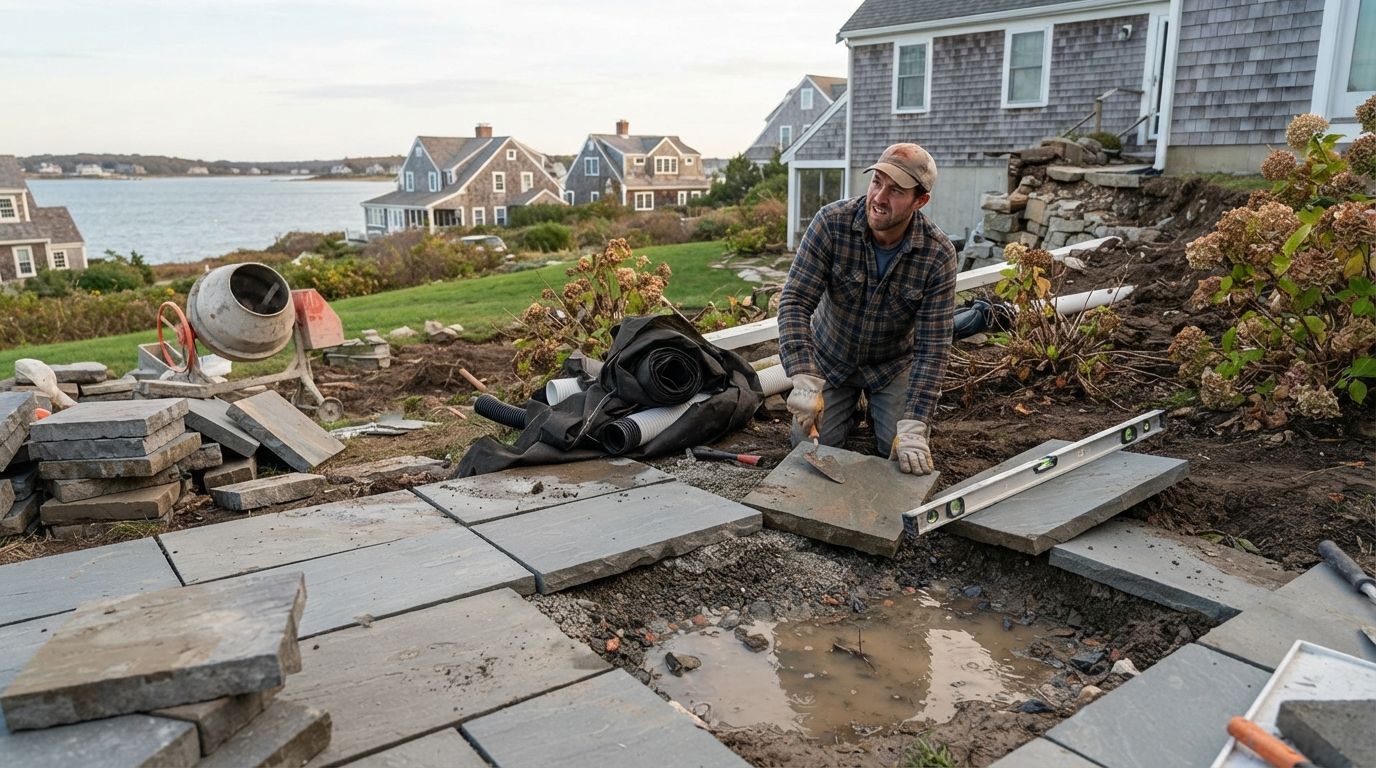
Site preparation is where a lot of patios go wrong before a single paver is laid. Inadequate excavation, poor compaction, or an undersized base layer all lead to settling and cracking down the track.
Soil conditions vary across the state. Sandy coastal soil needs a different compaction approach than the clay found further inland, and some western areas have rock ledge that requires specific excavation equipment and techniques. Skipping or rushing this phase compromises the entire project's integrity, and problems are often only discovered after something has already failed.
Mistake 6: Choosing Materials Based on Price Alone
New England winters are hard on cheap materials. Concrete without proper air entrainment cracks under repeated freezing. Lower-grade pavers often cannot handle frost heave pressure. Budget sealers and joint fillers break down faster in coastal air.
Materials designed for this climate cost more upfront but tend to need far less repair work over the years. Local suppliers familiar with Rhode Island conditions are usually a better source of advice than general online guides when it comes to choosing the right product for a specific site.
Mistake 7: Installing at the Wrong Time of Year
Concrete needs a specific temperature range to cure properly, which rules out both the height of summer and the depths of winter. Mortar-based work needs dry conditions, which makes Rhode Island's wet spring months tricky. Even paver installations, which rely on mechanical fit rather than curing, perform better when the ground is not saturated or frozen.
Autumn tends to offer the most reliable conditions for patio construction in Rhode Island, with the added benefit of having the patio ready before the following spring and summer.
Mistake 8: Taking on More Than a DIY Project Can Handle
Some patio work is reasonable for a confident DIYer. Complex drainage systems, structural elements, and anything involving utilities usually are not. Electrical work for patio lighting, for example, legally requires a licensed electrician in Rhode Island.
Recognising where a project's complexity exceeds typical homeowner capability can save money in the long run, since correcting a failed DIY attempt often costs more than hiring a professional from the start.
This is a similar lesson to the one we outline in our guide on home addition mistakes Rhode Island homeowners should avoid, where underestimating project complexity is one of the most frequent and costly errors.
Mistake 9: Not Planning for Long-Term Maintenance
A patio that is installed well still needs upkeep. Coastal patios need regular cleaning to remove salt residue and periodic sealing to stop deterioration. Inland patios need attention to freeze-thaw wear and a sensible approach to snow removal that does not damage the surface.
Maintenance is easier to plan for if it is considered during the design stage rather than added as an afterthought once problems appear. Creating a basic maintenance schedule helps a patio keep its appearance and function for its full expected lifespan.
Choosing the Right Patio Builder
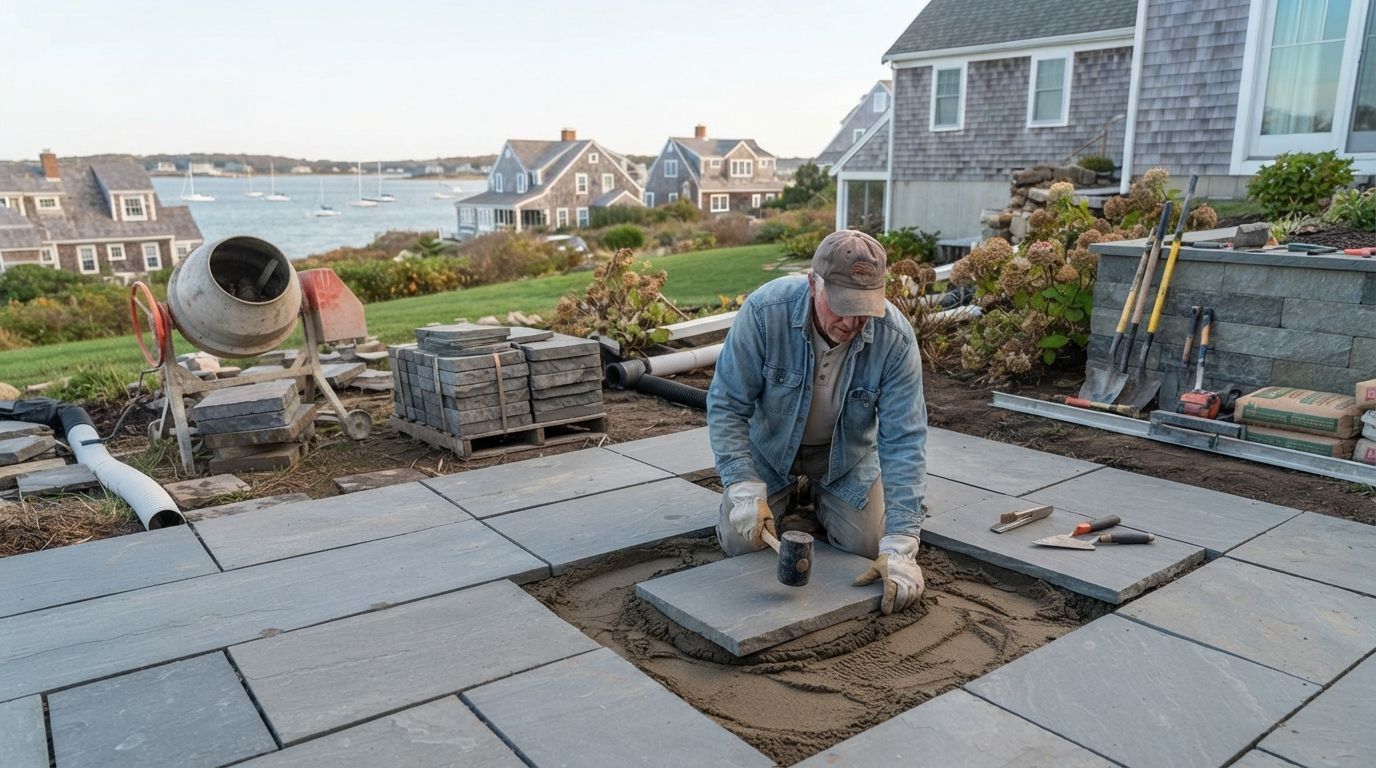
A lot of these mistakes come back to one decision: who gets hired to do the work. A contractor with genuine Rhode Island experience should understand frost line requirements, local soil behaviour, and the permit process in a specific town, rather than applying a generic approach that was not built for New England conditions.
For homeowners in and around Johnston, our page on paver patio builders and hardscaping in Johnston, RI outlines the kind of local patio and hardscaping work we handle, from paver installation through to drainage correction and retaining walls.
Getting It Right the First Time
Avoiding the most common mistakes Rhode Islanders make when building a patio comes down to a handful of consistent factors: proper frost line depth, well-planned drainage, materials suited to the state's climate, the correct permits, and a builder who understands local conditions rather than guessing at them. None of this is complicated, but it does take attention at each stage, from the first excavation through to the final seal.
Homeowners who get these details right at the start tend to spend far less on repairs later, and end up with a patio that holds up through Rhode Island's full range of seasons rather than needing attention after the first hard winter.
Rhode Island Patio Construction Mistake Checker
Identify potential construction problems before building your patio.
A patio can develop cracks, drainage problems, loose pavers, and structural damage when important construction steps are overlooked. Answer these questions to evaluate your project and identify areas that need attention before installation.
Your Patio Construction Assessment
Potential Mistakes Identified
Frost Depth and Structural Recommendations
Drainage and Base Preparation Recommendations
Material and Coastal Protection Recommendations
Permits and Professional Requirements
Your Patio Construction Prevention Checklist
This calculator is an informational planning tool, not a structural inspection or code-compliance certification. Verify current frost-depth, footing, drainage, permit, and setback requirements with your local building department and qualified professionals before construction.
Frequently Asked Questions
What is the minimum frost depth required for patio footings in Rhode Island?
Rhode Island requires footings to reach a minimum depth of 40 inches below grade, with the exception of New Shoreham, where 30 inches applies. This depth helps prevent ground movement from freeze-thaw cycles from damaging structural elements.
Do I need a permit to build a patio in Rhode Island?
Many municipalities require a permit for patios over a certain size, for projects with attached structures like pergolas, and for any work involving electrical or plumbing. Requirements vary by town, so it is worth checking with the local building department before work begins.
Why does salt air matter for patios that are not right on the coast?
Coastal storms can carry salt spray several miles inland, which means towns like East Greenwich and North Kingstown can still be affected. Materials not rated for salt exposure may deteriorate faster than expected, even away from the waterfront.
What time of year is best for patio installation in Rhode Island?
Autumn tends to offer the most reliable conditions, since it avoids the extreme temperatures of summer and winter along with the wet conditions common in spring. This timing also allows the patio to be ready for use the following season.
Can I install a patio myself, or should I hire a contractor?
Simpler paver projects may suit a confident DIYer, but anything involving structural elements, drainage systems, or electrical work typically needs professional expertise, and in some cases is a legal requirement, as with electrical installations.