

Why Fall Is an Underrated Time to Build a Patio in Rhode Island
Fall is one of the best times to build a patio in Rhode Island because the ground has dried out from summer, temperatures sit in a comfortable range for curing materials, and contractors generally have more room in their schedules than during the spring rush. Homeowners who start in September or October often have a finished patio ready well before the ground freezes.
Most homeowners assume spring is the only sensible time to start a patio project. It makes sense on the surface, warmer weather is coming and the backyard feels ready for an update. But in Rhode Island, fall quietly offers some of the most practical building conditions of the year, and it's worth understanding why before locking in a start date based on habit alone.
This guide looks at what actually changes in September, October and into November, from ground conditions to contractor scheduling, so you can decide whether a fall patio build makes sense for your property.
What Makes Rhode Island's Fall Weather Good for Patio Construction?
Rhode Island's fall sits in a comfortable middle ground. Daytime temperatures typically run in the 60s, dropping into cooler evenings that make outdoor work manageable for crews without the heat stress that summer can bring.
Temperature and Material Curing
Cooler, steadier temperatures matter more than most people realise when it comes to patio materials. Concrete cures more evenly when it isn't fighting extreme heat, which lowers the risk of surface cracking. Mortar and adhesives also set properly in this range, without the rapid drying that summer heat can cause or the slow curing that cold weather brings.
Lower Rainfall Through September and October
Late summer through early autumn tends to be one of the drier stretches of the year in Rhode Island. Less rain means fewer scheduling gaps, since excavation and base work depend on dry, workable ground. Spring, by comparison, often brings longer wet patches that push installation dates back.
Ground Conditions After Summer
By September, the ground has had months to settle. Soil that was disturbed or compacted during spring landscaping has usually stabilised, and moisture levels are low enough to keep dust down during excavation without turning the site muddy, which is a common issue in early spring builds.
Does Building a Patio in Fall Cost Less in Rhode Island?
Pricing in the trades tends to follow demand, and patio construction is no different. Spring and early summer are the busiest months for most contractors in the state, which puts upward pressure on pricing simply because schedules are full.
Fall shifts that balance. With fewer projects competing for the same crews, homeowners sometimes find more room to negotiate, along with better availability on materials. Suppliers often move through end-of-season stock during autumn, which can mean more competitive pricing on pavers, natural stone and other common patio materials.
Labour availability follows the same pattern. Crews who are booked out months in advance during peak season often have more flexibility in September and October, which can translate into steadier attention on your specific project rather than one squeezed between several others.
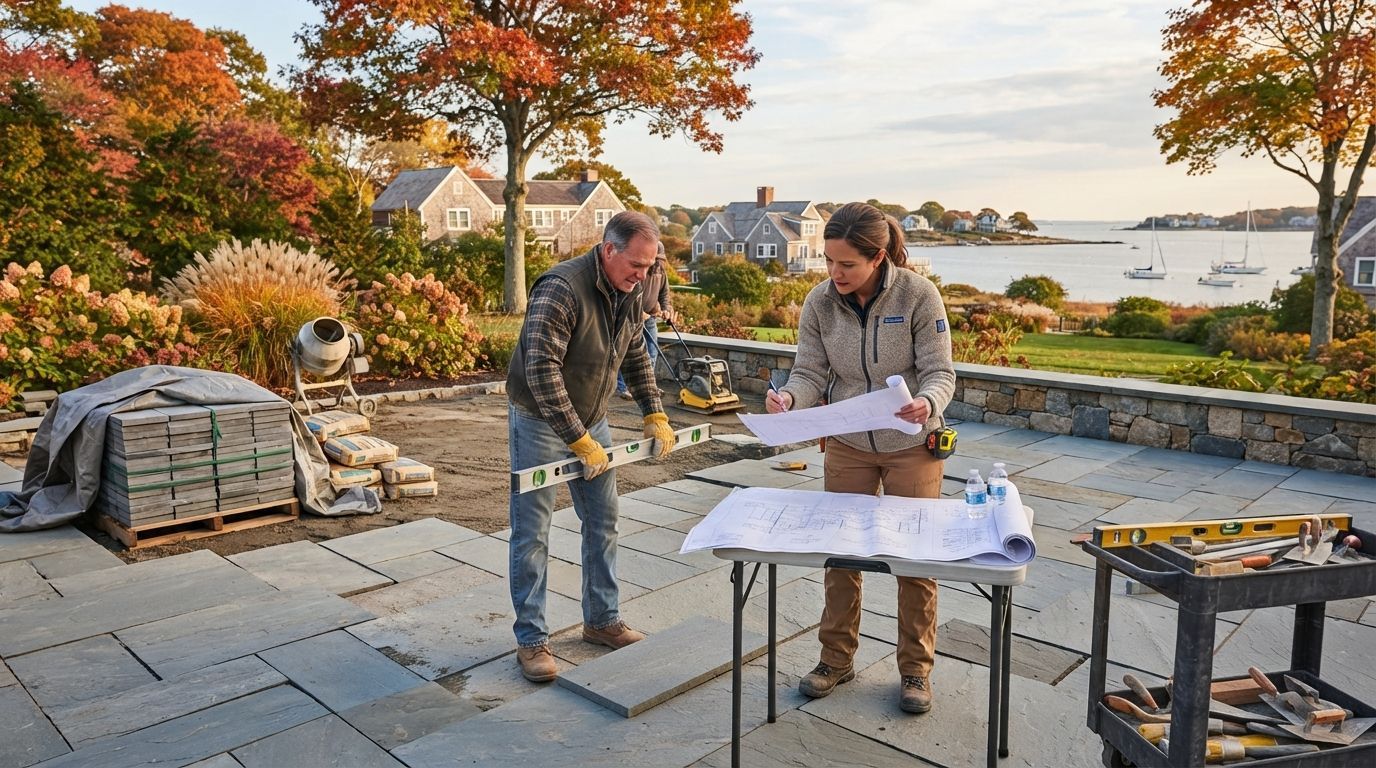
Why Are Contractors More Available in Fall?
Reduced seasonal demand means the contractors working through fall are often the ones who can be selective about which jobs they take on. That typically shows up in a few practical ways:
- More time available for design discussions before work begins
- Clearer communication throughout the build, since crews aren't juggling as many active sites
- Steadier scheduling, with less risk of delays caused by overlapping projects
None of this guarantees a faster project. Rhode Island weather still plays a role, and larger patios with walls, steps or drainage work will always take longer regardless of season. But the overall scheduling pressure tends to ease once the peak summer rush has passed.
How Does a Fall Build Set You Up for Spring?
One advantage that's easy to overlook is timing. A patio built in fall has the entire winter to settle before you're ready to use it. There's no waiting through a construction schedule once the warmer months return, your outdoor space is already finished.
It also lines up well with landscaping plans. Plants and garden beds installed around a patio in spring tend to establish more reliably than those planted during summer heat, so a fall-built patio gives you a natural starting point for finishing the space the following year.
What Should You Consider Before Starting a Fall Patio Project?
A few practical factors are worth checking before committing to a fall start date.
Site evaluation. Falling leaves can actually help here, since contractors get a clearer view of drainage patterns and sun exposure once summer foliage has thinned out.
Permit timing. Municipal permit offices in Rhode Island often see fewer applications in fall, which can mean faster processing than during the spring surge. This isn't guaranteed in every town, but it's a reasonable advantage in many areas.
Daylight hours. Shorter days mean less working light, so timelines should account for that rather than assuming the same daily progress as a June build.
Material choice. Natural stone, interlocking pavers and stamped concrete all perform well in fall conditions, since moderate temperatures reduce the risk of thermal shock or cracking during installation and curing.
If you're trying to work out exactly how long a project might take once it starts, this Rhode Island patio installation timeline guide breaks down the typical sequence month by month, including site prep, base work and finishing touches. The same general sequence applies in fall, just shifted later in the calendar.
Planning a Fall Patio Alongside Other Home Projects
Patios are often just one piece of a broader outdoor or home improvement plan. If you're weighing up a patio against other projects, such as a home addition, timing matters there too. This guide to the best time to start a home addition in Rhode Island explains how permitting and contractor scheduling shift throughout the year, which can help you sequence multiple projects without them competing for the same window.
If you're located closer to the Pawtucket area specifically, working with a
Pawtucket paver patio builder familiar with local soil conditions and permitting can help avoid delays that come from a contractor unfamiliar with the town's specific requirements.
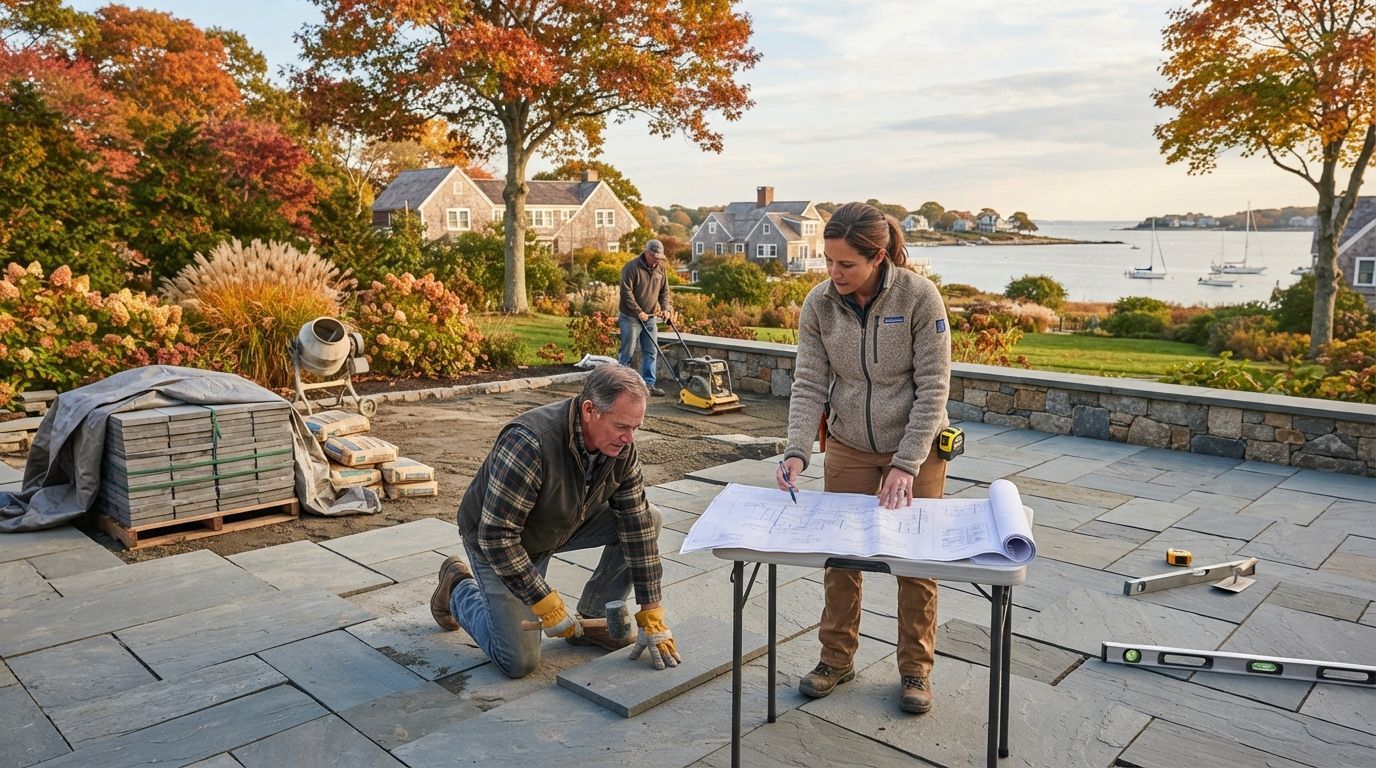
Making the Most of Fall Construction in Rhode Island
Fall offers a genuine, practical window for patio construction in Rhode Island. Moderate temperatures support better curing, lower rainfall reduces weather delays, and reduced seasonal demand often means more attentive scheduling from contractors. None of this makes fall the only option, but it's a season that deserves more consideration than it usually gets.
If you're planning a patio and your timeline doesn't fit neatly into spring, building in Rhode Island during fall is a reasonable, well-supported alternative worth discussing with a local contractor.
Rhode Island Fall Patio Construction Planner
Find the best autumn construction window for your outdoor project.
September, October, and November can offer different opportunities for patio construction in Rhode Island. Enter your project details to evaluate ground conditions, weather suitability, material requirements, contractor availability, and preparation needs.
Your Fall Patio Construction Assessment
Conditions Affecting Your Project
Recommended Construction Preparation
Weather and Scheduling Considerations
Your Personalized Fall Building Checklist
This calculator provides general seasonal planning guidance, not a construction guarantee or live weather forecast. Actual conditions can change quickly in Rhode Island. Follow material manufacturers' temperature and curing requirements, confirm municipal permit and inspection requirements, and have excavation, drainage, and structural work assessed by qualified professionals.
Frequently Asked Questions
Is it too late to build a patio in fall if I haven't started planning yet?
Not necessarily. Early fall still allows time for site evaluation, permitting and installation before the ground freezes, though larger projects should start sooner rather than later to avoid running into winter weather.
Does cold weather in late fall affect patio materials?
Once temperatures drop toward freezing, materials like concrete need more care to cure properly. Most contractors aim to complete pours and major installation work before late November for this reason.
Can I still landscape around a patio built in fall?
Yes. Many homeowners wait until spring to add plants and garden beds, since a dormant landscaping season doesn't suit new plantings anyway. The patio itself will be fully settled by then.
Are permits processed faster in fall in Rhode Island?
In many municipalities, yes, simply because fewer applications are submitted compared to the spring rush. Processing times still vary by town, so it's worth checking with your local building department directly.
Is fall better than spring for patio construction?
It depends on your priorities. Fall often offers drier conditions and more contractor availability, while spring allows immediate use through summer. Choose fall if avoiding wet-weather delays and securing a more flexible contractor schedule matter more than having the patio ready for early summer.