

Best Tile Options for Bathrooms in Rhode Island: A 2026 Guide
Porcelain tile is the strongest all-round choice for Rhode Island bathrooms because it resists moisture almost completely and holds up to the state's salt air and seasonal temperature swings. Ceramic, natural stone and glass tile each suit specific budgets and architectural styles, but the right pick depends on where you live, how your home was built, and how much upkeep you want to take on.
Choosing bathroom tile for a Rhode Island home involves more than picking a colour you like. The state's coastal climate brings humidity levels that sit well above the national average for much of the year, and homes near Narragansett Bay or the Atlantic shoreline face added exposure to salt air.
Add in Rhode Island's distinct seasons, from humid summers to cold, dry winters, and it becomes clear why some tile materials perform better here than others.
This guide walks through the best tile options for bathrooms in Rhode Island, covering how our climate affects material choice, which tiles suit the state's varied architecture, and what to budget for a renovation. If you're planning a remodel in Providence, Newport, Warwick or anywhere in between, this should give you a clear starting point.
How Rhode Island's Climate Affects Bathroom Tile Choices
Rhode Island's coastal position creates a few specific challenges that don't apply in drier, inland parts of the country. Bathroom tile needs to cope with everyday moisture from showers, but also with broader climate pressures that build up over years of use.
- Humidity: Coastal Rhode Island often sits between 60 and 70 percent humidity, climbing higher in summer. This makes moisture resistance a priority for any bathroom surface.
- Salt air: Properties near the coast, including Newport, Warwick and Narragansett, face salt exposure that can wear down grout and certain sealants faster than inland homes.
- Temperature swings: Rhode Island moves between humid summers and cold, dry winters, and that shift can cause some materials to expand and contract over time.
- Storm exposure: Nor'easters and coastal storms bring heavy moisture loads that well-sealed tile and grout need to withstand.
These factors don't rule out any particular material, but they do affect how much maintenance a tile will need and how long it's likely to last.
Rhode Island's Architecture Shapes Tile Choices Too
Rhode Island's housing stock is varied, and that often guides tile selection as much as climate does. Colonial and Federal-style homes, common throughout Providence and the historic parts of the state, tend to suit natural stone or classic subway tile.
Victorian homes often call for richer colours and decorative patterns that match their period detailing. Coastal cottages around Newport County lean toward lighter, beach-inspired tones, while mid-century and contemporary builds generally work best with clean lines and larger-format tiles.
Top Tile Materials for Rhode Island Bathrooms
Porcelain Tile
Porcelain is the most consistently reliable option for Rhode Island bathrooms. Its water absorption rate sits below 0.5 percent, which makes it close to waterproof, and it handles freeze-thaw conditions well, which matters for unheated seasonal properties near the coast.
Porcelain also stands up to salt air without deteriorating, and it's available in a huge range of styles, including wood-look and stone-look finishes that offer the appearance of natural materials with far less upkeep. Large format tiles, typically 12x24 inches or bigger, reduce the number of grout lines, which cuts down on cleaning and maintenance in a humid climate.
Ceramic Tile
Ceramic tile offers solid moisture resistance at a lower price point than porcelain, which makes it a practical option for budget-conscious renovations. It's lighter and easier to cut than porcelain or stone, and it comes in an extensive range of colours and patterns.
Ceramic tends to work best on shower walls, backsplashes and in powder rooms, where moisture exposure is somewhat lower than on bathroom floors. It has a long track record of performing well in New England's climate, so it's not a compromise, just a different balance of cost and durability.
Natural Stone
Natural stone suits Rhode Island's historic architecture and offers a look that manufactured materials can't fully replicate. That said, stone generally needs more care in a humid coastal climate.
- Marble brings classic elegance to Providence's historic homes but requires regular sealing and is better suited to lower-moisture areas like powder rooms.
- Travertine has a warm, natural look that fits traditional Rhode Island homes, and it offers good slip resistance when honed, though it still needs proper sealing for bathroom use.
- Slate performs well in humid conditions thanks to its natural water resistance and strong slip resistance, which makes it a sensible choice for shower floors.
- Granite is highly durable and resists water well, making it a premium option for Rhode Island bathrooms that see heavy use.
Glass Tile
Glass tile is non-porous, so it resists water completely, and its smooth surface makes it easy to keep free of soap scum and mildew. It also reflects light well, which helps brighten bathrooms during Rhode Island's shorter winter days.
Glass tends to work best as an accent, used for shower feature walls, mosaic borders or backsplashes, rather than across an entire floor.
Tile Sizes and Patterns That Suit Rhode Island Homes
Large format tiles, generally 12x24 inches or bigger, have become a popular choice for Rhode Island bathroom renovations. Fewer grout lines mean less maintenance in a humid climate, and the larger surface area can make a small bathroom feel more open. Plank formats, around 6x36 inches, are a common choice for wood-look porcelain installations.
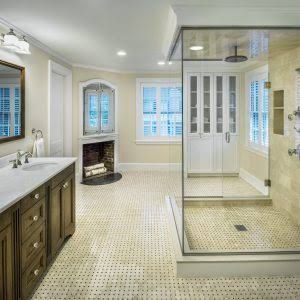
Smaller tiles and mosaics suit Rhode Island's older homes particularly well. Subway tile remains a dependable classic for almost any style, while hexagon mosaics and penny rounds offer more texture and better slip resistance thanks to the extra grout lines.
Patterns like herringbone and vertical stack are showing up more often in Providence and Newport renovations, giving a traditional material a more contemporary feel.
Choosing Grout for Rhode Island's Climate
Grout selection matters as much as tile choice in a humid, salt-exposed environment. Epoxy grout offers the strongest resistance to staining and moisture, which makes it a good fit for natural stone or high-traffic bathrooms, though it comes at a higher cost.
Cement-based grout with polymer additives is a more affordable standard option for ceramic and porcelain tile, but it needs periodic sealing to perform well in Rhode Island's climate. Urethane grout is flexible, resists cracking from temperature changes, and is generally easier to apply than epoxy.
Installation and Moisture Management
Proper installation matters just as much as the materials themselves. Waterproofing behind tile, particularly in shower areas, is essential in a climate where humidity sits well above average for much of the year. Quality substrates, such as cement board, help prevent moisture from reaching the framing behind the wall.
Ventilation plays a direct role here too. A bathroom with well-installed tile but inadequate airflow can still develop mould and mildew issues over time. Our guide to bathroom ventilation requirements in Rhode Island covers the exhaust fan sizing and venting rules that help protect a tile installation long after the renovation is finished.
Cost Considerations for Rhode Island Bathroom Tile
Material and installation costs vary depending on what you choose and the complexity of the job.
- Ceramic tile: $2 to $8 per square foot (material only)
- Porcelain tile: $3 to $12 per square foot (material only)
- Natural stone: $5 to $25+ per square foot (material only)
- Glass tile: $7 to $30+ per square foot (material only)
- Basic installation: $5 to $10 per square foot
- Premium installation, including natural stone and waterproofing: $10 to $20 per square foot
Most Rhode Island municipalities require permits for larger bathroom renovations, and homes near the coast may need additional waterproofing to account for salt air exposure, which can add to the overall budget.
Maintaining Bathroom Tile in Rhode Island's Climate
A consistent maintenance routine helps bathroom tile last in a coastal environment.
- Wipe down surfaces after use and run the exhaust fan to reduce moisture buildup
- Clean grout lines regularly with a pH-neutral cleaner suited to your tile type
- Reseal natural stone annually, and cement-based grout every one to two years
- Check caulk and sealant periodically for signs of wear, particularly in shower areas
Matching Tile to the Rest of Your Renovation
Bathroom tile rarely exists in isolation. If you're also updating your kitchen, it's worth looking at our guide to kitchen countertop materials for Rhode Island homes, which covers how the same humidity and salt air considerations apply to countertop selection.
Choosing the Best Tile Options for Bathrooms in Rhode Island
There's no single tile that suits every Rhode Island bathroom. Porcelain offers the most dependable performance for most homes, ceramic provides good value for budget-conscious renovations, and natural stone or glass suit homeowners after a specific look who are prepared for the extra maintenance that comes with it.
Matching your choice to your home's architecture, your location relative to the coast, and your willingness to keep up with sealing and cleaning will point you toward the best tile options for bathrooms in Rhode Island for your particular project.
For homeowners in the Burrillville area planning a renovation, our team at Rockhouse Construction offers kitchen and bathroom remodeling services built around the demands of Rhode Island's coastal climate, from material selection through to installation.
Rhode Island Bathroom Tile Selector & Calculator
Find the most suitable bathroom tile for your Rhode Island home and calculate how much tile you may need based on your room dimensions, installation area, tile format, and waste allowance.
Floor Area
Square feet of floor space.
Estimated Tile Area
Includes your selected wall or floor coverage.
Waste Allowance
Recommended extra material for cuts and breakage.
Order Quantity
Approximate tile area to plan for.
Tile Suitability
Frequently Asked Questions
What is the best tile for a Rhode Island bathroom?
Porcelain tile is generally the best option because it absorbs almost no water, holds up to salt air, and handles the state's temperature swings without cracking.
Is natural stone a good choice for Rhode Island's humidity?
Natural stone can work well, but it needs regular sealing to resist moisture. Marble suits lower-traffic areas like powder rooms, while slate and granite handle daily bathroom use better.
Does grout choice matter in a coastal climate?
Yes. Epoxy and urethane grout resist staining and moisture better than standard cement-based grout, which needs more frequent sealing in humid, salt-exposed areas.
How much does a bathroom tile renovation cost in Rhode Island?
Material costs range from around $2 per square foot for ceramic tile up to $30 or more for glass tile, with installation adding another $5 to $20 per square foot depending on complexity.
Do I need a permit to retile a Rhode Island bathroom?
Most Rhode Island municipalities require a permit for bathroom renovations that involve plumbing, waterproofing, or structural changes. Check with your local building department before work begins.