

Can I Build a Patio in Winter in Rhode Island?
Short answer: yes, you can build a patio in winter in Rhode Island, but success depends on the weather, the materials you choose, and whether you work with a contractor who understands cold-weather construction. Pavers and gravel patios are usually workable through the colder months, while concrete and mortar-set stone need far more care and are often better left for a milder window.
This guide walks through what actually happens to the ground and materials during a Rhode Island winter, which patio types hold up and which don't, what the building code requires, and how to decide if a winter build makes sense for your property.
What Makes Winter Patio Construction Difficult in Rhode Island
Rhode Island's coastal position means the state doesn't get the brutal, sustained cold you'd see further inland in New England, but it still experiences genuinely harsh stretches. Providence winters typically range from the low 20s to the low 80s Fahrenheit across the year, with cold snaps well below freezing and regular snow and ice events.
The main obstacle isn't the air temperature on any given day. It's what happens underground. Once soil freezes, it becomes almost impossible to excavate without specialised equipment, and any footing or base work that relies on compaction becomes unreliable. Add in unpredictable storms rolling off the Atlantic, and scheduling a winter patio project takes more planning than a spring or summer build.
None of this means winter construction is off the table. It means the project needs to be matched to the conditions.
When Winter Patio Construction Actually Works in Rhode Island
There are genuine windows during a Rhode Island winter when patio work can proceed without issue.
- Mild days above 40°F, which happen more often than people expect, especially in coastal towns
- Dry stretches between storm systems, when the ground hasn't been soaked or frozen solid
- Late autumn, from November through early December, before the ground locks up
- Late winter, typically February into March, when temperatures start climbing again
Certain patio types are far better suited to these conditions than others:
- Pavers and flagstone don't require curing time, so they can go in as long as the base material isn't frozen
- Gravel or decomposed granite patios have minimal weather restrictions and are one of the more forgiving options
- Raised deck-style patios can be built using standard cold-weather framing techniques
If you're weighing up whether to build now or wait, it's worth comparing this against building a deck in winter in Rhode Island, since decks face similar frost-line and footing challenges but use a different construction method.
When to Hold Off on a Winter Patio Project
Some conditions make winter construction genuinely risky rather than just inconvenient. Avoid starting or continuing work when:
- Temperatures are consistently sitting below 32°F
- A storm system is actively bringing snow or ice
- The ground has frozen solid
- An extended wet period has left the site saturated
Certain patio types simply don't belong in these conditions. Concrete needs specific cold-weather mixes and protection to cure properly, and skipping that step risks cracking and long-term failure.
Mortar-set stone patios have the same problem, since mortar won't cure correctly once temperatures drop below freezing. Any project that still needs excavation into frozen ground should wait.
Rhode Island Building Code Requirements for Patios
Patio construction in Rhode Island has to meet the same building code requirements no matter what time of year you build. The minimum frost depth across the state is 40 inches, as set out in the Rhode Island State One and Two Family Dwellings code (RISBC-2, Table R301.2(1)), with the exception of New Shoreham, where it's 30 inches.
This matters most for covered patios, pergolas, or any structure with permanent footings. Those footings need to sit below the frost line to avoid frost heave, which is what happens when moisture in the ground freezes and expands, pushing footings up and out of position over time.
Meeting this depth requirement in winter means digging through ground that may already be partially frozen, which is one of the clearest reasons winter excavation work needs an experienced crew.
Concrete Work and Rhode Island's Cold
If your patio design calls for concrete, the state's building code sets specific requirements for cold-weather pours. Concrete exposed to freezing and thawing conditions needs to be air entrained, with a minimum total air content of 5 percent, so it can withstand the repeated freeze-thaw cycles common in a Rhode Island winter.
In practice, this means:
- Using a cold-weather concrete mix
- Covering fresh pours with insulated curing blankets
- Sometimes building a heated enclosure around the work area
- Allowing extra curing time before the concrete is load-bearing
- Having someone monitor the cure closely rather than assuming standard timelines will apply
Skipping these steps in cold weather is one of the most common causes of concrete failure in patios built during a Rhode Island winter.
Ground Preparation and Material Considerations
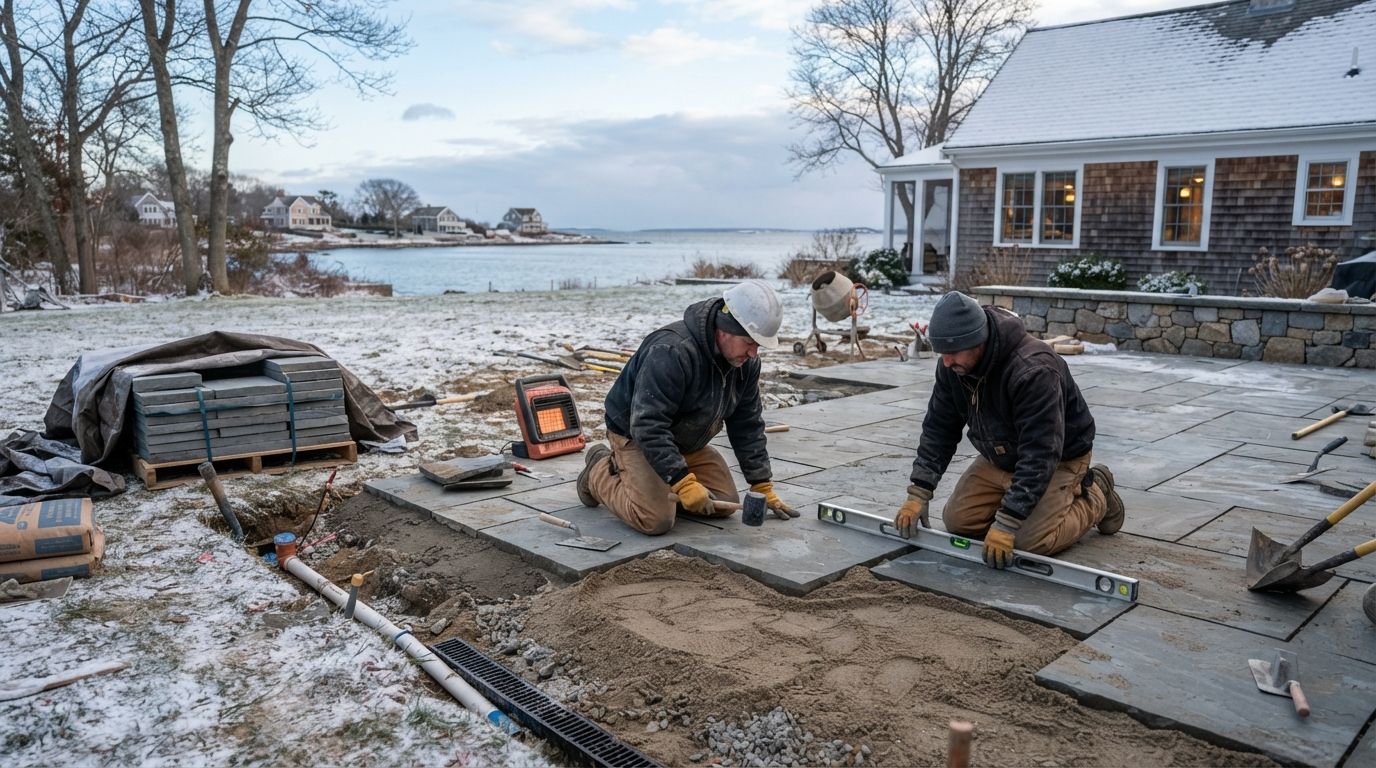
Frozen ground is the single biggest barrier to winter patio work. Once soil locks up, it affects every stage that follows, including levelling, drainage installation, base material placement, and compaction. A base that isn't properly compacted will shift and settle unevenly once the ground thaws in spring, which shows up as an uneven or sunken patio surface later on.
Materials behave differently in the cold too. Natural stone and pavers generally install fine as long as the base beneath them is workable. Composite materials can become brittle in extreme cold, adhesives and sealers often have minimum application temperatures printed on the packaging, and metal fittings or edging can be harder to work with once they're cold to the touch.
Weighing Up the Advantages of Winter Construction
There are a few genuine upsides to building during the off-season:
- Contractors often have more availability, since demand drops significantly after autumn
- Material suppliers may have better stock and pricing during slower months
- A patio finished in winter is ready to use the moment spring weather arrives
- There's less disruption to surrounding landscaping while plants are dormant
These benefits are real, but they only pay off if the project is suited to winter conditions in the first place. A gravel or paver patio is a sensible fit. A mortar-set stone patio with a tight spring deadline is not.
Why Professional Experience Matters for a Winter Build
Winter patio construction in Rhode Island is not the kind of project to take on without experience. It requires close attention to daily weather forecasts, adjusted techniques for cold-weather conditions, correctly selected materials, and strict compliance with frost depth and other code requirements.
An experienced contractor will typically:
- Check conditions day by day rather than relying on a fixed schedule
- Adjust installation methods based on temperature and ground condition
- Source and store materials correctly so they're ready to use
- Build in a way that holds up to freeze-thaw cycles long after installation
This is also where timing decisions come into play. If a winter build doesn't suit your situation, it's worth reading why fall is an underrated time to build a patio in Rhode Island, since the shoulder season often gives you more flexibility without the extra precautions winter demands.
Permits and Local Considerations
Municipal requirements can shift slightly during the colder months. Permit applications sometimes take longer to process, inspections can be delayed by weather, and some towns place additional restrictions on certain types of winter work.
It's worth checking with your local building department before committing to a start date, particularly if your project is in a town like Woonsocket, where paver patio and hardscaping work needs to account for local soil and drainage conditions alongside standard code requirements.
Planning a Winter Patio That Lasts
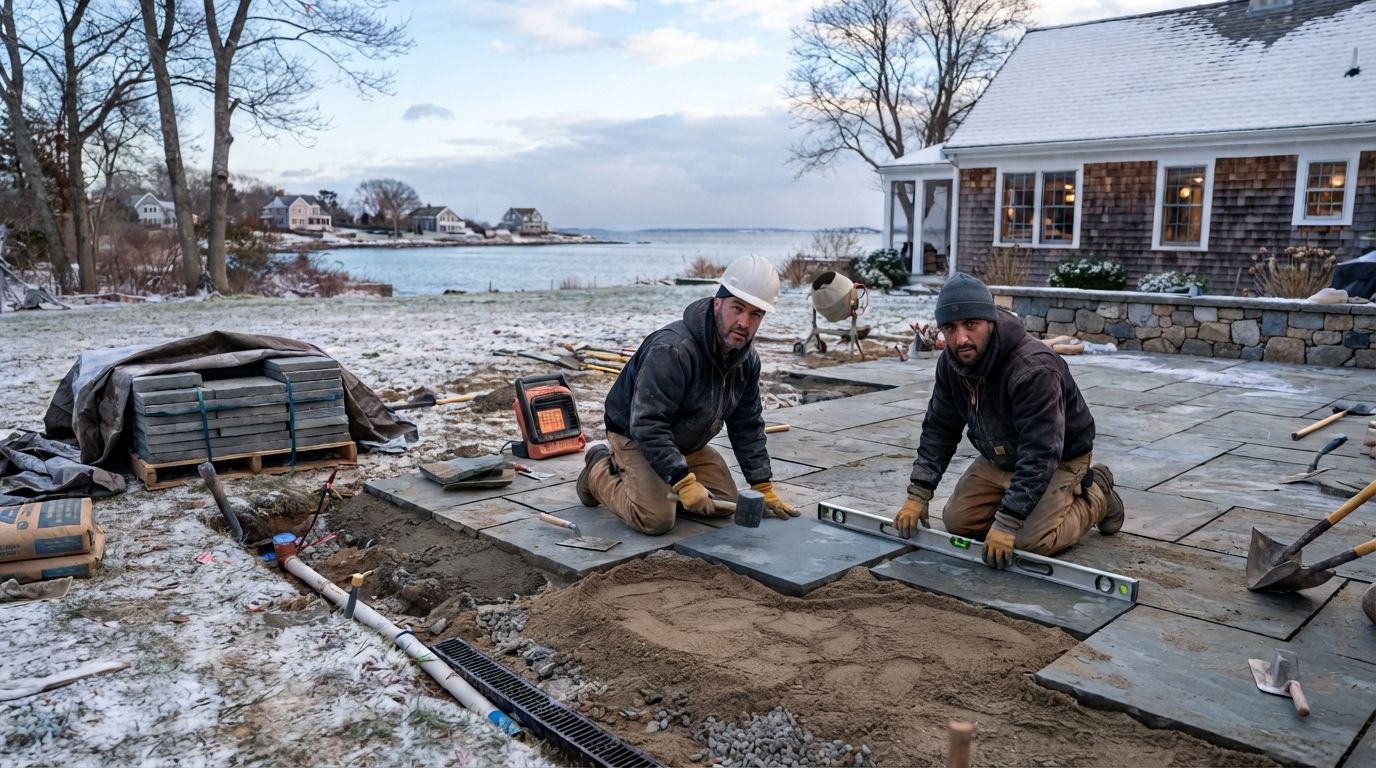
A patio built correctly in winter, using the right materials and proper cold-weather technique, holds up just as well long-term as one built in warmer months. The outcome depends on using appropriate materials, allowing adequate curing or setting time, protecting the work from freeze-thaw cycles while it's underway, and meeting every applicable building code requirement along the way.
If you're planning to build a patio in winter in Rhode Island, the most useful first step is an honest site assessment: check the ground conditions, settle on a patio type suited to the season, and confirm your local permit requirements before work begins. Done properly, a winter build can leave you with a finished outdoor space well before the first warm weekend of spring arrives.
Rhode Island Winter Patio Construction Calculator
Check whether your patio project is suitable for cold-weather construction.
Winter patio construction depends on temperature, ground conditions, material selection, and proper cold-weather techniques. Answer the questions below to evaluate your project's winter suitability and identify the precautions needed before construction begins.
Your Winter Patio Construction Results
Conditions That Need Attention
Winter Construction Precautions
Permit and Structural Requirements
Your Project Preparation Checklist
This calculator provides general construction planning guidance, not an engineering assessment or authorization to build. Actual work depends on site inspection, forecast conditions, approved plans, material instructions, and applicable building codes. Confirm frost depth and permit requirements with the relevant building department. Concrete and structural work should be supervised by qualified professionals.