

Patio Lighting Ideas for Rhode Island Homes
A good patio lighting plan makes the difference between an outdoor space that sits unused after sunset and one that gets enjoyed well into the evening. For Rhode Island homeowners, the right approach depends on a few local factors: coastal humidity, salt air, variable winter weather, and the age of the property itself.
This guide covers practical patio lighting ideas for Rhode Island homes, along with what to consider around fixture materials, placement, and energy use.
Patio lighting serves three main purposes: safety, usability, and atmosphere. Getting all three right usually means combining a few different lighting types rather than relying on a single fixture or string of lights.
Why Rhode Island's Climate Matters for Patio Lighting
Rhode Island's coastline runs for several hundred miles, and that proximity to saltwater affects outdoor fixtures more than many homeowners expect. Salt air speeds up corrosion in untreated metals, which is why fixture material matters more here than it would in an inland state.
A few climate-related points worth keeping in mind before choosing fixtures:
- Salt air exposure is a bigger factor in coastal towns like Newport, Narragansett, and Westerly than in inland areas such as Johnston or Scituate
- Wind load matters for taller or wall-mounted fixtures, particularly on exposed or elevated lots
- Freeze-thaw cycles through winter can loosen fittings and crack poorly sealed housings
- Shorter daylight hours in the colder months mean patios rely on artificial lighting for a larger part of the year
None of this means patio lighting has to be complicated. It just means the fixtures and finishes need to suit the conditions they're installed in.
String Lights for Rhode Island Patios
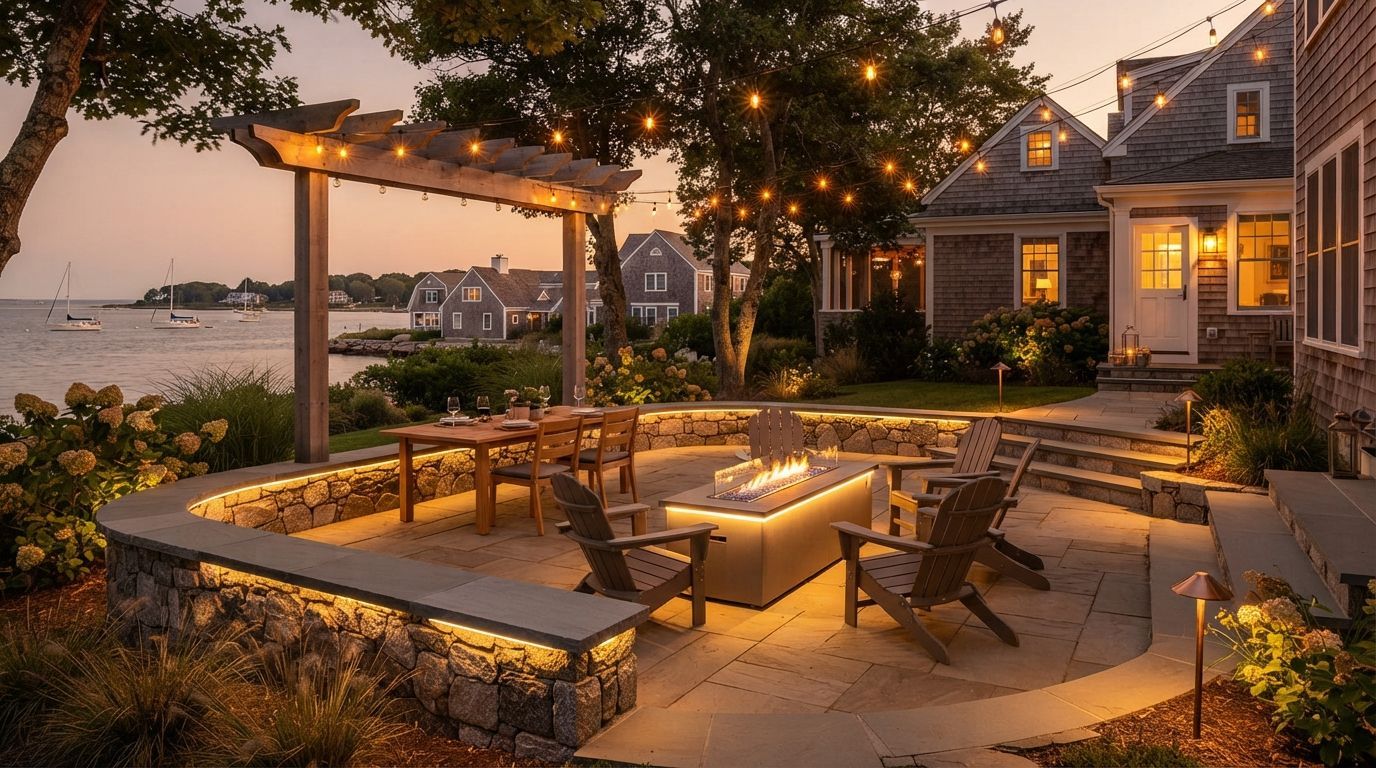
String lights remain one of the most common choices for patios, pergolas, and covered outdoor dining areas. They're relatively simple to install and give a casual, warm feel to the space.
A few points worth considering for Rhode Island properties:
- Weather-resistant LED strings hold up better than standard incandescent sets, particularly near the coast
- Solar-powered options reduce wiring needs but tend to produce less consistent brightness on cloudy days
- Dimmable sets allow more flexibility between everyday use and entertaining
- Fixtures should be rated for outdoor use and, where exposed to direct weather, carry an appropriate IP rating
Installing weatherproof outlets with GFCI protection is a sensible step for any string lighting setup that's plugged in rather than hardwired, and it's generally required under Rhode Island electrical code for outdoor circuits.
Path and Landscape Lighting
Path lighting serves a practical purpose first: guiding people safely from the driveway or house to the patio, particularly on uneven ground or stairs. It also adds a layer of ambient light that extends beyond the seating area itself.
A few design points to keep in mind:
- Space fixtures roughly six to eight feet apart to avoid gaps or overly bright spots
- Warm white light, generally in the 2700K to 3000K range, tends to suit residential settings better than cooler tones
- Fixtures around 12 to 18 inches tall provide subtle illumination without creating glare
- Timers or light sensors reduce the need to switch fixtures on manually each evening
Copper fixtures are a common choice near the coast because they develop a natural patina over time rather than corroding outright, which can suit both traditional and more contemporary landscaping.
Overhead and Statement Lighting
For larger patios or covered outdoor rooms, overhead lighting can serve as a focal point rather than just a source of illumination. Pendant lights over a dining table, or a lantern-style fixture on a covered porch, both fall into this category.
Overhead fixtures generally need professional electrical work, since they're hardwired rather than plugged in. They also need a weather-resistant rating and secure mounting suited to Rhode Island's wind conditions, particularly on open or elevated patios. GFCI protection applies here as well.
Fire Features and Lighting
Fire pits and fire tables are often paired with lighting rather than used on their own, since a fire feature alone doesn't illuminate the wider seating area. Built-in lighting around a fire pit, or LED strip lighting under a fire pit cap, both add usable light without competing with the flame itself.
Safety is the main consideration here. Fixtures and wiring near a fire feature need to be fire-rated, kept a reasonable distance from combustible materials, and compliant with local fire code. An emergency shutoff switch is a sensible addition for any gas fire feature.
Choosing Fixtures for Coastal Rhode Island Properties
Homes in coastal communities need lighting that can handle sustained salt air exposure without corroding or failing within a few seasons. Materials that tend to hold up well include:
- Brass fixtures with a protective coating
- Stainless steel components, ideally 316 grade, which resists corrosion better than standard grades
- Sealed LED fixtures with an IP65 rating or higher
- Corrosion-resistant mounting hardware
Wind resistance is also worth factoring into fixture selection for coastal and elevated properties. Heavy-duty brackets rated for sustained winds, along with underground wiring where practical, reduce the risk of fixtures loosening or failing during storms.
LED Versus Traditional Lighting
LED fixtures have become the standard for outdoor lighting, largely because they perform well in cold weather and use considerably less energy than incandescent bulbs. They also have a long operating lifespan, which reduces how often fixtures need replacing.
Traditional incandescent or halogen lighting still has a place in some settings, particularly on historic properties where a specific appearance or colour temperature is required. For general patio use, though, LED fixtures tend to be the more practical choice across most of Rhode Island's climate zones, from coastal towns to inland suburbs.
This same principle applies to other areas of the home. If you're weighing up fixture types and colour temperatures for an indoor renovation at the same time, our guide on choosing bathroom lighting for a Rhode Island remodel covers similar considerations around moisture ratings and finishes.
Smart Lighting Systems for Patios
Smart lighting has become more common for patios over the past few years, largely because it allows homeowners to control brightness, scheduling, and colour from a phone app rather than a physical switch. This is particularly useful for properties that sit empty for stretches of time, such as seasonal homes near the coast.
Common features include:
- Remote control from any location with an internet connection
- Automatic scheduling based on sunset and sunrise times
- Motion activation for added security around entry points
- Integration with existing smart home systems
Setup requires a reliable Wi-Fi signal reaching the outdoor area, along with weather-resistant wiring and connections. If you've looked into app-controlled lighting for holiday displays, the underlying technology is similar to what's used in smart Christmas light installation in Rhode Island, where scheduling and remote access work the same way for a seasonal display as they do for everyday patio lighting.
Seasonal Considerations for Rhode Island Patios
Lighting needs shift with the seasons in Rhode Island, mainly because of how much daylight is available and how the fixtures themselves respond to temperature changes.
In spring and summer, longer daylight hours mean lighting typically isn't needed until later in the evening. This is also when outdoor entertaining tends to pick up, so dimmable or colour-adjustable fixtures offer more flexibility for different occasions.
In autumn and winter, shorter days mean lighting gets used earlier and for longer stretches. LED fixtures generally perform better than incandescent bulbs in cold temperatures, and timers should be adjusted as sunset times shift. Ice and snow load are also worth checking on fixtures before winter sets in, particularly for anything mounted overhead.
Planning a New Patio with Lighting in Mind
If you're planning a new patio rather than adding lighting to an existing one, it helps to think about lighting placement during the design stage rather than after the hardscaping is finished. Wiring conduits, outlet placement, and fixture mounting points are far easier to plan before pavers, retaining walls, or steps are installed.
Homeowners working with a paver patio contractor in North Providence or elsewhere in Rhode Island should raise lighting requirements early in the design process, since layout decisions like seating areas, walkways, and fire pit placement all affect where fixtures make the most sense.
Working with a Licensed Electrician
Any hardwired outdoor lighting in Rhode Island, including overhead fixtures, landscape lighting circuits, and fire feature wiring, falls under the National Electrical Code and typically requires a permit for new circuits. GFCI protection is required for outdoor outlets and relevant lighting circuits.
Hiring a licensed electrician isn't just a code requirement. It also protects insurance coverage and reduces the risk of corrosion-related electrical faults, which are more common in coastal properties where moisture and salt air both come into play.
Final Thoughts on Patio Lighting Ideas for Rhode Island Homes
Choosing the right patio lighting for a Rhode Island home comes down to matching fixture type and material to the property's location, usage, and age. Coastal properties need stronger corrosion resistance and wind-rated mounting, while inland properties have more flexibility in fixture choice.
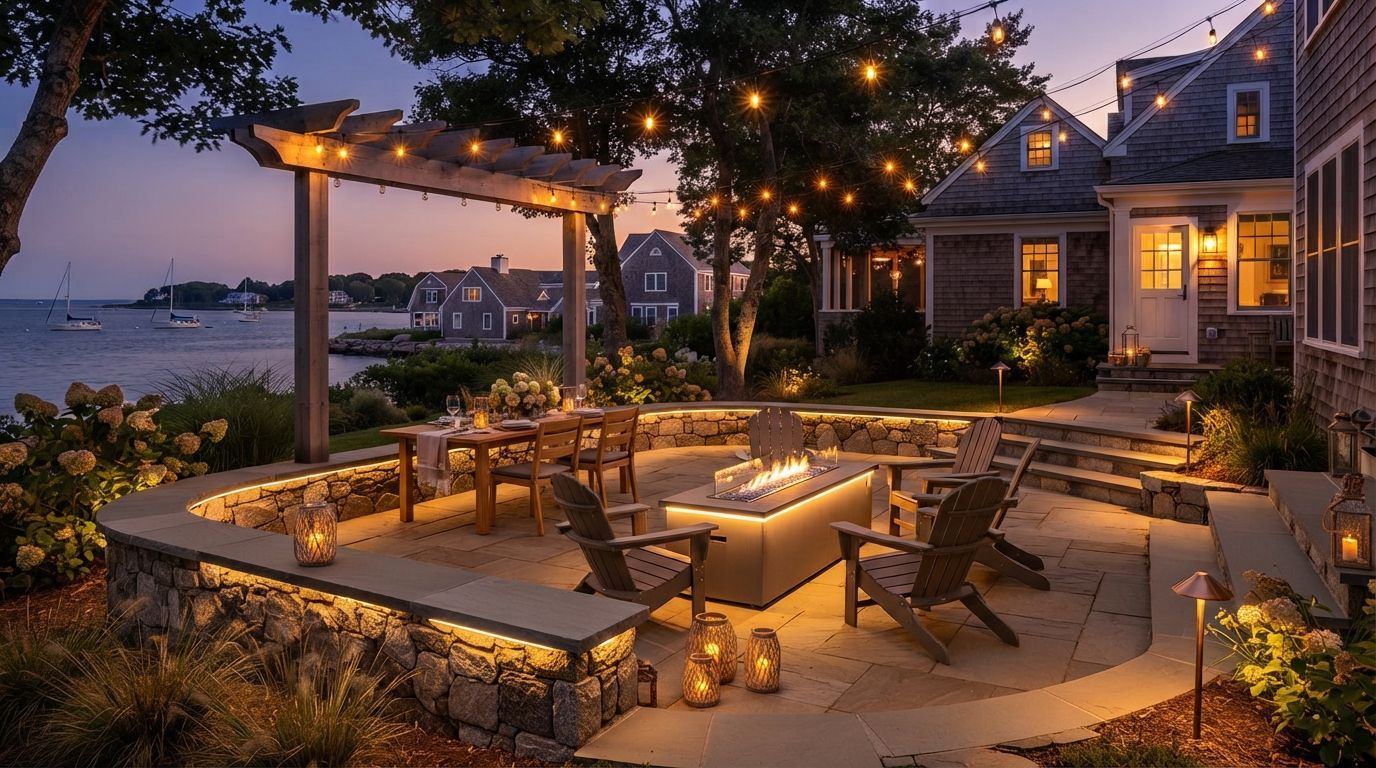
Layering string lights, path lighting, and overhead fixtures generally gives a more usable and better-lit patio than relying on a single lighting type. Taking the time to plan fixture placement, materials, and electrical requirements before installation makes for a safer and more durable result, whatever patio lighting ideas for Rhode Island homes you decide to go with.
Rhode Island Patio Lighting Planner
Plan your outdoor fixtures, lighting layers, and coastal protection.
Every patio needs a different lighting arrangement. Enter your outdoor dimensions, preferred fixtures, and property conditions to get a customized patio lighting layout for your Rhode Island home.
Your Patio Lighting Plan
Fixture and Material Recommendations
Path and String Light Layout
Coastal and Weather Protection
Electrical and Installation Checklist
Smart Lighting and Energy Suggestions
This planner provides general fixture and layout guidance, not an electrical design or code-compliance certification. Actual fixture quantities depend on pathway geometry, brightness, beam spread, mounting height, and manufacturer specifications. Have new outdoor circuits and hardwired fixtures installed by a licensed electrician. Confirm permits and applicable electrical requirements with your municipality.
Frequently Asked Questions
What type of patio lighting works best for Rhode Island's coastal climate?
Fixtures made from brass with a protective coating, 316-grade stainless steel, or sealed LED units with an IP65 rating or higher tend to hold up best against salt air and humidity along the Rhode Island coast.
Do I need a permit for patio lighting in Rhode Island?
Hardwired lighting, including overhead fixtures and new electrical circuits, generally requires a permit and should be installed by a licensed electrician. Requirements vary by municipality, so it's worth checking with your local building department.
Are LED lights worth it for outdoor patio lighting?
LED fixtures use considerably less energy than incandescent bulbs and perform more reliably in cold weather, which makes them a practical choice for Rhode Island's climate across most of the year.
Can smart lighting systems handle Rhode Island's weather?
Many smart lighting systems are rated for outdoor use, but Wi-Fi signal strength and weatherproof wiring both need to be confirmed before installation, particularly on exposed or coastal properties.
Should lighting be planned before or after building a new patio?
Lighting is easier and generally more cost-effective to plan during the design stage of a new patio, since wiring, outlets, and fixture mounting points are simpler to incorporate before hardscaping work is completed.