

Fire Pit Regulations for Patios in Rhode Island
Rhode Island fire pit rules depend on your city or town, but most communities follow the Rhode Island State Fire Code, which governs open burning, clearance distances, and permit requirements. Before installing a fire pit on your patio, check with your local fire department and building department, since rules on size, fuel type, and placement vary across the state's 39 municipalities.
Adding a fire pit to your patio is one of the easiest ways to get more use out of your outdoor space, especially during Rhode Island's cooler months. But before you start digging, pouring concrete, or ordering a prefabricated unit, it pays to understand the rules that apply where you live. Fire pit regulations in Rhode Island aren't governed by a single statewide checklist. Instead, they're shaped by the state fire code, local ordinances, and how individual fire departments choose to enforce open burning rules.
This guide walks through what homeowners across Rhode Island need to know before adding a fire pit to a patio, including permit basics, placement rules, and specific considerations for cities and towns from Providence to Westerly. Whether you're planning a DIY project or working with experienced patio builders, understanding these requirements upfront will save you time, money, and the frustration of a failed inspection.
How Rhode Island's Fire Code Applies to Residential Fire Pits
Rhode Island enforces fire safety through the Rhode Island State Fire Code, which is based on National Fire Protection Association (NFPA) standards. This code covers "open burning," a category that includes recreational fire pits, chimineas, and similar outdoor fire features.
Under this framework, most residential fire pits fall into one of two categories:
- Recreational fires - smaller, contained fires typically used for warmth or ambiance, often exempt from formal permitting if size and placement rules are followed.
- Open burning - larger fires or those used to burn debris, which usually require a permit from the local fire department.
The distinction matters because it determines whether you need a permit at all. A small, contained fire pit used occasionally for roasting marshmallows is treated differently than a larger pit used regularly or for burning yard waste.
What Determines Whether a Permit Is Required
Local fire departments typically look at a few factors when deciding whether a fire pit needs a permit:
- Size of the fire pit. Many communities set a maximum diameter or fuel area, often around 3 feet, before a permit becomes necessary.
- Fuel source. Wood-burning pits are generally subject to more scrutiny than gas-fueled units, since gas fire features produce less smoke and carry a lower risk of embers spreading.
- Distance from structures. Clearance requirements from homes, fences, and neighboring properties are a common factor in local decisions.
- Frequency of use. Occasional recreational fires are treated differently than fire pits used as a primary heat source or for regular burning.
Because these details vary by city and town, the only reliable way to confirm your obligations is to contact your local fire marshal's office before installation.
Clearance and Placement Rules for Patio Fire Pits
Regardless of location, certain placement principles are common sense and widely enforced across Rhode Island:
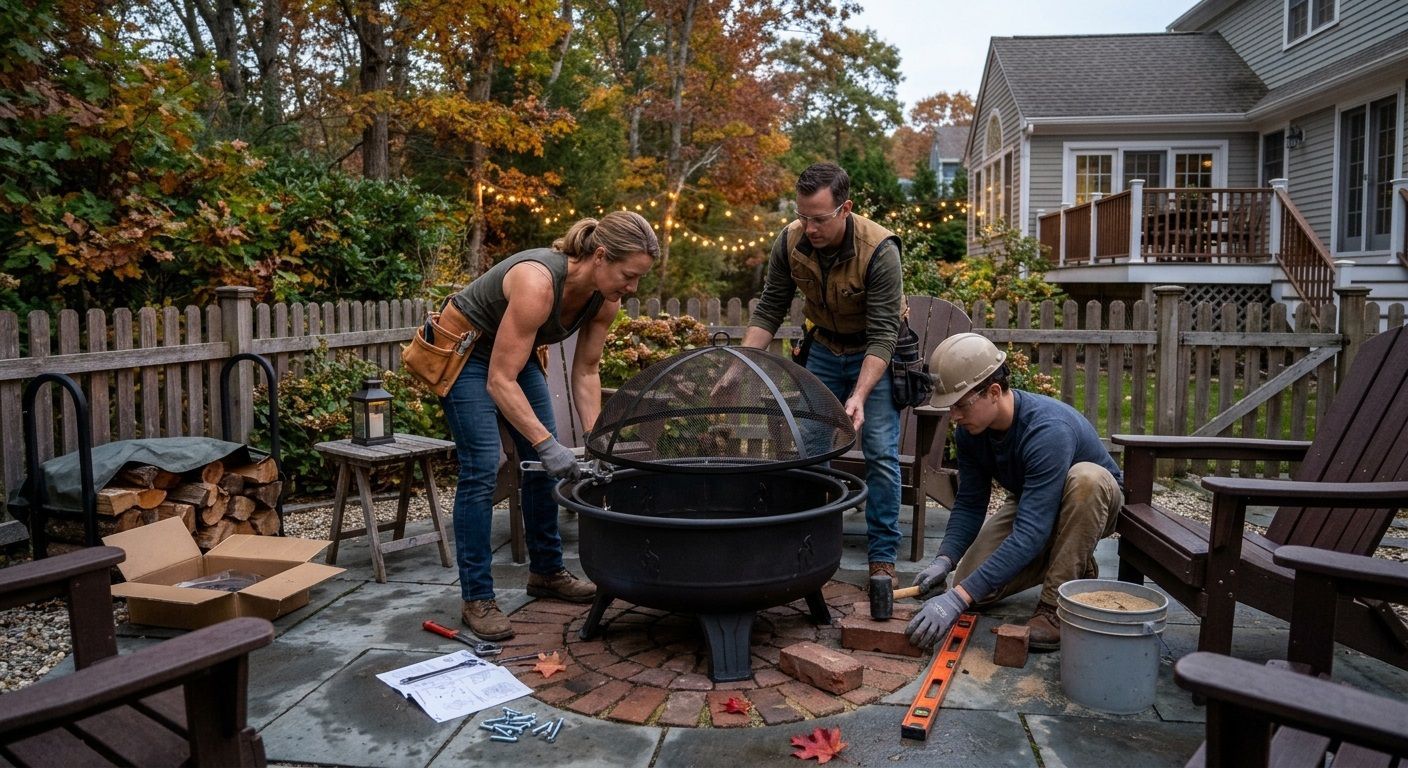
- Keep fire pits at least 10 to 25 feet from structures, fences, and combustible materials, with exact distances set locally.
- Avoid placing fire pits under overhangs, pergolas, or low-hanging tree branches.
- Position fire pits away from property lines to reduce the risk of smoke or sparks affecting neighbors.
- Use a non-combustible surface, such as pavers, concrete, or gravel, underneath and around the fire pit.
These placement rules aren't just about compliance. They reduce fire risk and protect your patio investment, which is one reason experienced patio builders factor fire pit placement into the design phase rather than treating it as an afterthought.
Permit Requirements Across Rhode Island Cities and Towns
Rhode Island doesn't have one statewide permit process for fire pits. Instead, enforcement sits with local fire departments and, in some cases, building departments that review patio and hardscape plans. Below is an outline of the general approach homeowners should expect in each city or town, along with who to contact before installation.
- Providence: Contact the Providence Fire Department. A permit is typically required for open burning, though smaller recreational pits may have exemptions.
- Warwick: The Warwick Fire Department handles this, with the local fire marshal reviewing size and placement before approval.
- Barrington: Contact the Barrington Fire District directly, as rules can differ from neighboring towns.
- East Greenwich: The East Greenwich Fire Department requires a permit for most wood-burning pits.
- Newport: The Newport Fire Department enforces stricter rules due to dense residential areas and historic districts.
- South Kingstown: Reach out to the South Kingstown Fire Department; coastal and rural zoning may affect placement rules.
- North Kingstown: The North Kingstown Fire Department's local fire marshal handles the permit review.
- Cumberland: The Cumberland Fire Department ties the permit process to lot size and setback distance.
- Bristol: Contact the Bristol Fire Department. Historic district guidelines may apply to visible patio features.
- Johnston: Check with the Johnston Fire Department's local fire marshal, especially for larger properties.
- Smithfield: The Smithfield Fire Department notes that rural zoning often allows more flexibility on placement.
- Pawtucket: The Pawtucket Fire Department notes that dense neighborhoods mean stricter clearance enforcement.
- Woonsocket: The Woonsocket Fire Department requires a permit for most open burning.
- North Providence: The North Providence Fire Department's local fire marshal reviews recreational fire pit requests.
- West Warwick: Contact the West Warwick Fire Department ahead of installation.
- Lincoln: The Lincoln Fire Department notes that rules are tied to lot size and proximity to neighbors.
- Central Falls: The Central Falls Fire Department enforces clearance rules closely, as it is among the most densely populated towns.
- Westerly: The Westerly Fire Department notes that coastal properties may have added considerations around wind and dry conditions.
- Tiverton: The Tiverton Fire Department notes that rural areas may allow more flexibility than village centers.
- Portsmouth: The Portsmouth Fire Department's local fire marshal reviews placement near structures.
- Middletown: Contact the Middletown Fire Department for permit requirements.
- Narragansett: The Narragansett Fire Department notes that seasonal population shifts can affect enforcement timing.
- Scituate: The Scituate Fire Department notes that rural zoning generally allows more flexibility.
- Richmond: The Richmond Fire Department notes that lower population density may ease some restrictions.
- Glocester: Contact the Glocester Fire Department. It is a rural setting, but permits still apply to larger fire pits.
- Hopkinton: Contact the Hopkinton Fire Department's local fire marshal for current requirements.
- Burrillville: The Burrillville Fire Department notes rural zoning with standard clearance expectations.
- Exeter: The Exeter Fire Department notes that lower density allows more flexibility on placement.
- Coventry: The Coventry Fire Department ties the permit process to fire pit size and fuel type.
- Cranston: The Cranston Fire Department notes that dense residential zones mean stricter enforcement of clearance rules.
This list is a starting point, not a substitute for direct confirmation. Local rules change, and enforcement can tighten during dry seasons or periods of elevated fire risk. Calling your local fire department before construction begins is the most reliable way to avoid issues later.
Building Permits vs. Fire Permits: What's the Difference?
Homeowners often confuse fire pit permits with general building permits, but they serve different purposes.
- Fire permits address safety concerns tied to open flame, smoke, and ember risk. These are issued by the fire department.
- Building permits may be required if the fire pit is a permanent, built-in structure as part of a larger patio project, particularly if it involves gas lines, electrical work, or significant excavation.
If you're working with patio builders on a full hardscape project that includes a built-in fire pit, your contractor should help coordinate both types of approval. Skipping either step can create problems when selling your home or filing an insurance claim after a fire-related incident.
Gas vs. Wood-Burning Fire Pits: Regulatory Differences
The fuel type you choose affects not just maintenance and convenience, but also how local authorities regulate your fire pit.
Gas fire pits are generally viewed more favorably because they:
- Produce less smoke and fewer airborne embers
- Allow for more precise control over flame size
- Are less likely to spread fire to surrounding vegetation
Wood-burning fire pits tend to face more scrutiny because they:
- Create more smoke, which can trigger neighbor complaints
- Produce embers that can travel with wind
- Require more clearance from structures and vegetation
If your town has stricter fire codes, choosing a gas fire pit can sometimes simplify the permitting process. That said, this isn't universal, so confirm with your local fire department before assuming either option skips the permit process entirely.
Seasonal and Weather-Related Restrictions
Rhode Island fire departments can issue temporary burn bans during dry spells, high winds, or periods of elevated fire danger. These bans typically apply regardless of whether you already hold a permit. Checking current conditions before lighting a fire pit, even one installed with proper permits, is a practical habit worth building.
Working With Patio Builders Who Understand Local Codes
Fire pit regulations are just one part of planning a patio project in Rhode Island. Grading, drainage, material selection, and proximity to property lines all factor into a successful build. Working with patio builders who are familiar with local fire codes and permit processes across Rhode Island communities reduces the risk of costly changes after construction has started.
An experienced contractor will typically:
- Confirm permit requirements with the local fire department before construction begins
- Design fire pit placement to meet clearance rules without compromising patio layout
- Select non-combustible materials suited to the fire pit's fuel type
- Coordinate building permits when the fire pit is part of a larger hardscape project
This kind of local knowledge matters more in Rhode Island than in many other states, given how much enforcement varies from one city or town to the next.
Final Thoughts on Fire Pit Regulations for Rhode Island Patios
Fire pit rules across Rhode Island share a common foundation in the state fire code, but enforcement and permit requirements differ by city and town. Before installing a fire pit on your patio, whether in Providence, Cranston, Newport, or a smaller community like Exeter or Richmond, confirm current requirements with your local fire department and building department.
If you're planning a patio project in Rhode Island and want it designed with local fire codes in mind from the start, working with established patio builders can help you avoid permit delays and costly rework. Rockhouse Construction has served Rhode Island homeowners since 2008 and understands how local regulations affect patio and hardscape design across the state. Contact us today at https://www.rockhouseconstruction.com/contact-us to start planning a patio that fits your property and meets local fire pit regulations from day one.
Rhode Island Fire Pit Planning Calculator
Answer a few questions about your planned patio fire pit to identify safety checks and local requirements to confirm before installation.
This calculator provides general planning guidance, not confirmation of legal compliance or permission to light a fire. Requirements vary by municipality and may change with weather conditions. Confirm applicable fire and building rules with your local authorities before installation or use.
Frequently Asked Questions
Q: Do I need a permit for a fire pit on my Rhode Island patio?
A: It depends on your city or town, the fire pit's size, and its fuel type. Many communities exempt small, contained recreational fire pits from formal permitting, while larger or wood-burning units often require approval from the local fire department.
Q: How far does a fire pit need to be from my house?
A: Clearance requirements vary by municipality, but a common range is 10 to 25 feet from structures, fences, and combustible materials. Confirm the exact distance with your local fire marshal.
Q: Are gas fire pits regulated differently than wood-burning ones in Rhode Island?
A: Yes, in many cases. Gas fire pits produce less smoke and fewer embers, so some towns apply less strict rules compared to wood-burning pits, though this varies by location.
Q: What happens if I install a fire pit without a permit?
A: Consequences vary by town but can include fines, mandatory removal, or complications during a home sale or insurance claim. Always confirm requirements before installation.
Q: Can local fire departments restrict fire pit use even with a permit?
A: Yes. Temporary burn bans can be issued during dry conditions or high fire risk periods, regardless of existing permits.