

French Drain Installation Rhode Island: A Guide to Basement Drainage
Water finding its way into a basement is one of the most common problems Rhode Island homeowners deal with, and a properly installed French drain is often the most reliable long-term fix.
This guide explains how French drains work, when they're the right solution for basement drainage, and what Rhode Island's soil and climate mean for installation.
Rhode Island's clay-heavy soil doesn't drain well on its own. When heavy rain or snowmelt hits the ground, water tends to pool near foundations instead of soaking away. Over time, that moisture works its way through basement walls and floors, leading to dampness, mould growth, and in some cases structural damage. A French drain addresses this by giving water a clear path away from the home before it becomes a problem.
What Is a French Drain and How Does It Work?
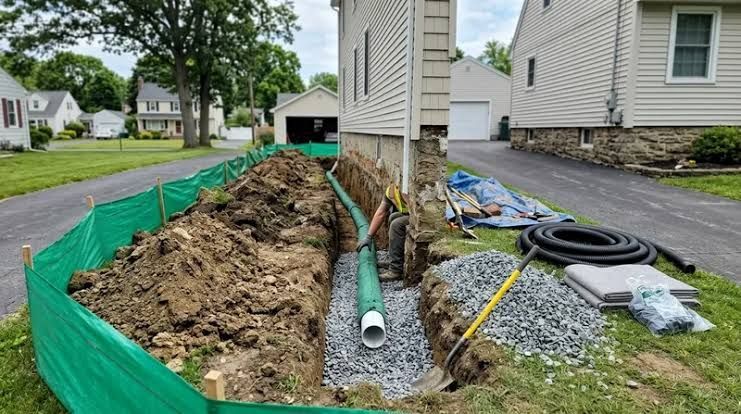
A French drain is a trench filled with gravel and a perforated pipe that redirects groundwater away from a structure. Instead of letting water sit against a foundation wall, the drain collects it and channels it to a safer discharge point, such as a storm drain, dry well, or lower section of the yard.
There are two main types used in residential basement drainage:
- Interior French drains – installed along the inside perimeter of a basement floor, typically paired with a sump pump to remove collected water
- Exterior French drains – installed outside the foundation, intercepting groundwater before it reaches the walls
Many Rhode Island properties benefit from a combination of both, particularly homes with a history of water intrusion or those built on lower-lying land.
Why Rhode Island Homes Are Prone to Basement Water Issues
A few factors make basement drainage a bigger concern in Rhode Island compared to drier regions of the country.
Clay soil composition. Much of Rhode Island sits on dense clay, which absorbs water slowly and holds it near the surface longer than sandy or loamy soil would.
High water tables. Coastal and low-lying areas across the state often have groundwater sitting close to the surface, especially after periods of heavy rain.
Seasonal weather patterns. Nor'easters, spring snowmelt, and summer thunderstorms all put pressure on drainage systems within short windows of time, which increases the risk of overwhelmed yards and saturated foundations.
If you've noticed pooling water, soggy patches, or erosion in your yard after rain, it's worth reading through the signs of poor yard drainage in Rhode Island homes to understand whether your property is at risk before water reaches the basement.
Signs You Need a French Drain
Not every damp basement requires a full French drain system, but certain warning signs point toward a drainage issue rather than a one-off leak:
- Water stains or efflorescence (white, chalky deposits) on basement walls
- A musty smell that persists even after cleaning
- Visible cracks in the foundation with moisture seeping through
- Water pooling in the yard near the foundation after rain
- A sump pump that runs frequently, even during light rain
If a sump pump is already working overtime, that's often a sign the drainage problem starts outside the home, not inside it. Addressing the exterior water first, with a French drain, reduces the load on interior systems.
French Drain Installation Process
A professional installation generally follows these steps:
- Site assessment – Grading, soil type, and existing drainage issues are evaluated to determine the best drain path
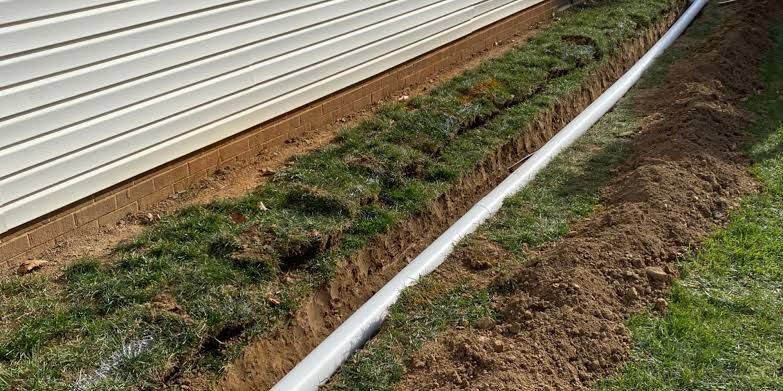
- Trenching – A trench is dug along the affected area, sloped slightly to allow gravity to move water toward the discharge point
- Pipe and gravel placement – A perforated pipe is laid in the trench and surrounded by gravel to filter debris while allowing water through
- Fabric lining – Landscape fabric is often used to prevent soil and silt from clogging the pipe over time
- Backfilling – The trench is covered with soil, restoring the yard's appearance while the drain works beneath the surface
- Discharge connection – The pipe is connected to an appropriate outlet, such as a dry well, storm drain, or daylight discharge point away from the home.
The complexity of this process depends on the yard's grading, soil conditions, and how far water needs to travel to reach a safe discharge area.
French Drains and Sump Pumps: How They Work Together
French drains and sump pumps solve related but different problems. A French drain manages water before it reaches the foundation, while a sump pump removes water that has already collected inside a basement or crawl space.
In many Rhode Island homes, both systems are installed together for complete protection. An interior French drain channels water toward a sump pit, where a pump then moves it out of the home and away from the foundation. This combination is particularly useful in properties with a history of basement flooding or a consistently high water table.
For homeowners weighing up whether a sump pump, a French drain, or both are needed, it helps to understand sump pump installation and repair options for Rhode Island basements alongside drainage solutions, since the two systems are often assessed together during a basement waterproofing consultation.
Cost Considerations for Rhode Island Homeowners
French drain costs vary depending on the length of the drain, whether it's interior or exterior, soil conditions, and how far water needs to travel to a discharge point. Exterior systems that require significant excavation around a foundation typically cost more than shorter interior installations.
Additional factors that can affect price include:
- Access to the work area (tight yards or landscaping can increase labour time)
- Whether a sump pump needs to be added or upgraded
- Local permit requirements, which vary by municipality
- Discharge point options and any additional piping needed to reach them
Getting a site assessment is the most accurate way to understand what a specific property needs, since soil type and grading differ even between neighbouring homes.
Maintaining a French Drain System
French drains are designed to work with minimal upkeep, but a few habits extend their lifespan:
- Keep gutters and downspouts clear so roof water doesn't add extra load to the drainage system
- Check discharge points periodically to make sure they're not blocked by debris, leaves, or sediment
- Watch for changes in yard grading over time, as settling soil can affect how well water flows toward the drain
- Address any new pooling or dampness quickly, since small issues are easier to correct than fully saturated soil
Most French drains last for decades when installed correctly and paired with regular gutter and downspout maintenance.
Basement Finishing and Drainage: Why Order Matters
Homeowners planning to finish a basement should address drainage first. Installing flooring, drywall, or insulation before resolving a water problem often leads to repeated damage and repair costs. This is especially relevant in areas like Richmond, where basement finishing projects are common but need to start with a dry, stable foundation.
If you're in the Richmond area and considering finishing a basement, it's worth speaking with basement finishing contractors in Richmond, RI who can assess drainage needs as part of the overall project, rather than treating waterproofing and finishing as separate jobs.
Getting Professional Help
French drain installation involves grading, excavation, and drainage engineering that go beyond a typical DIY project, particularly on properties with clay soil or a high water table. A qualified contractor can assess the specific conditions of a yard, recommend the right drain type and placement, and ensure the system complies with local codes.
For Rhode Island homeowners dealing with basement moisture, standing water in the yard, or a sump pump that's working harder than it should, a proper drainage assessment is the logical starting point. French drain installation in Rhode Island isn't a one-size-fits-all job, but with the right site evaluation and installation approach, it remains one of the most effective ways to keep water away from a home's foundation for the long term.
French Drain Installation Calculator
Find the most suitable basement drainage approach based on your water problems, soil, grading, foundation conditions and existing sump system.