

Rhode Island Driveway Setback Rules by Town
Driveway setback requirements in Rhode Island are set by each city or town's zoning ordinance, not by a single statewide rule. Most municipalities require driveways to sit a minimum distance from side and front property lines, often between 3 and 10 feet depending on the zoning district. Always confirm exact figures with your local zoning or building department before starting work.
Planning a new driveway or widening an existing one in Rhode Island involves more than picking a surface material and a contractor. Every city and town in the state has its own zoning ordinance, and tucked inside those ordinances are rules about how close a driveway can sit to your property line, your neighbour's fence, or the street. Get this wrong, and you could be looking at a stop-work order, a fine, or an expensive redo.
This guide walks through how driveway setbacks generally work across Rhode Island, what influences the distance you'll need to leave, and what to expect in 30 of the state's cities and towns. We've put this together based on our experience working on residential projects across Rhode Island, but zoning codes change and vary by district within each municipality, so this should be treated as a starting point for your research, not a substitute for checking with your local zoning office.
What Is a Driveway Setback, and Why Does It Matter?
A setback is the minimum distance a structure or improvement, including a driveway, must be from a property boundary. Setbacks exist to manage things like stormwater drainage, sightlines for drivers, access for emergency vehicles, and basic neighbourly space between properties.
Driveway setbacks specifically tend to address:
- Side yard clearance, keeping driveways a set distance from a neighbouring property line.
- Front yard or street line clearance, controlling how close a driveway apron can be to the road.
- Corner lot visibility, which often has stricter rules to prevent cars from blocking sightlines at intersections.
In Rhode Island, these rules are written into each municipality's zoning ordinance and can differ from one zoning district to the next, even within the same town. A property zoned for low-density residential use will often have different setback requirements than a lot zoned for higher-density residential or mixed use.
Why There's No Single Statewide Driveway Setback Rule
Rhode Island is a home rule state when it comes to land use planning. The Rhode Island Zoning Enabling Act gives each city and town the authority to write and enforce its own zoning ordinance, provided it meets certain state minimum standards. This means Providence can set different driveway rules to Barrington, and Narragansett can differ again from Westerly.
What stays consistent across the state is the general framework. Most Rhode Island zoning ordinances will include:
- A zoning map dividing the municipality into residential, commercial, industrial, and mixed-use districts.
- A table of dimensional requirements listing minimum lot size, setbacks, lot coverage, and height limits for each district.
- A permitting process through the local building or zoning department, often requiring a site plan for new or altered driveways.
Because of this structure, the only reliable way to confirm your exact driveway setback is to check your property's zoning district and then review that district's dimensional table in your town's ordinance, or ask the zoning office directly.
How to Find Your Driveway Setback Requirement
Before finalising driveway plans, it helps to follow a consistent process:
- Identify your zoning district. This is usually listed on your property tax assessment or available through your town's online GIS mapping tool.
- Locate the dimensional regulations table in your town's zoning ordinance for that district.
- Check for overlay districts. Some Rhode Island properties, particularly those near the coast, in historic districts, or within floodplains, have additional rules layered on top of the base zoning.
- Confirm driveway-specific standards, which are sometimes separate from general setback rules and may be covered under a site plan or curb cut permit.
- Speak with the zoning or building official before finalising your design. A short phone call can save a lot of rework later.

Rhode Island Driveway Setback Rules by Town
The following section outlines what to expect in 30 Rhode Island cities and towns. Setback distances within each municipality vary by zoning district, lot type, and whether the property is a corner lot, so treat these as general pointers rather than fixed numbers. Always confirm current requirements with the relevant local office before you dig.
Providence, RI
Providence's zoning ordinance sets different setback standards across its many residential, commercial, and mixed-use districts. Driveway placement is also affected by the city's curb cut permitting process, which is handled separately from the zoning permit in some cases. Properties in historic districts may face additional design review.
Warwick, RI
Warwick has a wide range of residential zoning districts, from low-density single-family areas to denser multi-family zones, each with its own setback table. Coastal properties near Narragansett Bay may also fall under additional flood zone or coastal management requirements.
Barrington, RI
Barrington's zoning ordinance tends to favour larger setback distances in its lower-density residential districts, reflecting the town's suburban character. Corner lots often have stricter requirements due to visibility concerns at intersections.
East Greenwich, RI
East Greenwich has several distinct residential zones, including some larger-lot districts where setback requirements are more generous. The town's historic district in the village area may carry extra design considerations for visible driveway work.
Newport, RI
Newport's zoning is shaped heavily by its historic architecture and dense residential layout in older neighbourhoods. Many properties fall within local historic districts, which can mean additional review beyond standard zoning setbacks, particularly for driveways visible from the street.
South Kingstown, RI
South Kingstown covers a large area with varied zoning, from rural residential to village centre districts. Setback rules differ noticeably between these zones, and coastal properties may have additional Coastal Resources Management Council considerations.
North Kingstown, RI
North Kingstown's zoning ordinance includes multiple residential districts with differing lot size and setback standards. Properties near Quonset Point or the waterfront may also need to account for overlay district rules.
Cumberland, RI
Cumberland has a mix of suburban residential zones, each with its own dimensional table. As with most Rhode Island towns, corner lots and properties on narrower lots tend to face closer scrutiny on driveway placement.
Bristol, RI
Bristol's zoning ordinance reflects its mix of historic village areas and more modern residential development. Driveway setbacks can vary meaningfully between the two, so it's worth confirming which district applies to your specific address.
Johnston, RI
Johnston's residential zoning includes several density tiers, and driveway and curb cut rules are generally handled through the town's planning and zoning office. As the location of our own Rockhouse Construction office, we've worked with Johnston's permitting process directly on past residential projects.
Smithfield, RI
Smithfield has a range of zoning districts covering rural, suburban, and some commercial areas. Setback requirements differ by district, and rural residential zones often allow more flexibility than denser areas.
Pawtucket, RI
Pawtucket is one of Rhode Island's more densely developed cities, and many residential lots are smaller and closer together. This generally means tighter setback allowances compared to more suburban or rural towns.
Woonsocket, RI
Woonsocket's zoning ordinance includes several residential districts reflecting its history as a mill city with compact neighbourhoods. Smaller lot sizes in older parts of the city can mean limited flexibility for driveway placement.
North Providence, RI
North Providence has a mix of residential zoning districts, with setback requirements that vary between its older, denser neighbourhoods and newer suburban-style development.
West Warwick, RI
West Warwick's zoning reflects its mixed industrial and residential history, with several district types across the town. As with neighbouring communities, driveway setbacks depend on which residential zone applies to the property.
Lincoln, RI
Lincoln includes both suburban residential areas and some larger rural lots, meaning setback requirements can differ noticeably depending on location within the town.
Central Falls, RI
Central Falls is Rhode Island's smallest and most densely populated municipality by area. Lot sizes here are often tight, and driveway setback allowances tend to reflect that compact development pattern.
Westerly, RI
Westerly has a broad range of zoning districts, from coastal residential areas near Watch Hill to more inland suburban zones. Coastal properties may be subject to additional review under state coastal management rules.
Tiverton, RI
Tiverton's zoning includes rural residential areas as well as more developed sections near the Sakonnet River. Setback requirements vary by district, with rural zones generally offering more room to work with.
Portsmouth, RI
Portsmouth covers a large geographic area with a mix of rural, suburban, and waterfront zoning. Properties near Narragansett Bay or the Sakonnet River may need to factor in coastal overlay requirements alongside standard setbacks.
Middletown, RI
Middletown's zoning ordinance includes several residential districts, with some additional considerations for properties near Aquidneck Island's coastline and nearby Newport's historic influence.
Narragansett, RI
Narragansett has a strong coastal residential character, and many properties fall within zones that balance standard setback rules with coastal management considerations, particularly near the shoreline.
Scituate, RI
Scituate is largely rural, and its zoning reflects that with generally larger lot sizes and more generous setback allowances compared to Rhode Island's more urban municipalities.
Richmond, RI
Richmond's zoning is predominantly rural residential, which typically means more space to work with for driveway placement compared to denser towns, though local confirmation is still essential.
Glocester, RI
Glocester has large rural lots in much of the town, and setback requirements in these districts tend to be more flexible than in suburban or urban zones.
Hopkinton, RI
Hopkinton's zoning is mostly rural and low-density, with setback rules generally allowing more room between structures and property lines than in Rhode Island's denser communities.
Burrillville, RI
Burrillville is one of Rhode Island's more rural towns, and its zoning ordinance reflects that with larger minimum lot sizes and setback distances in most residential districts.
Exeter, RI
Exeter is a rural town with low-density zoning throughout much of its area, generally allowing for more flexible driveway placement than denser municipalities.
Coventry, RI
Coventry has a broad mix of zoning districts, from rural residential to more suburban areas near its town centre. Setback requirements differ across these zones, so confirming the applicable district is important.
Cranston, RI
Cranston is one of Rhode Island's larger cities, with zoning that ranges from dense urban residential near Providence's border to more suburban neighbourhoods further south and west. Setback rules vary considerably depending on which part of the city your property sits in.
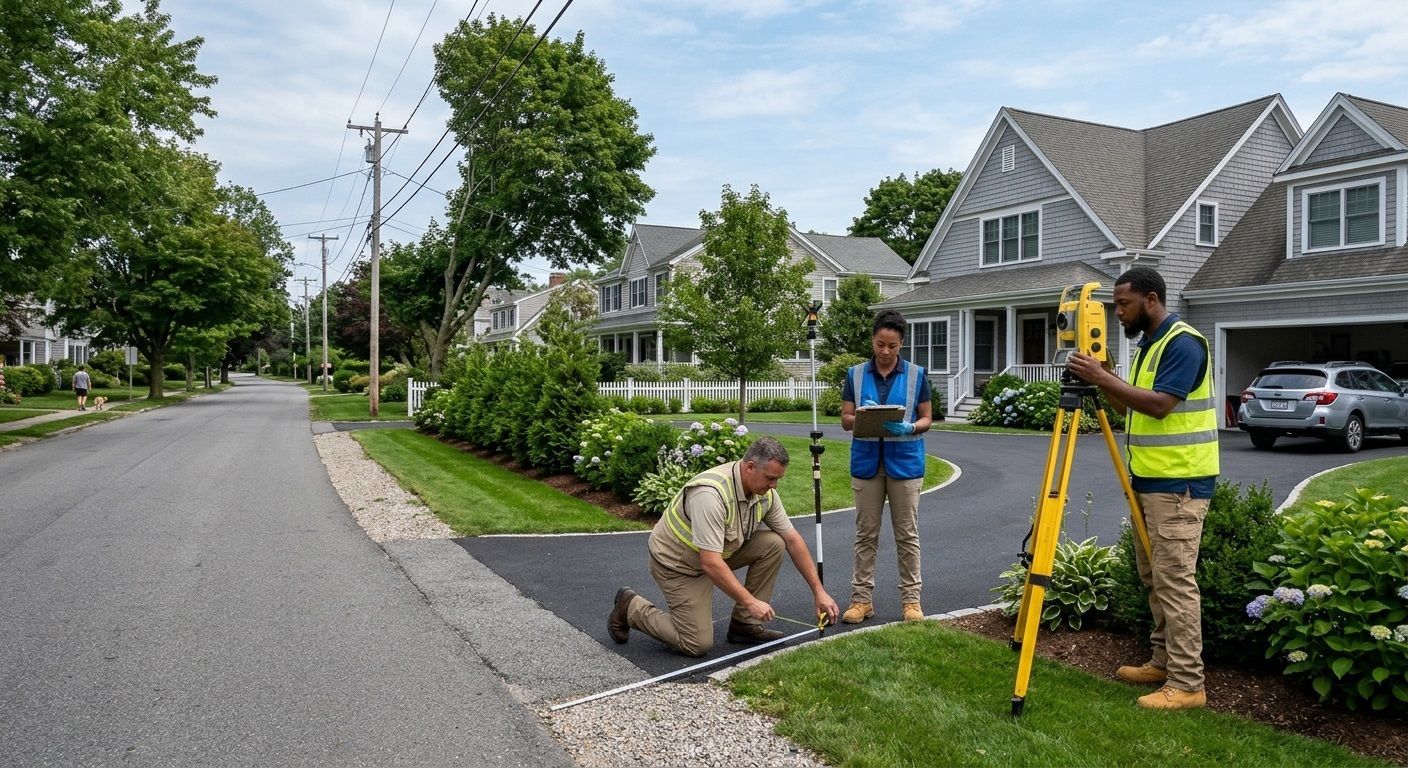
Getting Your Driveway Project Right from the Start
Zoning compliance is one of the first things worth sorting out before any driveway work begins, whether you're installing a new driveway, widening an existing one, or repaving with a different material that changes the footprint. Skipping this step can lead to delays, fines, or having to remove and redo completed work.
As a Rhode Island-based construction company, we've worked on residential projects across many of the towns listed above and understand how differently local zoning offices can interpret and apply their ordinances. If you're planning a driveway project and want help navigating the permitting process alongside quality construction work, our team at Rockhouse Construction is here to help.
Get in touch with Rockhouse Construction to discuss your Rhode Island driveway project and make sure it starts on solid ground.
Driveway Setback Calculator
Check your proposed driveway clearances against the minimum setback distances listed in your local Rhode Island zoning ordinance. Enter all measurements in feet.
Setback Check Results
This calculator provides a preliminary comparison only. It does not confirm zoning compliance or replace guidance from your local zoning or building department.
Frequently Asked Questions
Q: Do all Rhode Island towns have the same driveway setback rules?
A: No. Each Rhode Island city and town sets its own zoning ordinance under the state's home rule framework, so driveway setback distances vary by municipality and by zoning district within that municipality.
Q: How do I find out my property's exact driveway setback requirement?
A: Check your property's zoning district through your town's online GIS mapping tool or tax assessment records, then review the dimensional regulations table in that town's zoning ordinance, or call the local zoning office directly.
Q: Do corner lots have different driveway setback rules?
A: Often, yes. Many Rhode Island municipalities apply stricter setback requirements on corner lots to maintain clear sightlines for drivers at intersections.
Q: Will I need a permit to install or widen a driveway in Rhode Island?
A: In most cases, yes. Many towns require a permit or site plan approval for new driveways, curb cuts, or significant changes to an existing driveway's size or location.
Q: What happens if my driveway doesn't meet the required setback?
A: You may need to apply for a variance through the local zoning board, which can delay a project and isn't guaranteed to be approved. It's generally far simpler to confirm setback requirements before construction begins.
Q: Does living near the coast affect my driveway setback rules?
A: It can. Coastal properties in towns like Narragansett, Westerly, and Portsmouth may be subject to additional review from the Rhode Island Coastal Resources Management Council alongside standard municipal zoning rules.