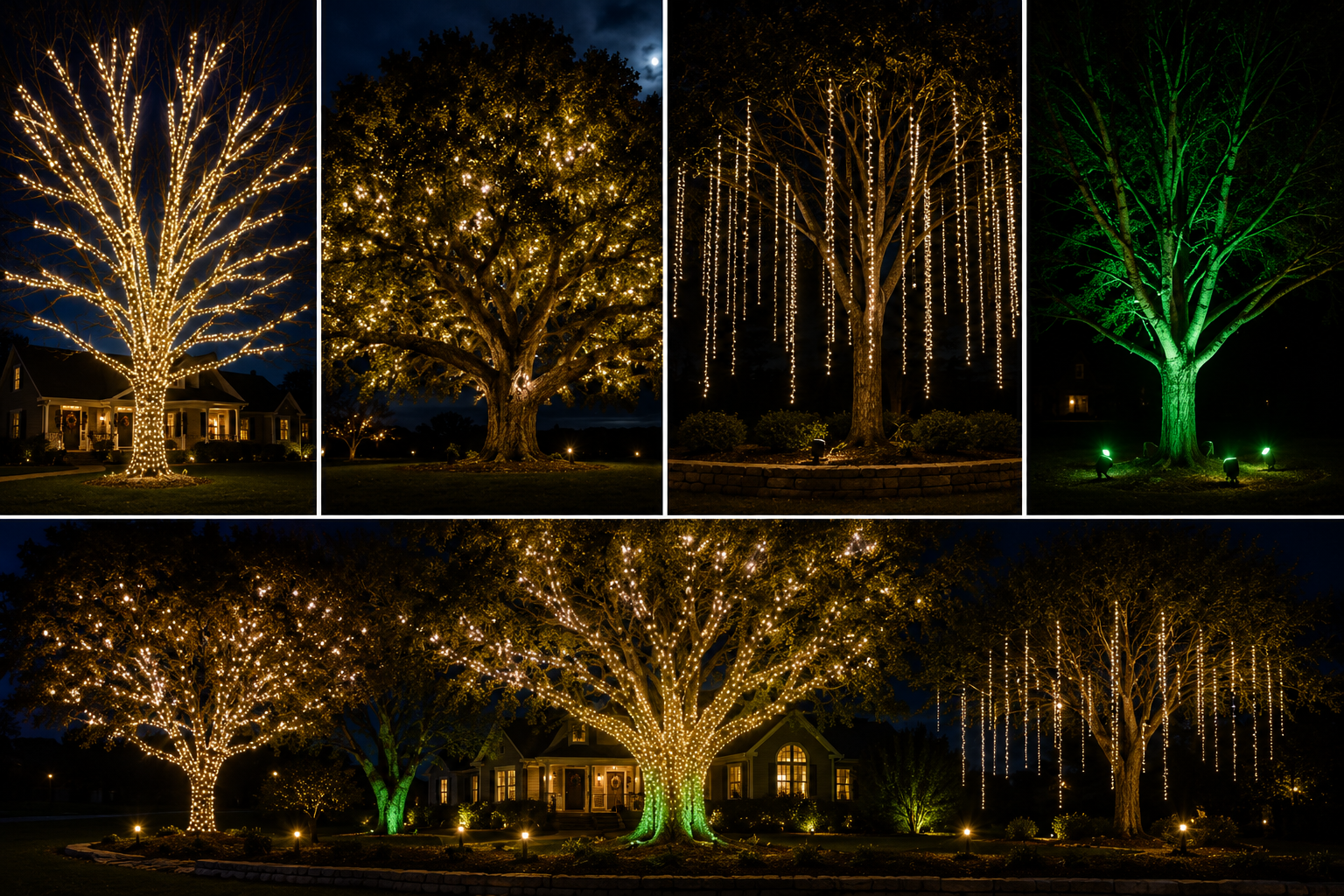

Tall Tree Holiday Light Installation - Rhode Island

David Antonucci • December 15, 2025

Rhode Island's mature landscape includes countless tall trees - majestic oaks, towering pines, and stately maples that define properties throughout Providence, Warwick, Cranston, East Greenwich, and across the Ocean State. During the holidays, these impressive trees become natural focal points for spectacular light displays, transforming yards into winter wonderlands visible throughout neighborhoods.


However, tall tree light installation presents significant challenges. Trees 20-50 feet high require specialized equipment, safety expertise, and proper techniques that put the project beyond typical DIY capabilities. Professional installation costs $300-$1,500+ per large tree in Rhode Island, but delivers safe, stunning results that DIY attempts often can't match.


Why Tall Trees Make Spectacular Holiday Displays


Large trees offer unique advantages for Christmas lighting.


Visual Impact and Scale


Tall trees create dramatic focal points visible from blocks away, anchor entire property displays, provide vertical interest complementing roofline lights, and capture attention of passersby and neighbors.


A beautifully lit 40-foot oak in your East Greenwich yard becomes a neighborhood landmark during the holiday season.


Natural Beauty Enhanced


Holiday lights accentuate trees' existing beauty by highlighting architectural branch structure, creating depth through layered lighting, emphasizing impressive height and scale, and complementing natural forms.


Variety of Lighting Styles


Tall trees accommodate multiple approaches including wrapped trunks and main branches, canopy lighting from within, uplighting from ground level, cascading light effects, and combination techniques.


Rhode Island's Tree Heritage


The Ocean State's mature landscapes particularly suit holiday lighting with established neighborhoods having 50-100 year old trees, properties in Barrington, Scituate, and South County featuring impressive specimens, coastal areas with dramatic evergreens, and historic properties showcasing heritage trees.


The Dangers of DIY Tall Tree Light Installation


Before considering DIY, understand the serious risks.


Fall Hazards


Falls from heights are leading causes of holiday injuries. Risks include falls from ladders causing serious injury or death, ladder instability on uneven ground, reaching too far and losing balance, icy branches and ladder rungs in Rhode Island winters, and fatigue leading to mistakes.


The Consumer Product Safety Commission reports thousands of ladder-related injuries each November-December, many involving holiday decorating.


Electrical Hazards


Working with electrical connections near trees presents dangers including wet conditions creating shock hazards, damaged cords causing shorts or sparks, overloaded circuits starting fires, and improper connections failing in Rhode Island weather.


Weather-Related Risks


Rhode Island's unpredictable weather compounds dangers with ice forming on branches and ladders, wind making ladder work extremely dangerous, cold reducing dexterity and judgment, and snow obscuring hazards.


Equipment Limitations


Typical homeowner equipment falls short for tall trees. Standard extension ladders reach only 20-25 feet safely. Climbing tall trees without proper training is extremely dangerous. Working alone means no one to spot or call for help if injured. Inadequate safety equipment increases risk.


Providence Emergency Room Data


Local hospitals report increased admissions every holiday season for falls from ladders and roofs, many involving homeowners decorating. Professional installers have safety training, proper equipment, and insurance protecting you from liability.


Tall Tree Lighting Styles and Approaches


Multiple techniques create various effects.


Trunk and Branch Wrapping


The classic approach wraps lights around main trunk and primary branches creating traditional Christmas tree appearance, emphasizing natural structure, allowing close viewing appeal, and using 500-2,000+ lights for large trees.


This labor-intensive method requires accessing entire tree structure - usually professionals only for tall trees.


Canopy Lighting


Lights placed within tree canopy create glowing effect with strings draped through upper branches, lights hidden creating magical glow, particularly effective on dense evergreens, and using 300-1,000 lights typically.


Vertical Cascades


Lights hung vertically create waterfall effect with strands suspended from high branches, icicle or curtain appearance, dramatic vertical emphasis, and relatively simpler installation than full wrapping.


Spotlight Uplighting


Ground-based spotlights offer safest installation with professional-grade LED spotlights, various color options (white, blue, red, green), highlighting tree from below creating dramatic shadows, and adjustable for different effects.


Cost: $100-$300 per spotlight installed.


Combination Approaches


Many professional installations combine techniques with wrapped trunk and ground uplighting, canopy lights plus spotlights, different colors for trunk vs. canopy, and layered effects creating depth.


Cost of Professional Tall Tree Light Installation in Rhode Island


Understanding pricing helps budget appropriately.


Factors Affecting Cost


Tree height and accessibility directly impact pricing. Trees 20-30 feet cost $300-$600 for professional installation. Trees 30-40 feet run $500-$900. Trees 40-50+ feet cost $800-$1,500+.


Additional factors include tree density and branch structure, number of lights used, installation technique selected, property access for equipment, and removal/storage services.


Installation-Only vs. Full-Service


Installation-only services (you provide lights) cost $200-$800 depending on tree size and complexity. Full-service packages include lights, installation, and removal running $400-$1,500+ per tree.


Lighting Package Options


Professional installers offer various packages. Basic LED strand packages cost $300-$600 per large tree. Premium packages with custom design run $600-$1,200. Luxury installations with special effects exceed $1,200-$2,000.


Per-Season vs. Multi-Year Contracts


Single season installation costs full price. Multi-year contracts often discount 10-20%, include storage of lights, and provide annual reinstallation.


Additional Services


Beyond basic installation, consider timer installation ($75-$150), electrical outlet installation if needed ($150-$400), landscape lighting integration ($200-$600), and custom programming for LED systems ($100-$300).


Rhode Island Market Pricing


Urban Providence and Newport prices typically run 10-20% higher than suburban Warwick, Cranston, or rural areas due to access challenges and higher operating costs.


Choosing the Right Lights for Tall Rhode Island Trees


Light selection affects both appearance and durability.


LED vs. Incandescent


LED lights dominate modern installations with 75-80% energy savings, 25,000-50,000 hour lifespan, cool operation (fire safety), durability in Rhode Island weather, and brighter, more consistent color.


Incandescent lights are cheaper upfront ($20 vs. $40 per strand) but cost more long-term in energy and replacement.


Light Color Options


Classic warm white creates traditional Christmas appearance suiting historic Rhode Island homes. Cool white provides crisp, modern look popular in contemporary properties. Multi-color lights offer playful, festive vibe loved by families. Blue and white create elegant winter theme common in coastal areas.


Light Size and Spacing


C9 bulbs (large, traditional) work well for tall trees visible from distance at 12-inch spacing. C7 bulbs (medium) suit moderate-sized trees at 8-12 inch spacing. Mini lights create delicate appearance at 4-6 inch spacing.


For 40-foot trees, most professionals recommend C9 or C7 for visibility.


Commercial vs. Residential Grade


Commercial-grade lights cost more but deliver superior durability with heavy-duty wire and construction, replaceable bulbs, longer warranties (3-5 years), and professional appearance.


For tall trees requiring professional installation, commercial-grade lights justify the investment.


Weather Resistance


Rhode Island's harsh winters demand rated for outdoor use, waterproof connections, cold-weather flexibility, and UV-resistant coatings.


Calculating Light Quantities


Estimate lights needed for your tree by measuring trunk and main branch lengths, multiplying by lights per foot (varies by spacing chosen - typically 12-24 lights per foot of branch), and adding 20% extra for connections and adjustments.


A 35-foot oak with 200 feet of trunk and primary branches needs 2,400-4,800 lights at standard spacing.


Finding Professional Holiday Light Installers in Rhode Island


Selecting qualified professionals ensures safety and quality.


What to Look for in Installers


Quality companies provide proof of liability insurance ($1-2 million minimum), workers' compensation coverage, specific experience with tall tree installation, proper equipment (lifts, climbing gear), and references from recent Rhode Island projects.


Rhode Island Holiday Lighting Companies


Research options through online reviews and ratings, Better Business Bureau listings, neighborhood recommendations, and social media showcasing recent work.

Many Rhode Island landscaping companies offer holiday lighting as seasonal service.


Questions to Ask Potential Installers


Essential questions include: How many tall trees have you installed? What equipment do you use? Are you insured for this work? What happens if lights fail during season? Do you provide removal and storage? What's your pricing structure? Can you provide recent references?


Red Flags to Avoid


Warning signs include no proof of insurance, unwillingness to provide references, prices significantly lower than competitors (often indicating corners cut), pressure for immediate decisions, and lack of professional equipment.


Getting Multiple Quotes


Obtain 2-3 detailed quotes comparing total cost including installation and removal, lighting package details (quality, quantity), warranties and guarantees, timeline for installation, and what's included vs. additional charges.


Maintaining Holiday Lights on Tall Trees


Once installed, lights require monitoring through the season.


Regular Checks


Weekly inspection during December includes checking for burnt-out bulbs, examining connections for water intrusion, verifying timers functioning correctly, and assessing for storm damage.


Weather Damage Response


Rhode Island winters bring damaging weather. After major storms, inspect for downed branches with lights, ice buildup stressing connections, and blown-down strands.


Professional installation contracts often include storm damage service.


Electrical Management


Monitor for tripped circuits indicating overload, GFCI outlets tripping (moisture issue), and unusual flickering or dimming.


End-of-Season Removal


Professional removal typically occurs early January with careful extraction preventing tree damage, inspection and cleaning of lights, proper storage preventing damage, and documentation of any needed replacements.


Attempting to remove lights from tall trees yourself in winter ice carries same risks as installation.


Creating Cohesive Holiday Lighting Displays


Tall trees should integrate with overall property lighting.


Design Principles for Multi-Element Displays


Unified displays feature consistent color schemes throughout, scale appropriate for property size, balance between various elements (house, trees, yard), and focal points guiding eye through display.


Combining Tree and Home Lighting


Coordinated displays might include white lights on house roofline and trees, multi-color accents on bushes tying together, ground-level path lighting, and matching light sizes and styles.


Multiple Tree Coordination


Properties with several tall trees should light 1-3 trees maximum (more becomes overwhelming), vary techniques for visual interest, maintain consistent color scheme, and create balanced arrangement.


Pathway and Landscape Integration


Complete displays extend beyond trees to include walkway lighting guiding guests, lighted garden beds, illuminated shrubs and hedges, and entry focal points (doors, porches).


Rhode Island Neighborhood Considerations


Respect neighbors with reasonable lighting hours (off by 11pm-midnight), appropriate brightness levels, no flashing or animated lights disturbing neighbors, and coordination with neighborhood displays if organized.


Some Rhode Island communities have organized light displays and competitions - Providence's Festival of Lights, Newport's displays, and suburban neighborhood contests.


Troubleshooting Common Tall Tree Lighting Problems


Issues arise even with professional installation.


Bulbs Burning Out Quickly


Causes include overloaded circuits, poor connections allowing water intrusion, voltage irregularities, and low-quality bulbs.


Solutions: Use GFCI outlets, ensure proper circuit capacity, invest in commercial-grade lights, and have electrician check voltage if recurring.


Lights Flickering or Dimming


Common causes include loose connections at any point, circuit overload, faulty GFCI outlet, and damaged extension cords.


Solutions: Check all connections, reduce load on circuit, replace GFCI if tripping frequently, and inspect cords for damage.


Sections Going Dark


Problems might be single bulb failure in series circuit, connector failure, damaged wire, or tripped GFCI.


Solutions: Test each bulb, check all connectors, inspect wire carefully, and reset GFCI outlets.


Storm Damage


Rhode Island nor'easters and winter storms can knock down branches and displace lights, break connections, accumulate dangerous ice, and cause tree damage.


If storm damage occurs, contact professional installer rather than climbing icy tree yourself.


Wildlife Interference


Squirrels occasionally chew wires and birds may disturb lighter strands. Solutions include animal repellent sprays and securing strands more firmly.


Alternatives to Traditional Tall Tree Lighting


Consider other options if climbing concerns you.


Professional Projection Systems


Modern laser and LED projectors create lighting effects without installation by projecting patterns onto trees, offering customizable colors and effects, requiring no climbing or installation, and renting for $50-$150 or purchasing for $100-$400.


Quality varies significantly - cheap projectors disappoint.


Ground-Based Spotlighting


Professional landscape lighting illuminates trees safely with permanent installation usable year-round, holiday color filters for seasonal changes, remote or smart control, and professional installation costing $200-$600 per tree.


Wrapped Tree Trunks Only


Lighting just lower trunk avoids tall ladder work with DIY-friendly heights (6-10 feet), creating attractive appearance, allowing combination with ground uplighting, and using 100-300 lights per tree.


Living Tree Alternative


For some properties, a planted living tree in accessible location provides holiday focal point without tall tree challenges, can be decorated annually, grows over time, and eventually becomes feature tree.


Creating Safe, Spectacular Tall Tree Displays in Rhode Island


Tall trees are among Rhode Island's most beautiful natural assets, and illuminating them for the holidays creates spectacular displays that define neighborhoods and bring joy throughout the season. However, the reality is that safely lighting trees over 20-25 feet requires professional expertise, specialized equipment, and comprehensive insurance that typical homeowners don't possess.


Professional holiday light installation for tall trees costs $300-$1,500+ per tree in Rhode Island - a significant investment, but one that delivers safe, beautiful results without risking serious injury or property damage. When you consider the cost of aerial lift rental, commercial-grade lights, insurance concerns, and the value of your time and safety, professional installation often makes both financial and practical sense.


Ready to illuminate your property's tall trees with professional holiday lighting that's both spectacular and safe? Rockhouse Construction is ready to help.


Contact us today for expert holiday light installation services throughout Providence, Warwick, Cranston, and across Rhode Island. While we specialize in year-round construction and home improvements, we understand the importance of the holiday season and can connect you with trusted lighting professionals, or discuss permanent outdoor lighting solutions that work beautifully year-round and can be adapted for holiday displays. Let us help make your property shine this holiday season!

By David Antonucci December 16, 2025
If you're considering adding an Accessory Dwelling Unit (ADU) to your property in Providence, Warwick, Cranston, East Greenwich, or anywhere across Rhode Island, you're joining a growing trend. ADUs - also called in-law suites, granny flats, carriage houses, or accessory apartments - provide independent living spaces on single-family properties, addressing Rhode Island's housing shortage while creating rental income opportunities or multigenerational living solutions. Rhode Island ADU construction costs typically range from $150,000-$400,000+ depending on size, type, and finishes, with most homeowners spending $200,000-$300,000 for quality 600-900 square foot units. Understanding cost factors, permitting requirements, and financing options helps you budget accurately and make informed decisions about this significant investment. What Is an ADU and Why They're Popular in Rhode Island Accessory Dwelling Units are reshaping how Rhode Island homeowners use their properties. Defining ADUs An ADU is a self-contained residential unit on the same lot as a primary residence, featuring complete kitchen facilities, full bathroom, separate entrance, independent utilities (or shared), and typically 300-1,200 square feet. Types of ADUs in Rhode Island Rhode Island properties accommodate various ADU configurations. Detached ADUs are separate structures in backyards, offering maximum privacy, typically 400-1,200 square feet, and resembling small cottages or converted garages. Attached ADUs connect to main house, sharing at least one wall, providing 500-1,000 square feet typically, and offering easier utility connections. Garage conversions transform existing structures, utilizing space above or beside garages, costing less than new construction, and providing 300-800 square feet commonly. Basement conversions finish existing lower levels, requiring adequate ceiling height (minimum 7 feet in RI), needing proper egress windows, and delivering 400-900 square feet typically. Why Rhode Island Homeowners Build ADUs Motivations include rental income ($1,200-$2,000+ monthly in Rhode Island markets), multigenerational living for aging parents or adult children, home offices or studios with separation from main house, property value enhancement, and addressing Rhode Island's housing shortage. Rhode Island's ADU-Friendly Legislation Recent years have seen Rhode Island embrace ADUs through state legislation encouraging municipalities to permit ADUs, relaxed zoning in many communities, recognition of housing shortage solutions, and owner-occupancy requirements in most areas. Providence, Warwick, and other cities have updated ordinances facilitating ADU development. Average ADU Construction Costs in Rhode Island Understanding typical costs helps you budget realistically. Cost Per Square Foot Rhode Island ADU construction averages $200-$350 per square foot for basic to mid-range finishes, $300-$450 per square foot for quality finishes and features, and $400-$600+ per square foot for luxury units with high-end materials. These rates reflect complete construction including all systems, finishes, and permits. Total Project Costs by Size Small ADUs (300-500 square feet) cost $60,000-$175,000 for basic studios or garage conversions. Medium ADUs (500-800 square feet) run $100,000-$280,000 for one-bedroom units. Large ADUs (800-1,200 square feet) cost $160,000-$480,000+ for two-bedroom units with full amenities. Detached ADU Construction Costs New detached structures represent the highest investment. A 400 square foot studio costs $120,000-$180,000, 600 square foot one-bedroom runs $180,000-$270,000, and 900 square foot two-bedroom costs $270,000-$405,000. These include complete construction from foundation through finishes. Garage Conversion Costs Converting existing garage structures costs less than new construction. Basic garage apartment conversions run $80,000-$150,000, quality conversions with full amenities cost $120,000-$200,000, and luxury garage conversions exceed $180,000-$280,000. Savings come from existing foundation, roof, and walls requiring less new construction. Basement Conversion Costs Finishing existing basements offers economy when adequate ceiling height and egress options exist. Basic basement ADUs cost $60,000-$120,000, quality basement apartments run $100,000-$180,000, and high-end conversions cost $150,000-$250,000. Foundation waterproofing and egress window costs vary significantly by Rhode Island property. Attached ADU Addition Costs Adding onto existing homes provides mid-range costs. Small attached ADUs (400-600 sq ft) cost $120,000-$210,000, medium additions (600-800 sq ft) run $180,000-$320,000, and large additions (800-1,200 sq ft) cost $240,000-$480,000+. Detailed Cost Breakdown for Rhode Island ADUs Understanding where money goes helps evaluate estimates and make decisions. Site Work and Foundation ($15,000-$45,000) Preparing sites and foundations includes excavation and grading ($3,000-$8,000), foundation installation ($12,000-$35,000 depending on type), utility trenching and connections ($5,000-$15,000), and driveway/parking additions ($3,000-$10,000). Rhode Island's rocky soil and high water tables in some areas increase foundation costs. Framing and Structure ($30,000-$80,000) Structural components include lumber and materials ($15,000-$40,000), framing labor ($12,000-$30,000), roof framing and materials ($8,000-$20,000), and windows and exterior doors ($5,000-$15,000). Coastal Rhode Island properties may need enhanced wind-rated framing. Exterior Finishes ($15,000-$40,000) Completing the exterior includes siding installation ($8,000-$20,000), roofing materials and installation ($5,000-$15,000), exterior trim and details ($2,000-$6,000), and exterior painting or staining ($3,000-$8,000). Match existing home aesthetics - colonial, Cape Cod, or contemporary finishes. Plumbing ($12,000-$30,000) Complete plumbing systems include rough plumbing installation ($5,000-$12,000), fixtures (sink, toilet, shower/tub) ($3,000-$10,000), water heater ($1,500-$4,000), and sewer/septic connections ($2,500-$8,000). Septic system upgrades may add $5,000-$20,000 in rural Rhode Island. Electrical ($10,000-$25,000) Electrical work encompasses service panel and connections ($3,000-$8,000), rough electrical installation ($4,000-$10,000), fixtures and devices ($2,000-$5,000), and final connections ($1,000-$3,000). Separate meters for rental units add $800-$2,000. HVAC ($8,000-$20,000) Climate control options include mini-split systems (most common for ADUs) ($4,000-$10,000), traditional HVAC systems ($8,000-$15,000), ductwork installation if needed ($3,000-$8,000), and ventilation systems ($1,000-$3,000). Rhode Island's four-season climate requires proper heating and cooling. Insulation ($4,000-$10,000) Proper insulation is essential with wall insulation ($2,000-$5,000), ceiling/attic insulation ($1,500-$4,000), and floor insulation ($500-$2,000). Rhode Island energy codes require R-19 to R-21 wall insulation. Interior Finishes ($25,000-$70,000) Finishing interiors includes drywall installation and finishing ($8,000-$18,000), flooring throughout ($6,000-$18,000), kitchen cabinets and countertops ($8,000-$20,000), bathroom finishes ($5,000-$15,000), interior doors and trim ($3,000-$8,000), and painting ($3,000-$8,000). Finish quality dramatically affects this category - basic vs. luxury choices. Permits and Fees ($3,000-$12,000) Rhode Island municipalities charge building permits ($1,500-$5,000 typically), impact fees in some communities ($1,000-$5,000), utility connection fees ($500-$2,000), and inspection fees (included in permit usually). Providence and larger cities typically charge higher fees than smaller towns. Design and Engineering ($5,000-$20,000) Professional services include architectural design ($3,000-$12,000), structural engineering ($1,500-$5,000), and permit drawings and submissions ($500-$3,000). Complex sites or designs increase professional service costs. Contingency (10-20% of budget) Unexpected expenses always arise - budget $15,000-$40,000 contingency for typical projects to cover site surprises, design changes, material upgrades, and unforeseen complications. Rhode Island ADU Permitting and Regulations Municipal requirements significantly affect costs and timelines. State-Level ADU Legislation Rhode Island law encourages ADUs through requirements that municipalities allow ADUs in residential zones, prohibition of excessive restrictions, and recognition as housing shortage solution. However, local regulations still vary significantly. Providence ADU Requirements Providence permits ADUs with owner-occupancy requirement (owner must live in primary or ADU), lot size minimums (typically 5,000+ square feet), parking requirements (often 1 space per ADU), design review for aesthetics, and building permits ($2,000-$6,000 typically). Warwick ADU Regulations Warwick allows ADUs with similar owner-occupancy rules, zoning compliance verification, adequate lot size, parking provisions, and permit fees ($1,500-$5,000). Cranston ADU Rules Cranston has specific ADU ordinances requiring owner occupancy, minimum lot dimensions, architectural compatibility, proper parking, and full building permits. Other Rhode Island Communities East Greenwich, Barrington, South Kingstown, and most Rhode Island towns have adopted ADU-friendly regulations. Verify specific requirements with your municipal building department. Coastal communities may have additional CRMC (Coastal Resources Management Council) requirements if within 200 feet of coastal features. Typical Permit Requirements Most Rhode Island municipalities require site plans showing ADU location and setbacks, architectural drawings with floor plans and elevations, engineering stamps for structural plans, septic system approval (if applicable), utility confirmation letters, parking plans, and neighborhood notice in some communities. Timeline for Permits Expect 4-12 weeks for permit approval in most Rhode Island communities depending on complexity, time of year (slower in summer), and completeness of application. Return on Investment for Rhode Island ADUs ADUs can deliver strong financial returns. Rental Income Potential Rhode Island rental markets vary by location. Providence studio ADUs rent for $1,200-$1,600 monthly. Warwick one-bedroom ADUs command $1,400-$1,800. East Greenwich quality units achieve $1,600-$2,200. Coastal areas (Narragansett, South Kingstown) see $1,500-$2,500 seasonally. Annual gross rental income typically ranges $14,400-$30,000. Calculating ROI For a $200,000 ADU renting at $1,500/month: annual rent is $18,000, less 20% for vacancy and maintenance ($3,600) equals $14,400 net income. Annual return is 7.2% on investment - comparable to stock market with less volatility. Additionally, property value increases $150,000-$200,000 (75-100% of construction cost typically). Property Value Enhancement Real estate professionals report Rhode Island properties with ADUs sell for $100,000-$250,000+ more than comparable homes without ADUs, depending on quality, location, and rental income potential. Tax Considerations Rental income is taxable but deductions include mortgage interest, property taxes (portion attributable to ADU), insurance, repairs and maintenance, utilities, and depreciation. Consult tax professionals for specific guidance. Long-Term Value Beyond immediate returns, ADUs provide flexibility for future needs (aging parents, adult children, downsizing into ADU while renting main house), hedge against housing cost increases, and retirement income potential. Design Considerations for Rhode Island ADUs Thoughtful design maximizes functionality and appeal. Essential Components Complete ADUs include full kitchen with appliances and counter space, complete bathroom, separate entrance, living/sleeping areas, storage space, and laundry (at minimum hookups). Size and Layout Optimization Studios (300-500 sq ft) work for single occupants, one-bedroom units (500-800 sq ft) accommodate couples or small families, and two-bedroom ADUs (800-1,200 sq ft) serve larger households. Open floor plans maximize perceived space in compact footprints. Rhode Island Climate Considerations Design for four-season comfort with proper insulation and HVAC, adequate heating for cold winters, cooling for humid summers, and moisture management for coastal humidity. Matching Existing Architecture ADUs should complement main houses through similar siding and roofing materials, coordinated color schemes, architectural details matching, and proportional scale. Providence's historic neighborhoods and Newport properties particularly benefit from architectural sensitivity. Accessibility Features Consider future needs with barrier-free entry options, wider doorways (32+ inches), accessible bathrooms, and single-floor living. Aging-in-place features increase rental appeal and future flexibility. Energy Efficiency Incorporate LED lighting throughout, Energy Star appliances, high-efficiency HVAC, proper insulation and air sealing, and low-flow water fixtures. Efficient ADUs reduce operating costs and appeal to environmentally-conscious renters. Common Challenges and Solutions Anticipate obstacles and plan solutions. Lot Size and Setback Issues Rhode Island's compact lots can limit ADU placement. Solutions include careful site planning maximizing buildable area, variance requests if needed, attached ADUs requiring less lot space, and basement conversions using existing footprint. Neighborhood Opposition Some neighbors resist ADUs. Address concerns by ensuring architectural compatibility, providing adequate parking, respecting privacy with careful window placement, and explaining benefits (addressing housing needs, maintaining property values). Utility Capacity Existing utilities may need upgrades including electrical panel expansion ($1,500-$4,000), septic system enlargement ($10,000-$30,000 if required), water service upgrade (rare, $2,000-$8,000), and gas line extensions ($1,500-$5,000). Historic District Requirements Properties in Providence's historic districts or Newport's historic areas face additional review. Work with designers experienced in historic contexts, use appropriate materials and details, and engage early with historic commissions. Coastal Regulations (CRMC) Properties within 200 feet of coastal features require CRMC approval adding 2-4 months to timelines. Plan accordingly and work with experienced coastal consultants. ADU vs. Other Property Investment Options Compare ADUs to alternatives. ADU vs. Rental Property Purchase ADUs require lower initial investment ($150,000-$400,000 vs. $300,000-$500,000+ for Rhode Island rental properties), no property management for distant property, control over tenants and maintenance, but limited to single unit versus multiple units possible. ADU vs. Home Addition Traditional additions cost $150-$400 per square foot (similar to ADUs) but don't generate rental income, add living space to main house, and don't require separate kitchen and bathroom. ADU vs. Multi-Family Property Multi-family properties generate more rental income but require larger investments, more intensive management, and different financing. Long-Term Wealth Building ADUs combine home equity growth, rental income stream, and flexible future use making them powerful wealth-building tools for Rhode Island homeowners. Is an ADU Right for Your Rhode Island Property? Accessory Dwelling Units represent significant investments - typically $150,000-$400,000 in Rhode Island - but deliver compelling returns through rental income, property value enhancement, and flexible living options. For homeowners with adequate lot space in ADU-friendly municipalities like Providence, Warwick, Cranston, and East Greenwich, ADUs address housing needs while creating financial opportunities. The key to successful ADU development is thorough planning that includes realistic budgeting with adequate contingency, understanding local permitting requirements, careful design maximizing functionality, selection of experienced contractors, and clear vision for ADU use (rental, family, or future flexibility). Ready to explore adding an ADU to your Rhode Island property and want accurate cost estimates for your specific situation? Rockhouse Construction is ready to help. Contact us today for expert consultation on ADU feasibility, design, permitting, and construction throughout Providence, Warwick, Cranston, and across Rhode Island. Our experienced team understands Rhode Island's ADU regulations and can guide you through every step of creating valuable, functional accessory dwelling space on your property.
By David Antonucci December 15, 2025
If you're tired of climbing ladders every November to hang holiday lights only to take them down in January, there's a better solution transforming Rhode Island homes from Providence to Warwick, Cranston to East Greenwich, and across the Ocean State. Permanent LED roofline lighting systems install once and last 15-20+ years, providing year-round architectural enhancement and customizable holiday displays without annual installation hassles. These sophisticated systems feature color-changing LED technology allowing white lights for holidays, subtle accent lighting year-round, or custom colors for special occasions - all controlled from your smartphone. Rhode Island homeowners typically invest $2,500-$8,000 for permanent roofline lighting on standard homes, with costs varying by home size, system quality, and features. What Is Permanent LED Roofline Lighting? Understanding system components and capabilities helps evaluate this investment. System Components Professional permanent lighting includes aluminum track channels mounted to fascia or eaves, color-changing LED bulbs spaced 6-12 inches, waterproof connections throughout, transformer/controller managing system, and smartphone app or remote control. Unlike temporary holiday lights, these systems install permanently and discretely, barely visible when off but spectacular when illuminated. How Color-Changing Technology Works Modern LED bulbs contain red, green, and blue diodes (RGB) or red, green, blue, and white (RGBW) allowing any color combination imaginable, millions of color possibilities, white light from cool to warm tones, and smooth color transitions. RGBW systems provide superior white light quality - important for traditional holiday displays. Control Systems Sophisticated controllers offer smartphone app control (iOS and Android), pre-programmed color scenes, custom scheduling and timers, individual zone control, animation effects (fading, chasing, twinkling), and voice control compatibility (Alexa, Google Home). Control from anywhere - turn lights on from vacation or adjust colors from your couch. Professional vs. Consumer Systems Commercial-grade systems used by professionals include aluminum channels (not plastic), high-output LEDs rated 50,000+ hours, weatherproof rated for Rhode Island climate, replaceable bulbs (not sealed units), professional warranties (5-10 years), and proven durability. Consumer DIY systems save upfront but often fail within 2-5 years in Rhode Island weather. Benefits of Permanent LED Lighting for Rhode Island Homes These systems offer compelling advantages over traditional seasonal lighting. Eliminate Ladder Work Never climb dangerous ladders again with one-time professional installation, no annual holiday decorating routine, no January removal in freezing weather, and no storage of tangled light strands. Ladder falls cause thousands of injuries annually - permanent systems eliminate this risk. Year-Round Functionality Maximize your investment through holiday lighting (Thanksgiving through New Year's), special occasions (birthdays, anniversaries, parties), seasonal celebrations (Fourth of July, Halloween), architectural accent lighting year-round, and security lighting deterring intruders. Superior Aesthetics Professional systems look better than temporary lights with clean, uniform appearance, no visible wiring or clips, architectural integration, consistent spacing and alignment, and modern, sleek design. Rhode Island's historic homes in Providence and Newport benefit from discrete systems that enhance rather than detract from architecture. Durability in Rhode Island Weather Commercial systems handle our coastal climate with waterproof construction throughout, cold-weather operation (tested to -40°F), UV-resistant materials, salt-air resistance (critical for coastal RI), and wind-proof mounting. Energy Efficiency LED technology dramatically reduces costs with 80-90% less energy than incandescent, minimal heat generation, long lifespan reducing replacements, and lower monthly operating costs. Running permanent lights 5 hours nightly costs $5-$15 monthly versus $30-$80 for traditional lights. Smart Home Integration Modern systems integrate with existing smart home technology through voice control, automation scheduling, integration with security systems, and scenes coordinating with other smart devices. Property Value Enhancement Quality permanent lighting adds value through modern, desirable amenity, enhanced curb appeal, reduced maintenance requirements, and appeal to tech-savvy buyers. Providence, Warwick, and East Greenwich real estate agents report that smart home features including permanent lighting appeal to today's buyers. Permanent LED Roofline Lighting Costs in Rhode Island Investment varies based on home size and system quality. Average Installation Costs Small homes (1,000-1,500 sq ft footprint) cost $2,000-$4,000 for 100-150 linear feet of roofline. Medium homes (1,500-2,500 sq ft) run $3,000-$6,000 for 150-250 linear feet. Large homes (2,500-4,000+ sq ft) cost $5,000-$10,000+ for 250-400+ linear feet. Pricing typically runs $15-$35 per linear foot installed depending on system quality and installation complexity. Cost Factors Several variables affect final pricing including roofline length (primary cost driver), roof height and pitch (steeper = more expensive), architectural complexity (multiple levels, peaks, valleys), system quality (commercial-grade vs. consumer), features desired (zoning, animations, integration), and Rhode Island contractor rates. Urban Providence and Newport typically cost 10-15% more than suburban Warwick or rural areas due to access challenges and higher operating costs. Premium vs. Budget Systems Budget systems ($15-$20 per linear foot) use plastic channels and lower-output LEDs, have basic control systems and limited warranties (2-3 years), and typically last 5-8 years. Premium systems ($25-$35+ per linear foot) feature aluminum channels and commercial-grade LEDs, advanced controls and smart integration, comprehensive warranties (7-10 years), and expect 15-20+ year lifespans. For Rhode Island's harsh climate, premium systems justify the investment. Additional Features and Costs Optional upgrades include landscape integration ($500-$2,000), pathway lighting connection ($300-$1,000), architectural accent lighting ($400-$1,500), extended zones for detached structures ($500-$2,000), and professional seasonal color programming ($100-$300 annually). Long-Term Cost Comparison Compare permanent lighting to traditional approach over 15 years: Traditional seasonal lights: Initial lights: $300-$800, Annual installation service: $300-$600 × 15 years = $4,500-$9,000, Replacement lights: $300-$800 every 3-5 years = $900-$2,400, Total 15-year cost: $5,700-$12,200. Permanent LED system: Initial installation: $3,500-$7,000, Annual operation: $60-$180 × 15 years = $900-$2,700, Maintenance/repairs: $200-$500, Total 15-year cost: $4,600-$10,200. Permanent systems often cost less long-term while eliminating hassle. How Permanent LED Systems Are Installed Understanding installation helps evaluate contractors and timelines. Pre-Installation Assessment Professional installers start with comprehensive site evaluation, measuring exact roofline dimensions, assessing mounting surfaces (fascia, soffit, eaves), identifying electrical access points, noting architectural details, and creating custom installation plan. Channel Installation Process Installation follows specific sequence by cleaning and preparing mounting surfaces, precisely measuring and cutting aluminum tracks, mounting channels securely to fascia with appropriate fasteners, creating continuous runs around entire roofline, installing corner pieces and connectors, and ensuring level, straight alignment. Proper mounting is critical - inferior installation leads to premature failure. LED Bulb Installation After channels are mounted, bulbs install precisely, spaced consistently (typically 6-9 inches), seated securely in channel, making waterproof connections, and testing throughout installation. Electrical Connections Professional electrical work includes running low-voltage wire through channels, connecting to transformer/power supply, installing controller in protected location, connecting to home electrical (licensed electrician required), implementing proper GFCI protection, and ensuring weatherproof connections throughout. Rhode Island electrical codes apply - permit may be required. Control System Setup Final installation includes configuring controller settings, connecting to WiFi network, installing smartphone app, programming initial scenes, creating schedules if desired, and training homeowner on operation. Installation Timeline Typical Rhode Island homes take 1-3 days for small homes (1 day), 2-3 days for medium homes, and 3-5 days for large or complex homes. Weather delays are minimal - most work proceeds in light rain or cold. Choosing LED Colors and Scenes for Year-Round Use Permanent systems shine through versatile color options. Holiday Season (November-January) Traditional Christmas displays use warm white for classic holiday appearance, cool white for modern winter aesthetic, red and green combinations, or full multicolor displays. Save multiple holiday scenes - traditional white one night, festive colors another. Special Occasions Customize for events with red and pink for Valentine's Day, orange for Halloween, red, white, and blue for Independence Day, school colors for graduations and celebrations, and custom colors for birthdays and parties. Seasonal Accents (Year-Round) Subtle year-round lighting includes soft white accent lighting (2700-3000K), architectural highlighting with neutral tones, seasonal colors (fall oranges, spring pastels), and professional appearance enhancing curb appeal. Many Rhode Island homeowners run subtle white accent lighting year-round, enjoying architectural enhancement beyond holidays. Security and Safety Lighting Functional applications include white lighting for visibility and security, motion-activation deterring intruders, scheduled evening lighting for safety, and illumination for walkways and entries. Custom Scenes Advanced systems allow saved presets for various occasions, animated effects (fading, twinkling, chasing), synchronized multi-zone displays, and scheduling different scenes throughout evening. Rhode Island Climate Considerations Our coastal weather demands robust systems. Winter Challenges Rhode Island winters test lighting systems through temperatures regularly dropping to 10-20°F, heavy snow accumulation on rooflines, ice formation, freeze-thaw cycles, and salt air in coastal areas. Quality systems operate reliably down to -40°F and feature ice-resistant mounting. Summer and Coastal Conditions Warmer months and seaside locations present challenges including intense UV exposure fading inferior materials, high humidity promoting corrosion, salt air accelerating deterioration (coastal RI), and temperatures to 95°F requiring heat tolerance. Coastal Rhode Island properties in Narragansett, Westerly, and South Kingstown need marine-grade materials. Wind and Storm Resistance Hurricane and nor'easter season brings intense wind events. Proper installation includes secure fascia mounting withstanding 100+ mph winds, continuous channel design preventing individual light loss, flexible connections accommodating building movement, and proven performance in coastal environments. Material Selection for Rhode Island Choose systems with aluminum channels (not plastic) resisting corrosion and temperature extremes, silicone-sealed connections (not cheap rubber), UV-stabilized components, marine-grade fasteners in coastal areas, and proven track record in New England climate. System Maintenance and Longevity Permanent systems require minimal but important maintenance. Annual Maintenance Tasks Yearly upkeep includes visual inspection of entire system, cleaning channels and bulbs (removes dirt, salt residue), checking connections for tightness, testing all zones and colors, and verifying controller operation. Most Rhode Island homeowners complete this in 30-60 minutes annually. Common Maintenance Issues Problems might include individual bulb failure (replaceable in quality systems), connection corrosion from moisture, controller glitches requiring reset, power supply failure, and physical damage from storms or maintenance work. Quality systems make bulb replacement simple - pop out failed bulb, insert new one. Consumer systems often require section replacement. Rhode Island-Specific Maintenance Coastal properties need more frequent cleaning removing salt residue, checking for corrosion indicators, and verifying waterproof seal integrity. Snow removal consideration - inform snow removal crews about roofline lighting to avoid damage. Warranty and Professional Service Premium installations include 5-10 year warranties on materials and workmanship, manufacturer warranties on components, annual service contracts (optional, $150-$400), and responsive repair service. Verify warranty terms before purchase - some companies go out of business leaving warranties worthless. Expected Lifespan Quality systems last 15-20+ years with proper maintenance and LED bulbs rated 50,000+ hours. Controllers and transformers typically last 10-15 years. Channels and mounting indefinitely with quality installation. Budget systems often fail within 5-8 years in Rhode Island's harsh climate. Professional Installation vs. DIY Can homeowners install permanent lighting themselves? DIY Systems Available Consumer-grade permanent lighting kits exist with simplified installation, lower upfront cost ($1,000-$3,000 typical), basic control systems, and self-installation possible. However, consider limitations including plastic components vs. commercial aluminum, shorter lifespans (5-8 years typical), inferior weather resistance, basic control features, no professional warranty, and electrical work still requires skills. Challenges of DIY Installation Roofline work presents obstacles including ladder safety on pitched roofs, precise measurement and cutting, achieving professional-grade alignment, proper electrical connections, weatherproofing skills, and working at heights. Many DIY attempts look amateurish with visible misalignment and inconsistent spacing. When DIY Makes Sense Consider DIY only for single-story homes with easy roof access, homeowners with electrical and construction skills, simple rooflines without complex architecture, and budget constraints preventing professional installation. Most Rhode Island homeowners choose professional installation for quality and safety. Professional Installation Advantages Hiring experts provides commercial-grade materials, proper installation techniques, electrical code compliance, professional appearance, comprehensive warranty, insurance protection, and time savings. Cost-Benefit Analysis DIY saves $1,000-$2,500 on installation labor but risks inferior results, potential damage to home, safety hazards, voided product warranties (many require professional installation), and likely shorter system lifespan. For most homeowners, professional installation justifies the cost. Permanent Lighting for Rhode Island Home Styles Different architectural styles benefit from permanent systems. Colonial Homes Rhode Island's abundant colonials suit permanent lighting with clean lines complementing traditional architecture, symmetric lighting enhancing balanced facades, white light respecting historic character, and year-round accent lighting showcasing details. Cape Cod and Coastal Homes Cape Cod cottages and beach houses work beautifully with subtle white accent lighting year-round, crisp winter white for holidays, marine-grade systems withstanding salt air, and integration with coastal landscape lighting. Victorian Homes Historic Victorian properties in Providence and Newport benefit from systems highlighting architectural details, color capability showcasing ornate trim, flexibility for various celebrations, and sensitive installation preserving historic integrity. Contemporary Homes Modern Rhode Island properties embrace permanent lighting with clean aesthetic matching contemporary design, smart home integration, bold color options for modern displays, and minimalist installation. Multi-Family and Condos Rhode Island's abundant triple-deckers and condos can install permanent systems with approval from condo associations or landlords, individual unit installations possible, coordinated building-wide displays, and modern appeal attracting tenants. Common Questions About Permanent LED Roofline Lighting Address frequent homeowner concerns. "Can I still use traditional lights too?" Yes - permanent systems don't prevent adding supplemental traditional lights for trees, bushes, or yard displays. Many Rhode Island homeowners use permanent roofline lighting plus temporary yard decorations. "What if technology improves?" Quality systems have replaceable bulbs allowing upgrades as technology advances. Controller upgrades sometimes available. Track channels remain useful even if bulb technology changes. "Will this damage my fascia or roof?" Professional installation uses appropriate fasteners that don't compromise roofing integrity. Systems mount to fascia or soffits, not roofing material. Removal possible if needed though rarely desired. "What about HOA or historic district restrictions?" Check regulations before installation. Most allow permanent lighting as it's discrete when off. Historic districts may require review - use installers experienced with historic properties. "Can I control from vacation?" Yes - smartphone apps work from anywhere with internet connection. Turn lights on remotely, change colors, or adjust schedules while away. "What if I sell my home?" Permanent lighting transfers with home and appeals to buyers as modern amenity. Often highlighted in listings. May increase home value more than cost. "How much does it cost to operate?" LED efficiency means minimal operating costs - typically $5-$15 monthly running 5 hours nightly, far less than traditional incandescent lights. The Future of Holiday and Architectural Lighting Permanent LED roofline lighting represents the evolution of holiday decorating and home illumination, combining convenience, safety, versatility, and beauty in systems that serve Rhode Island homeowners for decades. The initial investment of $2,500-$8,000 delivers freedom from dangerous ladder work, elimination of annual installation and storage hassles, year-round functionality for any occasion, and dramatic curb appeal enhancement. As the technology matures and more Rhode Island contractors offer professional installation, permanent lighting is transitioning from luxury novelty to mainstream home improvement - one that increases property value while making life easier and safer. Whether you choose subtle year-round white accent lighting or vibrant holiday displays controlled from your smartphone, permanent systems transform how you light your home. Ready to eliminate dangerous ladder work forever while enjoying spectacular year-round lighting? Rockhouse Construction is ready to help. Contact us today to discuss permanent LED roofline lighting installation for your Rhode Island home. Our experienced team can evaluate your property, recommend appropriate systems, and provide professional installation that delivers decades of beautiful, convenient illumination. We serve homeowners throughout Providence, Warwick, Cranston, and across the Ocean State with quality craftsmanship and innovative home improvement solutions. Let us light up your home - safely, beautifully, and permanently.
By David Antonucci December 15, 2025
If you're planning to build a retaining wall in Rhode Island, understanding proper drainage isn't just important - it's essential. Whether you're a homeowner in Providence, a contractor in Warwick, or a property owner in Cranston, Pawtucket, or anywhere across the Ocean State, getting drainage right can mean the difference between a wall that lasts decades and one that fails within years. Why Retaining Wall Drainage Matters in Rhode Island Rhode Island's climate presents unique challenges for retaining walls. With an average annual rainfall of over 45 inches and freeze-thaw cycles during winter months, water management becomes critical. Without proper drainage, water accumulates behind your retaining wall, creating hydrostatic pressure that can cause the wall to bulge, crack, lean, or completely collapse. Water-saturated soil weighs significantly more than dry soil, and this increased weight pushes relentlessly against your wall's structure. In Rhode Island's colder months, trapped moisture can freeze and expand, further compromising structural integrity. These forces explain why drainage is the most critical factor in retaining wall longevity. Rhode Island Building Code Requirements for Retaining Walls Under Rhode Island's One and Two Family Dwelling Code, lots must be graded so that surface water drains away from foundation walls, with the grade falling a minimum of 6 inches within the first 10 feet. While specific drainage requirements for standalone retaining walls aren't always explicitly detailed in residential codes, walls that retain 4 feet or more of unbalanced backfill require special attention to both structural and drainage considerations. Foundation walls and retaining walls must be designed to resist lateral soil loads, and they should support the full hydrostatic pressure of undrained backfill unless a drainage system is installed. This makes proper drainage systems not just recommended but essentially required for any substantial retaining wall project. For retaining walls over 24 inches in height, permits may be required depending on your municipality. Always check with your local building department in cities like Providence, Cranston, Warwick, or Pawtucket before beginning construction. Essential Components of a Proper Drainage System 1. Gravel Backfill: Your First Line of Defense The foundation of any good retaining wall drainage system starts with proper backfill material. Instead of using native soil directly behind your wall, you need a drainage zone of clean, crushed stone or angular gravel. Best practices include using gravel between 1/2 and 3/4 inch in size, with a minimum backfill thickness of 12 inches directly behind the wall. For taller walls (over 4 feet), consider increasing this to 18 inches or more. The gravel layer acts as a filter and conduit, preventing soil from clogging the system while allowing water to flow freely downward. 2. Geotextile Fabric: Preventing Soil Migration Geotextile fabric (also called landscape fabric or filter fabric) plays a crucial role by creating a barrier between your drainage gravel and the backfill soil. This permeable fabric allows water to pass through while preventing fine soil particles from washing into and clogging your drainage system. Install the fabric behind the wall before adding gravel, extending it up the sides with enough material to fold over the top of the gravel layer once backfilling is complete. This wrapping technique creates a protected drainage zone that will function properly for years. 3. Perforated Drain Pipe: The Water Highway A 4-inch perforated drain pipe wrapped in filter fabric should be installed at the base of your retaining wall, positioned within the gravel drainage layer. This pipe collects water that filters down through the gravel and directs it away from the structure. The pipe should be set with a slight downward slope (1-2%) to ensure water flows toward a discharge point - never toward the wall. The discharge point might be a storm drain, a dry well, a swale, or simply a lower area of your property where water can safely disperse. 4. Weep Holes: Emergency Exit Points Weep holes are small openings strategically placed in your retaining wall that allow trapped water to escape. These typically consist of 2 to 4-inch diameter PVC pipes inserted through or between wall blocks, positioned at a slight downward angle. Spacing recommendations suggest placing weep holes every 3 to 6 feet horizontally along the base of the wall. For walls taller than 4 feet, consider adding an additional row at mid-height. The holes should be positioned at the lowest points where water is likely to accumulate. Behind each weep hole, place 12 to 18 inches of crushed stone or gravel to facilitate drainage and prevent soil from entering and clogging the opening. Some contractors prefer inserting small sections of perforated pipe wrapped in filter fabric into each weep hole for added protection. Step-by-Step Installation for Rhode Island Conditions Site Preparation Begin by excavating to the proper depth, ensuring the base is level and extends below the frost line (important in Rhode Island's climate). Compact the subgrade thoroughly to prevent settling. Base Layer Install a 6-inch compacted gravel base using angular aggregate between 1/4 to 1 1/4 inches in size. Many Rhode Island contractors recommend 3/4-inch minus road gravel compacted in 2-inch lifts. This provides a stable foundation and aids in drainage. Drainage Installation Before building the wall, lay your perforated drain pipe along the back of the base, wrapped in filter fabric. Position it so water will flow to your chosen discharge point. Place geotextile fabric against the back of where the wall will be built, with enough material to eventually wrap over your gravel backfill. Wall Construction and Backfilling As you build the wall, integrate weep holes at the appropriate intervals in the lowest course. Continue construction according to your wall system's specifications. Behind the wall, fill with drainage gravel to the recommended depth (minimum 12 inches). Compact lightly to maintain void space for water flow. Fold the geotextile fabric over the top of the gravel layer. Final Backfilling Above the drainage zone, backfill with compacted native soil or fill material in 3 to 4-inch layers, compacting each layer thoroughly. This prevents settling and reduces pressure on the wall. Leave at least 6 inches of topsoil at the surface for landscaping. Surface Drainage Ensure the area above your retaining wall slopes away from the wall to prevent surface water from adding to the drainage system's load. Even a slight slope makes a significant difference in performance. Common Drainage Mistakes to Avoid Mistake 1: Using Native Soil as Backfill The most common and costly mistake is backfilling directly behind the wall with soil. This creates a saturated mass that generates maximum hydrostatic pressure. Always use proper drainage gravel in the 12 to 18-inch zone directly behind the wall. Mistake 2: Inadequate Compaction While the drainage gravel itself shouldn't be heavily compacted, the soil layers above and behind the gravel zone must be compacted in lifts. Failing to do this leads to settling, which can create depressions where water pools. Mistake 3: Blocked Weep Holes During and after construction, weep holes can become clogged with debris or soil. Regular inspection and maintenance of these openings ensures they continue functioning properly. Installing filter fabric or gravel pockets behind weep holes helps prevent clogging. Mistake 4: No Outlet for Water Installing drainage elements without planning where water will ultimately go defeats the purpose. Your drain pipe must discharge to an appropriate location - never toward another structure, onto a neighbor's property, or into an area where water will pond. Mistake 5: Skipping the Geotextile Fabric Some contractors skip this "extra" expense, but geotextile fabric is essential for long-term performance. Without it, fine soil particles migrate into the gravel, eventually clogging the drainage system and rendering it ineffective. Rhode Island-Specific Considerations Freeze-Thaw Cycles Rhode Island experiences regular freeze-thaw cycles during winter. Trapped moisture that freezes expands with tremendous force, which can crack walls and heave foundations. Proper drainage becomes even more critical in our climate because it prevents water from being present to freeze in the first place. Soil Conditions Rhode Island has varied soil conditions, from sandy coastal soils to heavier clay soils inland. Clay soils drain poorly and require more robust drainage systems. If you have heavy clay soils, consider increasing your gravel backfill depth to 18 inches or more and ensuring your drain pipe system has adequate capacity. Coastal Areas Properties near Narragansett Bay, Newport, or other coastal areas may face higher water tables and salt exposure. These conditions can require enhanced drainage systems and corrosion-resistant materials. Stainless steel or plastic weep hole inserts are preferable to standard metal in these environments. Municipality-Specific Requirements Different Rhode Island municipalities may have additional requirements or restrictions. For example: Providence may have specific requirements for retaining walls in historic districts Warwick has regulations about drainage near waterways and wetlands Cranston and Pawtucket may require engineered plans for walls over certain heights Always consult with your local building department before beginning your project. When to Hire a Professional While smaller retaining walls (under 3 feet) might be suitable for experienced DIYers, larger walls absolutely require professional expertise. Here's when you should definitely hire a qualified contractor: Walls over 4 feet in height Walls supporting structures or parking areas Sites with poor soil conditions or high water tables Walls on steep slopes Projects requiring permits and engineered plans Walls near property lines or easements A qualified contractor understands local building codes, has experience with Rhode Island's soil and climate conditions, and knows how to properly integrate all drainage components for long-term performance. Maintenance for Long-Term Success Even the best-designed drainage system requires periodic maintenance: Annual Inspections: Walk your retaining wall each spring and fall, looking for signs of moisture problems such as efflorescence (white mineral deposits), soil staining, bulging, cracks, or leaning. Clear Weep Holes: Check that weep holes remain clear of debris. A garden hose can flush out minor blockages, but persistent clogging may indicate a deeper problem. Monitor Drainage Paths: Ensure surface water continues to drain away from the wall and that your drain pipe outlet remains clear and functional. Check Grading: Over time, soil can settle or erode, changing drainage patterns. Maintain proper grading above the wall to direct water away from the structure. Winter Preparation: Before winter, ensure all drainage elements are functioning properly. Clear any debris from weep holes and drain outlets so they can handle snowmelt and winter rain. The Cost of Getting It Right While proper drainage adds to the upfront cost of retaining wall construction, it's far less expensive than rebuilding a failed wall. The additional cost for gravel, fabric, drain pipe, and proper installation typically adds 20-30% to the base cost of the wall, but this investment can extend the wall's life from 10-15 years to 50+ years. Consider these numbers: A properly drained retaining wall might cost $4,000-6,000, while the same wall without proper drainage might cost $3,000-4,000 initially but fail within 5-10 years, requiring complete reconstruction at $6,000-8,000 or more. The math clearly favors doing it right the first time. Signs Your Existing Wall Has Drainage Problems If you already have a retaining wall showing problems, watch for these warning signs that indicate drainage issues: Wall leaning or tilting forward Cracks in the wall face or between blocks Bulging or bowing in the wall White mineral deposits (efflorescence) on the wall surface Wet or soggy soil at the base of the wall Erosion behind or below the wall Vegetation growth in joints or cracks If you notice any of these signs, consult with a professional immediately. Early intervention can sometimes save a wall, while waiting too long may require complete replacement. Building Code Compliance and Permits Rhode Island municipalities require permits for most retaining walls over a certain height. Requirements vary by location: Providence, Cranston, Warwick, and Pawtucket typically require permits for walls over 30 inches in height. Walls over 4 feet generally require engineered plans prepared by a licensed professional engineer registered in Rhode Island. Smaller communities may have different thresholds, so always check with your local building department. Even if your wall doesn't require a permit, following best practices for drainage ensures your investment is protected. The building inspector will typically check: Proper footing depth and construction Adequate drainage system installation Proper backfill materials and compaction Compliance with setback requirements Professional engineering stamps where required Choosing the Right Professional in Rhode Island When selecting a contractor for your retaining wall project, look for: Experience with Local Conditions: Rhode Island's soil, climate, and building codes are unique. A contractor with local experience understands these factors. Proper Licensing and Insurance: Verify that your contractor is licensed and carries adequate liability insurance and workers' compensation coverage. References and Portfolio: Ask to see photos of completed projects and request references from past clients, particularly those in your area. Detailed Written Estimates: A professional contractor provides a detailed estimate that breaks down materials, labor, and includes all necessary drainage components - not just the wall itself. Warranty: Reputable contractors stand behind their work with a written warranty covering both materials and workmanship. Rockhouse Construction is ready to help. Our team understands Rhode Island's unique conditions and building requirements, and we specialize in building retaining walls that last. From proper drainage design to professional installation, we handle every detail to ensure your wall performs beautifully for decades. Contact us today for a consultation on your retaining wall project.
By David Antonucci December 15, 2025
Winter in Rhode Island brings an average of 35 inches of snow annually, with some areas receiving 40 to 55 inches in the western regions. For religious organizations across Providence, Warwick, Cranston, Pawtucket, and throughout the Ocean State, proper snow removal isn't just about convenience - it's about safety, legal compliance, and maintaining your sacred space as an accessible haven for your community during the coldest months. Why Snow Removal is Critical for Religious Buildings Religious facilities face unique challenges during winter months. Unlike typical commercial properties, houses of worship often serve vulnerable populations including elderly congregants, families with young children, and individuals with mobility challenges. These visitors arrive for services, religious education, community events, and pastoral care throughout the week, not just on weekends. A slip and fall accident on icy steps or an uncleared parking lot can result in serious injury and significant liability for your organization. Beyond legal concerns, inadequate snow removal can prevent congregants from attending services during the times they may need spiritual support most. Winter months often see increased need for community services, food pantries, warming centers, and fellowship activities - all of which require safe, accessible facilities. Religious buildings also tend to have extensive properties with multiple access points, including sanctuary entrances, fellowship halls, religious education buildings, administrative offices, and parking areas. Each of these zones requires timely attention after every snowfall. Rhode Island Snow Removal Laws That Apply to Religious Buildings Religious organizations in Rhode Island are subject to the same snow removal ordinances as other property owners. State law grants individual municipalities the authority to establish specific requirements for snow and ice removal, and these vary significantly across cities and towns. Providence Requirements In Providence, property owners must remove snow within eight hours of daylight after snowfall ends or face fines up to $500. Sidewalks must be cleared to at least three feet wide to accommodate wheelchairs, and all curb cuts and fire hydrants near your property must also be cleared. For churches, synagogues, mosques, and temples in Providence, this tight timeframe means having a snow removal plan in place before the first flake falls. If your Sunday morning service begins at 9 AM and snow stopped falling Saturday evening, your walks must be clear by morning. Warwick Snow Removal Rules Warwick allows 72 hours after the last snowfall for property owners to remove snow and ice, with fines up to $175 for non-compliance. This longer window provides some flexibility, but religious organizations should aim for much faster clearance to ensure safe access for scheduled services and activities. Cranston and Pawtucket Standards Cranston requires snow removal within 24 hours after snow stops falling, with business fines ranging from $250 to $500. Religious organizations typically fall under these business property rules given their public nature and regular hours of operation. Pawtucket mandates that snow be removed within the first 12 hours of daylight after snowfall ceases. Ice must be removed or covered with sand within two hours during daylight. This is one of the strictest timelines in Rhode Island and requires prompt action. Statewide Considerations Across all Rhode Island municipalities, property owners cannot deposit snow onto public streets, neighboring properties, or in ways that block fire hydrants or catch basins. Snow must be placed on your own property in locations where it won't create drainage problems or safety hazards as it melts. Religious facilities with elderly or disabled board members should note that some ordinances provide exemptions for individuals over 62 or those with documented medical conditions preventing them from shoveling. However, these exemptions apply to individual homeowners, not organizational property owners. Understanding Liability for Religious Organizations Snow and ice liability represents one of the most significant wintertime risks for religious organizations. Slip and fall accidents can result in costly lawsuits, insurance claims, and harm to members of your community. The Duty of Care Religious organizations owe a duty of care to all visitors, including congregants, guests, vendors, and even trespassers in some circumstances. This duty includes maintaining reasonably safe conditions on all property under your control, including sidewalks, parking lots, steps, entrances, and walkways. Courts evaluate slip and fall cases based on whether the property owner knew or should have known about the hazardous condition and whether they took reasonable steps to address it within a reasonable timeframe. This is why documentation becomes crucial - maintaining records of when storms occurred, when clearing was completed, and what methods were used can be essential evidence if a claim arises. High-Traffic Areas Require Extra Attention Religious facilities often have concentrated traffic patterns during specific times. Saturday evening services, Sunday morning worship, weekday religious school, evening programs, and community events all create periods when many people arrive and depart simultaneously. These high-traffic times require special consideration. It's not enough to clear snow at some point during the day - clearance must happen before people arrive. A church with Sunday services at 8 AM and 10:30 AM needs parking lots, walkways, and entrances completely clear by 7:30 AM at the latest. Insurance Considerations General liability insurance covers slip and fall claims, but insurers increasingly expect documented snow removal procedures and evidence of timely completion. Some policies include specific requirements for snow removal frequency and methods. Review your policy carefully and ensure your practices meet or exceed these requirements. Many religious organizations benefit from working with insurance brokers who specialize in houses of worship. These professionals understand the unique risks and can ensure adequate coverage for winter-related claims. Special Challenges for Rhode Island Religious Facilities Religious buildings in Rhode Island face several unique winter maintenance challenges beyond typical commercial properties. Historic Architecture Many churches, synagogues, and temples in Providence, Newport, and other historic areas feature beautiful but aging architecture. Steep stone steps, uneven slate walkways, and historic masonry can be particularly treacherous when covered in ice. These surfaces may also be sensitive to certain de-icing chemicals that can cause damage. Traditional metal shovels can chip historic stonework, while modern calcium chloride de-icers can deteriorate mortar in older buildings. Professional snow removal services experienced with historic properties understand these concerns and use appropriate techniques and materials. Large Properties with Multiple Buildings Religious campuses often include multiple structures - a main sanctuary, fellowship hall, religious school building, administrative offices, and perhaps a rectory or other residential facilities. Each building has its own entrances, walkways, and parking areas that require attention. Prioritizing these areas becomes essential. The main sanctuary entrance used for services takes precedence over administrative office entrances used only on weekdays. Create a clear priority map for your property. Volunteer and Staff Limitations Unlike businesses that operate during standard hours, religious organizations may lack on-site staff during overnight snowstorms or very early morning events. A Wednesday evening storm that ends at 2 AM poses problems for a Thursday morning religious school that begins at 8:30 AM. Most religious facilities don't have maintenance staff on call 24/7, and relying entirely on volunteers creates inconsistency and potential liability. Professional snow removal services solve this problem by monitoring weather conditions and clearing your property according to predetermined triggers, regardless of the time or day. Varied Use Schedules Religious buildings host activities throughout the week at varying times. Morning services, evening programs, midday meetings, weekend events, and emergency pastoral care all mean your facility needs to be accessible at unpredictable times. This schedule complexity makes proactive snow removal essential. Clearing only before scheduled events isn't sufficient when someone might need to reach your building for pastoral care, to access a food pantry, or attend an emergency meeting. Accessibility Requirements The Americans with Disabilities Act (ADA) applies to religious organizations in specific ways, particularly for facilities that serve as polling places or host secular community programs. Beyond legal requirements, most religious communities are committed to ensuring all members can access their spiritual home regardless of physical limitations. This commitment means going beyond minimum sidewalk clearing. Handicap parking spaces need extra attention, accessible ramps must be completely clear and treated for ice, and handrails should be free of snow and ice buildup. Some facilities install temporary ramps over steps during winter to improve accessibility. Creating an Effective Snow Removal Plan Every religious organization needs a written snow removal plan developed before winter arrives. This plan serves multiple purposes - it ensures nothing is overlooked, provides guidance to volunteers or contractors, and documents your commitment to safety. Designate Clear Responsibilities Identify who is responsible for monitoring weather, authorizing snow removal, and ensuring completion. For larger congregations, this might be a facilities manager. Smaller organizations might assign this to a board member, trustee, or volunteer committee chair. The responsible party should have authority to make decisions and activate your snow removal response without requiring multiple approvals. When snow falls on Saturday night, you can't wait for a board meeting to decide whether to clear the parking lot before Sunday service. Establish Weather Monitoring Someone needs to actively monitor weather forecasts during winter months, not just hope someone notices when snow is predicted. This person should check forecasts at least daily from November through March and more frequently when storms are predicted. Weather monitoring should trigger predetermined responses. If 2-3 inches are predicted, perhaps you activate your contractor or alert volunteers the evening before. If 6+ inches are coming, you might need to consider canceling activities or implementing your comprehensive clearing plan. Map Priority Zones Create a detailed property map marking priority zones: Priority 1 (Clear First): Main sanctuary entrances, handicap parking and access routes, steps with handrails Priority 2 (Clear Second): Additional entrances, primary parking areas, main walkways Priority 3 (Clear When Possible): Secondary parking areas, less-used walkways, administrative entrances used only on weekdays This priority system ensures the most critical areas receive attention first, even if a major storm makes completing everything before services difficult. Set Clear Triggers and Timelines Define exactly when snow removal begins. Common triggers include: Any accumulation over 2 inches Any snow when services or major events are scheduled within 12 hours Any freezing rain or ice regardless of amount Any snow accumulation combined with below-freezing temperatures Establish timelines such as "parking lots and main entrances clear by 7:00 AM on Sundays" or "all walkways clear within 4 hours of snow ending during weekdays." Document Everything Maintain a winter weather log recording when storms occurred, when clearing was completed, methods used, and any issues encountered. Take time-stamped photos of cleared areas. If someone is injured, this documentation can demonstrate your diligence and reasonable care. Choosing the Right Snow Removal Contractor Selecting a snow removal contractor requires careful consideration, especially for religious facilities with unique needs and schedules. Essential Qualifications Look for contractors who carry appropriate insurance including general liability and workers' compensation. Verify these policies are current and adequate for your property size. A certificate of insurance should name your organization as additionally insured. Experience matters, particularly with religious facilities. Properties with historic features, extensive grounds, or complex access needs require contractors familiar with these challenges. Ask for references from other churches, synagogues, or temples they serve. Service Agreement Clarity Snow removal contracts should specify exactly what services are included. Clarify whether the agreement covers parking lots, walkways, steps, and specific entrances. Understand how salt or sand application is handled - is it included in the base price or billed separately? Determine the trigger point for service - do they begin clearing at 2 inches, 3 inches, or another threshold? Can you request clearing for lesser amounts when events are scheduled? Confirm the timing commitment. When will clearing be completed? The lowest bidder who clears by noon Sunday might not help when your service begins at 8 AM. Seasonal vs. Per-Storm Contracts Snow removal contracts generally follow two structures. Seasonal contracts charge a flat fee covering all snow removal for the entire winter season, regardless of how many storms occur. This provides budget certainty and ensures the contractor is committed to your property for the season. Per-storm contracts bill based on each individual service. This might cost less in mild winters but can be expensive during heavy snow years. It also creates potential conflicts where contractors prioritize higher-paying clients during major storms. For religious organizations, seasonal contracts often make more sense. Budget predictability matters for non-profits, and the guaranteed relationship ensures priority service. Communication Protocols Establish clear communication expectations. How will you know when service is complete? Many contractors now provide text or email notifications, sometimes including photos. This documentation serves both parties - you know the work is done, and the contractor has proof of service completion. Understand the process for requesting additional service beyond the standard agreement. If you have an unexpected Wednesday evening event and need extra salting beforehand, how is that requested and billed? Best Practices for Religious Facility Snow Removal Regardless of whether you use professional services or volunteers, certain best practices ensure effective winter maintenance. Start Early and Work Systematically Begin clearing as soon as safe to do so during or immediately after snow stops. Working systematically from high-priority to lower-priority areas ensures critical zones are ready first. Clear a path before attempting to clear everything. A 3-foot-wide cleared walkway to your main entrance allows access for emergency needs while complete clearing continues. Proper De-Icing Technique Simply clearing snow isn't enough - ice prevention and treatment are equally important. Apply de-icing materials before storms when possible (pre-treatment) to prevent bonding between snow and pavement. After clearing, apply de-icer or sand to prevent refreezing. Choose de-icing materials appropriate for your surfaces and temperatures. Rock salt (sodium chloride) works well above 15°F and is economical for parking lots. Calcium chloride functions down to -25°F but costs more and can damage vegetation. Sand provides traction without melting but requires cleanup later. For historic buildings, consult with preservation experts about safe de-icing options that won't damage stone, brick, or mortar. Don't Forget These Often-Missed Areas Certain areas frequently get overlooked during snow removal. Fire hydrants near your property must be cleared - this is both a legal requirement and a safety necessity. Ensure HVAC units and air intakes remain clear of snow to prevent equipment problems. Check roof edges and overhangs for dangerous ice dams or icicles that could fall on people below. Clear storm drains and catch basins on your property so melting snow drains properly. Remember outdoor electrical panels, gas meters, and emergency shut-offs - utility workers may need access during winter emergencies. Handrails need special attention. Snow and ice on handrails make them dangerous and ineffective for preventing falls. Create Safe Snow Storage Areas When clearing snow, pile it in designated areas where it won't create new hazards. Avoid blocking fire lanes, accessible parking spaces, or sight lines at intersections. Don't pile snow near building entrances where it will be tracked inside as it melts or where falling ice could be dangerous. Consider drainage patterns as snow melts. Piles should be located where meltwater flows away from buildings and walkways, not toward them. Maintain Equipment and Supplies If relying on volunteer or staff clearing, maintain proper equipment including snow shovels, ice scrapers, and snow blowers in good working condition. Keep adequate supplies of salt, sand, and ice melt on hand - don't wait until the storm arrives to realize you've run out. For organizations using snow blowers, perform pre-season maintenance including oil changes, belt inspection, and spark plug replacement. A snow blower that won't start at 6 AM Sunday morning is useless. Winter Accessibility and Inclusive Practices Religious communities committed to welcoming all people must take extra steps ensuring winter accessibility. Beyond Basic Compliance ADA compliance is a starting point, not a ceiling. Clear accessible parking spaces and paths wider than the minimum requirement. Keep these routes as ice-free as possible through frequent ice melt application. Consider installing temporary ramps over frequently-used steps during winter months. These ramps benefit elderly congregants, parents with strollers, and anyone who finds steps challenging. Ensure handrails are clear, ice-free, and structurally sound. Test them periodically to ensure they're securely fastened and can support someone's weight if they slip. Assist Those Who Need Help Station volunteers near entrances during icy conditions to offer assistance. A steady arm can make the difference between a confident entry and a dangerous fall. Consider arranging pickup services for elderly or disabled members during severe weather. If safety concerns keep someone from attending services or accessing food pantry services, the religious community should bridge that gap. Communicate Proactively When severe weather is predicted, communicate early with your community about building accessibility, potential cancellations, or modified schedules. Many congregants are elderly or have mobility limitations who need time to make alternative plans. Provide specific information: "Main entrance will be accessible, but side entrance will remain closed until noon" is more helpful than "some areas may be affected." Emergency Planning for Severe Weather Rhode Island occasionally experiences significant winter storms requiring special response plans. Define Cancellation Criteria Establish clear guidelines for when activities will be canceled due to weather. Consider factors including total snow accumulation, active snowfall during scheduled event times, wind chill and temperature extremes, state of emergency declarations, and whether roads are passable and parking is available. Having predetermined criteria removes emotion and second-guessing from difficult decisions. Communication Trees Develop a communication tree for quickly notifying everyone about cancellations. This might include social media posts, website updates, email lists, phone trees for those without internet access, and notification to local media if your facility is a polling place or community center. Test these systems before winter to ensure they work efficiently. Shelter Operations If your facility serves as an emergency shelter or warming center, coordinate with local emergency management about snow removal needs during activation. Emergency shelters need more extensive clearing to accommodate increased traffic and emergency vehicle access. Keep emergency contact information readily available for your snow removal contractor, facilities staff, and key volunteers. Protect Your Building Winter storms can damage buildings through ice dams, frozen pipes, heating system failures, and structural stress from snow loads. Ensure heating systems are maintained before winter. Consider heat tape for vulnerable pipes. Monitor roof snow accumulation after heavy storms. For unheated spaces like Fellowship halls that are only used occasionally, ensure pipes are properly drained or protected. Cost Considerations and Budgeting Snow removal represents a significant line item in religious facility budgets, but it's not an area to cut corners. Typical Cost Ranges In Rhode Island, seasonal snow removal contracts for religious facilities typically range from $2,000 to $8,000 depending on property size, service level, and accumulation triggers. Properties under one acre with basic clearing might pay $2,000-3,500 for the season, while larger campuses with multiple buildings, extensive parking, and priority clearing could spend $5,000-8,000 or more. Per-storm pricing typically ranges from $150-500 for basic clearing of a small property to $500-1,500 for comprehensive clearing of larger facilities after significant snowfall. Budget Planning Religious organizations should budget for snow removal even in mild winters. Seasonal contracts make this easier, providing a fixed cost to budget regardless of actual snowfall. For per-storm contracts, budget based on average seasonal snowfall and typical storm frequency. Rhode Island averages 8-12 snow events per winter requiring clearing, though this varies significantly year to year. Don't forget to budget for salt, sand, and ice melt supplies. A typical season might require several hundred pounds of de-icing materials. Cost vs. Liability While snow removal feels expensive, compare these costs to potential liability. A single slip and fall lawsuit can easily exceed the entire decade's worth of snow removal costs. Adequate insurance, professional clearing, and documented procedures protect both your congregants and your organization's assets. Funding Considerations Some congregations establish winter maintenance funds where donations are specifically designated for seasonal needs. Others include snow removal in general operating budgets or facilities maintenance categories. Consider whether certain members or families might sponsor winter snow removal as a designated gift, particularly those unable to volunteer physically but wanting to contribute to maintaining their spiritual home. Rhode Island-Specific Weather Considerations Understanding Rhode Island's specific winter patterns helps religious organizations plan effectively. Varying Snowfall Across the State Rhode Island's snowfall varies significantly by location, from 20 inches annually on Block Island and along Narragansett Bay's southeast shores to 40-55 inches in the western third of the state. A synagogue in Warwick might experience very different snow conditions than a church in Foster. Organizations in northwestern Providence County should anticipate substantially more snow than those in coastal Washington County. Plan and budget accordingly. Storm Timing and Types Providence typically sees about ten days per year with at least one inch of new snow, with major storms of five inches or more occurring once or twice annually. Major blizzards dumping ten inches or more in one day are rarer but do occur several times per decade. Understanding this pattern helps with planning - you'll face numerous minor clearings and occasional major events requiring extensive work. Nor'easters and Coastal Impact Coastal storms moving up the Atlantic often produce Rhode Island's heaviest snowfall. These nor'easters can bring not only heavy snow but high winds, making clearing dangerous during the storm and creating significant drifting. Religious facilities should monitor nor'easter predictions carefully and plan for potential Sunday morning clearing if Saturday storms are predicted. Temperature Fluctuations Rhode Island's proximity to the ocean creates temperature variability. Above-freezing days following snow create melting and refreezing cycles, producing dangerous ice conditions. This pattern means snow removal isn't a one-time task. Areas cleared Monday might be ice-covered by Tuesday morning after melt-refreeze overnight. Regular monitoring and maintenance become essential. Freezing Rain Events While less common than snow, freezing rain creates the most dangerous conditions. Ice storms coat every surface with a slick, difficult-to-remove layer. These events require specialized response including extensive ice melt application, sand for traction, and sometimes mechanical ice removal. Real-World Scenarios and Solutions Learning from common situations helps religious organizations prepare for various winter challenges. Scenario One: Saturday Night Snow Before Sunday Services Snow begins Saturday evening and continues overnight, ending around 3 AM with 5 inches of accumulation. Sunday services are at 9 AM and 11 AM. Solution: If you have a seasonal contractor, they should automatically monitor the forecast and clear your property by 7 AM without requiring a call. If using volunteers, someone designated for weather monitoring should have called volunteers Saturday evening to ensure availability and should arrive at first light (around 6 AM in January) to assess and coordinate clearing. Scenario Two: Weekday Storm Impacting Evening Programs Wednesday's forecast shows snow beginning around noon and continuing through evening. Your facility has a 6 PM religious education program and a 7:30 PM study group. Solution: Monitor conditions throughout the afternoon. If accumulation reaches trigger points by 3-4 PM, initiate clearing to ensure safety by 5:30 PM. Communicate proactively with participants about conditions and potential modifications. Have a cancellation decision ready by 4 PM so families can plan accordingly. Scenario Three: Unexpected Ice Overnight No precipitation was predicted, but overnight temperatures dropped and morning dew froze, creating a sheet of ice on steps and walkways. Discovery happens when the first person arrives at 7:30 AM for an 8 AM meeting. Solution: This scenario demonstrates why designated individuals should arrive early to check conditions before scheduled activities. Keep emergency ice melt supplies readily accessible inside the building entrance so early arrivals can address unexpected ice. Consider postponing the meeting start time by 30 minutes while addressing conditions. This scenario also highlights the importance of pre-treatment with ice melt when below-freezing temperatures are predicted, even without precipitation. Scenario Four: Major Blizzard Requiring Cancellation A major blizzard is predicted with 18-24 inches of snow and white-out conditions. Wind chills will be dangerously cold. Solution: Cancel all activities, and communicate this decision at least 24 hours before the storm if possible. Your decision-making criteria should make this an easy call - no one should risk travel in these conditions. Focus instead on ensuring your building is secure, heating systems are functioning, and vulnerable members of your community have support. Coordinate snow removal for Monday or whenever safe conditions return. Use the situation to build community through virtual gatherings, phone check-ins with isolated members, and planning for returning to full operations. Preparing Your Religious Facility for Winter Success Effective snow removal for religious buildings in Rhode Island requires planning, resources, and commitment to safety. Start by understanding your local municipality's specific requirements and establishing clear timelines that exceed minimum compliance. Rhode Island winters will continue bringing snow, ice, and cold. Religious organizations that prepare thoroughly, respond promptly, and prioritize safety serve their communities well during challenging conditions. When your congregants arrive for services or community members seek support during winter hardships, they should find clear walkways, safe parking, and open doors - evidence of a community that cares for everyone who enters. Rockhouse Construction is ready to help. We understand the unique needs of religious facilities in Rhode Island and provide reliable, professional snow removal services tailored to houses of worship. Our team knows that your building serves as a spiritual home for your community, and we treat it with the respect and care it deserves. Contact us today to discuss how we can keep your property safe, accessible, and welcoming throughout every Rhode Island winter.
By David Antonucci December 11, 2025
If you're planning to install new kitchen cabinets in Providence, Warwick, Cranston, East Greenwich, or anywhere across Rhode Island, one of your first questions is likely "How long will this take?" Understanding the timeline helps you plan around kitchen disruption, coordinate with contractors, and set realistic expectations for your family. Most Rhode Island kitchen cabinet installations take 6-14 weeks from initial planning to completion, though timelines vary significantly based on cabinet type, kitchen size, and project complexity. The actual installation work typically takes 3-10 days, but ordering, delivery, and related work extend the total timeline substantially. Typical Rhode Island Cabinet Installation Timelines Here's what most Rhode Island homeowners can expect for kitchen cabinet projects. Stock Cabinets - Small Kitchen Planning and design: 1-2 weeks Ordering and delivery: 1-2 weeks Demolition: 1 day Installation: 3-4 days Countertops and finishing: 2-3 days Total timeline: 5-7 weeks Semi-Custom Cabinets - Medium Kitchen Planning and design: 2-3 weeks Ordering and delivery: 4-8 weeks Demolition and prep: 1-2 days Installation: 5-7 days Countertops and finishing: 3-5 days Total timeline: 8-14 weeks Custom Cabinets - Large Kitchen Planning and design: 3-6 weeks Ordering and delivery: 8-16 weeks Demolition and prep: 2-3 days Installation: 7-10 days Countertops and finishing: 5-7 days Total timeline: 14-24 weeks These timelines assume no major complications, reasonable contractor availability during Rhode Island's construction season, and prompt decision-making throughout the process. Phase 1: Planning and Design (1-6 Weeks) The planning phase sets the foundation for successful installation. Initial Consultation and Measuring (1-3 Days) Cabinet designers or contractors visit your Providence, Warwick, or Rhode Island home to measure kitchen dimensions precisely, assess existing conditions (walls, floors, plumbing, electrical), discuss your needs and preferences, and evaluate any structural considerations. Rhode Island's older homes often have non-standard dimensions requiring careful measurement and potential custom solutions. Design Development (1-4 Weeks) Simple designs using standard layouts complete quickly in 1-2 weeks. Custom designs incorporating specific features need 2-4 weeks. Complex or large kitchens with islands and special features require 3-6 weeks. Design time depends on how quickly you make decisions about style, layout, materials, hardware, and organizational features. Material and Finish Selection (1-2 Weeks) Choosing specific cabinet styles, door profiles, colors or stains, hardware (knobs, pulls), and organizational accessories (pull-outs, lazy susans) takes time. Visiting showrooms and reviewing samples helps expedite decisions. Many Rhode Island homeowners spend 2-4 showroom visits finalizing selections. Finalizing Plans and Ordering (3-5 Days) Once designs are complete, contractors prepare detailed specifications, create itemized quotes, finalize cabinet orders, and establish project schedules. Don't rush this phase - errors in ordering cause expensive delays and corrections. Planning Tips to Speed This Phase Accelerate planning by researching styles and preferences before consultations, measuring your kitchen yourself preliminarily, gathering inspiration photos showing what you want, establishing budget range upfront, and being decisive when reviewing options. Phase 2: Cabinet Manufacturing and Delivery (1-16 Weeks) Material lead times vary dramatically by cabinet type. Stock Cabinet Timelines Stock cabinets ship quickly from warehouses with availability in 1-2 weeks typically, sometimes same-week for common sizes, and delivery to Rhode Island within days of ordering. Major retailers like IKEA, Home Depot, and Lowe's maintain Rhode Island area inventory for quick delivery. Semi-Custom Cabinet Timelines Semi-custom cabinets require factory manufacturing with standard lead times of 4-8 weeks, potential for 6-10 weeks during high-demand seasons, and shipping to Rhode Island adding 1-2 weeks. Leading brands like KraftMaid, Wellborn, and Aristokraft manufacture to order, requiring patience. Custom Cabinet Timelines Fully custom cabinets are built specifically for your kitchen with manufacturing requiring 8-12 weeks typically, complex designs potentially needing 12-16 weeks, and delivery and inspection adding 1-2 weeks. Local Rhode Island cabinet makers may offer faster timelines than national companies. Factors Affecting Delivery Times Several variables influence when cabinets arrive including time of year (April-September is busiest with longer waits), cabinet complexity and customization level, supply chain disruptions (recent years have seen delays), manufacturer backlog, and shipping to Rhode Island locations. Expediting Delivery Some strategies can speed delivery by ordering during off-peak seasons (October-March), choosing in-stock or quick-ship options, selecting standard sizes when possible, and paying rush fees if available and necessary. However, custom cabinets fundamentally require manufacturing time that can't be dramatically shortened. What to Do While Waiting Use delivery time productively by obtaining required permits ($150-$500 in most Rhode Island municipalities), scheduling contractors for installation, ordering countertops (which have their own lead times), planning temporary kitchen setup, and making related selections (backsplash, fixtures, lighting). Phase 3: Demolition and Preparation (1-3 Days) Once cabinets arrive, demolition prepares for installation. Removing Old Cabinets (0.5-1.5 Days) Professional removal includes disconnecting plumbing and electrical, carefully removing wall and base cabinets, disposing of old cabinets properly, and removing old countertops. Small Rhode Island kitchens take 4-6 hours while large kitchens require 8-12 hours. Wall Preparation and Repair (0.5-2 Days) Wall work often necessary includes patching holes from old cabinet mounting, repairing water-damaged drywall, ensuring walls are plumb and level, and painting walls before cabinet installation. Rhode Island's older homes frequently need more extensive wall preparation than newer construction. Plumbing and Electrical Updates (0.5-2 Days) Modern kitchens may require moving sink location ($500-$1,500), adding electrical outlets ($200-$800), installing under-cabinet lighting ($400-$1,500), and updating to code-compliant GFCI outlets. Rhode Island electrical codes require GFCI protection near sinks - older homes need updates. Flooring Considerations If installing new flooring, timing matters. Install flooring before cabinets (requires more material but easier installation), or install cabinets first then flooring (less material but harder around cabinets). Most Rhode Island contractors recommend flooring before cabinets for best results. Demolition Debris Disposal Contractors typically include disposal in quotes, but verify. Rhode Island transfer stations charge disposal fees, or contractors use dumpsters ($300-$500 for small dumpster). Providence and other urban areas may require street permits for dumpsters ($50-$100). Unexpected Issues Demolition often reveals surprises including water damage behind cabinets, outdated wiring needing replacement, plumbing problems, structural issues, and mold or pest damage. Budget 10-20% contingency for unexpected discoveries common in Rhode Island's older housing stock. Phase 4: Cabinet Installation (3-10 Days) Actual installation timeframes depend on kitchen size and complexity. Small Kitchen Installation (8-12 Linear Feet) Simple layouts take 3-4 days including installing base cabinets (1-1.5 days), mounting wall cabinets (1-1.5 days), installing hardware (0.5 day), and adjustments and finishing (0.5-1 day). Typical Rhode Island galley or small L-shaped kitchens fall in this category. Medium Kitchen Installation (14-18 Linear Feet) Standard kitchens require 5-7 days with base cabinet installation (1.5-2 days), wall cabinet mounting (1.5-2 days), island installation if applicable (1 day), hardware installation (0.5-1 day), and adjustments and finishing (1-1.5 days). Most Rhode Island kitchens fall into this medium category. Large Kitchen Installation (20-30+ Linear Feet) Spacious kitchens need 7-10 days for base cabinets (2-3 days), wall cabinets (2-3 days), islands and specialty features (1-2 days), hardware and accessories (1 day), and final adjustments (1-2 days). Large kitchens in East Greenwich, Barrington, and upscale Rhode Island properties take longer. Installation Process Details Professional installation follows specific sequences by starting with base cabinets (easier to level and align), then installing wall cabinets (working from corners outward), adding crown molding and trim (if specified), installing hardware, adjusting doors and drawers, and conducting final quality checks. Factors Slowing Installation Installation extends when dealing with unlevel floors or walls (common in older RI homes), complex layouts with many corners, custom features requiring extra time, discovery of structural issues, and waiting for specialized trades (electrician, plumber). Installation Quality Checks Proper installation requires cabinets perfectly level and plumb, secure mounting to walls, proper alignment of doors and drawers, smooth operation of all mechanisms, and secure installation of hardware. Don't rush contractors - quality installation ensures decades of proper function. Phase 5: Countertops and Finishing (3-7 Days) Completion requires several finishing steps. Countertop Templating (1 Day) After cabinets are installed, countertop fabricators create precise templates by measuring installed cabinets exactly, marking sink and cooktop cutouts, and verifying all dimensions. This typically occurs 1-2 days after cabinet installation completes. Countertop Fabrication (1-2 Weeks) Fabrication timelines vary by material. Laminate countertops are ready in 3-5 days. Granite takes 1-2 weeks. Quartz requires 1-2 weeks. Marble needs 1-2 weeks. Order countertops when ordering cabinets so fabrication happens during cabinet installation. Countertop Installation (1 Day) Professional installation includes delivering countertop sections, positioning and securing them, creating cutouts for sinks and appliances, installing undermount sinks, and sealing seams. Most Rhode Island kitchen countertops install in 4-8 hours. Backsplash Installation (1-3 Days) Backsplash work requires surface preparation, tile or material installation, grouting (if tile), and sealing. Simple subway tile installs in 1-2 days while complex patterns or materials need 2-3 days. Plumbing and Appliance Installation (0.5-1 Day) Final connections include installing sink and faucet, connecting dishwasher, installing garbage disposal, hooking up refrigerator water line, and connecting gas for ranges (if applicable). Final Touches (0.5-1 Day) Completion includes installing switch plates and outlet covers, mounting under-cabinet lighting, final cleaning, touch-up painting if needed, and final walkthrough with homeowner. Factors That Extend Rhode Island Cabinet Installation Timelines Understanding delay causes helps you plan realistically. Contractor Scheduling Contractor availability significantly affects timelines. Peak season (April-September) means booking 4-8 weeks ahead, off-season (October-March) offers 1-4 week waits, and popular contractors require longer advance booking. Providence, Warwick, and Cranston have many qualified contractors, but the best book early. Material Delays Supply chain issues cause problems. During high demand periods, even stock cabinets may have 3-4 week waits, semi-custom lead times can extend to 10-12 weeks, and specialty items may face indefinite delays. Recent years' supply disruptions have made timelines less predictable. Rhode Island Weather Weather rarely stops indoor cabinet work, but it affects related elements. Heavy rain delays flooring delivery or installation, snow prevents dumpster delivery or pickup, and extreme cold affects adhesives and sealants. Winter projects may face weather-related delays for demolition debris removal or material delivery. Permit Delays While not always required for cabinets alone, permits affect timelines when needed. Providence reviews take 2-4 weeks, Warwick and Cranston need 1-3 weeks, and required inspections add 3-7 days for scheduling and completion. Contractors typically handle permitting, but verify this is included. Design Changes Mid-project changes disrupt schedules significantly. Minor changes (different hardware) add 1-3 days. Significant changes (different cabinet style) add 1-2 weeks plus new manufacturing time. Major redesigns may require starting over. Finalize all decisions before ordering to avoid expensive delays. Homeowner Decision Delays Contractors need timely decisions on hardware selections, backsplash choices, appliance specifications, fixture selections, and problem resolutions. Delayed decisions can stall projects for days or weeks. Discovery Issues Demolition often reveals problems requiring additional work including structural repairs (3-7 days added), electrical upgrades (2-5 days), plumbing modifications (2-4 days), and mold remediation (1-2 weeks). Rhode Island's older homes frequently surprise with hidden issues. Seasonal Considerations for Rhode Island Cabinet Projects Timing affects both scheduling and project success. Spring (April-May) Spring offers moderate weather and contractor availability but brings high contractor demand (book 6-8 weeks ahead), material supply challenges, and premium pricing. Many Rhode Island families want kitchen projects done before summer entertaining. Summer (June-August) Summer provides optimal conditions, peak contractor demand (book 8-12 weeks ahead), highest pricing of the year, and vacation schedules potentially affecting availability. Despite high demand, summer weather ensures no weather delays. Fall (September-October) Fall is often ideal with comfortable working conditions, better contractor availability (book 4-6 weeks ahead), moderate pricing, and completion before holiday cooking season. Fall is the "sweet spot" for Rhode Island cabinet installations. Winter (November-March) Winter offers advantages and challenges. Benefits include best contractor availability (book 2-4 weeks ahead), most competitive pricing of the year, and fewer material supply issues. Challenges include holiday disruptions (Thanksgiving through New Year's), cold affecting some materials, and potential snow delaying deliveries. Many Rhode Island homeowners tackle kitchen projects January-March to be ready for spring. How to Speed Up Your Cabinet Installation Timeline Strategic planning can reduce total project time. Planning Phase Acceleration Speed planning by making quick, confident decisions, researching before designer meetings, visiting multiple showrooms in one day, preparing dimension measurements in advance, and establishing firm budget parameters. Choosing Faster Cabinet Options Select options with shorter timelines by using stock cabinets (1-2 week delivery), choosing in-stock colors and styles, selecting standard sizes when possible, and avoiding complex customization. Efficient Contractor Coordination Improve scheduling by booking contractors during off-peak season, scheduling trades (plumber, electrician) in advance, having materials ready when contractors arrive, and being available for decisions and questions. Concurrent Task Management Overlap tasks when possible by ordering countertops when ordering cabinets, scheduling backsplash installation immediately after countertops, lining up appliance delivery for installation day, and preparing temporary kitchen during manufacturing time. Decisive Project Management Minimize delays by responding immediately to contractor questions, making material selections promptly, having backup choices for out-of-stock items, and addressing issues as they arise. Working With Rhode Island Cabinet Contractors Clear communication ensures timeline success. Setting Timeline Expectations Quality contractors provide realistic timeline ranges (not just best-case scenarios), detailed phase breakdowns, identification of potential delay factors, and regular progress updates throughout the project. Beware contractors promising unrealistically fast completion. Understanding Timeline vs. Schedule Timeline is total calendar time from start to finish. Schedule is actual working days contractors are on-site. A "2-week installation" might mean 7-10 actual working days spread over 2-3 calendar weeks with gaps for inspections, material delivery, and contractors working other jobs. This is normal in construction - expect intermittent presence rather than continuous work. Communication During Installation Maintain good communication through weekly progress updates (minimum), immediate notification of issues, prompt responses to questions, and documented change orders for any modifications. Payment Schedules and Timelines Tie payments to milestones, not calendar dates. Typical schedules include deposit at contract signing (10-30%), payment after demolition (20-30%), payment after cabinet installation (30-40%), and final payment after completion (10-20%). Never pay for work not yet completed. Handling Delays Professional contractors communicate proactively about any delays, explain causes clearly, provide updated timelines, and adjust schedules to minimize impact. Real Rhode Island Cabinet Installation Timeline Examples Actual projects illustrate how timelines unfold. Example 1: Stock Cabinets in Small Warwick Kitchen Planning: 10 days Ordering and delivery: 12 days Demolition: 1 day Installation: 3 days (spread over 5 calendar days) Countertops: 8 days from template to install Total: 6 weeks Outcome: Quick, economical refresh Example 2: Semi-Custom Cabinets in Medium Providence Kitchen Planning: 18 days Ordering and delivery: 47 days (6.5 weeks) Demolition and prep: 2 days Installation: 6 days (spread over 9 calendar days) Countertops and finishing: 12 days Total: 12 weeks Outcome: Typical semi-custom timeline Example 3: Custom Cabinets in Large East Greenwich Kitchen Planning and design: 32 days Custom manufacturing: 78 days (11 weeks) Demolition with structural repairs: 4 days Installation: 9 days (spread over 14 calendar days) Countertops and extensive finishing: 18 days Total: 20 weeks Outcome: Complex project with expected timeline Example 4: Semi-Custom with Delays Planning: 21 days Ordering: 56 days (delayed by supply issues) Demolition revealed water damage: 8-day delay for repairs Installation: 7 days (spread over 11 calendar days) Countertop templating delay: 4 days Finishing: 6 days Total: 16 weeks (vs. 10-week estimate) Outcome: Realistic timeline with common complications Planning Your Rhode Island Cabinet Installation Timeline Understanding cabinet installation timelines helps you plan realistically, coordinate effectively, and minimize frustration throughout your kitchen renovation. While every Rhode Island project is unique, most homeowners can expect 6-14 weeks from initial planning through completion, with the actual installation work taking 3-10 days depending on kitchen size and complexity. Whether you're updating your Providence colonial, renovating your Warwick ranch, or modernizing your Cranston cape, realistic timeline expectations ensure you're prepared for the process ahead. The temporary inconvenience of cabinet installation delivers decades of improved functionality and beauty - well worth the patience required. Ready to start your kitchen cabinet installation and want accurate timeline information specific to your project? Rockhouse Construction is ready to help. Contact us today for a free consultation and detailed timeline estimate tailored to your kitchen size, cabinet preferences, and schedule requirements. Our experienced team installs beautiful cabinets throughout Providence, Warwick, Cranston, and across the Ocean State, and we'll help you understand exactly what to expect every step of the way.
By David Antonucci December 10, 2025
If you're living with outdated, damaged, or dysfunctional cabinets in your Providence, Warwick, Cranston, or Rhode Island home, you're not alone. Kitchen and bathroom cabinets typically last 15-25 years before needing replacement, and Rhode Island's coastal humidity can accelerate deterioration. Whether your cabinets are showing their age through visible damage, outdated style, or simply aren't meeting your family's needs, replacement transforms your space and dramatically improves daily functionality. Rhode Island homeowners spend $8,000-$35,000 on kitchen cabinet replacement and $1,500-$8,000 for bathroom cabinets, depending on size, materials, and customization level. Signs Your Rhode Island Cabinets Need Replacing Understanding when cabinets have reached the end of their useful life helps you plan replacement at the right time. Visible Structural Damage Age and Rhode Island's humidity cause structural problems including sagging shelves from water damage or age, doors that don't close properly or hang crooked, drawer bottoms falling out, cracked or splitting cabinet boxes, and separation at joints and corners. These structural issues indicate cabinets nearing failure - repair typically costs more than it's worth. Water Damage and Rot Rhode Island's humidity takes a toll, especially in kitchens and bathrooms. Warning signs include soft, spongy wood when pressed, visible mold or mildew inside cabinets, musty odors from cabinet interiors, warped doors or panels, and peeling laminate or veneer. Water-damaged cabinets rarely improve - replacement is usually the only solution. Outdated Style Cabinet styles date homes significantly. Style indicators needing update include honey oak from the 1980s-90s, ornate or overly decorative hardware, brass or gold-colored fixtures, dark, heavy wood making spaces feel dated, and laminate finishes showing age. Providence and Warwick real estate agents confirm that outdated cabinets significantly impact home values and buyer perception. Inadequate Storage and Function Older cabinets often lack modern organization features. Functional deficiencies include no pull-out shelves or organizers, wasted corner space with no lazy susans, insufficient drawer space, missing soft-close features, and poor lighting inside cabinets. Modern cabinets offer dramatically better functionality than those from 20+ years ago. Failed Finishes Rhode Island weather damages cabinet finishes with peeling or bubbling laminate, worn or scratched surfaces, faded color from sun exposure, water stains that won't clean, and cracked or chipped paint or stain. Refinishing might work for some cabinets, but extensive finish failure usually indicates replacement time. Pest Damage Older Rhode Island homes can have pest issues. Cabinet damage includes termite damage in wood components, carpenter ant tunnels, mouse or rodent damage, and insect infestations inside cabinets. Pest-damaged cabinets need replacement plus addressing the underlying infestation. Layout No Longer Works Your needs change over time. Layout issues include insufficient counter space for modern appliances, cabinets blocking natural light, no accommodation for modern appliances (like large refrigerators), inefficient workflow, and dated kitchen or bathroom layouts. Replacement allows complete layout redesign improving functionality. Cabinet Replacement vs. Refacing: Making the Right Choice Before committing to full replacement, understand your alternatives. When Cabinet Refacing Makes Sense Refacing costs 40-60% less than replacement (typically $4,000-$12,000 for Rhode Island kitchens) by keeping existing cabinet boxes and replacing doors, drawer fronts, and veneering visible surfaces. This works when cabinet boxes are structurally sound, current layout functions well, you want updated appearance without construction mess, and budget constraints favor the less expensive option. When Full Replacement Is Better Replace rather than reface when cabinet boxes are damaged or deteriorating, layout needs improvement, you want modern storage features, cabinets are over 20 years old, water damage or rot exists, or you're doing complete kitchen renovation. Most Rhode Island homeowners choose replacement for cabinets over 15-20 years old or showing structural issues. Cost Comparison Cabinet refacing in Rhode Island costs $4,000-$12,000 for average kitchens. Full cabinet replacement runs $8,000-$35,000 for kitchens. For bathrooms, refacing costs $800-$2,500 while replacement runs $1,500-$8,000. The larger investment in replacement delivers better long-term value when cabinets truly need replacing. Quality and Longevity Refaced cabinets last another 10-15 years if boxes are sound. New cabinets last 20-30+ years with proper care and modern materials. Replacement provides decades more service than refacing aging cabinets. Planning Your Cabinet Replacement Project Successful replacement starts with thorough planning. Measuring Your Space Accurate measurements are critical. Measure overall wall lengths where cabinets will go, ceiling heights, distances to windows and doors, locations of plumbing and electrical, and any obstacles or architectural details. Rhode Island's older homes often have non-standard dimensions requiring careful measurement or custom solutions. Determining Your Budget Establish realistic budgets including cabinets themselves (50-60% of budget), installation labor (20-30%), countertops (15-20%), and backsplash, fixtures, and finishing (10-15%). For a $20,000 kitchen cabinet project in Rhode Island, expect $10,000-$12,000 for cabinets, $4,000-$6,000 for installation, $3,000-$4,000 for countertops, and $2,000-$3,000 for other elements. Choosing Cabinet Type Three main options suit different needs and budgets. Stock cabinets ($100-$300 per linear foot) are pre-made in standard sizes with quick availability (1-2 weeks) and basic customization. Semi-custom cabinets ($150-$450 per linear foot) offer factory-made with customization, extensive options, and 4-8 week lead times. Custom cabinets ($400-$1,200+ per linear foot) are built to exact specifications with unlimited options and 8-16 week timelines. Most Rhode Island homeowners choose semi-custom for the best balance of quality, customization, and cost. Material Selection Cabinet material dramatically affects cost and durability. Solid wood ($350-$1,000+ per linear foot) offers timeless beauty and maximum durability. Plywood construction ($200-$500 per linear foot) provides excellent stability and moisture resistance. MDF ($150-$350 per linear foot) works well for painted finishes. Particleboard ($100-$250 per linear foot) is the most economical but least durable. Rhode Island's humidity favors plywood or solid wood over particleboard, which deteriorates with moisture exposure. Style and Design Decisions Current Rhode Island trends include white and off-white cabinets (timeless and bright), gray tones (modern yet neutral), shaker style (clean lines, works everywhere), two-tone kitchens (island different from perimeter), and natural wood tones (warm, increasingly popular). Choose styles that complement your home's architecture - colonial homes suit traditional styles, while contemporary properties embrace modern designs. Hiring Professionals vs. DIY Cabinet installation requires expertise. Professional installation provides proper mounting and leveling, plumbing and electrical coordination, warranty on workmanship, and efficient completion. It costs $2,500-$8,000 for typical Rhode Island kitchens. DIY saves 30-50% on labor but demands precision, appropriate tools, and significant time. Most Rhode Island homeowners hire professionals for kitchen cabinets. The Cabinet Replacement Process Understanding the workflow helps you prepare for disruption and timeline. Phase 1: Design and Planning (2-6 Weeks) Initial consultation with designers or contractors takes 1-2 days. Design development and material selection requires 1-3 weeks. Measuring and finalizing specifications takes 3-5 days. Ordering cabinets initiates manufacturing timelines. Phase 2: Demolition and Preparation (1-3 Days) Removing old cabinets and disposing of them takes 1-2 days. Wall preparation includes patching, repairing drywall, and painting (1-2 days). Updating plumbing or electrical as needed adds time. Protecting floors and adjacent areas is essential. Rhode Island's older homes often reveal surprises during demolition - budget 10-20% extra for unexpected issues. Phase 3: Installation (3-10 Days) Installation timeline depends on project complexity. Installing base cabinets takes 1-2 days. Installing wall cabinets requires 1-2 days. Adjusting doors and drawers takes 1 day. Installing hardware and finishing touches adds 0.5-1 day. Total installation typically takes 1-2 weeks for complete kitchens. Phase 4: Countertops and Finishing (3-7 Days) Countertop template after cabinet installation takes 1 day. Countertop fabrication requires 1-2 weeks (already ordered during planning). Countertop installation takes 1 day. Backsplash installation adds 1-2 days. Final plumbing and fixture installation completes the project (1 day). Total Project Timeline From ordering to completion, expect 6-12 weeks for stock cabinets in straightforward projects, 8-14 weeks for semi-custom cabinets with moderate complexity, and 12-20 weeks for custom cabinets or complex renovations. Rhode Island's busy construction season (April-September) may extend timelines - book contractors early. Cabinet Replacement Costs in Rhode Island Detailed cost understanding helps budget accurately. Kitchen Cabinet Replacement Costs Small kitchens (10-12 linear feet) cost $8,000-$15,000 for complete replacement with stock to semi-custom cabinets. Medium kitchens (14-18 linear feet) run $15,000-$30,000. Large kitchens (20-25+ linear feet) cost $25,000-$50,000+. Luxury custom kitchens exceed $50,000. These estimates include cabinets, installation, basic countertops, and standard appliance installation. Bathroom Cabinet Replacement Costs Single bathroom vanities cost $1,500-$4,000 installed. Double vanity bathrooms run $2,500-$6,000. Full bathroom remodels with multiple cabinets cost $4,000-$12,000+. Cost Factors Several variables affect final costs including cabinet quality and construction, hardware choices (knobs/pulls add $5-$50 each), organizational features (pull-outs, lazy susans add $50-$200 each), countertop material selection, labor rates (urban Providence higher than rural areas), and permit fees ($100-$500 in most Rhode Island municipalities). Additional Costs to Anticipate Beyond cabinets, budget for countertops ($1,500-$8,000), backsplash ($600-$2,500), new sink and faucet ($300-$1,500), updated lighting ($400-$2,000), new appliances if desired ($2,000-$10,000+), flooring if extending or replacing ($1,500-$5,000), and wall painting ($500-$1,500). Many Rhode Island homeowners spend 50-100% beyond cabinet costs on related upgrades. Financing Options Manage costs through home equity loans (7-10% rates), home equity lines of credit (flexible borrowing), personal loans (10-18% rates, no collateral), contractor financing (convenient but verify rates), or credit cards with 0% promotional periods. Rhode Island Housing offers home improvement programs for qualified homeowners. Material Options for Rhode Island Cabinets Choose materials suited to our humid coastal climate. Solid Wood Cabinets Popular woods include maple (light, smooth grain, $350-$700 per linear foot), oak (traditional, prominent grain, $300-$600 per linear foot), cherry (rich color, ages beautifully, $500-$900 per linear foot), and hickory (rustic, very durable, $400-$700 per linear foot). Rhode Island's humidity requires proper wood sealing. Quality finishes are essential for longevity. Plywood Construction Plywood offers excellent dimensional stability with good moisture resistance (critical in RI), strength comparable to solid wood, and resistance to warping at $200-$500 per linear foot. Many semi-custom cabinets use plywood boxes with solid wood or veneer faces - a smart compromise. Thermofoil Cabinets Vinyl-coated MDF provides easy-clean surfaces, moderate costs ($150-$300 per linear foot), and consistent appearance. However, vinyl can peel near heat sources and has limited repair options. Thermofoil works well for budget-conscious Rhode Island homeowners wanting low maintenance. Laminate Cabinets Modern laminates offer dramatic improvements over older versions with wide variety of colors and patterns, durability and easy cleaning, budget-friendly pricing ($125-$300 per linear foot), and suitability for contemporary designs. Today's laminates far exceed the quality of 1980s-90s versions. Working with Rhode Island Cabinet Contractors Selecting qualified professionals ensures successful projects. Finding Qualified Contractors Locate experienced professionals through neighbor recommendations, online reviews (Google, Yelp, Angie's List), Rhode Island Builders Association members, and showroom referrals. Essential Contractor Questions Ask about Rhode Island kitchen/bath experience, licensing and insurance status, approach to timeline and scheduling, warranty on work and materials, payment schedule expectations, and availability of recent project references. Red Flags to Avoid Warning signs include pressure to sign immediately, requests for large upfront deposits (30% maximum standard), inability to provide proof of insurance, significantly lower bids than competitors, and vague contracts lacking details. Contract Essentials Quality contracts specify detailed scope of work, itemized costs for materials and labor, specific cabinet brands and models, project timeline with milestones, payment schedule tied to progress, and warranty terms covering workmanship. Never begin work without complete written contracts. Permits and Regulations in Rhode Island Understanding requirements prevents problems. When Permits Are Required Most Rhode Island municipalities require permits for complete kitchen renovations including cabinet replacement, projects involving plumbing modifications, electrical work beyond simple outlet replacement, and structural changes. Simple cabinet replacement without plumbing or electrical changes may not require permits in some towns - verify with your building department. Permit Costs Providence charges $200-$500 for kitchen renovation permits. Warwick and Cranston run $150-$400. Smaller towns may have lower fees. Electrical and plumbing permits cost $100-$300 each. Contractors typically handle permitting - ensure this is included in your contract. Historic District Considerations Properties in Providence's historic districts, Newport's historic areas, and other designated zones may need additional approvals from historic commissions for visible exterior changes or significant interior alterations. Kitchen changes typically don't require historic review unless affecting exterior appearance or historic fabric. Building Code Compliance Rhode Island codes require GFCI outlets near sinks, proper ventilation (range hoods), minimum clearances around appliances, and safe electrical capacity. Professional contractors ensure code compliance - DIY projects may face inspection failures. Maximizing Value from Cabinet Replacement Strategic decisions stretch budgets and improve outcomes. Investing Where It Matters Allocate budget to high-impact areas including quality cabinet boxes (hidden but crucial for longevity), soft-close hinges and drawer slides (used constantly), durable countertops (high-wear surfaces), and good lighting (transforms functionality). Economize on elements like interior cabinet finish (rarely seen) and excessive organizational accessories (add selectively as needed). Timing Your Project Schedule strategically by planning during winter for spring installation, taking advantage of contractor availability in fall (often better pricing), avoiding peak summer when contractors are busiest, and allowing adequate lead time for custom or semi-custom cabinets. Phasing Projects If budget is tight, consider phasing with kitchen cabinets first, bathroom cabinets later, or installing cabinets now, upgrading countertops in 1-2 years. Phasing spreads costs while allowing earlier enjoyment of improvements. Reusing What You Can Save money by keeping existing appliances if functional, reusing hardware if style-appropriate (clean and repaint), maintaining flooring if in good condition, and keeping layout if it works well (avoids plumbing/electrical moves). Adding Value Through Design Increase home value with white or light neutral colors (broadest appeal), quality construction (buyers appreciate durability), adequate storage (modern organization features), and timeless style (avoid trendy designs dating quickly). Providence and Warwick real estate professionals confirm that quality kitchen cabinets return 60-80% of investment in home value. Common Mistakes to Avoid Learn from others' errors. Inadequate Planning Rushing decisions leads to problems. Avoid choosing cabinets too quickly without research, failing to measure accurately, underestimating total project costs, not planning for storage during construction, and neglecting to order materials with adequate lead time. Sacrificing Quality for Price The cheapest option often disappoints. Avoid particleboard cabinets in humid Rhode Island conditions, inferior hardware failing quickly, skipping soft-close features (regretted later), and choosing contractors solely on lowest bid. Quality cabinets last decades - invest appropriately. Poor Layout Decisions Function matters more than appearance. Avoid inadequate counter space around sink and stove, insufficient storage for your needs, blocking natural light with cabinets, ignoring work triangle principles, and creating traffic flow problems. Work with experienced designers for optimal layouts. Ignoring Rhode Island Climate Our humidity affects cabinets. Avoid particleboard in humid basements or bathrooms, inadequate sealing on wood cabinets, poor ventilation in bathrooms, and ignoring moisture management. Transforming Your Rhode Island Home with New Cabinets Replacing old cabinets represents one of the most transformative improvements you can make to your Rhode Island home. Whether you're updating outdated 1980s oak in your Providence colonial, replacing damaged cabinets in your Warwick ranch, or modernizing your Cranston cape, new cabinets dramatically improve both functionality and aesthetics while adding significant home value. The investment typically ranges from $8,000-$35,000 for kitchens and $1,500-$8,000 for bathrooms, but the returns extend far beyond dollars. New cabinets provide decades of improved daily function, modern storage solutions that simplify life, beautiful spaces that make you proud, and substantial increases in home value. Ready to replace those old, outdated cabinets and transform your Rhode Island kitchen or bathroom? Rockhouse Construction is ready to help. Contact us today for a free consultation and detailed estimate. Our experienced team has replaced cabinets in hundreds of Rhode Island homes throughout Providence, Warwick, Cranston, and across the Ocean State, and we'll guide you through every decision to create beautiful, functional spaces you'll love for years to come.
By David Antonucci December 10, 2025
If you're unhappy with your kitchen cabinets in Providence, Warwick, Cranston, East Greenwich, or anywhere across Rhode Island, you're facing a crucial decision: should you reface your existing cabinets or replace them entirely? This choice significantly impacts your budget, timeline, and final results, making it one of the most important decisions in your kitchen renovation. Cabinet refacing typically costs $4,000-$12,000 for Rhode Island kitchens and takes 3-5 days, while complete replacement runs $8,000-$35,000 and requires 2-3 weeks of work. However, cost and time don't tell the full story. The right choice depends on your cabinet condition, desired improvements, budget constraints, and long-term plans. Cost Comparison: Refacing vs. Replacing in Rhode Island Understanding true costs helps you evaluate value. Cabinet Refacing Costs Rhode Island refacing prices vary by kitchen size and materials. Small kitchens (10-12 linear feet) cost $3,500-$7,000. Medium kitchens (14-18 linear feet) run $5,000-$10,000. Large kitchens (20-25 linear feet) cost $7,000-$15,000. Average Rhode Island kitchen refacing costs $4,000-$12,000. Cabinet Replacement Costs New cabinet costs span wider ranges. Small kitchens cost $8,000-$15,000 with stock/semi-custom cabinets. Medium kitchens run $12,000-$25,000. Large kitchens cost $18,000-$40,000+. These include cabinets, installation, and basic countertops. Cost Breakdown Comparison For a typical 16-linear-foot Rhode Island kitchen: Refacing: Materials $3,000-$6,000, labor $2,000-$4,000, hardware $300-$600, total $5,300-$10,600. Replacement: Cabinets $8,000-$16,000, installation $3,000-$6,000, countertops $2,000-$5,000, demolition/disposal $500-$1,000, total $13,500-$28,000. Refacing costs 40-60% less than replacement. Hidden Costs to Consider Refacing may require unexpected wall repairs when removing doors, additional hardware if changing styles, repairs to damaged cabinet boxes, and potential need for new countertops if style doesn't match. Replacement includes required demolition and disposal, possible wall repairs behind cabinets, updated plumbing or electrical, new flooring if extending or replacing, and permit fees ($150-$500 in most Rhode Island towns). Long-Term Value Comparison Consider lifespan and return on investment. Refaced cabinets last 10-15 additional years if boxes are sound, return about 50-60% of cost in home value, and may need replacing sooner than new cabinets. New cabinets last 20-30+ years, return 60-80% of cost in Rhode Island markets, and provide decades of worry-free service. Over 20+ years, replacement often delivers better value despite higher upfront cost. When Cabinet Refacing Makes Sense Refacing is the right choice in specific situations. Cabinet Boxes Are Structurally Sound Refacing works when boxes are solid wood or quality plywood, no water damage or rot exists, hinges attach securely, shelves are stable and level, and drawers operate smoothly. Inspect inside cabinets carefully - if boxes are deteriorating, refacing wastes money. Current Layout Works Well Keep existing configuration when work triangle is efficient, adequate counter space exists, storage meets your needs, cabinet sizes accommodate appliances, and no major functional complaints exist. If layout frustrates you daily, replacement allows redesign. Budget Is Primary Concern Refacing makes financial sense when budget is under $12,000 for medium kitchen, you want maximum visual impact per dollar, replacement cost seems prohibitive, or you're planning to sell within 5-7 years. Providence, Warwick, and Cranston homeowners often choose refacing for pre-sale updates. Minimal Disruption Is Critical Refacing minimizes inconvenience with 3-5 day installation versus 2-3 weeks, kitchen remains partially usable throughout, less dust and construction mess, and no major demolition or disposal. Families who can't manage without kitchens for weeks often prefer refacing. Cabinets Are Less Than 20 Years Old Relatively newer cabinets are better refacing candidates. Cabinets 10-15 years old with quality construction are prime refacing candidates. Cabinets 15-20 years old need careful evaluation. Cabinets over 20 years old typically better replaced. Cabinet Style Is Only Issue Reface when functionality is fine but appearance is dated, cabinet color/finish doesn't match décor, wood species is out of style, hardware is outdated, or you simply want a fresh look. If problems are deeper than appearance, refacing won't solve them. When Cabinet Replacement Makes Sense Replacement is the better investment in many situations. Structural Problems Exist Replace when cabinet boxes show water damage or rot, joints are separating or failing, shelves sag significantly, drawers are falling apart, or particleboard shows deterioration. Rhode Island's humidity accelerates cabinet degradation - structural issues only worsen. Layout Needs Improvement Replacement allows redesign when current layout is inefficient, you want to add or enlarge island, corner space is wasted, you need more or better storage, or you want to reconfigure work triangle. This is your opportunity to create the perfect layout. Cabinets Are Very Old Age often dictates replacement for cabinets over 20 years old, especially particleboard construction, dated 1970s-80s styles that can't be effectively updated, and cabinets with outdated dimensions not accommodating modern appliances. Many Providence and Warwick homes built 1970s-1990s have cabinets due for replacement. You're Doing Complete Renovation Replace during major remodels when removing walls or changing kitchen footprint, installing new flooring throughout, completely updating plumbing and electrical, or moving sink or appliance locations. Partial updates in complete renovations create mismatched results. You Want Modern Features New cabinets offer innovations including soft-close drawers and doors, pull-out shelving and organizers, deeper drawers for pots and pans, dedicated storage solutions, and superior build quality. If you cook seriously, modern cabinet features dramatically improve functionality. Long-Term Home Ownership Invest in replacement when planning to stay 10+ years, you want cabinets to last decades, maximum home value increase matters, and you can afford the larger investment. This is your forever kitchen - do it right. Current Cabinets Can't Support Upgrades Replace when boxes can't support granite or quartz countertops, frames won't accommodate modern built-in appliances, construction is too flimsy for heavy hardware, or drawers can't be upgraded to soft-close. Quality and Durability Comparison Materials and construction affect long-term performance. Refacing Quality Factors Refacing quality depends on existing cabinet box condition (refacing doesn't improve it), veneer material and application skill, door construction quality, and hardware durability. Well-done refacing on quality boxes looks great and lasts 10-15 years. Replacement Quality Factors New cabinet quality varies dramatically by box construction (solid wood, plywood, particleboard), door style and materials, hardware quality, and installation workmanship. Quality new cabinets easily last 25-30 years in Rhode Island conditions. How Rhode Island Climate Affects Each Option Rhode Island's coastal humidity impacts both choices. Refacing concerns include existing particleboard boxes absorbing moisture, old cabinet interiors potentially harboring mold, and limited ability to add moisture protection. New cabinets allow selection of moisture-resistant materials, proper sealing from factory, modern moisture-management features, and better performance in humid coastal homes. Coastal Rhode Island properties in Narragansett, South Kingstown, and Westerly particularly benefit from moisture-resistant new construction. Warranty Comparison Refacing warranties typically cover workmanship for 1-3 years, materials for 1-5 years, and limited coverage of existing cabinet boxes. New cabinet warranties include manufacturer warranties of 5-10 years or more, installation warranties of 1-5 years, comprehensive coverage of all components, and better protection for your investment. Aesthetic and Functional Comparison Visual results and functionality differ significantly. Appearance and Style Options Refacing offers limited door styles (what manufacturer provides), new colors and finishes for dramatic change, updated hardware for modern look, and generally convincing transformation. However, cabinet box dimensions and proportions remain unchanged. Replacement delivers unlimited style possibilities, any door design imaginable, modern proportions and sizing, custom details like crown molding, and completely fresh aesthetic. Storage and Organization Refacing provides same storage capacity as before, no improvement in cabinet interiors, limited upgrade options (some companies offer interior upgrades), and existing inefficiencies remain. Replacement includes modern pull-out shelving, lazy susans and corner solutions, deep drawers for pots and pans, specialized storage (spices, trash, appliances), and maximized efficiency. For serious cooks, organizational improvements alone justify replacement. Interior Condition Refacing leaves existing cabinet interiors untouched - stained, worn interiors remain, old shelf surfaces stay, outdated finishes persist, and potential mold or odors continue. New cabinets feature fresh, clean interiors, modern durable surfaces, proper sealing and finishes, and elimination of any existing problems. Integration with Countertops Refacing works with existing countertops (saving cost) but may create style mismatches and limits your countertop upgrade options. Replacement typically includes new countertops creating cohesive design, allowing any countertop material choice, and providing completely updated appearance. Timeline Comparison Project duration affects planning and convenience. Refacing Timeline Refacing proceeds quickly with initial consultation and measuring (1 day), door and material ordering (2-4 weeks), installation work (3-5 days), and minimal kitchen disruption. Total timeline: 3-6 weeks from order to completion. Kitchen remains partially usable - cooking possible with some inconvenience. Replacement Timeline Replacement takes substantially longer including design and planning (2-4 weeks), cabinet ordering and delivery (1-16 weeks depending on type), demolition and preparation (1-2 days), cabinet installation (3-10 days), countertop templating and installation (1-2 weeks), and finishing work (2-5 days). Total timeline: 6-20 weeks depending on cabinet choice. Kitchen is completely unusable during installation (1-3 weeks). Living Through Each Option Refacing allows limited kitchen use throughout, minimal dust and mess, shortened disruption period, and easier daily life during project. Replacement requires temporary kitchen setup elsewhere, complete loss of cooking facilities, more extensive mess and dust, and longer adjustment period. Rhode Island families often plan replacement projects around vacations or summer when outdoor grilling supplements cooking capacity. Questions to Ask Yourself Evaluate your situation honestly with these key questions. About Your Current Cabinets How old are your cabinets? What's the cabinet box construction (solid wood, plywood, particleboard)? Are there signs of water damage, rot, or deterioration? Do doors and drawers function properly? Are shelves level and stable? Any musty odors or visible mold? About Functionality Does the current layout work well? Do you have adequate storage? Is counter space sufficient? Do you want better organization features? Can you accommodate desired appliances? About Your Goals Is this purely about appearance? Do you need functional improvements? How long do you plan to stay in this home? What's your budget range? How much disruption can you handle? About Long-Term Value Are you preparing to sell soon (within 5 years)? Is this your forever home requiring decades of service? Do you value maximum ROI or perfect functionality? Can you afford ideal solution or need compromise? Honest answers guide you toward the right choice. Making Your Decision Synthesize all factors into your choice. When Refacing Is Clearly Better Cabinet boxes in excellent condition Purely cosmetic update desired Budget under $12,000 Minimal disruption required Selling home within 5 years Current layout functions well When Replacement Is Clearly Better Structural damage or deterioration Layout needs improvement Cabinets over 20 years old Complete kitchen renovation Staying in home 10+ years Modern features desired When It's a Close Call For borderline situations, consider your budget flexibility (can you afford replacement?), disruption tolerance (can you live without kitchen 2-3 weeks?), home value goals (maximum ROI vs. personal enjoyment?), and timeline requirements (project urgency?). If uncertain, get both quotes and compare value proposition. Trust Your Instincts After researching and comparing, trust your gut. If replacement feels right despite higher cost, you'll likely regret choosing refacing to save money. If refacing seems adequate and budget is tight, replacement might be overkill. Choosing What's Right for Your Rhode Island Kitchen The decision between cabinet refacing and replacement is highly personal, depending on your specific cabinet condition, functional needs, budget constraints, and long-term plans. There's no universally "better" option - only the better choice for your unique situation. Cabinet refacing offers compelling value when your cabinet boxes are sound, your layout works well, your budget is limited, and you're focused on appearance updates. For many Rhode Island homeowners in Providence, Warwick, and Cranston preparing to sell their homes or wanting a fresh look without major renovation, refacing delivers impressive results at 40-60% savings. Ready to explore both cabinet refacing and replacement options for your Rhode Island kitchen? Rockhouse Construction is ready to help. Contact us today for honest assessment of your cabinets, detailed quotes for both approaches, and expert guidance on which option delivers the best value for your specific situation.  We serve homeowners throughout Providence, Warwick, Cranston, and across the Ocean State with quality cabinet services and transparent advice.
By David Antonucci December 10, 2025
If you're building or replacing a deck in Providence, Warwick, Cranston, Newport, or anywhere across Rhode Island, selecting the right materials can mean the difference between a deck that lasts 10 years versus one that serves your family beautifully for 30+ years. Rhode Island's unique coastal climate - with harsh winters, humid summers, salt air, and dramatic temperature swings - demands careful material selection. This comprehensive guide evaluates the best deck materials specifically for Rhode Island weather conditions, helping you make informed decisions that balance performance, aesthetics, maintenance requirements, and budget. Whether you're in coastal Narragansett facing salt spray or inland Scituate dealing with heavy snow loads, we'll help you choose materials that thrive in the Ocean State. Understanding Rhode Island's Challenging Deck Climate Rhode Island weather tests deck materials year-round through multiple mechanisms. Winter Challenges Rhode Island winters bring temperatures regularly dropping to 10-20°F with occasional dips near 0°F, snow accumulation averaging 30-40 inches annually (more in northern areas), freeze-thaw cycles causing expansion and contraction, ice formation on deck surfaces, and heavy snow loads testing structural integrity. Deck materials must withstand repeated freezing and thawing without cracking, splitting, or warping. Summer Stresses Our summers feature temperatures reaching 85-95°F with high humidity levels (often 70-90%), intense UV radiation fading colors and degrading materials, afternoon thunderstorms with heavy downpours, and rapid moisture cycling from wet to dry conditions. Materials that trap moisture or lack UV resistance deteriorate quickly in these conditions. Coastal Environment Properties in Narragansett, South Kingstown, Westerly, Newport, and other coastal communities face additional challenges including salt air corroding metal fasteners and hardware, higher moisture levels from ocean proximity, intense sun exposure without inland shade, and hurricane and tropical storm threats. Coastal Rhode Island demands the most durable, corrosion-resistant materials available. Year-Round Humidity Rhode Island's location between ocean and inland creates persistent humidity. Even winter months rarely drop below 60% relative humidity, spring and fall frequently exceed 80% humidity, and summer humidity commonly reaches 90%+. This constant moisture accelerates mold, mildew, and wood rot in susceptible materials. Pressure-Treated Lumber: The Traditional Choice Pressure-treated lumber remains the most common deck material in Rhode Island for good reason. What is Pressure-Treated Lumber? Pressure-treated wood is chemically treated to resist rot, insects, and moisture. Modern treatments use alkaline copper quat (ACQ) or copper azole (CA), which replaced older arsenic-based treatments in 2003. Performance in Rhode Island Weather Pressure-treated lumber handles our climate well. It resists rot and decay in humid conditions, withstands freeze-thaw cycles effectively, offers good structural performance, and provides economical upfront costs at $2-4 per linear foot. However, it requires regular maintenance including staining or sealing every 2-3 years, can warp, twist, or split over time, splinters as it ages, and typically lasts 15-25 years in Rhode Island conditions. Best Applications Pressure-treated lumber works excellently for structural framing (joists, beams, posts), budget-conscious projects, and decks that will be regularly maintained. It's the standard choice for deck substructure even when using premium decking materials. Rhode Island Maintenance Requirements Expect annual power washing, stain or sealant application every 2-3 years (more frequently in coastal areas), splinter repairs as wood ages, and eventual board replacement for damaged sections. Many Providence, Warwick, and Cranston homeowners choose pressure-treated for structural elements while using low-maintenance materials for visible decking and railings. Cost Considerations Material costs: $2-4 per linear foot for decking boards, $3-6 per linear foot for dimensional lumber (joists, beams). Maintenance costs: $600-1,200 annually for a standard 300-square-foot deck. Total 20-year cost: $15,000-25,000 including maintenance and some board replacement. Composite Decking: Low-Maintenance Performance Composite decking has become increasingly popular among Rhode Island homeowners seeking low-maintenance alternatives. What is Composite Decking? Composites blend wood fibers with plastic polymers, creating boards that look like wood but resist moisture, rot, and insects. Leading brands include Trex, TimberTech, Azek, and Fiberon. Performance in Rhode Island Weather Composites excel in our climate with resistance to moisture, rot, and mildew, no splintering or warping, excellent freeze-thaw performance, good fade resistance with modern formulations, and 25-30 year lifespans with minimal maintenance. Drawbacks include higher upfront costs, potential for scratching (varies by brand), heat retention in direct sun (especially darker colors), and expansion/contraction requiring proper gapping. Rhode Island's temperature extremes require careful installation following manufacturer gapping specifications - typically 1/8 to 1/4 inch between boards depending on temperature at installation. Capped vs. Uncapped Composites Capped composites feature protective polymer shells over composite cores. Benefits include superior stain and fade resistance, better moisture protection, easier cleaning, and premium appearance. Costs run $8-12 per linear foot. Uncapped composites cost less ($5-8 per linear foot) but offer reduced stain resistance, more color fade over time, and slightly more maintenance. For Rhode Island's harsh conditions, capped composites justify the premium. Best Brands for Rhode Island Trex Transcend (capped, excellent warranty, $10-12 per linear foot) performs beautifully in coastal conditions. TimberTech AZEK (PVC capped, superior durability, $11-14 per linear foot) offers maximum performance. Fiberon Paramount (capped, good value, $8-10 per linear foot) balances cost and quality. All major brands perform well in Rhode Island when properly installed. Color Selection for Rhode Island Lighter colors (grays, tans) stay cooler underfoot during summer and show less fading. Darker colors (browns, reds) can become uncomfortably hot on sunny Rhode Island summer days and may fade more noticeably over time. Coastal homeowners particularly benefit from lighter colors that reflect rather than absorb intense sun. Cost Considerations Material costs: $5-12 per linear foot depending on brand and series. Installation: Professional installation costs $15-25 per square foot total. Maintenance: Minimal - occasional cleaning with soap and water ($50-100 annually). Total 25-year cost: $12,000-18,000 for 300 square feet with virtually no maintenance. Despite higher upfront costs, composites often cost less over their lifetime than pressure-treated lumber requiring continuous maintenance. PVC Decking: Premium Performance PVC (vinyl) decking represents the premium end of low-maintenance decking materials. What is PVC Decking? PVC boards are 100% cellular PVC - no wood content. They're completely synthetic, offering maximum moisture resistance and durability. Performance in Rhode Island Weather PVC excels in our challenging conditions with complete moisture imperviousness (won't rot or mold), excellent resistance to salt air and coastal conditions, superior stain resistance, minimal color fade, and 30+ year lifespan. PVC particularly suits coastal Rhode Island properties in Narragansett, Westerly, and South Kingstown where salt air destroys lesser materials. Considerations include highest material costs ($10-15 per linear foot), significant thermal expansion requiring careful installation, limited color options compared to composites, and potential for surface scratching (though better than early generations). Best PVC Brands AZEK (now part of TimberTech) leads PVC decking with proven Rhode Island performance, industry-leading warranties (30-50 years), and extensive color options. Prices range $11-15 per linear foot. WOLF PVC decking offers comparable performance at slightly lower costs ($10-13 per linear foot). Installation Considerations PVC's expansion characteristics demand expert installation. In Rhode Island's temperature extremes (0°F winter to 95°F summer), PVC boards can expand/contract up to 1/4 inch per 18 feet. Proper gapping, fastening techniques, and allowances for movement are critical. This isn't a DIY-friendly material - professional installation is essential. Cost Considerations Material costs: $10-15 per linear foot. Professional installation: $18-30 per square foot total installed. Maintenance: Virtually none beyond occasional cleaning. Total 30-year cost: $15,000-22,000 for 300 square feet with minimal maintenance. For homeowners prioritizing longevity and minimal upkeep, PVC delivers excellent long-term value despite premium initial investment. Natural Wood Decking: Beauty With Maintenance Natural wood offers unmatched aesthetics but requires commitment to maintenance in Rhode Island's climate. Cedar Decking Cedar is naturally rot-resistant and beautiful. Performance characteristics include natural oils resisting moisture and insects, gorgeous color and grain patterns, pleasant natural aroma, and moderate durability (15-20 years in Rhode Island with maintenance). However, expect significant maintenance with annual cleaning and sealing, color fading to silver-gray without treatment, potential for warping and splitting, and costs of $6-10 per linear foot. Cedar works beautifully for homeowners who enjoy maintenance and appreciate natural materials. It's less common in coastal Rhode Island due to maintenance demands. Redwood Decking Redwood offers premium natural beauty with excellent natural rot resistance, rich color, fine grain, and long lifespan with proper maintenance (20-25 years). Limitations include high cost ($10-18 per linear foot), limited availability in Rhode Island (most is shipped from California), maintenance requirements similar to cedar, and environmental concerns about old-growth forests. Few Rhode Island decks use redwood due to cost and availability, though it performs well in our climate when maintained. Tropical Hardwoods (Ipe, Tigerwood, Cumaru) Exotic hardwoods offer exceptional durability with extreme density and hardness, natural resistance to rot, insects, and moisture, minimal maintenance requirements, and 25-40 year lifespans. Challenges include very high costs ($10-20 per linear foot), difficult installation requiring pre-drilling, limited availability through Rhode Island suppliers, color variation and limited choices, and environmental sustainability concerns. Ipe (Brazilian walnut) performs exceptionally well in Rhode Island's coastal environment and is occasionally seen on high-end properties in Newport, Barrington, and East Greenwich. Maintenance Requirements All natural woods in Rhode Island require annual cleaning, application of quality sealant or stain every 1-2 years, more frequent maintenance in coastal areas, and vigilant monitoring for rot or insect damage. The beauty justifies maintenance for some homeowners, while others prefer low-maintenance synthetics. Aluminum Decking: Emerging Alternative Aluminum decking remains relatively rare but offers unique benefits for specific Rhode Island applications. What is Aluminum Decking? Extruded aluminum boards coated with textured finishes to resemble wood. Leading brand Nexan offers powder-coated aluminum decking systems. Performance in Rhode Island Weather Aluminum thrives in coastal conditions with complete rust and corrosion resistance (ideal for salt air), impervious to moisture (won't rot, mold, or mildew), fireproof construction, and essentially unlimited lifespan. Benefits particularly valuable in Rhode Island include stays cool underfoot (unlike composites), lightweight (reduces structural loads), and recyclable at end of life. Limitations include high cost ($12-18 per linear foot), industrial appearance (doesn't convincingly mimic wood), limited color options, and slippery when wet without proper coatings. Best Applications in Rhode Island Aluminum excels for commercial applications, coastal properties facing extreme salt exposure, rooftop decks where weight matters, and modern architectural designs where industrial aesthetic fits. Few residential Rhode Island decks currently use aluminum, but it's worth considering for challenging coastal installations. Deck Railing Material Options Railing materials face the same weather challenges as decking but have additional safety requirements. Wood Railings Pressure-treated or cedar railings match wood decks aesthetically at costs of $25-45 per linear foot installed. They require the same maintenance as wood decking and typically last 15-20 years in Rhode Island conditions. Composite Railings Composite railing systems offer low maintenance, color-matching to composite decking, and good durability at $35-60 per linear foot installed. They're the logical choice for composite decks. Aluminum Railings Powder-coated aluminum delivers exceptional durability with no rust or corrosion, minimal maintenance (occasional cleaning), sleek modern appearance, and costs of $40-80 per linear foot installed. Aluminum railings work beautifully with any decking material and perform exceptionally well in coastal Rhode Island locations. Cable Railings Stainless steel cable systems provide modern aesthetics with unobstructed views, stainless cables resisting salt corrosion, and costs of $70-120 per linear foot installed. Cable railings are increasingly popular on high-end Rhode Island decks, particularly those overlooking water or scenic views. Glass Railings Tempered glass panels offer ultimate view preservation with completely unobstructed sightlines, modern elegant appearance, and costs of $150-300 per linear foot installed. Glass railings suit upscale Rhode Island properties but require frequent cleaning to maintain clarity in our humid, coastal environment. Fasteners and Hardware for Rhode Island Decks Proper fasteners prevent structural failure and cosmetic damage. Stainless Steel Fasteners Stainless steel screws and bolts offer superior corrosion resistance, essential for coastal Rhode Island properties, long lifespan matching premium decking materials, and costs 2-3x regular fasteners but worth the investment. All decks within 5 miles of Rhode Island's coast should use stainless steel fasteners exclusively. Coated Deck Screws Polymer-coated or ceramic-coated deck screws resist corrosion better than standard screws at moderate cost. They're suitable for inland Rhode Island properties but coastal locations need stainless steel. Hidden Fastening Systems Systems like Cortex, Camo, and Ipe Clip create smooth deck surfaces without visible screws. Benefits include cleaner appearance, reduced moisture infiltration points, and easier cleaning. Costs add $1-2 per square foot. Hidden fasteners work with most decking materials and are increasingly popular on Rhode Island decks. Joist Hangers and Structural Hardware Use galvanized or stainless steel joist hangers, hurricane ties, and other structural connectors. Rhode Island's building codes require appropriate fasteners for coastal wind loads, and rust on structural hardware can cause dangerous failure. Making the Right Choice for Your Rhode Island Property Select materials based on your specific situation and priorities. Best for Coastal Properties (Narragansett, Newport, Westerly) Capped composite or PVC decking resists salt air perfectly. Stainless steel fasteners are essential. Aluminum or stainless railings prevent corrosion. Budget: $18-35 per square foot installed. Salt air destroys wood and corrodes standard fasteners rapidly - invest in premium materials. Best for Budget-Conscious Projects Pressure-treated lumber offers economical upfront costs. Accept ongoing maintenance requirements (budget $500-1,000 annually). Expect 15-20 year lifespan before replacement. Budget: $12-18 per square foot installed. Best for Low-Maintenance Preference Capped composite or PVC decking requires minimal care. Composite or aluminum railings complete the system. Cleaning once or twice yearly is sufficient. Budget: $18-30 per square foot installed. Best for Traditional Aesthetics Cedar decking offers natural beauty. Commit to annual maintenance. Wood railings complete the look. Works well for homeowners who enjoy maintenance. Budget: $15-25 per square foot installed. Best for Modern Design PVC or composite decking in contemporary colors suits modern homes. Cable or glass railings enhance sleek aesthetic. Clean lines and minimal maintenance align with modern lifestyle. Budget: $25-40 per square foot installed. Best Overall Value for Rhode Island Capped composite decking balances performance, cost, and maintenance. It handles our weather beautifully, requires minimal upkeep, lasts 25-30 years, and costs reasonably. Budget: $18-28 per square foot installed. This represents the sweet spot for most Rhode Island homeowners. Comparing Lifetime Costs Initial price tells only part of the story - lifetime costs reveal true value. Pressure-Treated 20-Year Cost (300 sq ft deck) Initial installation: $5,000-7,000 Maintenance (cleaning, staining): $600-1,000 annually = $12,000-20,000 Repairs (board replacement): $1,000-3,000 Total 20-year cost: $18,000-30,000 Composite 25-Year Cost (300 sq ft deck) Initial installation: $8,000-12,000 Maintenance (occasional cleaning): $50-100 annually = $1,250-2,500 Repairs (minimal): $200-500 Total 25-year cost: $9,450-15,000 PVC 30-Year Cost (300 sq ft deck) Initial installation: $10,000-15,000 Maintenance (occasional cleaning): $50-100 annually = $1,500-3,000 Repairs (virtually none): $100-300 Total 30-year cost: $11,600-18,300 When lifetime costs are considered, premium low-maintenance materials often cost less than budget options requiring continuous upkeep. Installation Considerations for Rhode Island Climate Proper installation is as important as material selection. Moisture Management Rhode Island's humidity demands excellent drainage. Ensure proper deck slope (1/4 inch per foot away from house), gap boards appropriately for water drainage, use flashing at ledger board connections, and avoid trapping moisture between boards. Seasonal Installation Timing Install composites and PVC during moderate temperatures (50-80°F) for proper gapping. Spring and fall are ideal. Summer installation requires wider gaps (boards contracted in heat). Winter installation isn't recommended due to material brittleness. Structural Considerations Rhode Island building codes require decks to withstand snow loads of 40-50 pounds per square foot (varies by location). Joist sizing and spacing must accommodate loads. Coastal areas need additional wind load considerations. Posts and footings must extend 42 inches deep (below frost line). Professional installation ensures code compliance and proper performance. Maintenance Tips by Material Type Proper care extends deck lifespan regardless of material. Pressure-Treated Lumber Maintenance Clean annually with deck cleaner Apply penetrating stain or sealant every 2-3 years Inspect for loose nails, splinters, and rot Replace damaged boards promptly Budget 10-15 hours and $300-600 annually Composite and PVC Maintenance Clean 1-2 times yearly with soap and water Remove mildew with composite deck cleaner Avoid pressure washers above 1500 PSI Clear debris from gaps between boards Budget 2-3 hours annually, minimal cost Natural Wood Maintenance Clean annually with wood cleaner Apply quality sealant yearly or stain every 2 years Inspect for rot, insect damage, and splitting Sand and refinish as needed Budget 15-25 hours and $400-800 annually Rhode Island's humidity makes regular maintenance non-negotiable for wood products. Environmental Considerations Sustainability matters to many Rhode Island homeowners. Eco-Friendly Options FSC-certified pressure-treated lumber comes from responsibly managed forests. Composite decking uses recycled materials (many brands use 90%+ recycled content). Aluminum decking is fully recyclable. Natural woods from sustainably managed forests offer renewable options. Environmental Impact Pressure-treated chemicals leach into soil over time. Composite manufacturing has environmental footprint but products last decades. Tropical hardwoods may contribute to deforestation unless certified. PVC production involves petroleum products. Consider full lifecycle impacts when making decisions. Choosing the Best Materials for Your Rhode Island Deck Selecting deck materials for Rhode Island's challenging coastal climate requires balancing performance, aesthetics, maintenance commitment, and budget. No single material is universally "best" - the right choice depends on your specific property location, budget constraints, maintenance preferences, and aesthetic priorities. For most Rhode Island homeowners in Providence, Warwick, Cranston, and surrounding communities, capped composite decking offers the ideal combination of weather resistance, low maintenance, attractive appearance, and reasonable cost. These materials handle our freeze-thaw cycles, humidity, and sun exposure beautifully while requiring minimal care. Coastal properties in Narragansett, South Kingstown, Westerly, and Newport benefit from premium PVC or capped composites with stainless steel fasteners - the investment in corrosion resistance pays dividends in longevity and reduced maintenance. Ready to build a deck with materials perfectly suited to Rhode Island's weather? Rockhouse Construction is ready to help. Contact us today to discuss material options, see samples, and get expert recommendations based on your property's specific conditions and your family's needs. Our experienced team has built hundreds of Rhode Island decks and knows exactly which materials thrive in the Ocean State.
By David Antonucci December 9, 2025
If you live in a Providence triple-decker, a Newport colonial, a Cranston cape, or a Warwick condo, you're likely familiar with the challenge of limited kitchen space. Rhode Island's historic homes and urban properties often feature kitchens far smaller than modern standards - typically 70-120 square feet versus today's average of 150-200 square feet. Add in our coastal lifestyle that values entertaining and cooking with fresh local seafood and farm produce, and storage becomes a daily challenge. The good news? Smart storage solutions can dramatically improve even the smallest Rhode Island kitchen's functionality. Understanding Rhode Island's Small Kitchen Challenges Rhode Island's unique housing characteristics create specific storage obstacles. Historic Home Constraints Rhode Island's older housing stock presents particular challenges including original kitchens designed for 1920s-1960s lifestyles when cooking was simpler, limited cabinet depth (often 12 inches vs. modern 24 inches), non-standard dimensions making off-the-shelf solutions difficult, low ceilings in many older homes (7-8 feet), and architectural details like windows and radiators limiting cabinet placement. Providence's Federal Hill, College Hill, and other historic neighborhoods feature beautiful but space-challenged kitchens. Urban and Condo Living Rhode Island's urban properties and condos face modern small-space issues including open floor plans with kitchens visible from living areas, galley-style layouts common in conversions, limited wall space in studio and one-bedroom units, no room for islands or peninsulas, and storage needs for modern appliances and gadgets. Downtown Providence, Newport, and Pawtucket condos exemplify these challenges. Coastal Home Considerations Rhode Island's coastal properties have unique needs including storage for entertaining supplies (common in beach communities), humidity requiring proper storage solutions, seasonal storage needs (summer grilling equipment, winter slow cookers), and multiple kitchenware items for year-round and seasonal residents. Why Small Kitchen Storage Matters Effective storage transforms daily life through reduced clutter and stress, improved cooking efficiency, accommodation of modern appliances and tools, enhanced home value, and better aesthetics with organized spaces. For many Rhode Island homeowners, solving storage challenges makes the difference between loving or tolerating their kitchens. Vertical Storage Solutions When floor space is limited, build upward. Extending Cabinets to Ceiling Rhode Island homes often have unused space above standard cabinets. Maximize it by installing cabinets to ceiling (adds 12-18 inches of storage), using upper cabinets for seasonal items and rarely-used pieces, adding crown molding for finished appearance, and installing pull-down shelving systems for easy access ($200-$600 per unit). This single upgrade adds 15-30% more storage in typical Rhode Island kitchens. Open Shelving Systems Replace some upper cabinets with open shelves for storage that feels less cramped, display of attractive dishware and glassware, easy access to frequently-used items, and costs of $100-$400 per section installed. Open shelving works beautifully in Providence's renovated lofts and contemporary Rhode Island homes. Keep displayed items organized and dust-free - Rhode Island's coastal air brings dust. Wall-Mounted Racks and Rails Utilize vertical wall space with magnetic knife strips ($20-$60), hanging pot racks ($80-$300), utensil rails with S-hooks ($30-$100), spice racks mounted to walls or cabinet sides ($25-$80), and floating shelves for decorative storage ($40-$150 per shelf). These solutions keep frequently-used items accessible without consuming counter space. Pegboard Storage Systems Modern pegboard offers versatile storage with customizable configurations, easy rearrangement as needs change, hooks for pots, pans, utensils, and tools, and costs of $50-$200 for complete systems. Install pegboard on empty wall sections in galley kitchens common throughout Rhode Island. Over-the-Door Storage Cabinet and pantry doors provide hidden storage opportunities including over-door organizers for spices ($20-$50), inside-door racks for cleaning supplies ($25-$60), hooks for towels, pot holders, and aprons ($10-$30), and mounted cutting board holders ($15-$40). This is "found space" that costs minimally but adds significant capacity. Cabinet Interior Optimization Transform existing cabinets into efficient storage powerhouses. Pull-Out Shelving Replace fixed shelves with pull-out drawers for easy access to items in back, no more digging through stacked items, maximized vertical space, and costs of $50-$150 per shelf installed. Particularly valuable in Rhode Island's deep base cabinets where items get lost in the back. Lazy Susans and Corner Solutions Corner cabinets waste enormous space. Optimize them with lazy susans for easy access to corner storage ($40-$150), pull-out corner drawers maximizing difficult space ($200-$500), magic corner systems bringing contents to you ($300-$600), and diagonal corner cabinets with swing-out shelves ($250-$500). Every Rhode Island L-shaped or U-shaped kitchen benefits from proper corner solutions. Drawer Dividers and Organizers Keep drawer contents orderly with utensil dividers ($15-$50), spice drawer inserts ($30-$80), knife organizers ($25-$70), expandable dividers adjusting to drawer size ($20-$60), and custom drawer organizers ($100-$300). Organized drawers effectively double capacity by eliminating wasted space. Vertical Tray and Pan Storage Store sheet pans, cutting boards, and platters vertically rather than stacked for easy access to specific items, protection from scratching and damage, better use of vertical space, and costs of $30-$100 for divider systems. Under-Sink Organization The under-sink area is often chaotic. Tame it with pull-out organizers accommodating plumbing ($60-$150), tension rod for hanging spray bottles ($10-$25), small bins for sponges and supplies ($20-$50), door-mounted organizers ($25-$60), and compact trash/recycling systems ($80-$200). Toe-Kick Drawers The 4-inch space below base cabinets can become storage for slim toe-kick drawers perfect for sheet pans and platters, cookie sheets and cutting boards, and linens and placemats. Professional installation costs $200-$400 per drawer. This is true "hidden" storage using previously wasted space. Counter Space Solutions Limited counter space is a primary Rhode Island small kitchen complaint. Rolling Kitchen Carts Mobile carts provide flexibility with additional prep surface when needed, storage in cabinets or drawers below, mobility to move aside when not needed, and costs of $100-$500 depending on size and quality. Choose carts that fit your kitchen's footprint - measure carefully before purchasing. Cutting Board Covers Create temporary counter space with cutting board sink covers ($30-$80), stove-top covers when not cooking ($40-$100), and custom-sized boards bridging gaps. These simple solutions add crucial prep space in galley kitchens. Pull-Out Counters Install fold-out or pull-out surfaces including pull-out cutting boards in cabinet spaces ($50-$150), fold-down counters attached to walls ($100-$300), and extending countertops on hinges ($150-$400). Appliance Garages Hide countertop appliances when not in use with appliance garages keeping counters clear, tambour doors for easy access ($150-$400), and built-in solutions during renovations ($300-$800). Rhode Island kitchens often accumulate coffee makers, toasters, mixers, and other appliances that consume precious counter space. Wall-Mounted Fold-Down Tables Add eating or prep space with wall-mounted drop-leaf tables ($150-$400), folding brackets supporting butcher block ($100-$300), and combination storage/dining solutions. Perfect for Providence apartments and small Warwick condos lacking dining areas. Small Appliance Storage Solutions Modern kitchens accumulate numerous appliances requiring smart storage. Appliance Lift Systems Keep heavy appliances accessible but stored with motorized lift systems bringing mixers up from base cabinets ($400-$800 installed), spring-loaded shelves for easier access ($150-$300), and pull-out shelves for heavy appliances ($100-$250). Vertical Appliance Storage Stack appliances efficiently using appliance storage towers in narrow spaces ($200-$500), custom cabinets designed for specific appliances ($400-$1,000), and shelving systems maximizing height ($100-$300). Dedicate Pantry Space If you have a pantry, designate sections for small appliances creating seasonal appliance storage, organized by frequency of use, and freeing valuable kitchen real estate. Garage or Basement Overflow For seasonal or rarely-used items, consider storing in finished basement spaces, garage shelving systems, or climate-controlled storage areas. Rhode Island's humidity requires proper protection - use sealed containers for basement or garage storage. Pantry Organization for Small Spaces Many Rhode Island homes lack walk-in pantries but still need dry goods storage. Pull-Out Pantry Systems Install narrow pull-out pantries between appliances or in narrow spaces (6-12 inches wide), full-height storage in minimal footprint, easy visual access to all items, and professional installation costing $400-$1,200. These work beautifully in tight spaces common in Providence and Newport kitchens. Door-Mounted Pantries Add pantry storage to existing doors with over-door organizers for spices and packets ($30-$80), mounted wire racks for canned goods ($40-$100), and adjustable shelf systems ($60-$150). Clear Container Systems Maximize pantry efficiency with clear containers showing contents at a glance, stackable designs using vertical space, uniform sizes creating organized appearance, and airtight seals protecting from Rhode Island humidity. Initial investment ($100-$300) pays off in reduced waste and improved organization. Shelf Risers and Expanders Double shelf capacity with tiered shelf organizers ($15-$40), expandable shelving ($20-$60), and under-shelf baskets ($15-$35 each). Pantry Door Organizers Utilize the back of pantry doors for spice racks, small items storage, foil and plastic wrap holders, and cleaning supply organization. Creative Storage in Unlikely Places Think beyond traditional cabinet space. Above-Window Storage Install shallow shelves above kitchen windows for cookbook storage, decorative items, and infrequently-used serving pieces. This space typically goes unused. Under-Cabinet Surfaces Mount items under upper cabinets including paper towel holders, wine glass racks ($20-$60), coffee mug hooks, and tablet or cookbook holders. Refrigerator Side Panels Magnetic organizers attach to refrigerator sides for spice storage with magnetic containers ($40-$100), knife strips, paper towel holders, and hooks for oven mitts. Range Hood Integration Some range hoods include utensil storage, mounted rails for hanging tools, or decorative and functional combinations. Windowsill Herb Gardens Use sunny window space for fresh herb growing in attractive containers, dual-purpose storage and functionality, and Rhode Island's excellent growing season (May-October). Ceiling-Mounted Racks If ceiling height allows, install pot racks for cookware storage ($150-$600), hanging fruit baskets, and wine glass racks. Ensure proper structural support - Rhode Island's older homes may need reinforcement. Rhode Island-Specific Storage Considerations Our state's characteristics create unique needs. Humidity Control Storage Coastal Rhode Island's moisture requires proper protection including airtight containers for dry goods, moisture-absorbing packets in cabinets, proper ventilation preventing mold, and avoiding porous materials harboring moisture. Narragansett, Westerly, and South Kingstown coastal homes particularly need humidity-conscious storage. Seasonal Storage Rotation Adapt storage for Rhode Island's seasons by storing winter items (slow cookers, soup pots) in summer, accessing grilling tools and picnic supplies in warm months, rotating holiday serving pieces, and keeping off-season items in less accessible storage. Historic Home Integration Preserve character while adding storage through solutions respecting original architecture, period-appropriate hardware and finishes, avoiding damage to historic elements, and removable systems for rental properties. Providence's historic districts and Newport's colonial homes require sensitivity to preservation. Small Space Entertaining Rhode Island's entertaining culture demands storage for extra serving pieces, wine and beverage storage, folding furniture for guests, and seasonal décor. Budget-Friendly Storage Solutions Improve storage without major investment. DIY Solutions Under $50 Adhesive hooks for walls and cabinets ($10-$20) Tension rods creating dividers ($8-$15) Shelf risers and organizers ($15-$40) Magazine holders for pan lid storage ($8-$15) Lazy susan turntables ($12-$30) Command strips and hooks ($10-$25) Magnetic spice containers ($25-$50 for sets) Mid-Range Improvements ($50-$200) Pull-out organizers installed DIY ($50-$150) Wall-mounted pot racks ($80-$200) Rolling kitchen carts ($100-$200) Cabinet door organizers ($40-$100) Drawer divider systems ($30-$80) Over-door pantry organizers ($50-$120) Professional Installations ($200-$1,000) Custom pull-out shelving ($200-$600) Lazy susan corner systems ($250-$500) Appliance lift mechanisms ($400-$800) Pull-out pantry systems ($400-$1,200) Toe-kick drawer installation ($200-$400 each) When to Consider Kitchen Renovation Sometimes storage issues require more than organization. Signs You Need More Than Organization Consider renovation when cabinets are deteriorating or damaged, layout is fundamentally inefficient, no amount of organizing helps, you're planning to stay long-term, or home value would benefit from kitchen update. Adding Storage Through Renovation Kitchen updates can include extending cabinets to ceiling, adding an island with storage, reconfiguring layout for efficiency, installing custom storage solutions, and incorporating modern organizational systems. Rhode Island kitchen renovations cost $15,000-$50,000 depending on scope, but dramatically improve functionality and home value. Smaller Updates with Big Impact Before full renovation, consider replacing cabinet doors and adding pull-outs ($4,000-$10,000 for refacing), installing pull-out pantry systems professionally ($800-$2,000), adding one section of cabinets ($1,500-$4,000), or upgrading organizational hardware ($500-$1,500). Small Kitchen Organization Tips Storage solutions work best with good organization habits. Decluttering First Before buying storage, purge by removing duplicate items, discarding broken or unused pieces, donating rarely-used appliances and tools, consolidating similar items, and keeping only what you actually use. Most Rhode Island kitchens have 30-40% more items than they need. Zone Organization Organize activity areas including prep zone (cutting boards, knives), cooking zone (pots, pans, utensils), baking zone (measuring cups, mixers), beverage zone (coffee maker, mugs), and cleaning zone (dish soap, sponges). Frequency-Based Storage Place items by use frequency with daily-use items at eye level and within easy reach, weekly-use items in slightly less convenient locations, monthly-use items in upper cabinets, and seasonal items in highest or lowest spaces. Visual Inventory Systems Maintain organization with clear containers showing contents, labels preventing confusion, consistent container sizes, and regular maintenance every few months. One In, One Out Rule Prevent accumulation by removing one item when adding new purchases, regularly assessing what's truly needed, and resisting single-purpose gadgets. Maintaining Your Storage Solutions Organization requires ongoing effort. Weekly Maintenance Return items to designated spots Wipe down surfaces and containers Check for items needing restocking Dispose of expired food (5-10 minutes weekly) Monthly Reviews Assess what's working and what isn't Reorganize problematic areas Deep clean storage spaces Check for moisture or pest issues (30 minutes monthly) Seasonal Deep Cleaning Empty and clean all cabinets and drawers Rotate seasonal items Purge unused items Update organizational systems (2-4 hours seasonally) Rhode Island's humid summers make spring and fall ideal for deep kitchen organization. Creating Your Functional Rhode Island Kitchen Small kitchens in Rhode Island homes don't have to mean compromised functionality or constant frustration. With creative storage solutions, smart organization, and strategic use of every available inch, even the most compact Providence apartment kitchen or historic Newport galley can become remarkably efficient and pleasant to use. Whether you're dealing with a 70-square-foot galley in a Cranston cape, a 100-square-foot kitchen in a Warwick condo, or a charming but cramped space in a Providence triple-decker, the storage solutions in this guide can transform your daily cooking experience. From simple $20 fixes like magnetic knife strips to $1,000 professional installations of pull-out pantry systems, options exist for every budget and skill level. Ready to dramatically improve your small kitchen's storage and functionality? Rockhouse Construction is ready to help. Contact us today for expert guidance on storage solutions, from simple organizational systems to complete kitchen renovations that maximize every inch of your Rhode Island home. We serve homeowners throughout Providence, Warwick, Cranston, and across the Ocean State with creative solutions for small-space challenges.
By David Antonucci December 9, 2025
If you're planning a kitchen renovation in Providence, Warwick, Cranston, East Greenwich, or anywhere across Rhode Island, your cabinet layout is the single most critical design decision you'll make. A well-planned layout creates efficient workflow, maximizes storage, and enhances daily functionality for decades. Poor layout decisions, however, lead to daily frustration, wasted space, and expensive corrections. Rhode Island homeowners typically invest $12,000-$35,000 in kitchen cabinets, making layout mistakes particularly costly. Unlike cabinet color or hardware that can be changed relatively easily, layout determines your kitchen's fundamental function and is expensive to modify after installation. Understanding Rhode Island Kitchen Characteristics Rhode Island's unique housing creates specific layout challenges. Historic Home Constraints Rhode Island's older housing stock presents particular obstacles including non-standard room dimensions, low ceiling heights (7-8 feet in many pre-1960 homes), plumbing and electrical in fixed locations, structural elements limiting flexibility, and small original kitchen footprints. Providence's Federal Hill, Newport's colonial district, and Pawtucket's historic neighborhoods feature these challenges. Modern Space Limitations Even newer Rhode Island homes and condos face space constraints with compact urban apartments and condos, open floor plans requiring visual coherence, limited wall space in studio layouts, and restrictions from condo association rules. Common Rhode Island Kitchen Sizes Understand typical dimensions when planning. Small Rhode Island kitchens measure 70-100 square feet (common in condos and older homes). Medium kitchens span 100-150 square feet (typical suburban homes). Large kitchens exceed 150-200 square feet (newer construction and upscale properties). Most Rhode Island kitchens fall in the small-to-medium range, making efficient layout crucial. Mistake #1: Ignoring the Work Triangle The work triangle remains the foundation of functional kitchen design. What Is the Work Triangle? The work triangle connects three primary work areas: the sink (cleaning zone), refrigerator (storage zone), and stove/range (cooking zone). Efficient triangles have each leg measuring 4-9 feet, total perimeter of 13-26 feet, no major traffic cutting through, and clear paths between zones. Common Triangle Mistakes in Rhode Island Kitchens Triangle too large with zones too far apart requiring excessive walking. Triangle too small with crowded workspace and bumping into things. Traffic lanes cutting through triangle disrupting cooking workflow. One point too far from others creating inefficiency. Real Rhode Island Example A Warwick homeowner placed their refrigerator at the far end of their galley kitchen, 18 feet from the stove. Every cooking task required walking the length of the kitchen multiple times - exhausting and inefficient. Relocating the refrigerator 10 feet closer cost $800 but transformed daily cooking. How to Get It Right Plan your major appliance locations first, measure distances ensuring 4-9 feet between points, avoid doorways and traffic paths through triangle, and test the layout by walking through cooking activities mentally. Mistake #2: Inadequate Counter Space Counter space is precious in Rhode Island's compact kitchens. Minimum Counter Space Requirements Building codes and design standards recommend 15 inches of counter beside refrigerator for unloading groceries, 15 inches on handle side of refrigerator, 18-24 inches on one side of sink for dish stacking, 24-36 inches on other side of sink for prep, 12-18 inches beside range/cooktop, and 36-42 inches uninterrupted prep space elsewhere. Common Counter Space Mistakes Placing sink or range in corner with inadequate adjacent counter creates frustration. No landing space near refrigerator forces juggling grocery bags. Insufficient prep space means working in cramped conditions. Interrupting counter with appliance garages or decorative elements. Small isolated counter sections that can't accommodate actual tasks. Providence Colonial Example A homeowner placed their sink directly in the corner with 8 inches of counter on one side. Washing dishes meant no space for clean items, and meal prep was impossible. Post-renovation, they relocated the sink 18 inches from the corner - simple change with massive functional improvement. Solutions for Tight Rhode Island Kitchens When space is limited, install pull-out cutting boards adding temporary counter space, use sink covers creating additional surface, choose smaller sinks leaving more counter, install peninsula or small island if space permits (even 24x30 inches helps), and consider fold-down counters on walls. Mistake #3: Poor Corner Cabinet Planning Corner cabinets waste enormous space when poorly designed. Why Corners Are Problematic Standard corner cabinets have deep recesses that are hard to reach, items in back become lost and forgotten, wasted space frustrates in small kitchens, and poor solutions cost as much as good ones. Common Corner Mistakes Installing blind corner cabinets with no access solution (50-70% of space is unusable). Using stationary shelves requiring crawling inside to reach items. Placing lazy susans too small for the space. Not planning corners during design (leaving them problematic). Putting heavy or dangerous items in hard-to-access corners. Better Corner Solutions Lazy susans provide rotating access to contents ($100-$300). Magic corner systems pull contents forward ($400-$700). Diagonal corner cabinets with swing-out shelves ($300-$600). Pull-out corner drawers maximizing space ($300-$800). Appliance garages in corner locations work well. Cranston Ranch Example A homeowner installed standard blind corner cabinets to save money ($400 versus $700 for pull-out systems). Five years later, they never use 60% of that space and regret the "savings." In a 120-square-foot kitchen, that wasted space is significant. Planning Corners Right Budget appropriately for corner solutions ($300-$700 per corner), select solutions during design phase not after, consider avoiding L-shaped or U-shaped layouts if budget doesn't allow proper corner treatment, and remember that wasted space in small Rhode Island kitchens is unacceptable. Mistake #4: Blocking Natural Light Rhode Island's historic homes often have limited windows - don't waste them. Why Light Matters Natural light makes kitchens feel larger and more inviting, reduces electricity costs, improves mood and cooking experience, and enhances home value especially in darker New England winters. Common Light-Blocking Mistakes Upper cabinets above or beside windows blocking light flow. Dark cabinet colors absorbing rather than reflecting light. Cabinets extending too close to windows. Closed upper cabinets on window walls. Over-designing around windows creating visual clutter. Better Approaches for Rhode Island Kitchens End upper cabinets 6-12 inches from window edges, use glass-front cabinets flanking windows, choose lighter cabinet colors reflecting light, consider open shelving on window walls, install fewer upper cabinets near windows, and use under-cabinet lighting compensating for limited natural light. East Greenwich Colonial Example A homeowner installed full-height cabinets around their only kitchen window, reducing natural light by 70%. The kitchen felt dark and oppressive. During later renovation, they removed upper cabinets beside the window and switched to open shelving - dramatically improved the space. Maximizing Light in Dark Rhode Island Kitchens If natural light is minimal, use white or light-colored cabinets reflecting available light, install generous under-cabinet LED lighting, add pendant lights over islands and tables, use glossy finishes rather than matte, and minimize upper cabinets on available walls. Mistake #5: Insufficient Storage Planning Rhode Island kitchens need strategic storage for modern cooking needs. Modern Storage Requirements Today's kitchens need space for large appliances (stand mixers, food processors), specialty tools (spiralizers, instant pots, air fryers), bulk shopping from Costco and BJ's, extensive cookware collections, entertaining supplies, and recycling/trash. Common Storage Mistakes Not inventorying current storage needs before design. Assuming standard cabinets accommodate your items. Forgetting about trash and recycling storage. No plan for small appliances creating counter clutter. Inadequate pantry space forcing overflow into other areas. No accommodation for awkward items (sheet pans, platters, cutting boards). Storage Assessment Process Before finalizing layout, inventory everything you want to store, measure large appliances and special items, calculate linear feet of pantry goods, consider entertaining storage needs, plan specific homes for everything, and add 20% capacity for future acquisition. Warwick Cape Example A homeowner designed cabinets but didn't measure their stand mixer. After installation, the mixer didn't fit in designated space, living on the counter in a small kitchen. An appliance lift system ($600) solved it post-construction - should have been planned initially. Creating Adequate Storage Include pull-out pantry for dry goods (6-12 inches wide, $400-$1,200), deep drawers for pots and pans (not shallow drawers), appliance garage or lift for countertop appliances, dedicated trash/recycling center, vertical storage for sheet pans and platters, lazy susans or pull-outs for corner access, and upper cabinets to ceiling adding 15-30% storage. Mistake #6: Forgetting About Appliances Appliances dictate cabinet layout - plan them simultaneously. Appliance Planning Mistakes Choosing cabinets before selecting appliances means dimensions don't align. No landing space beside refrigerator for unloading. Range/cooktop too close to corners (fire hazard and limits pot handles). Dishwasher not beside sink creating workflow issues. No electrical/gas planning for appliance locations. Appliance-Specific Requirements Refrigerators need 15 inches of counter adjacent (at least one side), clearance for door swing (36-inch opening requires 42+ inches), and proper electrical outlet positioning. Ranges/cooktops require 12-18 inches counter clearance each side, minimum 15 inches from corner, hood or ventilation planned above, and gas lines installed before cabinets. Dishwashers should be within 24 inches of sink, 24-inch opening in base cabinets, and proper electrical and plumbing access. Counter-Depth vs. Standard-Depth Counter-depth refrigerators align with cabinets creating streamlined look but offer less storage (19-22 cubic feet typical). Standard-depth refrigerators protrude 6-8 inches beyond cabinets but provide more capacity (22-30 cubic feet). Plan cabinets accordingly - different cabinet depth may be needed. Providence Condo Example A homeowner ordered cabinets with 33-inch refrigerator opening, then bought 36-inch refrigerator requiring expensive cabinet modifications ($1,200) to accommodate. Always select appliances before finalizing cabinet dimensions. Appliance Planning Checklist Select appliances before ordering cabinets (at minimum, confirm dimensions), verify precise measurements including depth with handles, plan adequate landing space for each appliance, ensure proper electrical/gas/plumbing locations, consider ventilation requirements for ranges, and allow clearance for door swings and openings. Mistake #7: Improper Cabinet Proportions Aesthetic proportions matter in Rhode Island's smaller kitchens. Balance and Scale Issues All upper cabinets to ceiling with no uppers elsewhere creates heaviness. Excessive upper cabinets making kitchen feel closed-in. Cabinets too large or too small for wall space. Mismatched upper and lower cabinet depths. Varying cabinet heights creating visual chaos. Rhode Island-Specific Proportion Considerations Low ceilings (7-8 feet) in older homes require careful cabinet height selection - standard 30-inch uppers leave awkward gaps while 42-inch uppers to ceiling may feel overwhelming. Small galley kitchens benefit from fewer upper cabinets avoiding tunnel effect. Open floor plans need cabinet proportions compatible with visible living areas. Creating Proper Proportions In rooms with 8-foot ceilings, extend cabinets to ceiling (custom height), or use standard 36-inch uppers with decorative crown molding. In 9-foot+ ceilings, use 42-inch uppers to ceiling, or leave open space above 36-inch uppers for display. Balance uppers and lowers - don't overload with upper cabinets. Consider mixing cabinet heights for visual interest. Narragansett Coastal Home Example A homeowner installed 30-inch upper cabinets in kitchen with 9-foot ceilings, leaving 3 feet of empty wall above cabinets that collected dust. Should have specified 42-inch or custom-height uppers. Mistake #8: Neglecting the Work Zone Concept Beyond the work triangle, modern kitchens need designated zones. Essential Kitchen Zones Well-designed kitchens include prep zone (cutting boards, knives, mixing bowls), cooking zone (stove, pots, utensils, spices), cleaning zone (sink, dishwasher, dish soap, towels), storage zone (refrigerator, pantry), and beverage zone (coffee maker, mugs, water). Zone Planning Mistakes Scattering related items throughout kitchen. Coffee maker far from mugs and coffee. Pots stored away from stove. No logical organization system. Mixing zones creating inefficiency. Implementing Zones in Rhode Island Kitchens Even small kitchens benefit from zoning. In galley kitchens, alternate zones on opposite walls. In L-shaped kitchens, dedicate each leg to specific zones. In U-shaped kitchens, assign each wall to different zones. In small spaces, overlap zones but maintain logical groupings. Cranston Kitchen Example A homeowner stored coffee mugs in upper cabinet above dishwasher, coffee maker on counter 12 feet away. Every morning required walking across kitchen repeatedly. Simple reorganization putting mugs near coffee maker transformed morning routine. Zone Design Process Map your cooking workflow from start to finish, identify logical groupings of tools and ingredients, locate zones based on plumbing (sink zone) and electrical (appliance zones), store items where you use them first, and test mentally by walking through typical cooking scenarios. Mistake #9: Ignoring Accessibility and Ergonomics Kitchen should accommodate all users comfortably. Common Accessibility Mistakes All storage in high or low locations requiring reaching/bending. No variation in cabinet heights. Pull-out shelves not included in lower cabinets. Awkward corner access. Toe-kick space inadequate (less than 3 inches deep). Handles difficult to grasp. Universal Design Principles Good kitchen design includes varied storage heights accommodating different users, pull-out shelves in lower cabinets (no bending and reaching), adequate toe-kick space (3-4 inches deep), easy-grip hardware, proper counter heights (standard 36 inches, but vary if needed), and clear floor space allowing wheelchair or walker access if needed. Solutions for Aging-in-Place If planning long-term, incorporate pull-out shelves throughout, drawers instead of lower cabinets with doors, lever-style or D-pull handles (easier than knobs), varying counter heights including seated work area (30-32 inches), lazy susans and pull-outs eliminating reaching, and adequate lighting throughout. East Greenwich Homeowner Example A 60-year-old couple planning to age in place installed all lower cabinets as pull-out drawers rather than shelves behind doors. This added $2,000 to cabinet cost but eliminated bending and reaching - investment that increases in value as they age. Mistake #10: Poor Planning for Trash and Recycling Rhode Island's recycling requirements need proper accommodation. Trash and Recycling Needs Modern households need space for regular trash, recycling (Rhode Island has mandatory recycling), compost (increasingly common), bottle/can redemption storage, and pet food containers. Common Mistakes Trash squeezed into awkward corner. No designated recycling location. Bins too small for household needs. No plan for recycling causing counter clutter. Inadequate clearance for bin access. Better Trash Solutions Pull-out trash systems in base cabinets ($100-$400), dual or triple bins for trash and recycling, 18-inch cabinet minimum for adequate capacity, soft-close mechanisms preventing slamming, and odor-sealed containers. Rhode Island Recycling Considerations Many Rhode Island municipalities have specific recycling requirements - check local rules. Coastal areas may need bear-resistant exterior containers. Urban areas may have limited exterior space requiring more indoor storage. Ideal Placement Best locations include base cabinet beside sink (most convenient), peninsula or island base (if space allows), near door to outside trash/recycling, and accessible but not disrupting main work triangle. Mistake #11: Inadequate Electrical and Lighting Planning Electrical needs must be planned with cabinet layout. Common Electrical Mistakes Too few outlets requiring appliances to share. Outlets blocked by appliances or items. No outlets on islands or peninsulas. Forgetting about under-cabinet lighting during design. Not planning for appliance garage outlets. Missing GFCI protection near sinks (required by code). Proper Outlet Planning Rhode Island electrical code requires outlets every 4 feet along counter space, GFCI outlets within 6 feet of sinks, dedicated circuits for major appliances, and outlets on islands longer than 12 inches.  Additionally plan for under-cabinet lighting circuits, appliance garages with internal outlets, charging station outlets, and coffee/beverage area outlets. Lighting Layers Complete kitchen lighting includes general overhead lighting (recessed or surface), task lighting under cabinets, accent lighting in glass-front cabinets, pendant lights over islands and dining, and toe-kick lighting for nighttime navigation. Providence Triple-Decker Example Homeowners renovated kitchen but forgot to wire for under-cabinet lights during construction. Adding them later cost $1,500 versus $400 if planned initially. Cabinet layout should include electrical planning simultaneously. Mistake #12: Not Planning for Future Needs Kitchens should accommodate life changes. Life Stage Considerations Young singles/couples may need less storage now but more later, families with children need kid-friendly features and snack storage, empty nesters may want entertaining-focused features, and aging homeowners need accessibility features. Building Flexibility Design with adjustable shelving allowing reconfiguration, neutral styles having broad appeal if selling, storage systems that adapt to needs, space for evolving appliances and technology, and capacity for collection growth. Resale Considerations If selling within 10 years, avoid overly personal choices, maintain traditional work triangle efficiency, provide adequate storage, use neutral colors with broad appeal, and include features buyers expect (soft-close, organizational inserts). Warwick Homeowner Example A couple with no kids built kitchen with no lower-cabinet storage (all uppers and drawers). Five years later with two children, they desperately need lower storage for kid-accessible items. Poor planning for potential life changes. Working With Rhode Island Kitchen Designers Professional help prevents costly mistakes. When to Hire a Designer Consider professional design for kitchens over $20,000 investment, complex layouts with structural changes, historic homes requiring special considerations, challenging spaces (awkward dimensions, many obstacles), and when you're uncertain about layout decisions. What Designers Provide Professional kitchen designers offer space planning expertise avoiding common mistakes, knowledge of Rhode Island building codes, 3D renderings visualizing finished space, vendor relationships and product knowledge, project management coordinating trades, and solutions for challenging spaces. Designers typically charge $1,500-$5,000 for Rhode Island kitchen projects but often save more through better planning and vendor connections. Questions for Designers How many Rhode Island kitchens have you designed? Can you provide references from local projects? How do you address common layout mistakes? What's your process for ensuring client needs are met? How do you handle structural or code challenges? What's included in your design fee? DIY Layout Planning If designing yourself, use online planning tools (IKEA, Home Depot offer free software), visit showrooms for inspiration and scale understanding, measure precisely (use laser measure), create scale drawings, research design principles thoroughly, and have professionals review before ordering. Creating Your Functional Rhode Island Kitchen Cabinet layout mistakes cost Rhode Island homeowners thousands of dollars in wasted space, daily frustration, and expensive corrections. By understanding common pitfalls - from ignoring the work triangle to forgetting about trash storage - you can design a kitchen that functions beautifully from day one and for decades to come. Your kitchen cabinets will serve your family for 20-30 years. Taking the time to avoid these common mistakes ensures those decades are filled with efficient, pleasant cooking experiences rather than daily frustration with poor layout decisions. Ready to design a kitchen cabinet layout that avoids costly mistakes and delivers optimal functionality? Rockhouse Construction is ready to help. Contact us today for expert kitchen design services throughout Providence, Warwick, Cranston, and across Rhode Island. Our experienced team has designed hundreds of kitchens in Ocean State homes and knows exactly how to avoid the pitfalls that plague poorly planned layouts.