

Providence vs Warwick vs Newport: Rhode Island Patio Trends for 2026
Rhode Island homeowners are rethinking their outdoor spaces, and Rhode Island patio trends now reflect each city's own character. Providence favours compact, urban-friendly layouts. Warwick leans into suburban comfort with coastal touches. Newport continues to set the benchmark for premium waterfront design.
Understanding how these trends differ by location helps homeowners plan a patio that suits their property, their budget, and the Ocean State's demanding climate.
This guide looks at what's shaping patio design across Providence, Warwick, and Newport, the materials holding up best to Rhode Island weather, and the practical factors every homeowner should weigh before starting a project.
What's Driving Patio Trends Across Rhode Island Right Now
Coastal exposure, freeze thaw winters, and smaller urban lots all shape how Rhode Island patios are designed. Homeowners are prioritising materials that can handle salt air and seasonal temperature swings, along with layouts that make the most of the space available, whether that's a compact city backyard or a sprawling waterfront lawn.
Providence: Urban Layouts for Smaller Lots
Providence properties, particularly in neighbourhoods like Federal Hill and The Hill, tend to sit on narrower city lots. This has pushed homeowners toward multi-level deck systems, rooftop patios, and vertical gardening to make the most of limited square footage.
Common features in Providence patio projects include:
- Composite decking, chosen for its low maintenance and resistance to moisture
- Built-in fire features that extend outdoor use into cooler months
- Privacy screening using materials like cor-ten steel or bamboo
- Smart lighting systems for evening use
In Providence's historic districts, traditional brick and bluestone patios remain popular, largely because they complement the Federal and Victorian architecture found throughout the city. Homeowners drawn to this more traditional look often take cues from rustic patio designs for Rhode Island homes, which pair natural stone with weathered wood for a look rooted in the state's colonial history.
Warwick: Suburban Space with Coastal Influence
Warwick's larger suburban lots give homeowners more room to work with, and its proximity to Narragansett Bay means coastal materials and nautical details show up often in local patio designs.
Patio elements commonly requested in Warwick include:
- Large format natural stone, particularly bluestone and granite
- Outdoor kitchen islands with built-in grills and storage
- Pergolas with retractable canopies for shade and rain protection
- Saltwater resistant hardware and fixtures
Waterfront areas such as Conimicut and Oakland Beach tend to favour elevated decking with open bay views, while inland neighbourhoods near Goddard Park often go for family friendly layouts with dedicated dining and play areas. Because Warwick sits directly on the bay, material choices need to account for salt exposure in a similar way to Rhode Island's beach communities further south.
Newport: Premium Materials for Waterfront Properties
Newport's reputation for high end coastal living carries through to its patio design. Properties here, especially those along Bellevue Avenue and in The Point neighbourhood, often call for premium materials that can stand up to direct ocean exposure while complementing the city's Gilded Age architecture.
Features commonly found in Newport patio projects include:
- Natural Rhode Island fieldstone
- Custom outdoor fireplaces and fire pits
- Teak or mahogany decking for waterfront homes
- Outdoor kitchens with pizza ovens and wine storage
Homeowners building closer to the water should pay particular attention to material selection, since salt air accelerates wear on anything not properly treated or rated for coastal conditions. For a closer look at how coastal exposure shapes design decisions, our guide on best patio styles for beach homes in Rhode Island covers the materials and layouts that perform best right on the water.
Climate Considerations That Apply Across the State
No matter which Rhode Island city a patio is built in, the same climate challenges apply:
- Freeze thaw cycles through winter, which require proper base preparation and frost resistant materials
- Salt air along the coast, which can corrode untreated metal fixtures over time
- Hurricane season, which calls for secure or removable furniture and fixtures
- Snow load on any covered patio structures
Getting the base right matters more in Rhode Island than in milder climates. A patio built without proper drainage and a frost resistant base is far more likely to shift or crack after a few winters.
Material Preferences by Location
Material choice varies by city, largely based on lot size, architectural style, and proximity to the coast.
Providence tends to favour composite decking and concrete pavers, with natural stone and traditional brick used in historic areas.
Warwick leans toward natural stone, particularly bluestone and granite, along with composite materials for larger suburban patios.
Newport sees the highest use of premium natural stone and exotic hardwoods, reflecting the higher-end nature of many waterfront properties.
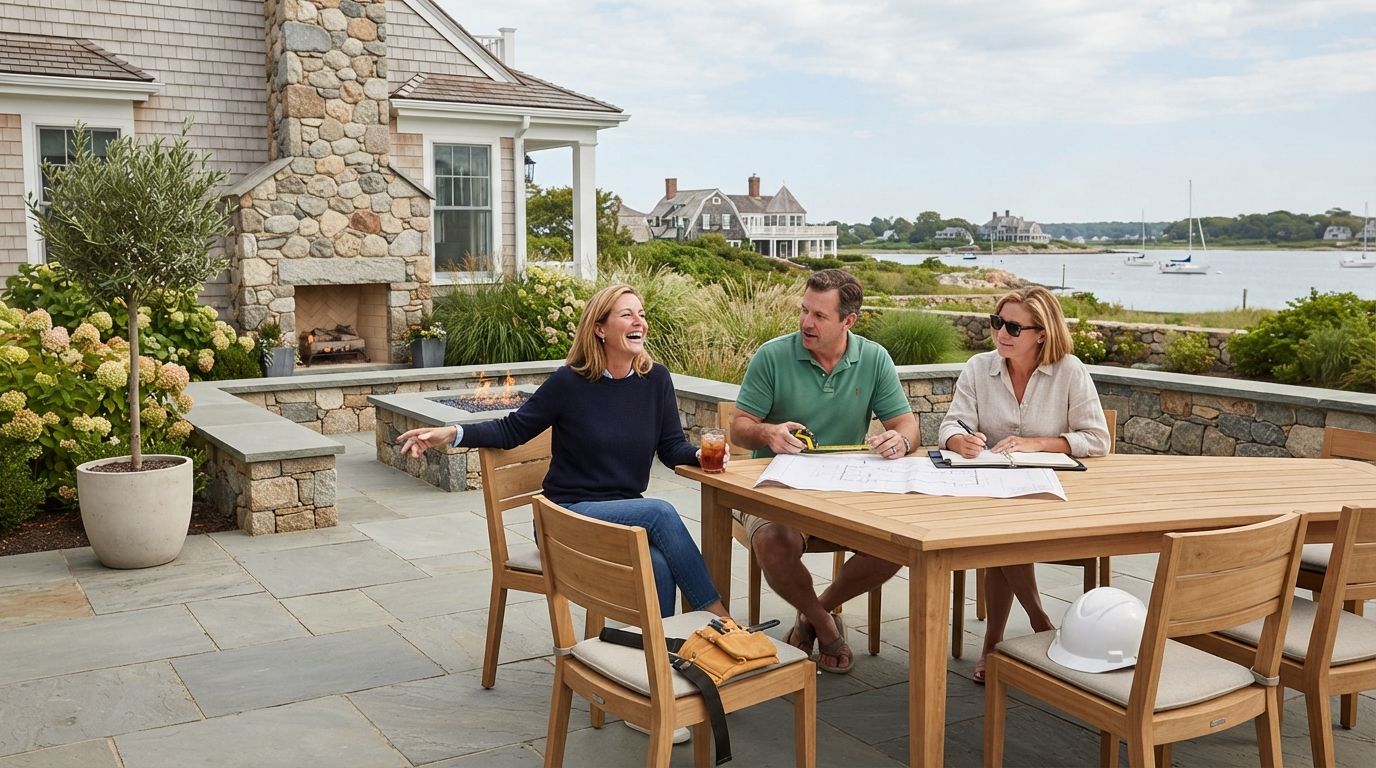
Budget Considerations
Patio project costs vary significantly across Rhode Island, largely driven by material choice, site preparation, and location.
- Providence patio projects are generally the most accessible for urban lot sizes
- Warwick projects tend to sit in the mid range, reflecting larger suburban patios
- Newport projects are typically the most expensive, due to premium materials and the added complexity of waterfront construction
Homeowners should budget for site preparation and drainage work in addition to materials and labour, particularly on coastal or sloped properties.
Local Regulations and Permits
Rhode Island patio projects may require building permits, particularly for structures over a certain size, along with compliance with local zoning setbacks. Coastal properties often have additional drainage requirements, and homes in historic districts may need design approval before work begins.
Requirements also vary by town. In Tiverton, for example, properties along the Sakonnet River and Mount Hope Bay face their own set of drainage and frost heave considerations, which is why working with a local paver patio and hardscaping contractor in Tiverton familiar with the town's conditions can help avoid issues down the line. Homeowners in any Rhode Island city or town should check with their local building department before starting a project.
Why Location Matters for Patio Design
Each Rhode Island city brings its own advantages to patio design. Providence offers urban convenience and a mix of architectural styles suited to compact lots. Warwick provides suburban space with coastal influence, making it well suited to family focused outdoor living. Newport delivers premium waterfront settings that call for higher-end materials and design work.
Choosing a patio style that fits your city, rather than following a generic template, tends to produce a better result and a longer-lasting one.
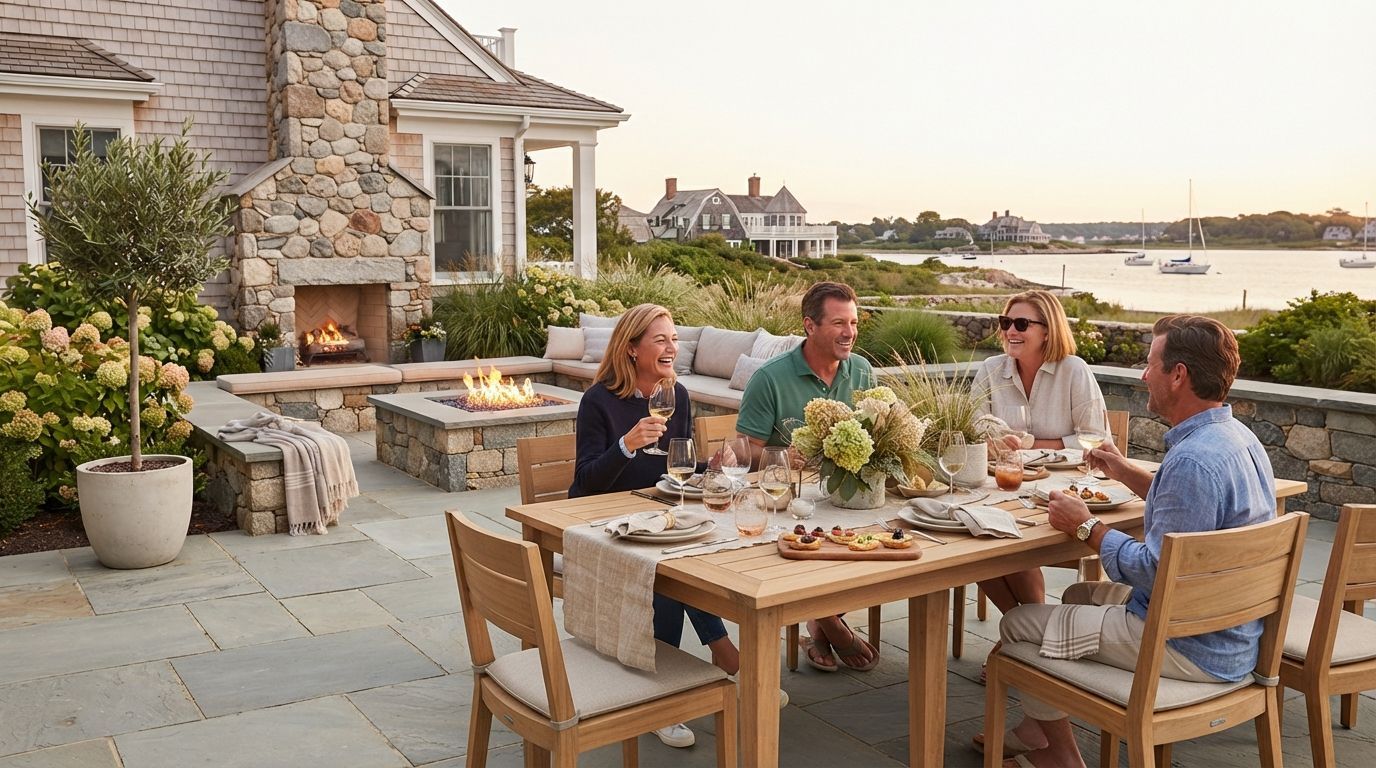
Planning Your Rhode Island Patio
Rhode Island patio trends make it clear that there's no single right approach. Providence favours practical, space-conscious design. Warwick balances suburban comfort with coastal durability. Newport continues to set the standard for premium waterfront outdoor living.
Whichever city you're in, choosing materials suited to Rhode Island's climate and working within local permit requirements will go a long way toward a patio that holds up for years to come.
Rhode Island Patio Design Planner 2026
Find the right patio layout, materials, and features for your property.
Providence, Warwick, and Newport each have different patio design trends and property conditions. Answer the questions below to generate a personalized patio planning guide for your home.
Your Personalized Patio Design Plan
Recommended Materials
Your Recommended Features
Rhode Island Climate Considerations
Important Site and Permit Checks
This planner provides general design guidance based on your selections. Actual material performance, structural requirements, permits, zoning, coastal approvals, and drainage solutions depend on the property and local regulations. Consult qualified local professionals and your municipal building department before construction.
Frequently Asked Questions
What's the most popular patio material in Rhode Island right now?
Composite decking and natural stone are both widely used, though the right choice depends on your location. Coastal properties generally do better with natural stone or treated hardwoods, while inland and urban properties often favour composite for its low maintenance.
Do I need a permit to build a patio in Rhode Island?
It depends on the size and type of structure. Larger patios, covered structures, and anything affecting drainage or setbacks typically require a permit. Always check with your local building department before starting.
How does coastal exposure affect patio design in Rhode Island?
Salt air can corrode untreated metal fixtures and wear down certain materials faster than inland conditions. Coastal properties generally benefit from natural stone, treated hardwoods, and stainless or coated hardware.
Is Newport patio construction more expensive than Providence or Warwick?
Generally yes. Newport projects often involve premium materials and more complex waterfront site work, which increases overall cost compared to Providence or Warwick.
What should I prioritise if I'm on a tighter budget?
Focus on proper base preparation and drainage first. These elements affect how long your patio lasts, regardless of the finish materials you choose.