

Rhode Island Patio Contractors: Questions to Ask Before You Hire
Hiring a patio contractor in Rhode Island is a decision that affects your property for years, not months. The right questions, asked before any contract is signed, separate a durable, well built outdoor space from one that cracks, pools water, or simply falls apart after a single New England winter. This guide walks through what to ask, what the answers should sound like, and what Rhode Island's licensing rules actually require.
Rhode Island's coastal climate, freeze-thaw cycles, and town-by-town permitting differences mean that a contractor who performs well in a dry inland state may not understand what a Narragansett or Portsmouth property needs.
Asking the right questions during the hiring process is the most reliable way to confirm that a contractor understands local conditions, carries the required registration and insurance, and has a track record you can actually verify.
What Are the Most Important Questions to Ask a Rhode Island Patio Contractor?
Before anything else, ask these three questions: Are you registered with the Rhode Island Contractors' Registration and Licensing Board? Do you carry liability insurance, and can you provide a certificate? Can you give me references from recent Rhode Island projects? These questions confirm legal compliance, financial protection, and genuine local experience, which are the three things every homeowner needs before work begins.
If you are still deciding which contractors to call in the first place, this guide on finding the best patio builder in Rhode Island outlines how to shortlist contractors with documented local experience before you get to the quoting stage.
Licensing and Registration Questions
Is the Contractor Registered with the Rhode Island CRLB?
Any contractor performing work valued over $500 in Rhode Island must be registered with the Contractors' Registration and Licensing Board (CRLB). A legitimate contractor should provide their registration number without hesitation and should not object to you checking it yourself through the state's official database at crb.ri.gov.
Follow up with:
- What is your CRLB registration number?
- When does the registration expire?
- Can I verify this online while we're speaking?
A contractor who cannot answer these clearly, or claims registration "doesn't apply" to smaller residential jobs, is a sign to keep looking elsewhere.
Does the Contractor Carry Adequate Insurance?
Rhode Island requires contractors to carry proof of liability insurance as part of maintaining their registration. Before signing anything, confirm the following:
- General liability insurance with current, active coverage
- Workers' compensation coverage, if the contractor employs staff
- A certificate of insurance you can request a copy of directly
This protects your property if something goes wrong during construction and protects you from liability if a worker is injured on your site.
Does the Work Require Additional Bonding?
Some specialised licence categories in Rhode Island, such as underground utility work, carry separate bonding requirements. If your project involves anything beyond standard patio installation, such as drainage work tied into utility lines, ask whether a surety bond applies to that portion of the job.
Experience and Local Knowledge Questions
How Does the Contractor Handle Rhode Island's Climate?
Rhode Island's freeze-thaw cycles and coastal salt air put real demands on patio materials and base preparation. A contractor with genuine local experience should be able to explain, in specific terms, how they account for:
- Frost heave, through proper excavation depth and base compaction
- Drainage, so water is directed away from the patio and the home's foundation
- Salt exposure, for coastal properties near Narragansett Bay or the Sakonnet River
Vague answers here are a red flag. A contractor who understands Rhode Island conditions will talk through specific base materials and depths, not general statements about "doing it right."
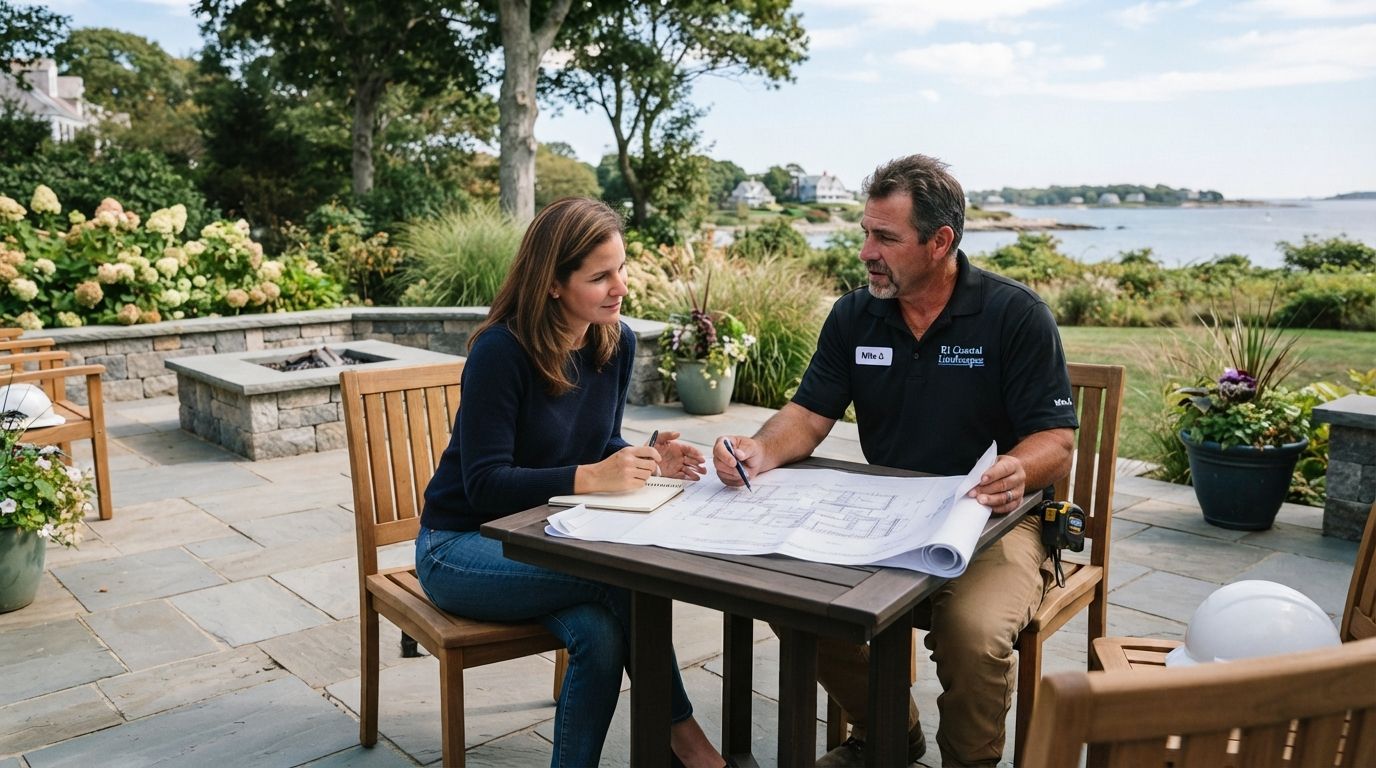
Can the Contractor Provide Local References?
Ask for references from projects completed in the past two years, ideally in a town similar to yours. A contractor confident in their work will usually offer:
- Contact details for past clients willing to speak with you
- Photos of completed, similar-scope projects
- A willingness to let you visit a finished site, if the homeowner agrees
If you want a deeper breakdown of what to look for when comparing local builders, including how to evaluate a documented project history, finding the best patio builder in Rhode Island covers this in more detail.
Does the Contractor Know Local Permit Requirements?
Permit requirements differ between Rhode Island municipalities. Ask directly who is responsible for obtaining permits, and what approvals apply to your specific town, including:
- Standard building permits for structural work
- Zoning and setback compliance
- Historic district approvals, where applicable
- Coastal or wetland permits, for properties near the water
A contractor working regularly in your town should be able to name the specific permits your project will need, not give a general answer that applies anywhere.
Project Scope and Material Questions
Will the Estimate Be Written and Detailed?
A proper quote is written, based on an actual site visit, and itemises costs clearly. It should include:
- Materials listed by type, grade, and quantity
- Labour costs separated from material costs
- Permit and disposal fees identified individually
- A realistic timeline, including allowance for weather delays
Be cautious of any contractor offering a verbal estimate over the phone without seeing the property. Ground conditions vary even within the same neighbourhood, and a figure given without a site visit is a guess, not a quote.
If you want to understand exactly what a proper quote should contain before you start contacting contractors, this guide on how to get patio quotes in Rhode Island walks through what to prepare and what separates a reliable quote from a rushed one.
What Warranty Does the Contractor Provide?
Ask about both workmanship and material warranties. Quality contractors typically offer a workmanship warranty of two to five years, alongside whatever coverage the material manufacturer provides. Get the specific terms in writing, including what is and isn't covered.
Will Subcontractors Be Used?
If subcontractors are part of the job, confirm they hold valid Rhode Island registration where required and are covered under the main contractor's insurance. This matters because responsibility for quality and liability can become unclear if subcontracted work isn't properly documented.
Payment and Project Management Questions
What Is the Payment Schedule?
Reputable contractors generally request a modest upfront deposit, often 10 to 20 percent, with the remainder tied to completion milestones rather than fixed calendar dates. Be wary of any contractor requesting full payment before work begins or insisting on cash only.
How Are Changes to the Project Handled?
Ask how change orders are managed. A professional process includes written authorisation for any changes, clear cost implications before the work proceeds, and an updated contract reflecting the revised scope.
How Will the Contractor Communicate During the Project?
Confirm how often you'll receive updates, and through what channel, whether that's phone calls, email, or photos of completed stages. Clear, consistent communication during the quoting process is usually a reliable indicator of how the contractor will communicate once the job is underway.
Where to Verify a Rhode Island Contractor's Information
Once you've asked these questions, verify the answers independently rather than relying on what you were told:
- CRLB registration lookup, through the state's official contractor database
- Better Business Bureau ratings and complaint history
- Recent customer reviews on Google
- Direct calls to listed references, asking specific questions about the quality of the work and the contractor's communication
Red Flags Worth Taking Seriously
A few warning signs should prompt a second look before signing anything:
- No Rhode Island registration, or a registration that has lapsed
- Reluctance to provide insurance certificates
- Pressure to sign immediately or skip the permit process
- Full payment requested before work starts
- No local references, or unwillingness to provide any
None of these alone is automatically disqualifying, but more than one should make you pause.
Making a Confident Decision
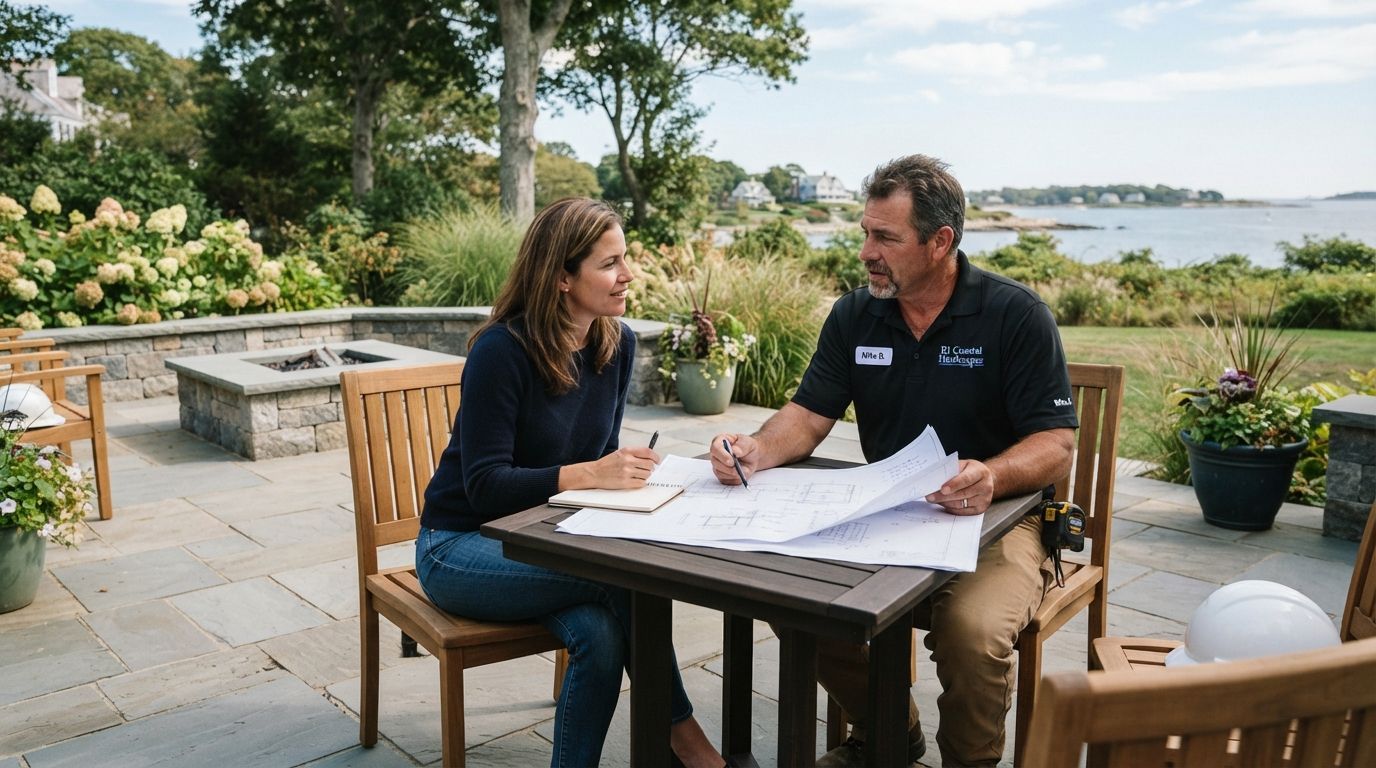
Collecting answers to these questions from three to five Rhode Island contractors gives you a genuine basis for comparison, not just a list of prices. Verify registration and insurance independently, contact references directly, and compare written quotes on detail and professionalism rather than the bottom line alone.
Homeowners in Portsmouth and other Aquidneck Island communities dealing with coastal ground conditions and salt air exposure may also find it useful to review the specific considerations covered in this overview of paver patio builders and hardscaping in Portsmouth, RI, which outlines how coastal site conditions affect patio planning.
Taking the time to ask these questions before hiring a Rhode Island patio contractor puts you in a stronger position to avoid costly mistakes and end up with a patio that holds up through the state's seasonal extremes for years to come.
Rhode Island Patio Contractor Checker
Evaluate a contractor before signing an agreement.
Answer these 12 questions based on the information your contractor has provided. Your results will help you identify strengths, missing details, and potential warning signs.
Your Contractor Assessment
Items to Follow Up On
This assessment is an informational screening tool, not a guarantee of contractor performance or a substitute for independently verifying registration, insurance, permits, and contract documents.